Why Aluminum Metal Roofing Dominates in Harsh and Coastal Climates
Aluminum metal roofing is one of the most durable, lightweight, and corrosion-resistant roofing options available today. If you’re weighing your options, here’s a quick snapshot of why it stands out:
- Corrosion resistance: Naturally forms a protective oxide layer — no rust, ever
- Weight: 0.5–0.75 lbs/sq ft, roughly ⅓ the weight of steel
- Lifespan: 40–60+ years with minimal maintenance
- Cost: $7–$18/sq ft for standing seam; 20–30% more than comparable steel
- Best for: Coastal climates, high-humidity regions, and weight-sensitive structures
- Eco-friendly: Made from 95% recycled materials and 100% recyclable
Metal roofs have been growing in popularity for good reason — they look sharp, last decades, and hold up where traditional asphalt shingles fail. But not all metal roofs are created equal. Steel is the most common choice, but in harsh or coastal environments, aluminum consistently outperforms it — without rusting, without heavy coatings, and without weighing down your home’s structure.
Whether you’re dealing with Wisconsin’s heavy snowfall or a property near salt air, the material you choose matters more than most homeowners realize.
I’m Matt Smith, owner of Smith Roofing & Exteriors, and after years of helping homeowners across rural Wisconsin protect their properties with the right roofing materials — including aluminum metal roofing — I’ve seen which systems hold up and which ones don’t. Let’s break down exactly what makes aluminum the right call for the right situations.
What is Aluminum Metal Roofing?
When we talk about aluminum metal roofing, we are referring to a professional roofing system manufactured from lightweight, malleable, and incredibly corrosion-resistant aluminum alloys. While steel is often the “default” in the metal roofing world, aluminum is a specialty material that offers a unique set of physical properties that make it a premium choice.
According to research from All In Aluminum, this “miracle metal” was first produced in the 19th century using electricity to break down chemical compounds. Today, it is prized in industries ranging from aerospace to high-end construction. In the roofing world, it is primarily used for architectural roofing, meaning it is designed to be installed over a solid roof deck rather than serving as the structural support itself.
One of the most impressive traits of aluminum panels is their strength-to-weight ratio. Aluminum is the lightest roofing material available, yet it possesses a higher strength-to-weight ratio than almost any other metal used in construction. This makes it an excellent candidate for investing in metal roofing for your home, especially if you are looking to minimize the load on an older structure.

Common Styles of Aluminum Metal Roofing
One of the best things about aluminum is its malleability. Because it is easier to bend and shape than steel, manufacturers can create a wide variety of aesthetic styles to match any home in Southeastern Wisconsin.
- Standing Seam: These feature concealed fastener systems where the ribs lock together, hiding the screws from the elements. This is the “gold standard” for leak prevention.
- Corrugated Panels: Often used for more industrial or agricultural looks, these exposed fastener panels are budget-friendly and provide a classic “metal roof” aesthetic.
- Aluminum Shingles: For homeowners who want the benefits of metal but love the look of traditional materials, aluminum shingles are a fantastic choice. They can be manufactured to mimic cedar shakes, slate, or even Mediterranean clay tiles.
- Cedar Shake Mimics: These provide the rugged beauty of wood without the rot, moss, or fire risk associated with real cedar.
Aluminum vs. Steel: The Battle for Coastal Superiority
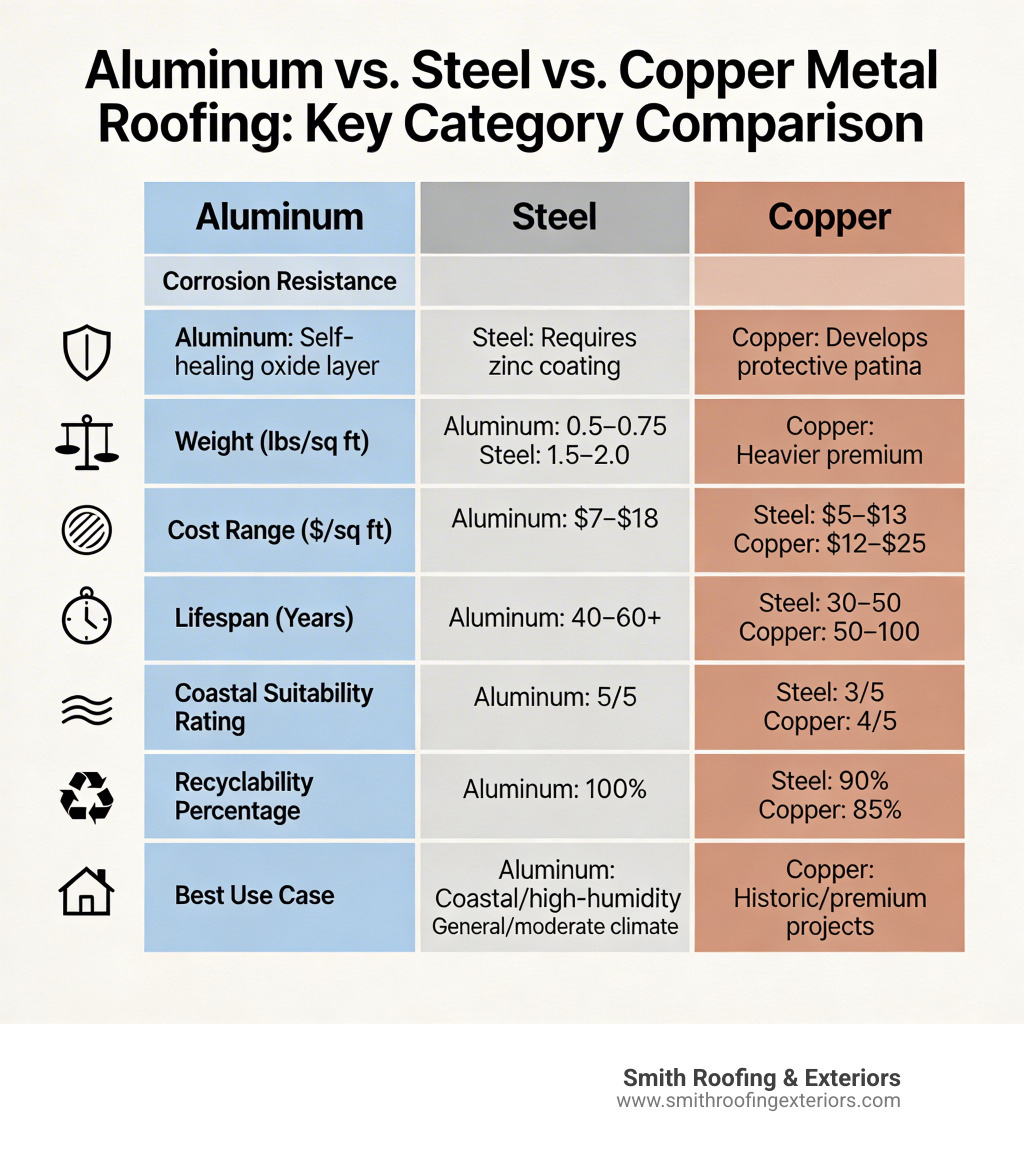
If you live within a mile of a large body of water or in a high-humidity area, the choice between aluminum and steel becomes very clear. While steel is a fantastic, durable material, it relies on a sacrificial coating (like zinc in galvanized steel or a zinc-aluminum mix in Galvalume) to prevent rust. Once that coating is scratched or wears down, the steel underneath is vulnerable to “red rust.”
Aluminum, on the other hand, does not rust. When aluminum is exposed to oxygen, it naturally forms a hard, protective layer of aluminum oxide. This film is “self-healing”; if the surface is scratched, a new oxide layer forms immediately to protect the metal underneath. This is why we almost always recommend aluminum for coastal applications or areas with high salt spray.
| Feature | Aluminum Roofing | Steel Roofing |
|---|---|---|
| Weight | 0.5 – 0.75 lbs/sq ft | 1.5 – 2.0 lbs/sq ft |
| Corrosion Resistance | Superior (No Red Rust) | Good (Requires Coatings) |
| Cost | Premium ($7 – $18/sq ft) | Value ($5 – $12/sq ft) |
| Lifespan | 40 – 60+ Years | 40 – 70 Years |
| Recycled Content | ~95% | ~25 – 35% |
The weight difference is another massive factor. Aluminum is nearly 60% lighter than steel. While copper and zinc are also beautiful, long-lasting options, they are significantly heavier and more expensive. Choosing a lightweight material like aluminum reduces the structural load on your home, which can be a lifesaver for older homes in Jefferson or Fort Atkinson that weren’t originally designed for heavy roofing materials. For commercial owners, comparing metal vs rubber roofing often leads back to aluminum when weight and longevity are the top priorities.
The Energy Efficiency of Aluminum Metal Roofing
Aluminum isn’t just tough; it’s also incredibly smart. It is one of the most energy-efficient materials you can put on your home. Because aluminum has high solar reflectance and emissivity, it reflects a huge portion of the sun’s rays back into the atmosphere rather than absorbing that heat into your attic.
Many aluminum metal roofing systems use UV-inhibiting “cool roof” paints that further enhance this effect. Homeowners who switch to an aluminum system often see cooling savings of up to 25% during those humid Wisconsin summers. Furthermore, aluminum’s high recyclability and energy performance help many projects meet LEED certification requirements, making it a favorite for eco-conscious builders.
Durability and Performance in Extreme Weather
In Southeastern Wisconsin, we don’t just worry about the sun; we have to deal with heavy snow, high winds, and the occasional hail storm. Aluminum is built to handle it all.
Most aluminum roofing systems are tested to withstand wind uplift exceeding 120 mph, which is more than enough to handle the straight-line winds we sometimes see in the Midwest. Because aluminum is a “cool” metal, it sheds snow much faster than asphalt shingles. This prevents heavy snow accumulation and reduces the risk of ice dams forming at your eaves.
When it comes to longevity, you’re looking at a “lifetime” roof. Most aluminum roofs last between 40 and 60 years, and many come with a 50-year transferable warranty. This is one of the top benefits of installing a metal roof—you likely won’t ever have to pay for a roof replacement again.
Mitigating Denting and Surface Damage
One common question we get is: “Is aluminum too soft? Will it dent in a hail storm?” It’s true that aluminum is more malleable than steel, but manufacturers account for this by using a thicker gauge. While a standard steel roof might be 24 or 26 gauge, a residential aluminum roof is typically .032” or .030” thick.
While very large hail can cause cosmetic denting, it’s important to remember that a dent in aluminum does not lead to corrosion or leaks because of that self-healing oxide layer. To maximize rigidity, we recommend choosing profiles with built-in striations or textures (like aluminum shingles or ribbed panels), which help hide small imperfections and provide extra structural strength. High-performance PVDF coatings also help protect the surface from scratches and UV degradation.
Key Installation and Maintenance Considerations
Installing aluminum metal roofing requires a specialized touch. One of the most important factors we manage is thermal expansion. Aluminum expands and contracts roughly twice as much as steel when temperatures change. To prevent “oil canning” (that wavy look) or fasteners backing out, we use floating clip systems and expansion clips that allow the panels to “breathe” as they heat up and cool down.
Because this is architectural and not structural roofing, we always install a high-quality synthetic underlayment first. This provides an extra layer of moisture protection and acts as a thermal break.
As for maintenance, aluminum is about as “set it and forget it” as it gets. We recommend an occasional rinse with a garden hose to remove salt spray or debris, especially if you live near the water. Beyond that, just keep your gutters clear. If you’re curious about how a specific color might look on your home, you can use a free visualizer to see the transformation before we ever pull a permit.
Frequently Asked Questions about Aluminum Metal Roofing
How much does an aluminum roof cost compared to steel?
Generally, you can expect to pay a 20% to 30% premium for aluminum over steel. In the current market, aluminum standing seam roofs typically cost between $7 and $18 per square foot installed. While the upfront cost is higher, the long-term ROI is superior because you avoid the rust issues that can plague steel in certain environments. If you’re ready to see what the numbers look like for your specific home, you can request a free quote for aluminum panels here.
Is aluminum roofing eco-friendly and recyclable?
Absolutely. Aluminum is one of the most sustainable building materials on Earth. Approximately 95% of aluminum roofing systems are made from previously recycled materials. Furthermore, at the end of its 50+ year life, the roof is 100% recyclable. Interestingly, about 75% of all aluminum ever produced in the last 100 years is still in use today!
When is aluminum the best choice over other materials?
Aluminum is the undisputed king in coastal environments, marine climates, and high-humidity regions where salt air is present. It’s also the best choice for weight-sensitive structures or for homeowners who want a lifetime roofing solution that will never rust. You can explore more about different metal options in our metal roof category.
Conclusion
At Smith Roofing & Exteriors, we believe in providing our neighbors in Fort Atkinson, Jefferson, and across Southeastern Wisconsin with roofing solutions that actually last. While asphalt shingles are common, they simply can’t compete with the long-term value and protection of a metal system.
If you are looking for a roof that combines extreme durability with lightweight performance and unmatched corrosion resistance, aluminum metal roofing is the answer. Our experienced local team is here to help you navigate the selection process, ensuring you get the right gauge, style, and color for your property.
Ready to protect your home with a lifetime roofing solution? Explore our metal roofing options or contact us today for a transparent, no-pressure estimate. We’re proud to be your partners in building a safer, more beautiful home.