What Overflowing Gutters Damage Can Do to Your Home
Overflowing gutters damage goes far beyond a little water spilling over the edge. Left unchecked, it can destroy your foundation, flood your basement, rot your fascia boards, and cost you tens of thousands in repairs.
Here’s a quick look at the most serious risks:
- Foundation cracks and basement flooding – Water pools against your foundation, saturates the soil, and seeps into your basement over time
- Fascia and soffit rot – Constant moisture exposure breaks down the wood behind and beneath your gutters
- Siding and window damage – Water splashing against your exterior causes staining, warping, and decay
- Landscaping erosion – Overflow washes away soil and plants around your home’s perimeter
- Mold and mildew growth – Damp conditions inside walls and ceilings create serious health hazards
- Concrete and driveway damage – Water seeps into small cracks, then freezes and expands, widening them over time
Here’s why this matters: just one inch of rainfall on an average-size roof generates roughly 1,900 gallons of runoff. Your gutters have one job — move all that water safely away from your home. When they fail, that water has to go somewhere. And it usually goes somewhere expensive.
In Wisconsin, harsh winters and heavy spring rains make this problem even worse. Freeze-thaw cycles turn minor overflow issues into major structural damage fast.
I’m Matt Smith, owner of Smith Roofing & Exteriors, and I’ve seen how overflowing gutters damage can quietly destroy a home’s foundation and exterior before most homeowners even notice the warning signs. Let’s walk through exactly what’s at risk — and what you can do about it.
Why Gutters Fail: Common Causes of Overflow
If you’ve ever watched a summer thunderstorm in Fort Atkinson or Lake Mills, you know how quickly our Midwestern skies can open up. When that 1,900-gallon torrent hits your roof, your gutter system needs to be in top shape to handle the load. Unfortunately, several common issues can cause the system to fail, leading to significant overflowing gutters damage.
Debris and Leaf Buildup
The most frequent culprit is simply a lack of cleaning. Leaves, twigs, pine needles, and even those pesky “helicopter” seeds (whirlybirds) act like a dam. When debris settles in the channel, it slows the water down. Eventually, the water has nowhere to go but over the sides. In Southeastern Wisconsin, we also see a lot of roofing granules from aging shingles collecting in the bottom of gutters, creating a heavy sludge that is particularly difficult for water to push through.
Improper Pitch
Gutters might look like they are perfectly horizontal, but they shouldn’t be. To work correctly, they need a slight “fall” or slope toward the downspouts. We generally recommend a pitch of 1/4 inch for every 10 feet of guttering.
If the pitch is too level, water pools and eventually spills over the front. If the pitch is too steep, the water may rush toward the downspout so fast that the outlet can’t swallow it quickly enough, causing a backup. Over time, a home’s natural settling can change the angle of your gutters, making regular checks essential.
Undersized Gutters and Downspouts
Sometimes, the system itself just isn’t big enough for the job. Most standard homes come with 5-inch gutters, but for homes with large, steep roof pitches—common in many of our historic Jefferson and Elkhorn neighborhoods—6-inch gutters are often a much safer bet.
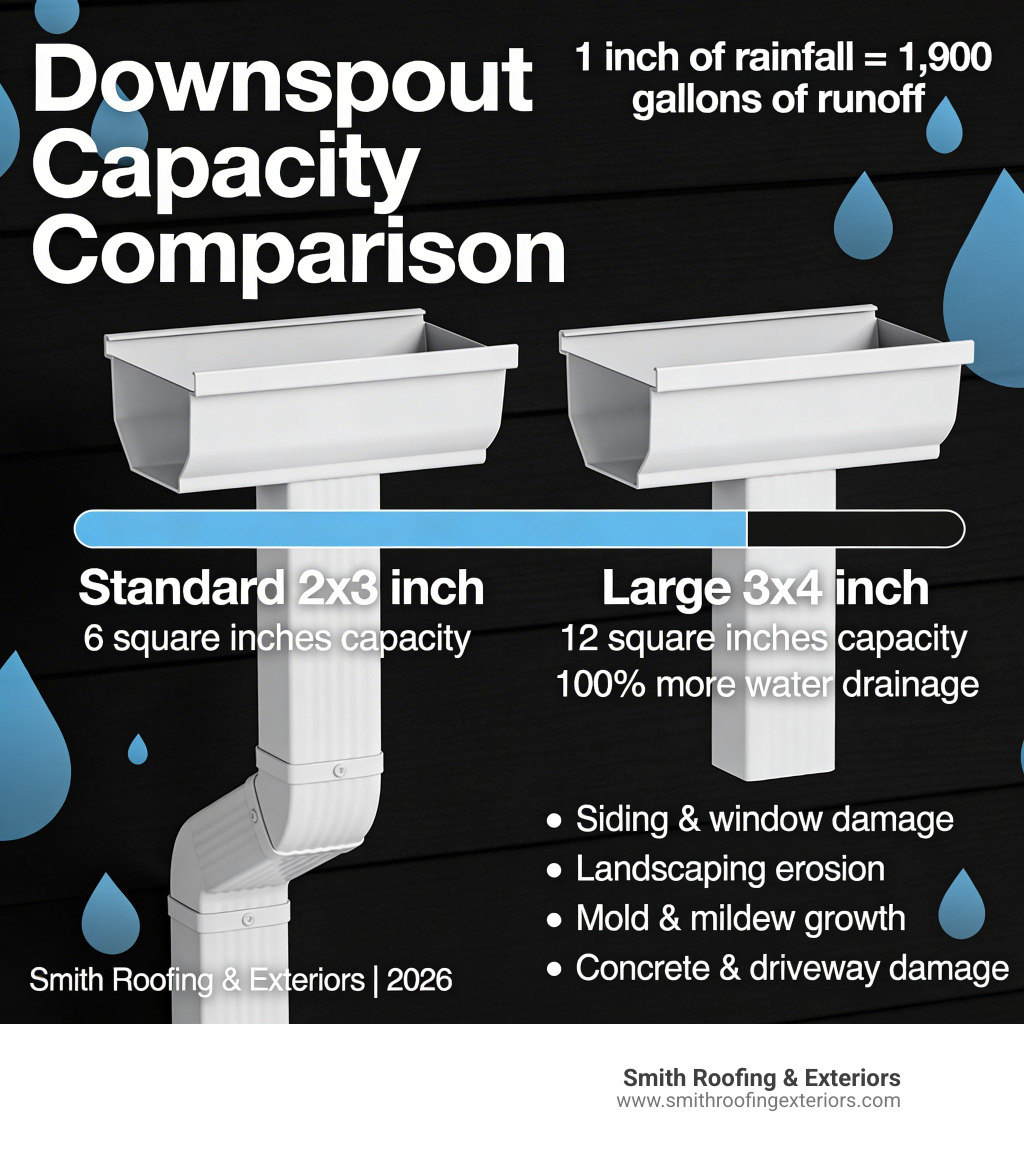
The downspouts are equally critical. Many older systems use 2×3 inch downspouts, which have a capacity of only 6 square inches. Upgrading to 3×4 inch downspouts doubles that capacity to 12 square inches, allowing your system to drain twice as fast during a heavy downpour.
Ice Dams and Winter Hazards
In our region, winter brings the unique challenge of ice dams. When heat escapes from your attic, it melts the snow on the roof. That water runs down to the cold gutter and refreezes. This creates a block of ice that prevents any further meltwater from draining. When the next thaw happens, the water backs up under your shingles or spills over the side, leading to interior leaks and structural rot.
For more technical details on how municipal systems and residential drainage interact, you can review this Homeowner guidance on gutter issues.
The Costly Reality of Overflowing Gutters Damage
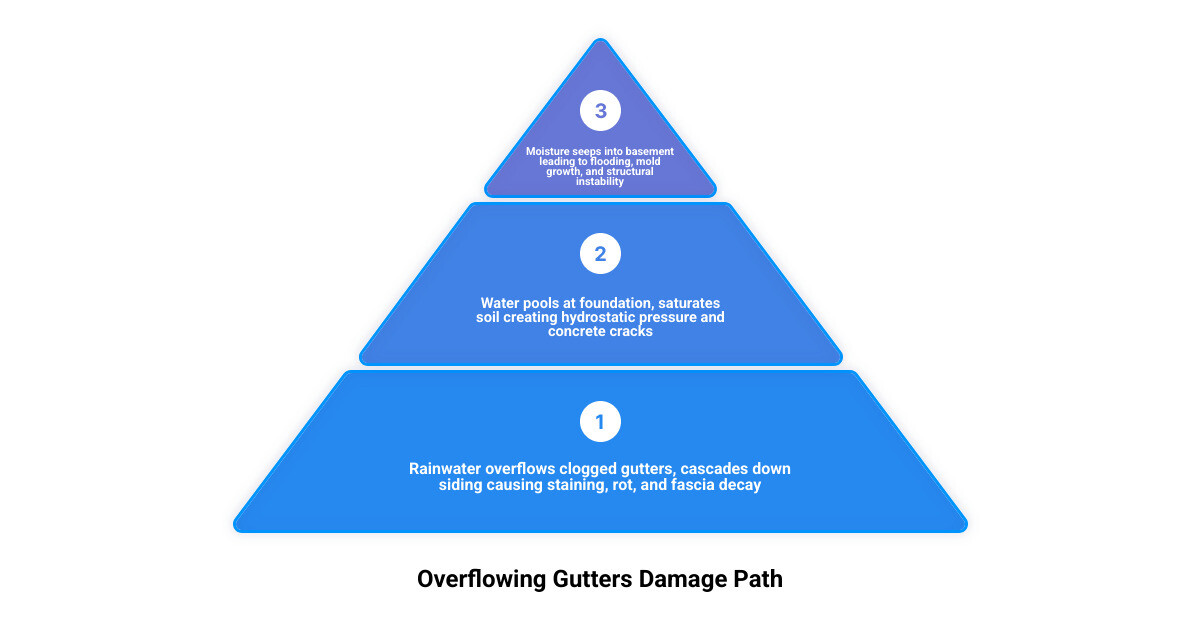
It’s easy to ignore a little bit of splashing during a storm, but the long-term financial consequences are staggering. When water isn’t channeled away, it begins to work against the structural integrity of your home through a process called hydrostatic pressure. This occurs when the soil around your foundation becomes so saturated that it exerts immense pressure against your basement walls.
According to our research into 4 types of property damage that faulty gutters can cause, ignoring the problem can lead to a “snowball effect” where one issue triggers three more. You might start with a simple clog and end up with a cracked foundation.
To understand the full scope of the threat, consider What damage can a leaking gutter cause? which highlights how water wicking into your eaves can rot the very timber holding your roof up.
Foundation Cracks and Basement Flooding
Your foundation is the most expensive part of your home to repair. When gutters overflow, water pools directly at the base of your house. In cities like Burlington and Delavan, where the soil can hold significant moisture, this leads to soil erosion and shifting.
As the ground beneath your home becomes unstable, your foundation can settle unevenly, leading to:
- Vertical and horizontal cracks in your basement walls.
- Seepage that turns your basement into a humid, moldy mess.
- Structural instability that can make doors and windows difficult to open or close.
If you are seeing damp spots on your basement floor after a rain, it’s a major red flag. Learning how gutter repair can help protect your roof and foundation is the first step in avoiding a five-figure foundation repair bill.
Exterior Siding and Roof Damage
When water overflows, it doesn’t just fall straight down; it often “wicks” backward. This means the water clings to the underside of the gutter and runs onto your fascia boards and soffits. These wooden components aren’t designed to be submerged. Constant moisture leads to wood rot, which eventually spreads to the roof rafters.
The damage doesn’t stop there. Overflowing water often splashes onto windows and siding. Did you know that the national average for window replacement is roughly $21,000? Constant water exposure can rot window frames and ruin the seals on your siding, leading to mold growing inside your walls where you can’t even see it.
Identifying and Preventing Future Issues
The good news is that overflowing gutters damage is almost entirely preventable. By knowing what to look for and taking a few proactive steps, you can keep your home dry and protected.
Visible Signs of Overflowing Gutters Damage
You don’t need to wait for a rainstorm to know if you have a problem. Take a walk around your home in Walworth or Lake Geneva and look for these warning signs:
- Wall Staining: Dark streaks or “tiger stripes” on the front of your gutters or on your siding.
- Soil Erosion: Deep trenches in your mulch or flower beds directly beneath the gutter line.
- Sagging Gutters: Gutters that look like they are “pulling away” from the house or have a visible dip.
- Peeling Paint: Paint bubbling or flaking on your fascia boards or siding.
- Basement Dampness: A musty smell or white, powdery “efflorescence” on your basement walls.
Proactive Steps to Stop Overflowing Gutters Damage
To truly protect your home, you need a multi-layered defense:
- Install Gutter Guards: High-quality mesh or solid-cover guards prevent debris from entering the channel while still allowing water to flow. This is the single best way to reduce maintenance.
- Professional Cleaning: Even with guards, a professional check-up twice a year (spring and fall) ensures that downspouts are clear and the pitch hasn’t shifted. You can find reliable gutter cleaning services to protect your home right here in Southeastern Wisconsin.
- System Upgrades: If your home has roof valleys (where two roof sections meet), water flows much faster in those areas. Installing splash guards or “high-back” gutters like the Gutter Shutter system can prevent water from overshooting the edge.
- Downspout Extensions: Ensure your downspouts discharge water at least 5 to 10 feet away from your foundation. Using underground PVC piping is an even better long-term solution.
- Tree Trimming: Keep branches at least 6 to 10 feet away from your roof to minimize the amount of debris falling into your system.
Frequently Asked Questions about Gutter Overflow
What are the most common causes of overflowing gutters?
The most common cause is a clog made of leaves, twigs, and roofing granules. However, many homeowners are surprised to learn that an improper slope or undersized downspouts are just as likely to cause an overflow during heavy Wisconsin rainstorms.
How can I prevent my gutters from overflowing during heavy rain?
The best approach is a combination of regular cleaning, upgrading to 3×4 inch downspouts to handle higher volumes, and installing splash guards at roof valleys. If you live in a heavily wooded area, gutter guards are a must-have to keep the system flowing freely.
When should I call a professional for gutter issues?
If you notice your gutters are sagging, pulling away from the house, or if you see cracks forming in your foundation, it’s time to call in the experts. Cleaning gutters on a two-story home can also be dangerous; a professional team has the right equipment to do the job safely and can identify hidden rot in your fascia that a DIYer might miss.
Conclusion
At Smith Roofing & Exteriors, we believe that your gutter system is your home’s first line of defense against the elements. From our home base in Fort Atkinson to our neighbors in Edgerton and Jefferson, we’ve dedicated ourselves to providing the highest quality protection for Wisconsin homeowners.
Don’t wait for a flooded basement to realize your gutters are failing. Whether you need a simple cleaning, a repair to your fascia, or a full system upgrade with superior materials, our local team is here to help with transparent pricing and 24/7 emergency services.
Overflowing gutters damage is a serious threat, but it’s one you can win against. Protect your home with professional gutter solutions and give yourself the peace of mind that comes with knowing your foundation is safe and dry. Give us a call today for a free inspection!