Why Rain Gutter Screens Are Worth Every Penny for Wisconsin Homeowners
Rain gutter screens are mesh or perforated covers that sit on top of your gutters to keep leaves, pine needles, and debris out — while still letting rainwater flow through freely.
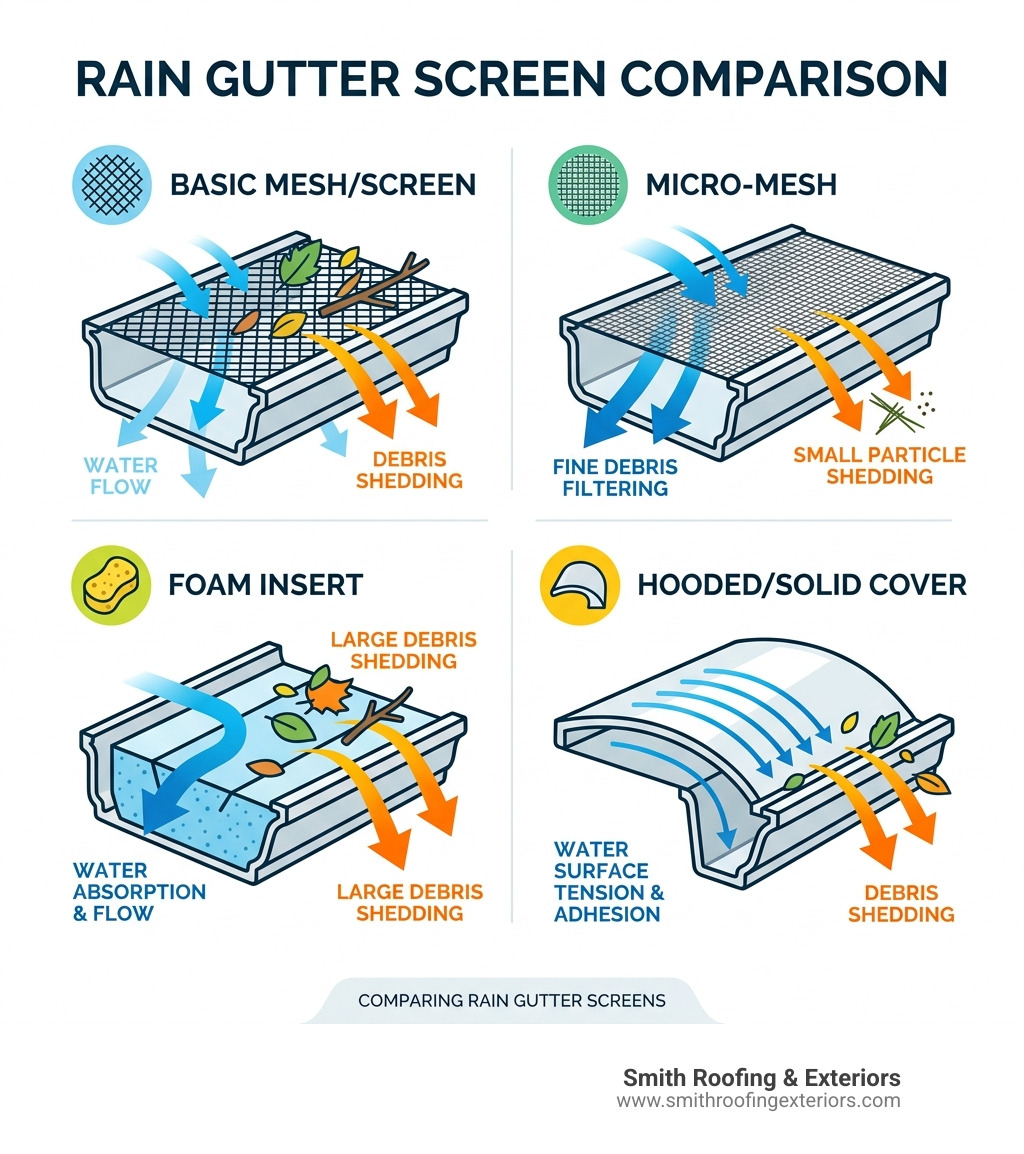
Here’s a quick comparison of the most common types to help you choose:
| Type | Best For | Debris Filtered | Price Range (per ft) |
|---|---|---|---|
| Basic mesh/screen | Light debris, budget installs | Leaves, twigs | $0.50 – $1.50 |
| Micro-mesh | Fine debris, pine needles | Nearly everything | $1.50 – $4.00 |
| Foam insert | Simple DIY installs | Leaves, large debris | $1.50 – $3.00 |
| Hooded/solid cover | Heavy rainfall areas | Leaves, large debris | $3.00 – $7.00+ |
Clogged gutters are a bigger deal than most homeowners realize. When water can’t drain properly, it overflows down the side of your home — damaging your siding, rotting your fascia boards, and eventually threatening your foundation. In Wisconsin, where spring downpours and heavy snow loads are part of life, a blocked gutter can cause serious, costly damage fast.
The good news? The right rain gutter screen can reduce how often you need to clean your gutters by up to 95% in some cases — and can protect your home year-round with minimal effort.
I’m Matt Smith, owner of Smith Roofing & Exteriors, and I’ve spent years helping Wisconsin homeowners find the right rain gutter screens to stand up to our harsh winters and heavy spring rainfall. In this guide, I’ll walk you through every major option so you can make a confident, informed decision.
Rain gutter screens terms at a glance:
What Are Rain Gutter Screens and How Do They Work?

At their core, rain gutter screens act as a filtration system for your home’s drainage. While gutters are designed to collect and move water away from your foundation, they also tend to collect everything else—leaves, twigs, seed pods, and even the occasional tennis ball.
Rain gutter screens work by creating a physical barrier over the gutter channel. Most modern designs, such as Drop In™ Gutter Screens, utilize a combination of hole patterns and material tension to manage water. When rain hits the screen, surface tension helps pull the water through the mesh or perforations and into the gutter, while the debris remains on top. From there, a light breeze or the natural pitch of the screen allows the dried debris to blow away.
Installing these systems offers Top Advantages Of Installing Gutter Guards, primarily by ensuring that your gutters remain open and functional during the most critical times—like those sudden April thunderstorms in Lake Mills or Fort Atkinson.
Comparing Rain Gutter Screens to Solid Covers
You might hear the terms “screens,” “guards,” and “covers” used interchangeably, but there are distinct differences in how they handle the Wisconsin elements.
- Screens (Mesh/Micro-mesh): These are generally preferred for high-volume water areas. Because they are “open” to the air, they allow for better airflow, which helps dry out any damp debris sitting on top so it can blow away. Products like those found at 302 Found focus on specific hole sizes (like 7/64th inch) to balance water intake with debris rejection.
- Solid Covers (Surface Adhesion): These use a solid piece of metal with a curved edge. Water follows the curve into the gutter via surface tension, while leaves are supposed to fall off the edge. While effective for large leaves, they can sometimes struggle with “overshooting” in torrential rain or becoming an eyesore if they aren’t perfectly aligned.
Key Benefits of Professional Gutter Protection
Beyond just avoiding a messy Saturday morning chore, there are several “invisible” benefits to installing rain gutter screens:
- Pest Prevention: Stagnant water in clogged gutters is a breeding ground for mosquitoes. Screens also prevent birds, squirrels, and wasps from nesting in your eaves.
- Fire Hazards: In dryer months, dry leaves in gutters can become a fire risk. Metal screens provide an extra layer of protection against flying embers.
- Ladder Safety: Gutter cleaning is one of the most common causes of ladder-related injuries. By reducing maintenance needs, you stay safely on the ground.
- Mold Reduction: By keeping moisture away from the fascia and siding, you significantly reduce the risk of mold and wood rot, which is a common issue we see in walworth/gutters/guards service calls.
Popular Types and Materials for Gutter Protection
Choosing the right material is just as important as the design. In our experience serving Southeastern Wisconsin, the material needs to handle extreme temperature swings without warping or cracking.
| Material | Durability | Pros | Cons |
|---|---|---|---|
| Stainless Steel | Highest | Rust-proof, handles heavy snow | More expensive |
| Aluminum | High | Lightweight, won’t rust, matches gutters | Can dent if a heavy branch hits it |
| Plastic/PVC | Low/Medium | Very affordable, easy DIY | Can warp in heat or crack in deep freezes |
| Copper | High | Beautiful patina, extremely long-lasting | Highest price point |
For a deeper dive into the financial side of things, check out our guide on How Much Do Gutter Guards Really Cost Per Foot In 2026.
Choosing the Best Rain Gutter Screens for Your Roof
Not every screen fits every gutter. Most homes in Jefferson and Burlington use standard 5-inch or 6-inch K-style gutters. When selecting your protection, you need to ensure the screen is compatible with your specific gutter size.
Furthermore, look for UV stabilization if you are opting for any plastic components. Without it, the sun will make the guards brittle within just a few seasons. If you’re looking for local advice on what works best for our specific climate, explore our Fort Atkinson Gutter Screen Options The Ultimate Shield For Your Home resource.
Material Durability and Rust Resistance
In Wisconsin, rust is the enemy. Between the humidity of summer and the salt and slush of winter, your rain gutter screens need to be resilient. We highly recommend surgical-grade stainless steel or powder-coated aluminum. These materials resist the corrosive effects of shingle grit and environmental pollutants. For homeowners in Elkhorn, choosing high-durability materials is the best way to ensure your investment lasts 20+ years. You can see more on these material choices at elkhorn/gutters/guards.
Performance in Extreme Weather and Heavy Debris

A common concern we hear is: “Will these screens just overflow when it really pours?” It’s a valid question. High-quality rain gutter screens are tested to handle incredible amounts of water—some even up to 20+ inches of rain per hour. The key is the “micro-hole” technology that breaks the surface tension of the water, pulling it down even when the rain is torrential. This is vital for maintaining Quality Rain Gutters and Downspouts in Lake Mills, where summer storms can be quite intense.
Why Rain Gutter Screens Excel in Wisconsin Winters
Wisconsin winters present a unique challenge: ice and snow.
- Snow Loads: Cheap plastic screens can sag or collapse under the weight of a heavy February snowfall. Metal screens, especially those with internal structural supports, stay rigid.
- Ice Dams: While no gutter guard prevents ice dams (those are caused by attic heat loss), a good screen ensures that when the snow melts, the water has a clear path to flow away rather than refreezing in a debris-filled gutter.
- Pine Needles: If you live near the evergreens in Lake Geneva, you know pine needles are the “gutter killers.” Micro-mesh is the only screen fine enough to keep those pesky needles out. See more regional tips at Lake Geneva/Gutters/Guards.
Handling High-Volume Water Flow
The ultimate goal of any gutter system is to protect your foundation. Clogged gutters lead to “pooling” around the base of your home, which can cause basement leaks and foundation cracks. By keeping the channel clear, rain gutter screens ensure that water is moved efficiently to the downspouts and away from the house. This is especially important for larger homes in Delavan that may have complex rooflines. Check out delavan/gutters/guards for more on high-volume management.
Installation Guide and Maintenance Requirements
There are two main ways rain gutter screens are installed:
- Snap-on/Drop-in: These are the most common DIY options. They usually slide under the first row of shingles and snap onto the front lip of the gutter.
- Screw-in/Fastened: These are more permanent and typically installed by pros. They are screwed into the front lip and sometimes the back fascia, making them incredibly strong and resistant to wind uplift.
For homeowners in Burlington, we often recommend the fastened approach to ensure the guards don’t shift during high-wind events. More details can be found at burlington/gutters/guards.
Common Installation Mistakes to Avoid
Even the best product will fail if installed incorrectly. Here are the “big four” mistakes we see:
- Improper Slope: If the screen is too flat, debris won’t blow off. If it’s too steep, water will “overshoot” the gutter.
- Shingle Damage: Forcing screens under old, brittle shingles can cause leaks.
- Gap Formation: Small gaps at the end caps or miters are like an open door for birds and squirrels.
- Fastener Corrosion: Using steel screws on aluminum gutters causes a chemical reaction (galvanic corrosion) that will rot your gutters. Always match your metals!
Long-Term Maintenance and Cleaning Tips
Let’s be honest: no gutter guard is 100% maintenance-free. Anyone who tells you otherwise is probably trying to sell you a bridge!
However, instead of scooping out handfuls of rotting sludge twice a year, maintenance with screens usually looks like this:
- Yearly Inspection: Walk around the house and look for any areas where debris might be “piling up” on top of the screens.
- Light Brushing: Use a soft brush on a pole to sweep off any stubborn leaves or pine needles that didn’t blow away.
- Downspout Check: Ensure the outlets are clear.
For those in Fort Atkinson, we offer maintenance packages to keep your system in top shape. Visit Fort Atkinson/Gutters/Guards for more info.
Frequently Asked Questions about Gutter Protection
Do rain gutter screens work in heavy rain?
Yes! High-quality stainless steel and aluminum screens are designed with a specific “aperture” (hole size) that uses surface tension to pull water into the gutter even during torrential downpours. They actually perform better than solid covers in many high-volume scenarios because they don’t allow the water to “skip” over the edge.
Can I install screens on my existing gutters?
Absolutely. Most rain gutter screens are designed specifically to be retrofitted onto existing 5-inch or 6-inch K-style gutters. As long as your current gutters are in good structural shape (not sagging or rusted through), adding screens is a great way to extend their lifespan.
How much do gutter screens cost per foot in 2026?
In 2026, you can expect to pay anywhere from $0.50 to $1.50 per foot for basic DIY plastic screens. For professional-grade stainless steel micro-mesh, the cost typically ranges from $2.00 to $4.50 per foot for materials, with professional installation adding to that total depending on the height and complexity of your roof.
Conclusion
Investing in rain gutter screens is one of the smartest moves you can make to protect your home from the unpredictable Wisconsin weather. Whether you’re dealing with the heavy snows of Edgerton or the falling leaves of Lake Mills, a solid gutter protection system saves you time, money, and ladder-related headaches.
At Smith Roofing & Exteriors, we take pride in being your local experts. We live and work right here in Fort Atkinson, and we know exactly what it takes to keep a home safe from water damage. We offer transparent pricing, an experienced local team, and the best materials available in 2026.
Ready to stop climbing that ladder? Protect your home with professional gutter services and let us give you the peace of mind you deserve. Reach out to us today for a free estimate!