The Science Behind Thermal Imaging for Roof Leaks
To understand why thermal imaging for roof leaks is so effective, we have to look at the physics of heat, also known as thermography. Every object with a temperature above absolute zero emits infrared radiation. While our eyes can’t see this radiation, infrared cameras can, translating that heat energy into a visual map of colors.
The secret weapon here is thermal capacitance (or thermal mass). Water has a much higher heat capacity than standard roofing materials like wood, rubber, or foam. During a sunny Wisconsin day, the sun “loads” the roof with solar energy. This is called solar loading.
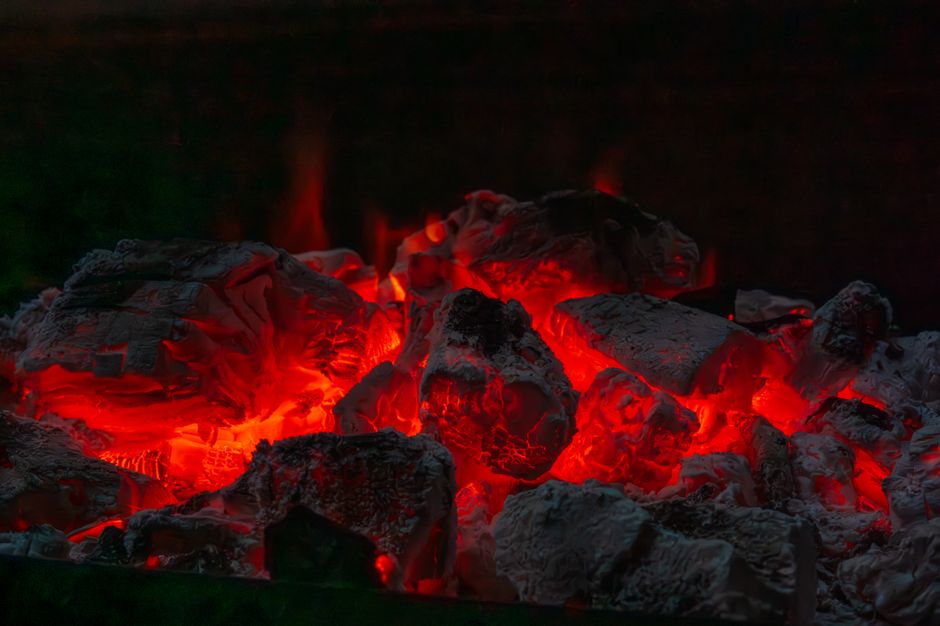
Once the sun goes down, the roof begins to release that heat into the night air. Dry insulation is lightweight and loses its heat quickly. However, wet insulation is heavy and dense; it acts like a battery, storing that solar heat and releasing it much more slowly. When we look through an infrared camera at dusk, the dry areas look dark (cool), while the moisture-laden areas glow brightly (warm).
In some cases, we also look for evaporative cooling. If moisture is on the surface or evaporating from within a porous material, it can actually appear cooler than the surrounding dry areas. Whether it’s a “hot” spot or a “cold” spot, the camera highlights the anomaly, allowing us to see exactly where the water is hiding. For more technical details on how these cameras operate, you can explore the Best Infrared Thermal Cameras for Roof Inspection | Fluke.
Ideal Conditions for Thermal Imaging for Roof Leaks
You can’t just walk onto a roof at high noon and expect to find a leak with an infrared camera. To get accurate results, we need specific environmental “windows.”
- Solar Gain: The roof needs a good “soaking” of sunshine during the day to charge up the thermal mass of any hidden water.
- Clear Skies: A cloudy day won’t provide enough solar loading, and a cloudy night can act like a blanket, preventing the roof from cooling down properly.
- Low Wind: Winds exceeding 15 mph can strip the heat off the roof surface too quickly (convective cooling), “washing out” the thermal patterns we are trying to see.
- The “Golden Hour”: The best time for an inspection is typically 1–4 hours after sunset. This is when the temperature differential between wet and dry materials is at its peak.
- Dry Surface: The roof surface itself must be dry. If it’s raining or there is heavy dew, the camera will only see the temperature of the surface water, not what’s underneath.
If you want to learn more about the types of leaks we often find during these windows, check out our Category/Roof Leak section.
Limitations of Thermal Imaging for Roof Leaks
As cool as this technology is, it isn’t magic. There are certain “Kryptonites” for thermal cameras:
- Inverted Membranes: Roofs where the insulation is on top of the membrane (protected membrane roofs) using extruded polystyrene are notoriously difficult to scan because the ballast or pavers mask the heat signature.
- Highly Reflective Surfaces: New, bright white TPO or shiny metal roofs have low “emissivity.” They act like mirrors, reflecting the temperature of the sky rather than showing their own heat.
- Ponding Water: If there are literal puddles on the roof, the camera can’t “see through” the standing water to the insulation below.
- Heavy Debris: Leaves, dirt, and “roof gunk” create their own thermal signatures that can confuse the results.
- Incompatible Insulation: While most rigid boards (fiberglass, polyiso) scan beautifully, some lightweight concrete or gypsum decks can be tricky to interpret.
Why Infrared Beats Traditional Inspection Methods
In the old days (and unfortunately for many contractors still today), finding a leak involved a lot of guesswork. A visual inspection usually means looking for cracked shingles or soft spots. But water is sneaky—it can enter at a ridge vent in Elkhorn, travel down a rafter, and finally drip onto a ceiling in the living room twenty feet away.
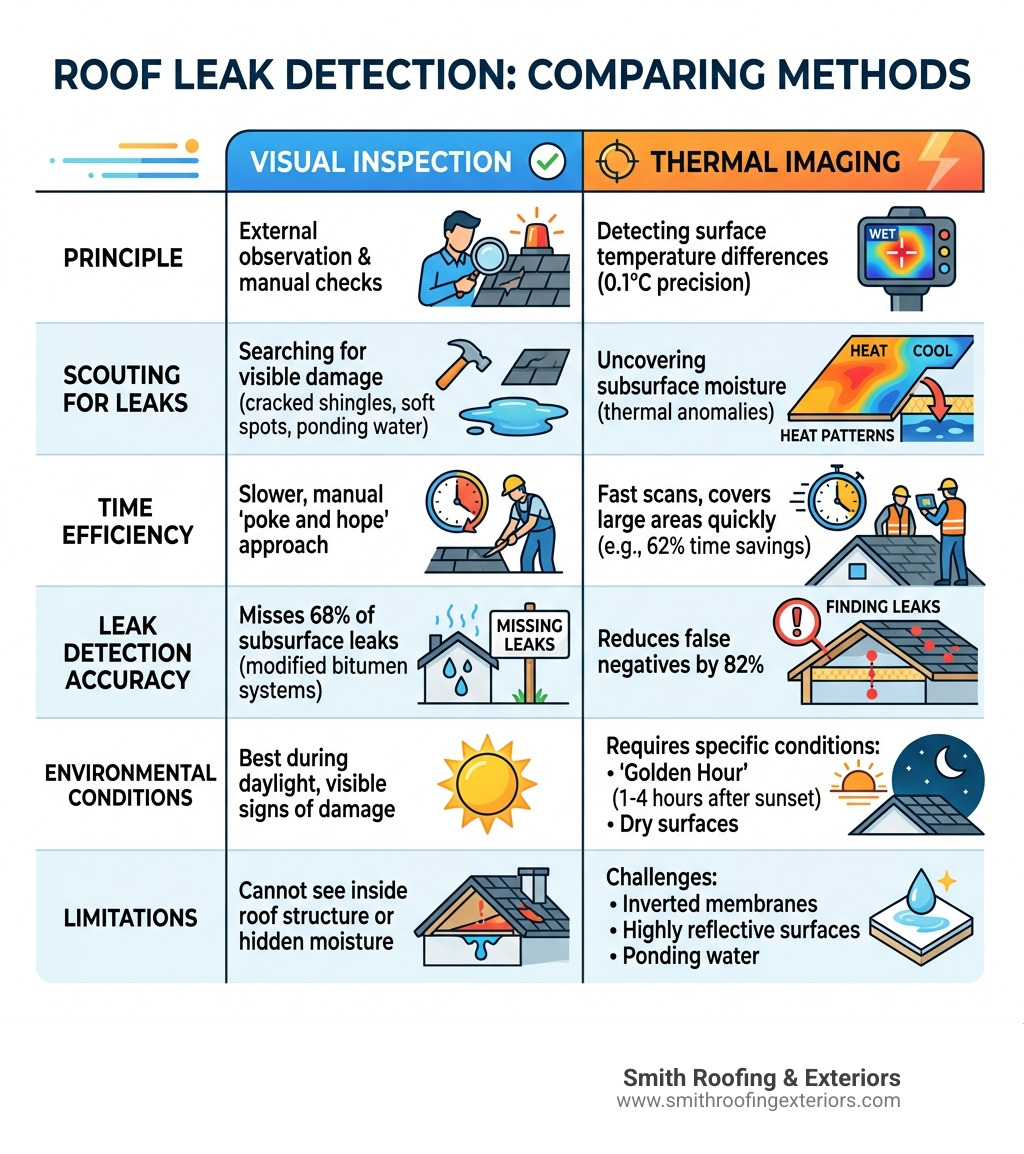
The data doesn’t lie: traditional visual inspections miss a staggering 68% of subsurface leaks in modified bitumen systems. By using thermal imaging for roof leaks, we reduce false negatives by 82%. This is because the camera can detect temperature differences as small as 0.1°C.
Furthermore, the efficiency is unmatched. For a large commercial project, a crew using thermal imaging can inspect 18,000 sq. ft. in about 3.5 hours. Compare that to the 9.2 hours it takes using traditional “poke and hope” methods—that’s a 62% time savings. If you’re wondering why you shouldn’t wait for a visual sign of a leak, read these 5 Reasons To Fix Roof Leaks Asap.
Enhanced Accuracy and ROI
For property owners in Southeastern WI, the return on investment (ROI) for a thermal scan is massive. A single undetected leak can escalate into a $15,000+ repair job within just 12 months as mold grows and structural decking rots.
By catching these issues early, we’ve seen contractors reduce their “callbacks” (having to go back because the leak wasn’t actually fixed) by 23%. Additionally, because thermal images provide “hard evidence,” they are incredibly powerful for supporting insurance claims. Since 34% of insurance claims involve hidden water intrusion, having a radiometric thermal map makes it much harder for an adjuster to deny the extent of the damage. You can read more about how this tech saves money at the Thermal Imaging: The Ultimate Tool to Find Roof Leaks | RoofPredict Blog.
Safety and Large-Scale Efficiency
Safety is our top priority at Smith Roofing & Exteriors. Walking a roof at night can be hazardous. This is where drones and aerial thermography change the game. By mounting high-resolution thermal sensors on a drone, we can survey a massive warehouse roof in Burlington or Delavan without ever putting a foot on a ladder.
This aerial view provides a “birds-eye” perspective that makes it much easier to see the flow patterns of moisture. It also ensures we are compliant with OSHA standards by minimizing “at-height” risks. When we do need to be on the roof, we use two-person teams and never walk backward while looking through the camera viewfinder—a common but dangerous mistake for novices!
Interpreting Patterns and Avoiding False Positives
Reading a thermal image is an art form. It’s not just about finding “hot spots”; it’s about understanding what those spots mean. Different types of insulation create different “signatures”:
- Checkerboard Patterns: These usually occur with absorbent insulation like wood fiber or perlite. As water wicks into the boards, the entire square board glows, creating a grid.
- Window Frame Patterns: These are common with non-absorbent boards like polystyrene. The water can’t get into the board, so it collects in the joints between the boards.
- Thermal Bridges: Sometimes, a “hot” spot isn’t a leak at all—it’s a metal fastener or a structural beam conducting heat from the building interior.
- HVAC Interference: Exhaust vents, steam pipes, and heavy machinery can all create heat signatures that look suspiciously like moisture.
Verification and Industry Standards
Because about 15% of thermal anomalies turn out to be false positives (like a warm spot caused by an old patch or different R-value insulation), we never rely on the camera alone. We follow the ASTM C1153 standard for infrared moisture detection.
Our process involves a “Two-Stage” approach:
- The Scan: We identify the “hot” zones and mark them with chalk or paint.
- The Verification: We use a moisture meter or a small “core sample” (a tiny surgical cut) to confirm that moisture is actually present. This reduces false positives by 40% compared to just taking a photo and leaving.
Understanding the “why” behind your roof’s condition is vital. Learn more about The Difference That A Timely Roof Repair Can Make to see how verification leads to better outcomes.
Frequently Asked Questions about Infrared Detection
How does thermal imaging find a leak if the roof is dry?
The surface of the roof should be dry, but the insulation underneath is what’s wet. The camera isn’t looking for liquid water on top; it’s looking for the heat stored in the soaked material beneath the membrane. Even if it hasn’t rained in three days, that trapped moisture will still hold heat longer than the dry sections.
What is the best time of day for a thermal roof scan?
In the summer and spring, the best time is shortly after sunset (dusk). In the winter, we can sometimes perform “cold scans.” This relies on the heat from inside your home or building escaping through the wet insulation (which has a lower R-value). If the building is heated to 70°F and it’s 20°F outside in Fort Atkinson, the wet spots will glow because they are losing heat faster than the dry, well-insulated spots.
Can thermal imaging see through concrete or heavy ballast?
It’s much harder. Concrete and stone ballast have very high thermal mass themselves, which can “mask” the moisture underneath. While we can sometimes get readings on these roofs, they require much longer cooling periods and very specialized high-sensitivity cameras (detecting differences as small as 0.03°C).
Conclusion
At the end of the day, thermal imaging for roof leaks is about moving from “I think we have a problem” to “I know exactly where the problem is.” Whether you are a homeowner in Lake Geneva worried about ice dam damage or a facility manager in Jefferson responsible for a 50,000 sq. ft. plant, this technology is the ultimate tool for preventative maintenance and long-term budgeting.
Don’t let a “hot mess” turn into a cold, expensive disaster next winter. Our team at Smith Roofing & Exteriors combines local expertise with the latest infrared technology to keep your property dry and your wallet full. If you suspect your roof is hiding a secret, it’s time to see the light—the infrared light.
Schedule a professional roof inspection in Fort Atkinson today and let us give you the peace of mind you deserve.