What Are Commercial Roofing Systems? A Quick Overview
Commercial roofing systems are the complete assemblies of materials used to waterproof, insulate, and protect flat or low-slope roofs on business, industrial, and institutional buildings.
Here are the main types you’ll encounter:
| System Type | Common Materials | Best For |
|---|---|---|
| Single-ply membrane | TPO, PVC, EPDM | Most commercial flat roofs |
| Bituminous / BUR | SBS, APP, multi-layer asphalt | High-traffic or high-durability needs |
| Liquid-applied | Silicone, acrylic, elastomeric | Restoration, irregular surfaces |
| Metal roofing | Steel, aluminum | Sloped commercial buildings |
| Hybrid systems | Membrane + coating combos | Complex or aging roofs |
Each system has its own strengths, cost profile, and ideal use case — and choosing the wrong one for Wisconsin’s freeze-thaw climate can mean premature failure and expensive repairs.
That’s the short answer. But if your building is due for a new roof — or you’re dealing with leaks, aging materials, or rising energy bills — understanding which system fits your specific situation matters a lot.
Commercial roofs aren’t one-size-fits-all. A warehouse in Fort Atkinson has different needs than a healthcare facility or a retail strip. Climate, budget, building structure, and long-term goals all play a role.
I’m Matt Smith, owner of Smith Roofing & Exteriors, and I’ve spent years helping Wisconsin property owners navigate the real-world decisions behind commercial roofing systems — from material selection to installation to long-term maintenance. Let’s walk through everything you need to know to make a confident, informed choice.
Understanding the Main Types of Commercial Roofing Systems
When you look across the skylines of Lake Mills or Jefferson, you’ll see a variety of roof profiles. Most of these are low-slope or “flat” roofs, which require specialized commercial roofing systems to handle standing water and the harsh Wisconsin sun. Choosing the right one is about balancing performance with your building’s specific footprint.
The industry has moved toward more efficient, lighter materials over the last few decades, but traditional methods still hold their ground for certain heavy-duty applications. For a deeper dive into the selection process, you can check out our guide on Choosing The Right Commercial Roofing System For Your Building.
Comparing Single-Ply Commercial Roofing Systems
Single-ply membranes are currently the most popular choice for commercial properties in Southeastern WI. These are large sheets of synthetic materials that are either mechanically fastened, adhered, or induction welded to the roof deck.
- TPO (Thermoplastic Polyolefin): TPO has been a staple in the field for over 20 years. It’s highly reflective, which helps lower cooling costs in the summer. Manufacturers like GAF have innovated this space with products like the EverGuard TPO® 12-foot wide roll. These rolls are 20% wider than standard options, meaning we can install them with fewer seams. Fewer seams mean fewer potential leak points and faster installation times.
- PVC (Polyvinyl Chloride): If your building is a restaurant in Delavan or a manufacturing plant in Elkhorn, PVC might be your best bet. It is exceptionally resistant to chemicals, grease, and fire. Systems like the Duro-Tuff® Single Ply Roofing Membrane offer incredible seam strength because the seams are heat-welded, creating a monolithic, watertight layer.
- EPDM (Ethylene Propylene Diene Monomer): Often called “rubber roofing,” EPDM is a black membrane known for its ability to withstand extreme temperature swings. While it doesn’t reflect heat like white TPO, it is incredibly durable and has a long track record of success in colder climates.
| Feature | TPO | PVC | EPDM |
|---|---|---|---|
| Primary Benefit | Cost-effective & Reflective | Chemical & Grease Resistant | Extremely Durable & Flexible |
| Seam Method | Heat-Welded | Heat-Welded | Tape/Adhesive |
| Typical Color | White, Grey, Tan | White, Grey, Tan | Black |
| Chemical Resistance | Moderate | High | Low |
Bituminous and Built-Up Roofing (BUR) Solutions
Before the rise of single-ply membranes, Built-Up Roofing (BUR) was the gold standard. In fact, Johns Manville pioneered these systems over 160 years ago. These are often called “tar and gravel” roofs. They consist of multiple layers of bitumen (asphalt) alternating with reinforcing fabrics.
The beauty of BUR is its redundancy. If the top layer is punctured, you have several more layers of protection underneath. Modern versions of this include SBS (Styrene-Butadiene-Styrene) and APP (Atactic Polypropylene) modified bitumen membranes. These add “rubberized” or “plasticized” modifiers to the asphalt to make it more flexible and resistant to the cracking that can occur during our Walworth County winters. You can learn more about these multi-layered approaches in our article on Expert Solutions For Commercial Roofing.
The Role of Insulation and Energy Efficiency
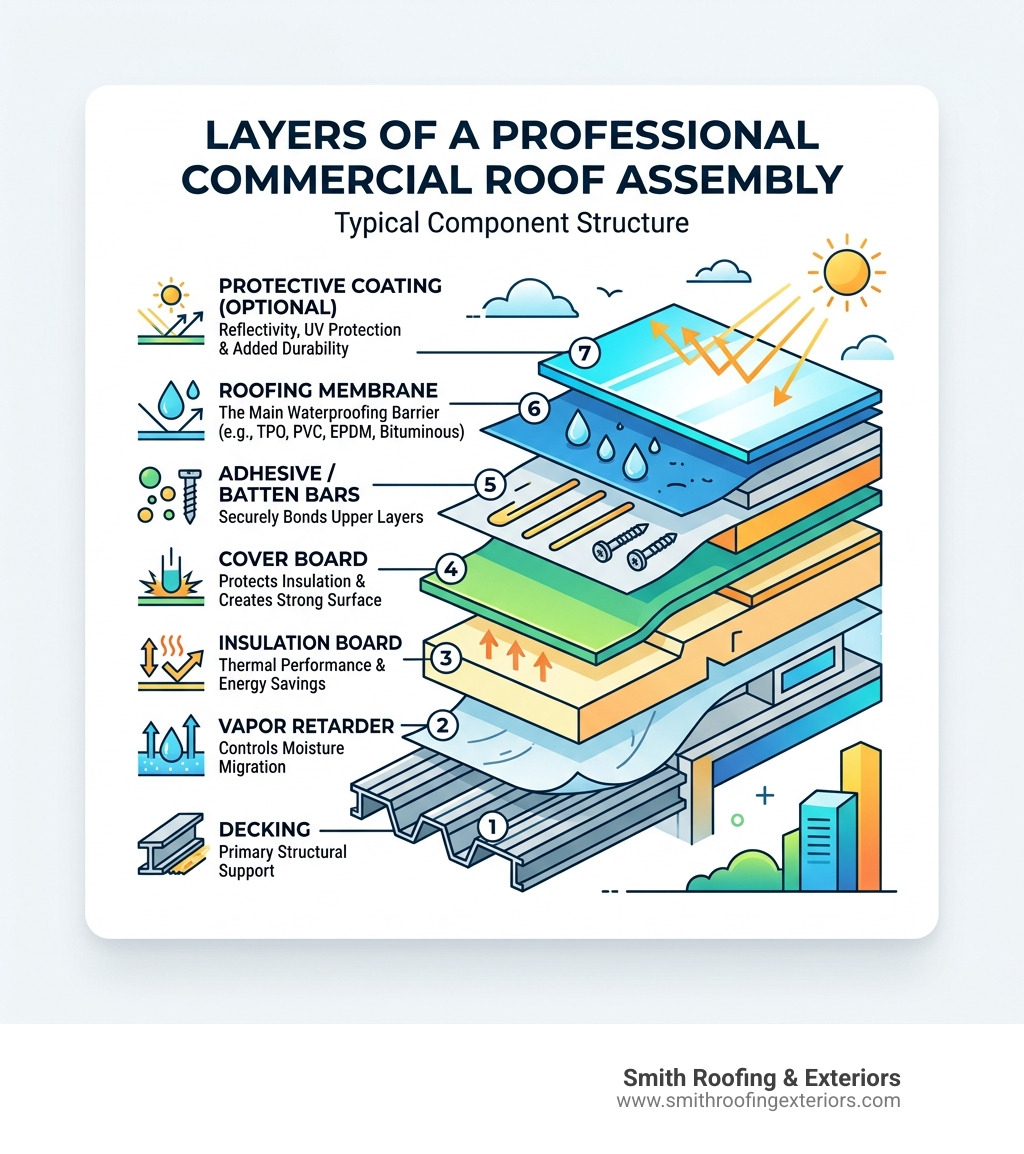
A commercial roof is much more than just the top membrane. What’s underneath—the “insulation sandwich”—determines how much you’ll spend on heating and cooling. In Wisconsin, where we swing from sub-zero winters to humid 90-degree summers, insulation is everything.
Most modern commercial roofing systems utilize Polyisocyanurate (Polyiso) insulation boards. These offer a high R-value (thermal resistance) per inch. We often recommend adding a cover board on top of the insulation. This high-density board protects the softer insulation from hail, foot traffic, and heavy snow loads, while also providing an extra layer of fire resistance.
Sustainability is also a major factor in April 2026. The 179D Energy-Efficient Commercial Buildings Deduction, enhanced by the Inflation Reduction Act, provides tax incentives for buildings that meet specific energy reduction targets. By choosing highly reflective membranes and superior insulation, you aren’t just saving on utilities; you’re potentially qualifying for significant tax breaks. For a comparison of how different materials stack up regarding efficiency, see Metal Vs Rubber Choosing The Right Commercial Roofing System.
Extending Lifespan with Roof Coatings and Waterproofing
Not every aging roof needs a full tear-off. In many cases, we can use liquid-applied systems to restore an existing roof. These coatings—available in silicone, acrylic, and elastomeric formulations—are sprayed or rolled on to create a seamless, watertight barrier.
- Life Extension: A properly applied coating can add 10 to 15 years to the life of your roof.
- Reflectivity: Like white TPO, reflective coatings can significantly reduce the “heat island” effect on your building.
- Waterproofing: Products like GAF’s HydroStop™ are excellent for metal roofs or complex asphaltic systems, sealing up leaks without the need for heavy construction.
This is a strategic business move. Investing in waterproofing now can save you from the massive capital expenditure of a full replacement. We’ve seen many Fort Atkinson property owners successfully use these Commercial Reroofing And Restoration Strategies to balance their budgets while keeping their inventory dry.
Selecting and Installing Your New Roof
The installation method is just as important as the material. For example, if we are working on a hospital in Lake Geneva or a school in Edgerton, we might choose an induction welding system. This allows us to secure the membrane to the plates underneath using heat, rather than piercing the membrane with thousands of fasteners. It’s a quieter, faster, and very secure way to install PVC and TPO.
Other methods include:
- Mechanically Fastened: Using screws and plates to secure the roof. Best for buildings that can handle the vibration.
- Fully Adhered: Using specialized adhesives to bond the membrane to the substrate. This is excellent for high-wind areas.
- Custom Fabrication: Some manufacturers, like Duro-Last, offer custom-fabricated systems. They measure your roof and create large sections (up to 1,500 sq. ft.) in the factory, including flashings and accessories. This moves the labor from the roof to a controlled environment, ensuring a better fit and fewer leaks.
If you’re wondering whether your building would be better suited for a different shape altogether, read our comparison on Flat Vs Sloped Commercial Roofing Which Is Best.
Maintenance Strategies for Commercial Roofing Systems
We always tell our clients in Burlington and Delavan: “A roof is an asset, not a ‘set it and forget it’ item.” To get the full 20, 30, or even 50 years out of your system, you need a maintenance plan.
- Bi-Annual Inspections: We recommend checking the roof in the spring (after the snow melts) and in the fall (before the ice arrives).
- Core Cuts: Sometimes, we need to see what’s happening underneath. A core cut allows us to check for moisture in the insulation layers that isn’t visible from the surface.
- Drainage Clearing: Clogged drains are the #1 cause of commercial roof failures. Standing water adds immense weight and eventually finds a way into the building.
- Immediate Repairs: Small leaks can escalate into major structural issues. Our team provides Commercial Roof Repair In Fort Atkinson to catch these problems before they become catastrophes.
Understanding Manufacturer Warranties and Performance
Warranties are your safety net. Leading manufacturers now offer some of the most robust guarantees in history. For instance, the Duro-Life 600 system is designed to provide 600 months—that’s 50 years—of performance. This is achieved through a combination of high-grade PVC membranes and DuPont Styrofoam insulation.
GAF also offers PVC guarantees up to 30 years. When reviewing a warranty, look for an NDL (No Dollar Limit) warranty. This means the manufacturer is responsible for the full cost of repairs (labor and materials) if the system fails due to manufacturing defects or even certain installation errors, rather than just pro-rating the cost of the material.
Frequently Asked Questions about Commercial Roofing
What is the longest-lasting commercial roofing system?
While standard membranes last 20-30 years, the Duro-Life 600 system is currently the leader with a 50-year performance goal. Multi-ply Built-Up Roofing (BUR) also has a legendary lifespan, often lasting 40+ years when maintained correctly because of its redundant layers.
How do TPO and PVC roofing systems differ?
The main difference is chemical composition. PVC is highly resistant to chemicals, oils, and greases, making it the standard for restaurants and factories. TPO is generally more cost-effective and offers excellent UV resistance, making it the “go-to” for warehouses and retail centers. Both are heat-weldable and highly reflective.
Can I install a new roof over my existing one?
In many cases, yes! This is called a “recover.” By installing a lightweight PVC or TPO membrane over the old roof, you can save 30% to 70% on costs by avoiding the labor and disposal fees of a tear-off. However, we must perform a moisture scan and structural assessment first; if the existing insulation is wet, it must come off.
Conclusion
Navigating commercial roofing systems can feel like a full-time job, but you don’t have to do it alone. Whether you’re managing a facility in Jefferson County or a retail space in Walworth County, the right roof is an investment in your business’s future.
At Smith Roofing & Exteriors, we take pride in being a local Fort Atkinson team that understands the specific challenges of Southeastern Wisconsin weather. We offer transparent pricing, superior materials from manufacturers like GAF and Duro-Last, and 24/7 emergency services because we know leaks don’t wait for business hours.
Ready to protect your investment? Contact our commercial roofing experts in Fort Atkinson for a professional consultation and let’s find the system that works best for you.