Why Gutter Failure Is a Bigger Problem Than Most Homeowners Realize
Gutter failure is one of the most common — and most overlooked — causes of serious home damage in Wisconsin. When gutters stop working, water doesn’t just drip off your roof. It pools at your foundation, rots your fascia, floods your basement, and erodes your landscaping.
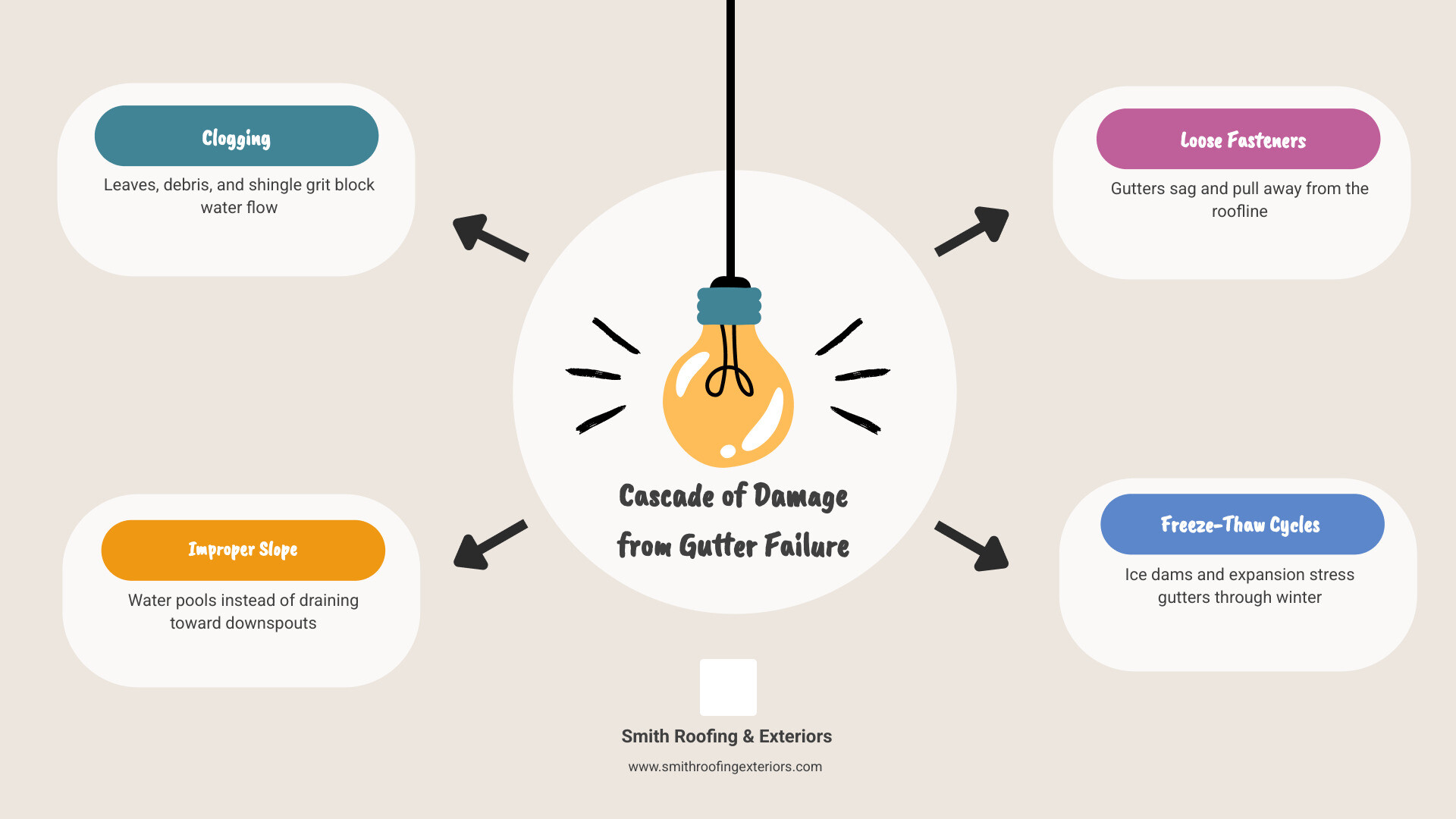
Here’s a quick look at the most common causes of gutter failure:
- Clogging — leaves, debris, and shingle grit block water flow
- Improper slope — water pools instead of draining toward downspouts
- Loose or failed fasteners — gutters sag and pull away from the roofline
- Aging materials — aluminum gutters last 20–30 years; older systems break down
- Too few downspouts — system gets overwhelmed during heavy rain
- Freeze-thaw cycles — ice dams and expansion stress gutters through Wisconsin winters
- Poor original installation — incorrect pitch, wrong sizing, or bad seam placement
One inch of rain on a 1,000 square-foot roof produces over 620 gallons of runoff. Your gutters have one job: move all of that water away from your home safely. When they fail, that water goes somewhere it shouldn’t.
I’m Matt Smith, owner of Smith Roofing & Exteriors, and after years of inspecting and repairing homes across rural Wisconsin, gutter failure is one of the leading causes of preventable structural damage I see on the job. Let’s walk through exactly what’s going wrong — and what you can do about it.
Telltale Signs of Gutter Failure

Detecting gutter failure early can save you thousands of dollars in secondary repairs. While some issues are obvious during a torrential downpour, others are subtle “silent killers” of your home’s exterior.
One of the most frequent sights we see in Fort Atkinson and Lake Mills is sagging sections. If your gutters look like they are dipping or pulling away from the house, the hangers have likely loosened or the weight of debris has bent the metal. This creates a “low spot” where water pools, leading to rust and eventual collapse.
Keep an eye out for these other warning signs:
- Peeling Paint and Rust: If you see paint flaking off your siding or the gutters themselves, it’s a sign that water is constantly overflowing or leaking through the metal.
- Pooling Water: If you notice puddles around your foundation hours after the rain stops, your gutters aren’t doing their job of directing water far enough away.
- Landscape Erosion: Are there “trenches” in your mulch or soil directly beneath the roofline? This is a classic sign of water spilling over the edge.
- Siding Stains: Dark streaks or “tiger stripes” on your siding indicate that water is running down the face of the gutter rather than through it.
- Gutter Gardens: If you see grass or weeds growing out of your roofline, you have a major clog that has turned into fertile soil.
- Bad Odors: Rotting leaves and stagnant water in a failed gutter system can create a swampy smell that attracts pests.
If you’re noticing these red flags, it’s worth reviewing the top signs that it’s time for gutter replacement or looking into these 5 indications that it’s time for gutter repair to determine your next steps.
Root Causes: Why Gutters Fail

Understanding why gutter failure happens is the first step toward prevention. In Southeastern Wisconsin, we face unique climate challenges that put a lot of stress on our drainage systems. The U.S. Environmental Protection Agency explains why directing water away from your foundation matters, and that same principle applies to keeping your gutter system working properly.
Improper Slope and Pitch
Gravity is the engine that makes gutters work. For water to flow correctly, gutters must be pitched toward the downspouts. A common industry standard is a minimum slope of 1/16 inch to 1/4 inch per 10 linear feet. If the pitch is too flat, water stands still; if it is too steep, the water can overshoot the downspout or look crooked against your roofline.
Clogging and Debris
Clogging is the leading cause of gutter failure. When leaves, twigs, and shingle granules accumulate, they create dams. These dams trap water, which adds immense weight to the system. A gallon of water weighs about 8.3 pounds; a gutter filled with several gallons of water and wet sludge can easily weigh over 100 pounds, causing hangers to fail.
The Wisconsin Winter Factor
Our freeze-thaw cycles in places like Jefferson and Elkhorn are brutal on gutters. Ice dams form when snow melts on the roof and refreezes in the cold gutter. This ice can weigh hundreds of pounds per linear foot. Furthermore, as water freezes and expands, it can pop seams open and loosen the fasteners that hold the system to your home.
Aging Materials and Spike-and-Ferrule Failure
Materials do not last forever. Aluminum gutters typically last 20 to 30 years, while vinyl might only last 10 to 15 years in our harsh climate. Many older homes in Walworth and Burlington still have “spike-and-ferrule” systems – large nails driven through the gutter into the wood. Over time, the wood fibers compress and rot, causing the spikes to pull out. Modern hidden hangers with heavy-duty screws are a much more reliable solution.
The Structural Impact of Gutter Failure
When we talk about gutter failure, we aren’t just talking about a leaky piece of metal. We are talking about the structural integrity of your entire home. Water is a powerful force of nature; when it isn’t controlled, it finds its way into the smallest cracks and begins to dismantle your property from the outside in.
Ignoring these issues can lead to a “cascade of failure.” This is why it is vital to understand the 5 reasons to fix gutter problems ASAP and recognize how clogged gutters damage your home and your wallet.
How Gutter Failure Damages Your Foundation
The most expensive repair a homeowner can face is foundation remediation. When gutters overflow, they dump hundreds of gallons of water directly at the base of your home. This saturates the soil, creating hydrostatic pressure. This pressure pushes against your basement walls, leading to:
- Wall Bowing and Cracking: The sheer weight of the wet earth can cause concrete blocks to shift or crack.
- Basement Flooding: Water will eventually find its way through the floor-wall joint or through cracks in the foundation.
- Soil Erosion: Water can wash away the soil supporting your foundation, leading to “settling” and uneven floors.
If you’ve seen water in your basement after a storm, check out how overflowing gutters can ruin your basement and foundation.
Roof and Fascia Damage from Gutter Failure
The “roofline” is the first area to suffer when gutters fail. If water pools in a sagging gutter, it often wicks backward into the fascia board (the wood the gutter is attached to).
- Fascia and Soffit Rot: Constant moisture leads to wood decay. Once the fascia rots, it can no longer hold the gutter hangers, causing the whole system to fall off.
- Rafter Decay: If the rot spreads, it can reach the ends of your roof rafters, requiring expensive structural timber repairs.
- Mold and Pests: Damp wood is a magnet for carpenter ants, termites, and mold growth that can eventually move into your attic.
Proper maintenance is the best defense, and you can learn more about how gutter repair can help protect your roof and foundation here.
Repair vs. Replacement: Making the Right Choice
As a homeowner in Southeastern Wisconsin, you might wonder if you can get away with a quick fix or if you need to start fresh. Here is a breakdown of how we typically evaluate the situation:
| Issue | Recommended Action | Why? |
|---|---|---|
| Small leak at a seam | Repair | Can often be resealed with high-grade gutter sealant. |
| Loose hanger | Repair | Replacing a single hanger or screw is a simple maintenance task. |
| Widespread sagging | Replacement | Usually indicates the fascia is rotted or the metal is permanently warped. |
| Rust and multiple holes | Replacement | Once the metal has corroded through, “patches” are only temporary. |
| System is 25+ years old | Replacement | Most aluminum systems are at the end of their functional life. |
Understanding when gutter replacement becomes necessary is key to making a smart investment. If you’re on the fence, remember the dangers of ignoring gutter repair—the cost of new gutters is a fraction of the cost of a new foundation.
Proactive Strategies to Prevent Gutter Failure
Prevention is always cheaper than a cure. To avoid the headache of gutter failure, we recommend a multi-layered approach to home maintenance.
Maintenance and Protection Systems
The most effective way to prevent clogs is to stop debris from entering the system in the first place.
- Gutter Guards: Systems like Leaf Relief or stainless steel micro-mesh covers allow water in while keeping leaves out. This significantly reduces the need for ladder-climbing.
- Seasonal Cleaning: Even with guards, you should inspect your system twice a year—once in the spring to clear winter grit and once in the fall after the leaves have dropped.
- Downspout Extensions: Ensure your downspouts discharge water at least 5 to 10 feet away from your foundation.
For those who prefer to leave it to the pros, using reliable gutter cleaning services is the best way to ensure your home stays protected year-round.
The Role of Professional Installation
Many gutter failure cases we see in Lake Geneva and Delavan are the result of poor initial installation.
- Seamless Gutters: Traditional sectional gutters have seams every 10 to 20 feet. Every seam is a potential leak point. Seamless gutters are custom-fabricated on-site to fit your home perfectly, eliminating 90% of potential failure points.
- Proper Sizing: A standard 5-inch gutter is fine for most homes, but large, steep roofs in Wisconsin often benefit from 6-inch “oversized” gutters to handle heavy snowmelt and spring downpours.
- Hidden Hangers: We use heavy-duty screw-in hangers spaced every 24 to 30 inches to ensure the system can handle the weight of ice and snow.
Frequently Asked Questions about Gutter Failure
How long do aluminum gutters typically last?
In our region, you can expect 20 to 30 years from a high-quality aluminum gutter system. However, this lifespan can be cut in half if they aren’t cleaned regularly. Standing water leads to corrosion, and heavy ice loads can warp the metal, leading to early gutter failure.
Can I replace my gutters without replacing my roof?
Yes! Gutters and roofs are independent systems. While it is often convenient to do both at once, we frequently replace gutter systems for homeowners in Edgerton and Walworth whose roofs still have 10 or 15 years of life left. We simply ensure the new gutters are tucked properly under the existing drip edge.
How often should I clean my gutters to avoid failure?
We recommend a bi-annual inspection. Spring is critical for removing the “shingle grit” and twigs that accumulate during winter storms. Fall is essential for removing leaves that will otherwise freeze into a solid block of ice come December.
Conclusion
At Smith Roofing & Exteriors, we believe your gutters are the unsung heroes of your home’s exterior. From Fort Atkinson to Lake Geneva, our team is dedicated to ensuring your drainage system is up to the task of protecting your investment. Whether you need a simple repair or a full seamless upgrade, we provide the local expertise and transparent pricing you deserve.
Don’t wait for a basement flood to take action. Understanding the 4 types of property damage that faulty gutters can cause is the first step toward a drier, safer home.
Ready to protect your home?
Contact Smith Roofing & Exteriors today for a professional diagnosis of your gutter system. We’ll help you stop the leaks before they become a foundation disaster!