When Your Roof Fails at Night: What to Do Right Now
If you’re dealing with a 24/7 roof emergency, here’s what to do immediately:
- Stay safe — avoid the damaged area and turn off power to any circuits where water is dripping near electrical fixtures
- Contain the water — place buckets under active drips and move valuables away from the affected area
- Document everything — take photos of all visible damage from a safe location before touching anything
- Call a professional now — do not attempt to climb on a wet or damaged roof yourself
- Protect the interior — cover furniture and floors with plastic sheeting to limit secondary damage
It’s 2 a.m., rain is hammering your Wisconsin farmhouse, and you hear the unmistakable drip of water hitting your hardwood floor. A 24/7 roof emergency doesn’t wait for business hours — and in a harsh Midwest climate, every minute of delay matters. Moisture can begin causing mold and structural damage in as little as 24 to 48 hours, which means a leak that starts tonight can turn into a far more costly problem by morning.
This guide walks you through everything — from the moment you spot the damage to the final permanent repair.
I’m Matt Smith, owner of Smith Roofing & Exteriors, and handling a 24/7 roof emergency is something I’ve done for homeowners across Wisconsin through some of the region’s toughest storms. I’ll show you exactly what to do so you can protect your home and keep your cool when it counts most.
Identifying a True 24/7 Roof Emergency
Not every missing shingle requires a call at three in the morning, but knowing when to pull the trigger on an emergency dispatch can save you thousands of dollars in secondary damage. A true 24/7 roof emergency is any situation that poses an immediate threat to your property’s interior, its structural integrity, or the safety of your family.
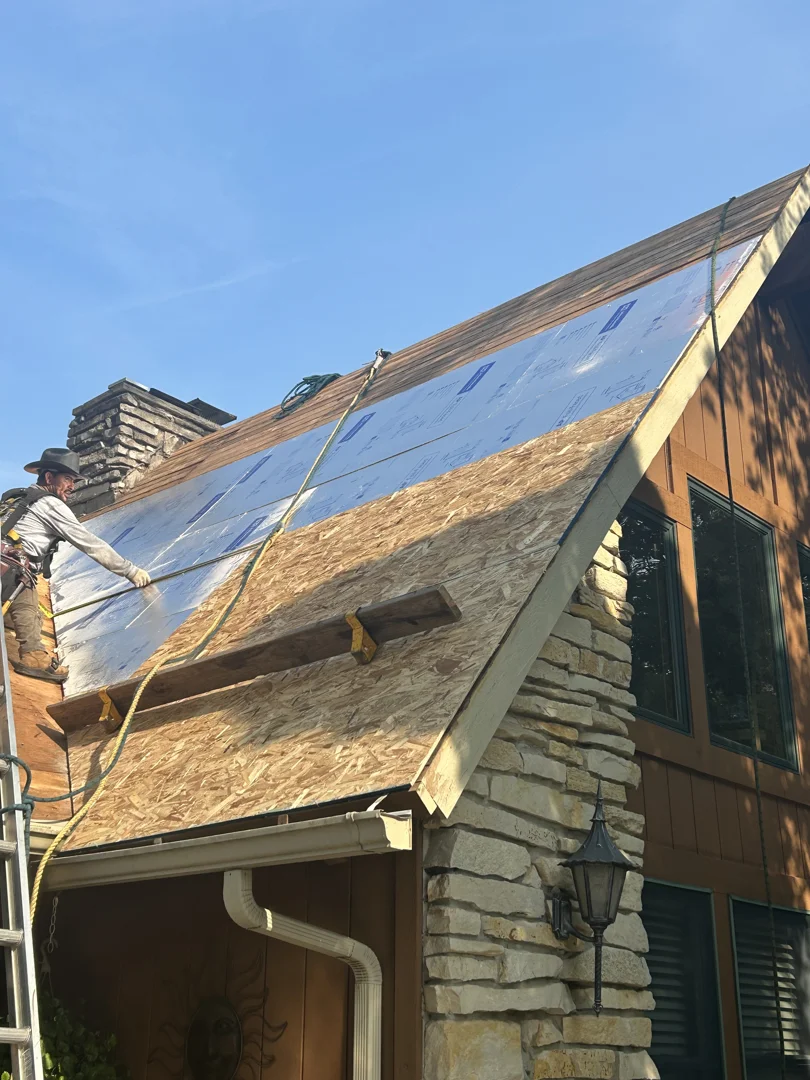
At Smith Roofing & Exteriors, we categorize emergencies into a few critical buckets:
- Active Interior Leaks: If water is actively dripping into your living space, it is an emergency. Water doesn’t just ruin drywall; it travels along beams, saturates insulation, and can lead to electrical fires if it reaches light fixtures or outlets.
- Structural Impact: A fallen tree limb that has punctured the roof deck is a high-priority emergency. This isn’t just about a leak; it’s about the physical stability of your home.
- Large Sections of Missing Shingles: If the wind has stripped away significant portions of your roofing, leaving the underlayment or wood decking exposed, your home is defenseless against the next wave of rain.
- Fire Damage: After the fire department has done their job, the roof is often left with holes that must be stabilized immediately to prevent weather damage from finishing what the fire started.
Understanding when to call for emergency roof repair and what happens next is the first step in maintaining your home’s value. If the “envelope” of your house is breached, the clock is ticking.
Common Causes of a 24/7 Roof Emergency
Why do roofs fail when we least expect it? In our experience serving Fort Atkinson and the surrounding areas, several culprits usually lead to a middle-of-the-night crisis.
Wind Uplift is a major factor. High winds don’t just blow on a roof; they create a vacuum effect that can lift shingles right off the deck. If your shingles are older or the seal strips have failed, a strong gust can peel them back like an orange.
Hail Impact is another silent killer. While a hail storm might not cause a leak tonight, it bruises the shingle’s asphalt mat, leading to rapid deterioration and “granule loss.” Over time, these spots become the entry points for water.
We also see many emergencies caused by Flashing and Pipe Boot Failures. Flashing is the metal material used at joints (like chimneys or valleys), and pipe boots are the rubber seals around plumbing vents. These components often wear out faster than the shingles themselves. When a seal cracks, water flows directly into your attic. For a deeper dive, check out these common causes that lead to emergency roof repair.
Regional Weather Risks and 24/7 Roof Emergency Needs
Living in Southeastern Wisconsin means our roofs have to be tougher than most. From the humid summers in Lake Geneva to the brutal winters in Elkhorn, our local weather patterns create specific risks.
- Ice Damming): This is a classic Wisconsin winter emergency. When snow melts on the upper parts of the roof and refreezes at the cold eaves, it creates a dam. Subsequent meltwater backs up under the shingles and into your walls.
- Heavy Snow Loads: Excessive snow weight can cause structural sagging or even collapse on older buildings or flat commercial roofs.
- Spring Thunderstorms: High winds and sudden downpours are the primary drivers for a 24/7 roof emergency in the warmer months.
Whether you need expert residential roofing services in Walworth, WI or a rapid response in Jefferson, understanding these local threats helps us prepare the right materials before we even leave our shop.
Immediate Steps to Take Before Help Arrives
The period between discovering a leak and the arrival of our crew is critical. While your instinct might be to grab a ladder, stay off the roof. Wet roofs are incredibly slippery, and storm-damaged structures may be unstable.

Instead, focus on interior mitigation:
- Relieve Water Pressure: If you see a bulge in your ceiling where water is pooling, it might seem counterintuitive, but poking a small hole in the center with a screwdriver can relieve the pressure. This allows the water to drain into a bucket in a controlled way, rather than having the entire ceiling collapse under the weight.
- Clear the Area: Move furniture, electronics, and heirlooms. If an item is too heavy to move, cover it with heavy-duty plastic sheeting or even trash bags.
- Document for Insurance: Take clear photos of the leak, any pooling water, and the damage to your interior. This is vital evidence for your claims adjuster later.
| Action | DIY Mitigation (Inside) | Professional Stabilization (Outside) |
|---|---|---|
| Safety | High (Safe on ground) | Dangerous (Requires harness/gear) |
| Water Control | Catching drips in buckets | Applying heavy-duty tarps |
| Tools Needed | Buckets, towels, plastic | Ladders, roofing nails, 2x4s |
| Goal | Protect belongings | Stop the entry of water |
Following these emergency roof repair after a storm: what to do steps will keep you safe while we are en route to your property.
The Professional Emergency Response and Repair Process
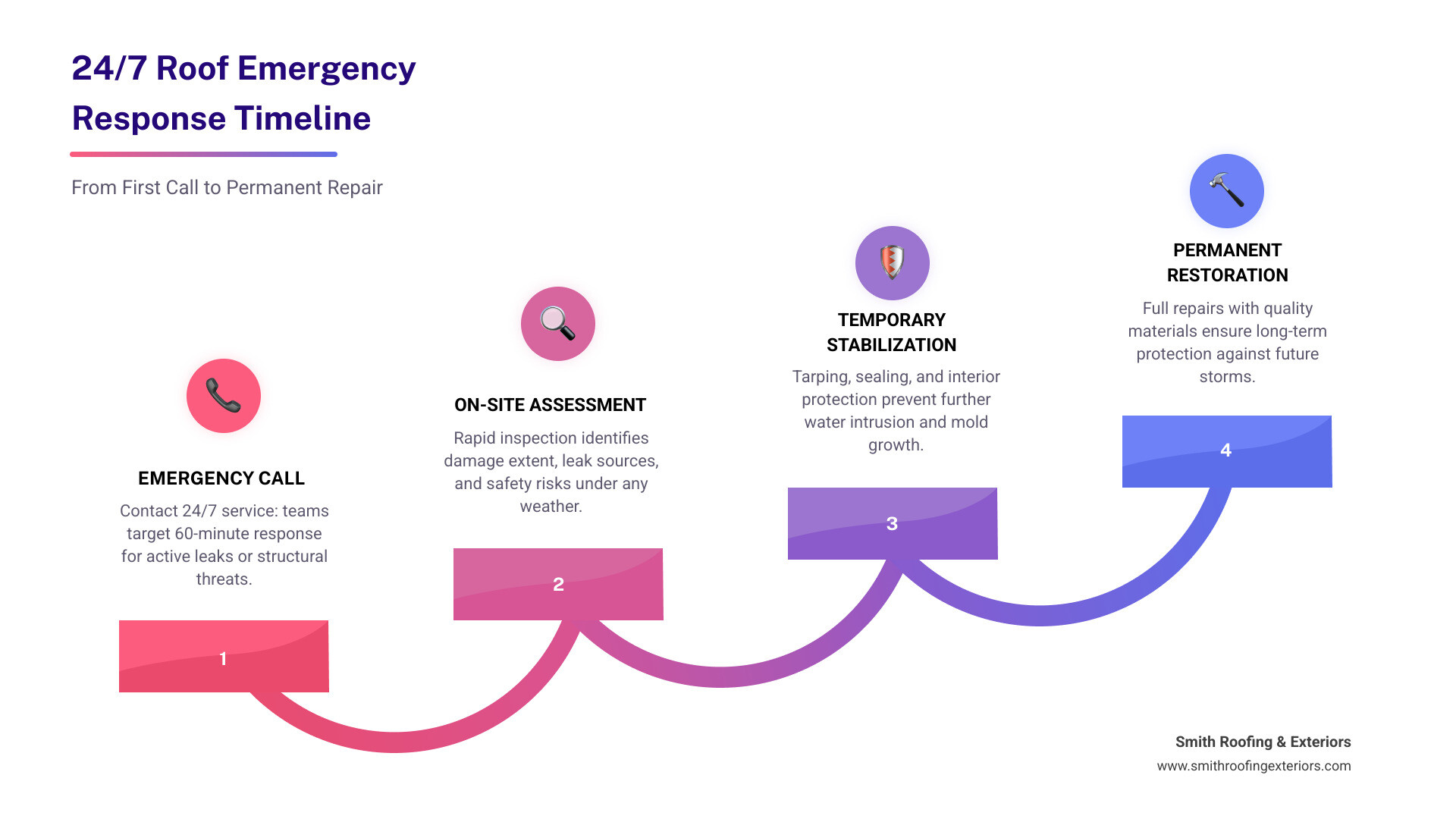
When you call for a 24/7 roof emergency, we don’t just show up with a flashlight and a “good luck.” Our process is designed to stabilize your home as quickly as possible.
- Rapid Dispatch: We aim for the fastest possible response time. Our trucks are pre-stocked with generators, high-powered lighting, and specialized weatherproofing materials.
- Initial Assessment: We perform a rapid but thorough inspection to find the “source” of the leak. Water rarely enters the house directly below where it drips; it often travels down rafters first.
- Emergency Tarping: This is the most common stabilization method. We use professional-grade, UV-rated tarps (not the thin blue ones from the hardware store). We secure these using wooden “battens” (2x4s) screwed through the tarp into the roof. This ensures the wind won’t blow the tarp away.
- Leak Detection: If the cause isn’t obvious, we use advanced techniques to trace the moisture path, ensuring we aren’t just covering a symptom but addressing the cause.
- Stabilization vs. Restoration: The emergency visit is about stabilization—making your home weather-tight. Once the storm passes and the roof is dry, we return for the permanent restoration.
You can learn more about what to expect from emergency roof repair contractors to help lower your stress levels during the process.
Navigating Insurance Claims for a 24/7 Roof Emergency
One of the biggest stressors in a 24/7 roof emergency is the cost. The good news is that most homeowner insurance policies cover “sudden and accidental” damage, such as storm impact or fallen trees.
In fact, most policies require you to take immediate action to mitigate damage. If you ignore a leak and let mold grow, the insurance company may deny the secondary damage claim because you didn’t fulfill your “mitigation duty.”
At Smith Roofing & Exteriors, we act as your advocate. We provide:
- Detailed Estimates: We break down exactly what is needed to meet local building codes.
- Photo Evidence: We document the “before” state of the damage to prove the cause to your adjuster.
- Coordination: We can work directly with adjusters to ensure they have the documentation they need to process your claim efficiently.
Our team knows how to help with Fort Atkinson emergency roof repair help, including the tricky paperwork that comes with storm damage.
Why Local Expertise Matters for Wisconsin Storms
When a major storm hits Southeastern Wisconsin, “storm chasers” often flood the area. These are out-of-state contractors who follow the weather, do quick (and often sub-par) work, and vanish before the first snow hits.
Choosing a local, family-owned team like Smith Roofing & Exteriors offers several advantages:
- GAF Master Elite Status: We are part of the top 3% of roofers in the country. This isn’t just a badge; it means we are vetted, insured, and trained to the highest industry standards.
- Regional Knowledge: We know that a roof in Fort Atkinson needs different ventilation than one in Florida. We understand ice dams and the specific thermal stresses our Wisconsin roofs endure.
- Accountability: We live here. Our reputation in Burlington, Delavan, and Lake Mills is everything to us. If there’s an issue with a repair, you know exactly where to find us.
For residents looking for Fort Atkinson emergency roof repair help, we are just a phone call away, 24 hours a day, 365 days a year.
Frequently Asked Questions about Emergency Roofing
How much does emergency roof tarping typically cost?
The cost of emergency stabilization varies based on the size of the area, the pitch (steepness) of the roof, and the time of day. Generally, professional tarping ranges from $300 to $1,500. This fee covers the labor of working in hazardous conditions, the heavy-duty materials, and the rapid dispatch. This is often covered by insurance as part of your mitigation requirements.
How quickly can an emergency roofing team respond?
While response times can vary during a massive regional storm event when everyone is calling at once, we generally aim for a 60-minute target for local dispatch. Being based in Fort Atkinson allows us to reach our neighbors in Lake Mills, Jefferson, and Edgerton very quickly.
Can a roof be repaired during an active rainstorm?
We cannot perform permanent repairs (like shingling or hot-patching) during active rain because the adhesives won’t bond and the materials won’t seal. However, we can and do perform emergency stabilization. We can install heavy-duty tarps and temporary sealants even in the rain to stop the water from entering your home. Once things dry out, we return for the emergency roof repair: immediate steps for homeowners that lead to a permanent fix.
Conclusion
A 24/7 roof emergency is a test of any homeowner’s patience, but it doesn’t have to be a disaster. By staying calm, prioritizing safety, and calling a trusted local professional, you can protect your home from the worst of the Wisconsin weather.
At Smith Roofing & Exteriors, we’ve built our business on the idea that our neighbors deserve peace of mind. Whether it’s a minor leak or major storm damage, we provide the transparent pricing and expert craftsmanship you need to get your life back to normal.
Don’t let a midnight leak ruin your week. If you’re worried about your roof’s integrity, protect your home with Walworth residential roofing services or contact us for a professional inspection today.