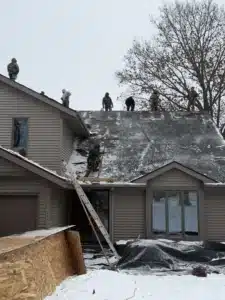
What to Do Before Hail Damage Roof Repairs
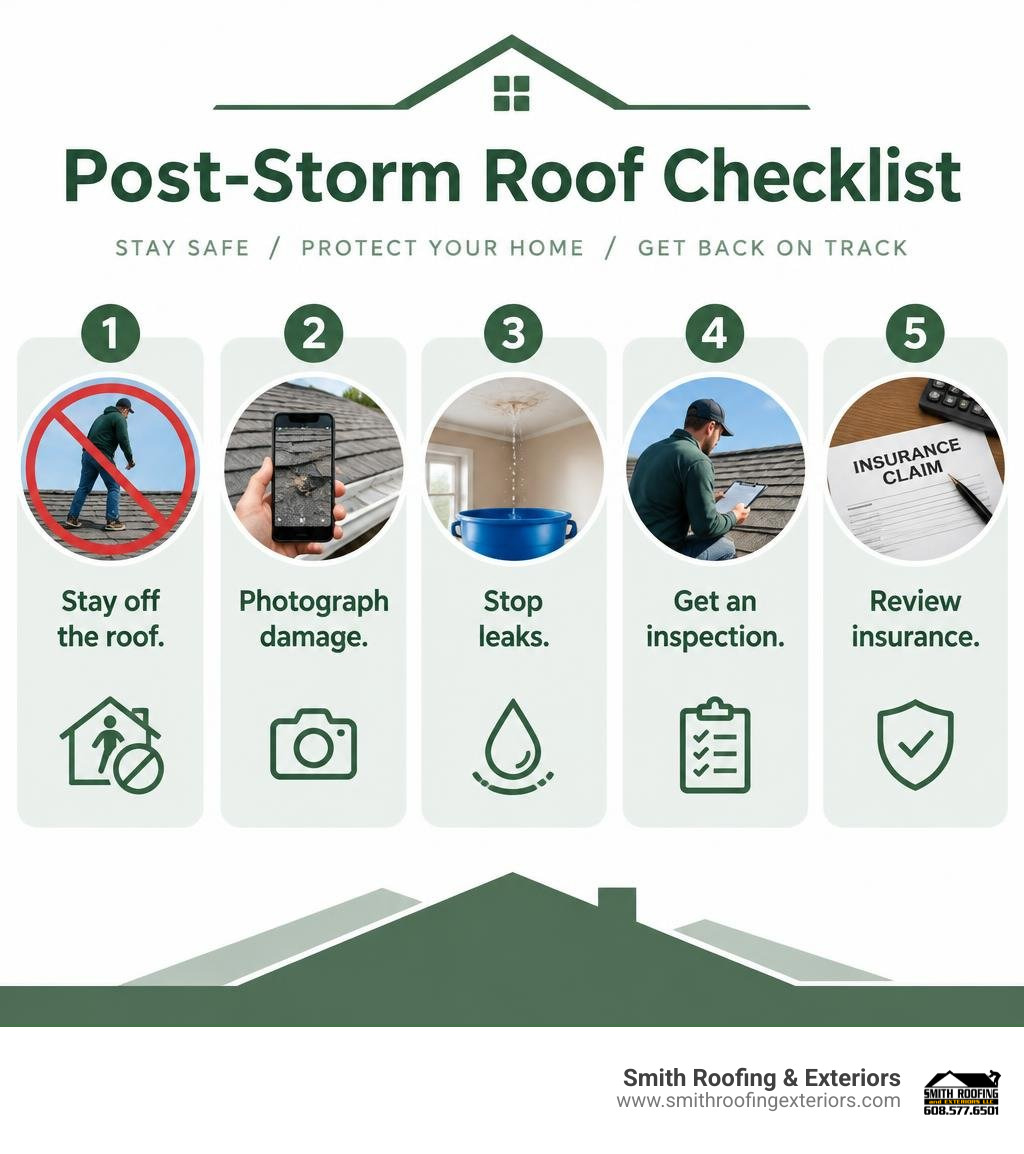
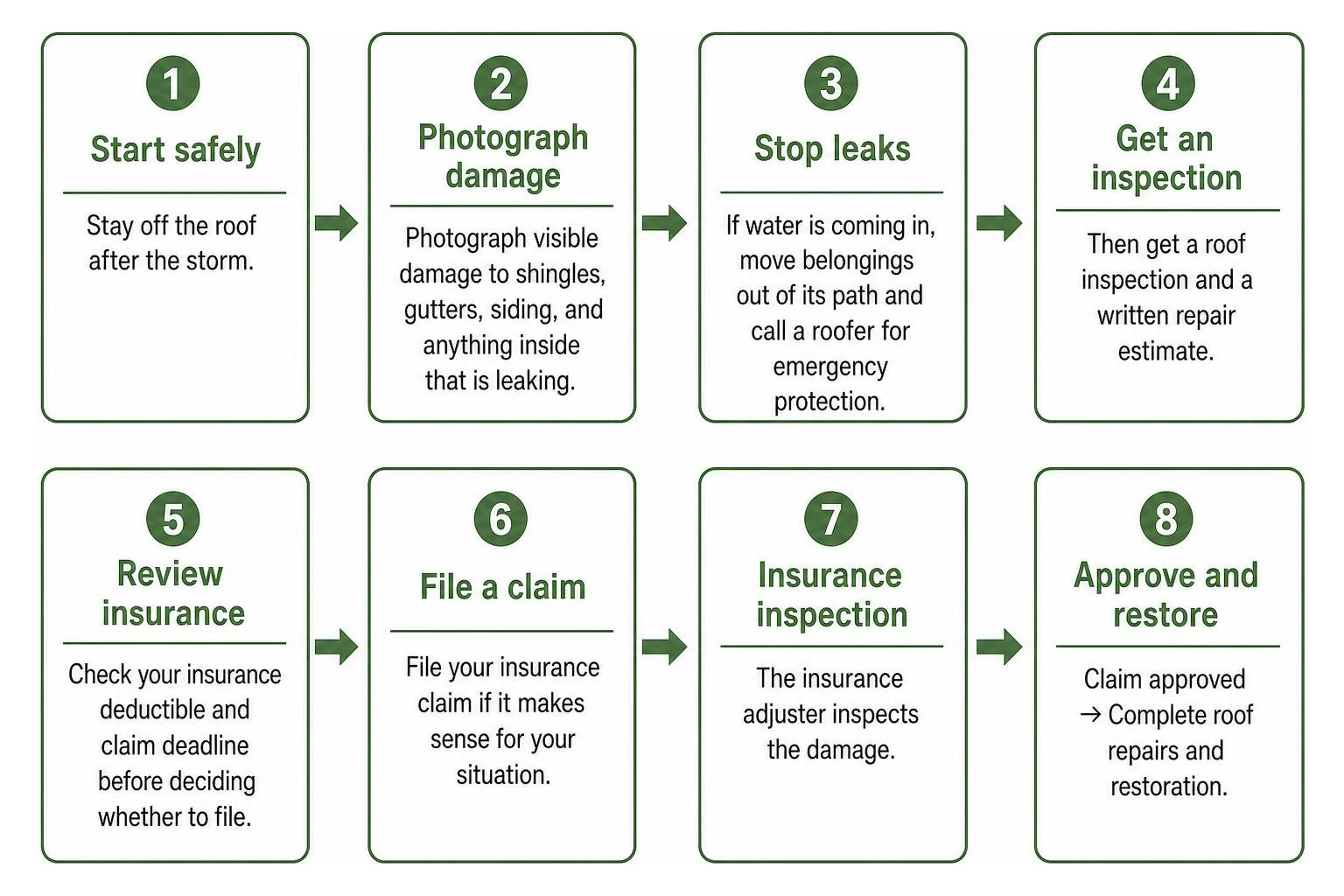
Start safely: Stay off the roof. Photograph visible damage to shingles, gutters, siding, and anything inside that is leaking. If water is coming in, move belongings out of its path and call a roofer for emergency protection. Then get a roof inspection and a written repair estimate. Check your insurance deductible and claim deadline before deciding whether to file.
Hail damage is not always easy to see from the ground. A professional can check whether the damage is limited to a few areas or whether the roof needs more extensive work.
I’m Matt Smith, owner of Smith Roofing & Exteriors in Fort Atkinson. I work directly with homeowners on roofing projects, helping them understand their options and pricing, including when they’re planning hail damage roof repairs.
Basic hail damage roof repairs vocab:
Step-by-Step Guide to Hail Damage Roof Repairs and Insurance Claims
When severe weather sweeps through southeastern Wisconsin, assessing your home quickly prevents minor leaks from turning into major structural headaches. We always recommend starting with a ground-level inspection once the storm passes. Walk around your perimeter and look for dented downspouts, chipped window wraps, damaged siding, and piles of dislodged mineral granules beneath gutter spouts. Take date- and time-stamped photos of everything, including outdoor furniture, air conditioning units, and vehicles.
Inside the home, inspect your attic rafters, ceilings, and exterior walls for dark water rings or active dripping. If you spot water entering your living space, immediate action is critical. Implementing emergency roof tarping procedures helps contain water intrusion, protect your drywall and insulation, and prevent electrical hazards while you arrange permanent restoration.
Identifying When You Need Hail Damage Roof Repairs
Hail size directly influences the severity and type of structural damage your roof sustains:
- Hail under 3/4 inch: Rarely causes structural damage to sound shingles, though it may strip loose granules from severely aged or deteriorating materials.
- Hail between 3/4 inch and 1 inch (Quarter-sized): Can cause significant granule loss, surface pit marks, and edge cracking on standard or lightweight composite shingles.
- Hail 1 1/4 inches and larger (Half-dollar sized or bigger): Delivers enough kinetic energy to crack heavy architectural composite shingles, shatter wood shakes, fracture underlying fiberglass mats, and puncture thin metal roof fixtures.
Understanding the mechanics of spotting fundamental hail damage helps you know when to seek repairs. An impact typically creates a dark, soft “bruise” where mineral granules have been forced into the asphalt layer or stripped away entirely. Pressing gently on a suspected impact area often reveals a spongy, broken fiberglass core beneath the surface. Once that protective granule armor is knocked away, ultraviolet rays rapidly degrade the exposed asphalt, leading to leaks over time.
For commercial and low-slope residential structures, inspecting flat roof membranes requires checking for circular starburst cracks, insulation board crushing beneath the membrane, and seam separations. Addressing TPO hail punctures and repairs promptly ensures that hidden water channels do not compromise the underlying insulation assembly.
Differentiating Storm Impact from Normal Shingle Aging
Not all shingle blemishes stem from storms. Insurance adjusters carefully distinguish between sudden storm events and baseline wear, making it essential to recognize identifying genuine hailstorm damage.
| Damage Characteristic | Hailstorm Impact | Normal Shingle Aging & Manufacturing Defects |
|---|---|---|
| Pattern of Distribution | Random, localized strike marks across slopes facing storm winds. | Uniform, widespread deterioration across entire roof planes. |
| Physical Texture | Soft, bruised, or spongy feel when pressed with fingertips. | Hard, dry, and brittle edges without localized indentations. |
| Granule Loss Shape | Distinct circular or semi-circular craters exposing fresh black asphalt. | Horizontal line cracks, craze cracking, or discolored runoff streaks. |
| Collateral Evidence | Dents on aluminum gutters, vents, flashing, and siding. | No denting on nearby metal fixtures or soft roof accessories. |
| Surface Blistering | Puncture marks break through the reinforcement mat. | Hollow, popped surface bubbles caused by trapped gas during manufacturing. |
Navigating Insurance Claims, Adjusters, and Supplements
Filing a claim for hail damage requires thorough preparation. Most homeowners insurance policies carry deductibles typically ranging from $500 to $2,500, and standard policies generally require claims to be submitted within one year from the date of loss. However, you should never call your insurance carrier to open a claim before securing an independent professional roof inspection. Filing without verified damage creates an unnecessary claim on your record.
When your carrier sends an adjuster to evaluate your roof, having your contractor present during the inspection provides substantial benefits. Insurance adjusters frequently miss underlying damages or local building code requirements, and initial insurance payout estimates commonly come in $3,000 to $8,000 short of actual restoration costs. In fact, over 90% of initial insurance scopes require supplementary line items to cover all necessary labor and components.
Following established industry standards, such as the National Roofing Contractors Association guidelines on post-storm roof recovery, helps build a well-supported claim. Having a qualified contractor on-site during the adjuster meeting typically increases the approved payout by 15% to 40% compared to a homeowner meeting the adjuster alone. When navigating roof insurance claims, clear photo documentation, matched shingle test squares, and itemized supplement filings ensure your home is restored properly according to local building codes.
Executing Repairs, Upgrades, and Long-Term Protection

Completing repairs after severe weather safeguards your property’s value. Following through with professional residential storm damage restoration ensures the roof remains watertight, compliant with local building codes, and structurally sound for decades to come.
Repair vs. Replacement: Determining the Scope of Hail Damage Roof Repairs
Determining whether you need targeted repairs or a complete roof replacement depends on the concentration of impacts across your roof slopes. Adjusters and contractors evaluate damage using a 10-foot by 10-foot “test square” on each exposure:
- When Localized Repair Works: If a storm caused isolated damage affecting only a few shingles, surrounding materials remain pliable, and matching shingles are readily available, replacing the individual damaged tabs or localized valley flashing is practical and cost-effective.
- When Full Replacement Is Necessary: If an inspection reveals widespread bruising (typically 8 to 10 or more hits per test square across multiple slopes), structural fiberglass mat fractures, or if your current shingles are discontinued and cannot be matched to maintain weather-tightness, a complete replacement is required.
Securing professional roof repairs for hail damage prevents lingering moisture issues. Neglecting bruised shingles allows rainwater to seep through fractured backing mats, leading to rotted roof decking, attic mold growth, and compromised rafters.
Avoiding Storm Chasers and Selecting Local Roofing Contractors
Severe storms often bring out-of-state “storm chasers” who travel between severe weather zones, knocking on doors and offering quick repairs or claiming they can waive your insurance deductible (which is illegal in most states). These transient crews frequently provide substandard workmanship and vanish before warranty issues arise.
Protect yourself by vetting local contractors carefully:
- Verify Local Presence: Choose a company with an established physical office, local phone number, and long-standing roots in your community.
- Check Licensing and Insurance: Require proof of general liability insurance and state licensing.
- Demand Transparent Pricing: A trustworthy contractor provides itemized written proposals and never pressures you into signing blank contracts.
- Review Verified Workmanship: Look for established local references and manufacturer-certified installers who back their work with meaningful labor warranties.
Upgrading to Class 4 Impact-Resistant Roofing Systems
If you need a roof replacement after a hailstorm, upgrading to Class 4 impact-resistant shingles offers lasting protection. Tested under UL 2218 standards—where steel balls are dropped onto the roofing material to simulate heavy hail strikes—Class 4 rated products resist cracking and tearing under severe impacts.
These advanced shingles utilize styrene-butadiene-styrene (SBS) modified asphalt, creating a rubberized, flexible matrix that absorbs kinetic impact energy rather than fracturing. In addition to minimizing future storm damage, many insurance carriers offer annual premium discounts for installing Class 4 systems, providing strong return on investment over the life of your roof.
At Smith Roofing & Exteriors, we deliver dependable professional storm damage roof restoration services across Fort Atkinson, Lake Mills, Jefferson, Burlington, Delavan, Elkhorn, Lake Geneva, Walworth, Edgerton, and surrounding southeastern Wisconsin communities. If your roof has weathered a recent hailstorm, contact our experienced team today for a comprehensive inspection and clear, transparent restoration guidance.