When Every Minute Counts: What to Know Before Calling an Emergency Tarp Roof Service
An emergency tarp roof service is one of the fastest ways to stop a damaged roof from turning into a flooded living room — and in Wisconsin’s brutal storm seasons, that window closes quickly.
Need help right now? Here’s what to do:
- Call a local emergency roof tarping company — look for 24/7 dispatch and same-day availability
- Turn off electricity in any rooms with active leaks
- Move furniture and valuables away from water intrusion points
- Take photos of all visible damage — inside and out — before anything is covered
- Contact your insurance provider within 24–48 hours of the damage
A professional crew will arrive, assess the damage, and install a secure tarp — usually within hours. Costs typically run $200 to $1,200, depending on roof size and damage extent. The tarp buys you 30 to 90 days of protection while permanent repairs are arranged.
Water can cause thousands of dollars in additional damage within hours of a roof breach. The sooner a tarp goes up, the less there is to fix later.
I’m Matt Smith, owner of Smith Roofing & Exteriors, and with over a decade of hands-on roofing experience — including responding to storm emergencies across rural Wisconsin — I’ve seen how a fast, properly installed emergency tarp roof service can be the difference between a manageable repair and a catastrophic loss. Let me walk you through everything you need to know to protect your home and your claim.
Key terms for emergency tarp roof service:
What is an Emergency Tarp Roof Service and When Do You Need It?
An emergency tarp roof service is a specialized, rapid-response solution designed to temporarily seal a compromised roof. When severe weather hits Southeastern Wisconsin, your roof is your home’s first and only line of defense. If that defense is breached, a professional tarping service acts as a heavy-duty, weather-resistant shield, stopping rain, wind, and pests from entering your living space until permanent repairs can be scheduled.
You might need this service after a variety of sudden events. High-velocity wind damage can tear entire sections of shingles away, leaving the underlayment and roof decking completely exposed. Severe hail impact can fracture shingles or puncture roofing materials, creating hundreds of tiny pathways for water to seep in. Even worse, fallen trees or heavy branches can cause immediate structural compromise, leaving literal gaping holes in your ceiling.
Understanding when your home is vulnerable is the first step in protecting it. To help you identify these critical situations, we recommend checking out our guide on the Top 7 Signs Your Home Needs Emergency Roof Repair. Additionally, you can learn more about the environmental hazards behind these situations by reading about the Common Causes That Lead to Emergency Roof Repair.
Whether you are dealing with a sudden summer storm in Jefferson or the aftermath of a severe hailstorm in Edgerton, acting quickly is the only way to protect your property.
How Emergency Tarping Prevents Compounding Water Damage
Once water gets past your shingles, the clock starts ticking. Within just 24 to 48 hours, standing water and trapped moisture will begin to cause compounding damage.
First comes mold prevention. Mold spores thrive in damp, dark spaces like attics and wall cavities, and once they take root, remediation can cost thousands of dollars. Second, unchecked water causes ceiling leaks, ruining drywall, destroying insulation, and damaging personal electronics or family heirlooms below. Finally, prolonged moisture leads to structural rot, weakening your rafters, roof decking, and ceiling joists.
By calling for an emergency tarp roof service immediately, you stop the water at its point of entry. This simple act of mitigation saves you from having to gut your ceilings or replace structural beams later. For a step-by-step breakdown of how to manage this stressful situation, read our expert advice on Emergency Roof Repair After a Storm: What to Do.
When to Call for an Emergency Tarp Roof Service
How do you know if your roof damage warrants an immediate emergency call, or if it can wait for regular business hours? You should call for an emergency tarp if you notice any of the following:
- Active Leaks: Water is actively dripping, pooling, or staining your ceilings or walls.
- Missing Shingles or Exposed Decking: Large patches of shingles have blown off, leaving the dark underlayment or wood decking visible from the ground.
- Storm Aftermath: A major storm has just passed through areas like Lake Mills, Delavan, or Walworth, and you suspect structural impact from flying debris.
- Visible Punctures: A tree limb or heavy debris has physically struck and punctured the roof surface.
If you are unsure of your next steps, we have mapped out the entire sequence of events in our detailed article, When to Call for Emergency Roof Repair and What Happens Next.
Professional Tarping Materials, Methods, and Safety Protocols
When we perform an emergency tarp roof service, we do not just throw a cheap blue tarp from the local hardware store over your roof and hope for the best. A professional “dry-in” requires industrial-grade materials and highly specific installation methods to ensure the tarp does not blow away during the next gust of wind.
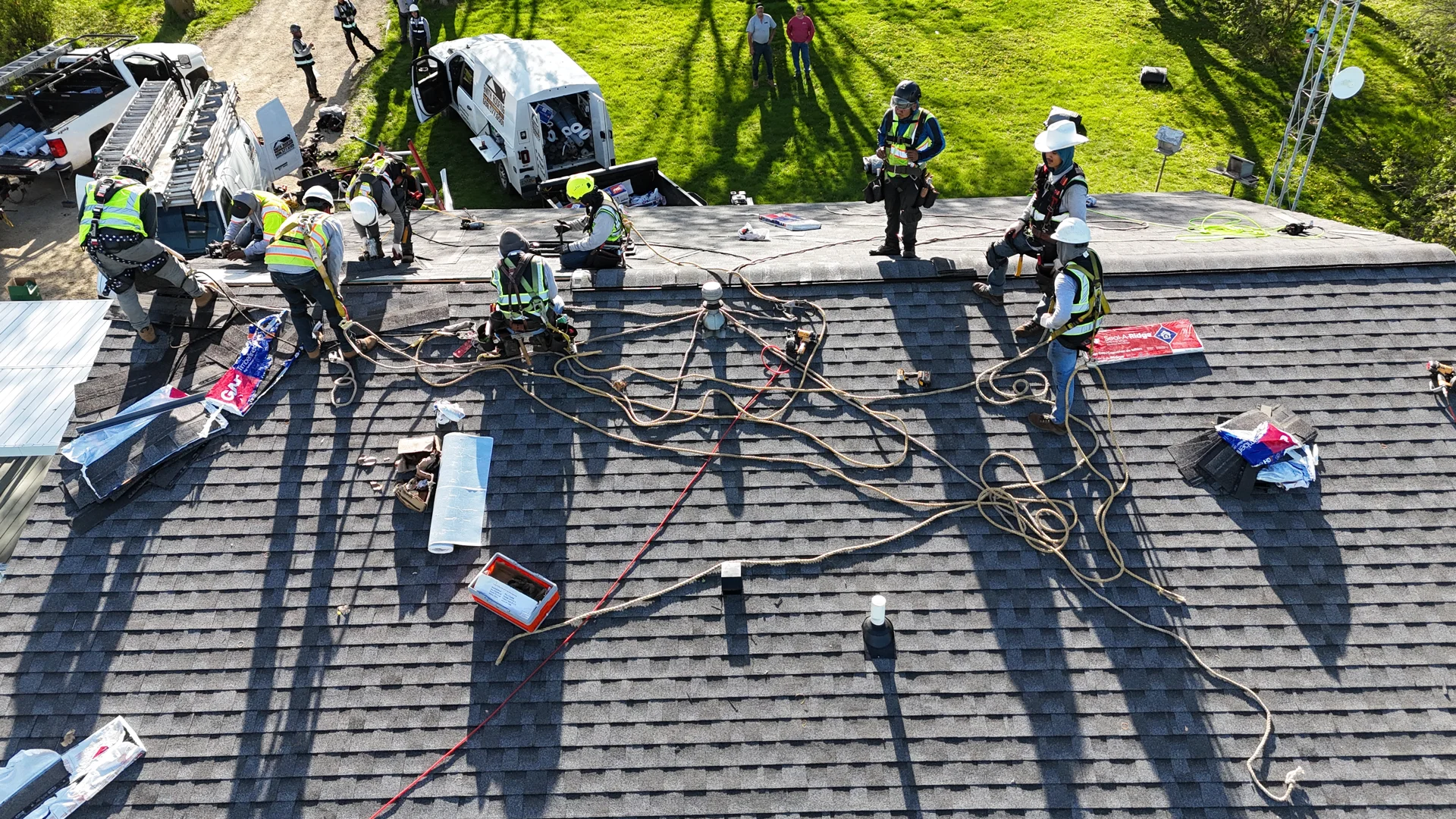
Essential Tarping Materials
To provide a secure, weather-tight seal, professional crews utilize a specific kit of heavy-duty materials:
- Heavy-Duty Polyethylene or Vinyl Tarps: Usually 10-mil thickness or higher, designed to resist UV degradation and tearing.
- Anchor Boards (2×4 Lumber): Used to weigh down, wrap, and secure the edges of the tarp so wind cannot get underneath.
- Deck Screws or Cap Nails: Fasteners long enough to penetrate the boards, tarp, shingles, and securely grip the roof decking.
- Silicone Caulking / Roofing Sealant: Applied around screw heads and critical joints to prevent water from leaking through the installation points.
Professionals must also adhere strictly to safety protocols. OSHA standards require fall protection, including safety harnesses, anchors, and specialized ropes, for any workers exposed to falls of 6 feet or more. Climbing onto a wet, damaged, or structurally weakened roof is incredibly dangerous, which is why having the right safety gear is non-negotiable.
Why DIY Roof Tarping is Highly Discouraged
We understand the temptation to grab a ladder and try to patch things up yourself. However, DIY roof tarping is highly discouraged for several critical reasons:
- Extreme Slip Hazards: Wet shingles, loose granules, and plastic tarps are incredibly slick. One misstep can lead to a catastrophic fall.
- Ladder Safety Issues: Positioning a ladder on uneven, storm-damaged ground is a recipe for tipping.
- Improper Sealing: Without professional training, it is easy to install a tarp backward (against the flow of water), which actually funnels rain under the tarp and accelerates interior water damage.
- Structural Collapse Risk: If a tree has fallen on your home, the roof structure may be unstable. Stepping on the wrong spot could cause a partial collapse.
If you are currently dealing with a roofing crisis and trying to figure out how to handle it safely, take a deep breath and read our guide on How to Find the Best 24-Hour Emergency Roof Repair Without Losing Your Cool.
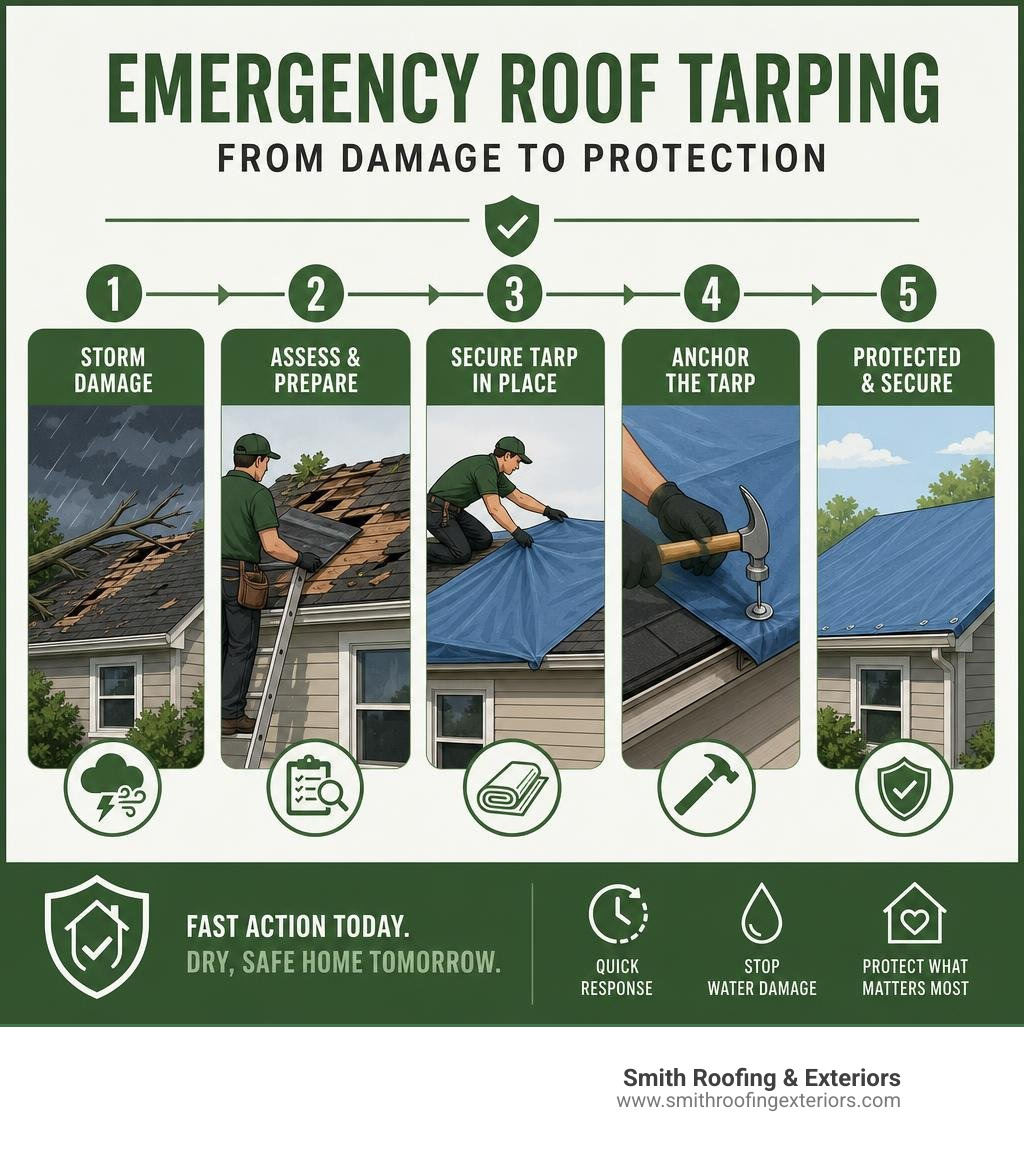
The Professional Emergency Tarp Roof Service Installation Process
When our team arrives at your property in Fort Atkinson, Lake Geneva, or Elkhorn, we follow a systematic, safe installation process:
- Damage Assessment: We inspect the roof from the ground and safely from ladders to identify all puncture points and structural weaknesses.
- Debris Removal: We clear away fallen branches, loose shingles, and storm debris so the tarp can lay completely flat.
- Ridge-Down Installation: We always run the tarp over the peak (ridge) of the roof whenever possible. This prevents water from running down the slope and slipping underneath the top edge of the tarp.
- Batten Securing: We wrap the edges of the tarp around 2×4 anchor boards (battens) and screw them directly into the roof. This creates a tight, wind-resistant seal that prevents the tarp from flapping or tearing away.
For residents in the eastern parts of our service area, you can read about our localized rapid response in Burlington Emergency Roofers to the Rescue.
The Cost of Emergency Roof Tarping and Insurance Claim Support
One of the first questions homeowners ask during a roofing emergency is, “How much is this going to cost?”
The cost of an emergency tarp roof service typically ranges between $200 and $1,200. The final price depends on several distinct pricing factors: the square footage of the damaged area, the slope (pitch) of your roof, ease of access, and whether you require after-hours or holiday service. On average, after-hours emergency tarping costs between $1.00 and $2.80 per square foot.
| Roof Damage Size | Typical Square Footage | Average Cost Range |
|---|---|---|
| Small (e.g., minor puncture or valley leak) | 100 – 200 sq. ft. | $200 – $400 |
| Medium (e.g., section of missing shingles) | 300 – 500 sq. ft. | $400 – $700 |
| Large / Complex (e.g., tree impact or multi-slope damage) | 1,000+ sq. ft. | $800 – $1,200 |
To better understand what goes into these emergency service rates and how to navigate the initial contracting process, see our article on What to Expect from Emergency Roof Repair Contractors After a Storm.
How Tarping Supports Your Homeowners Insurance Claim
Did you know that installing a tarp is actually a requirement under most homeowners insurance policies?
Almost all standard policies contain a “mitigation clause.” This clause requires the property owner to take reasonable, immediate steps to prevent further damage to the property after an incident. If you leave a roof hole open to the elements and a subsequent rainstorm ruins your hardwood floors, your insurer may deny coverage for the floor damage because you failed to mitigate the initial loss.
To ensure your insurance claim is approved smoothly, follow these essential documentation steps:
- Take “Before” Photos: Photograph the exposed roof damage before the tarp is installed.
- Document the Tarping Process: Take photos of the professionally installed tarp to prove you took immediate action.
- Keep All Receipts: Save the invoice and receipt from your emergency tarp roof service; this cost is typically fully reimbursable as part of your mitigation claim.
- Get a Written Scope: Ensure your roofing contractor provides a detailed, written explanation of the damage to submit to your adjuster.
To get started on your recovery, you can access professional assistance directly through our dedicated Southeastern Wisconsin Storm Damage Restoration Page.
Temporary Tarping vs. Permanent Roof Repairs
It is crucial to remember that emergency roof tarping is a temporary dry-in solution, not a permanent fix.
A tarp is designed to buy you time. It keeps the rain out while you file your insurance claim, wait for an adjuster to visit your home, and schedule a professional roofing crew for permanent restoration. Permanent repairs involve replacing damaged wood decking, laying down new ice-and-water shield barriers, installing fresh underlayment, and nailing down matching shingles to restore your roof’s original structural integrity.

Leaving a tarp on your roof for too long can lead to serious issues. Over time, UV degradation from the summer sun will break down the plastic fibers, causing the tarp to become brittle, crack, and eventually leak. Additionally, trapped moisture beneath a long-term tarp can rot your roof deck. For more information on the hazards of delaying permanent repairs, read about the Common Causes That Lead to Emergency Roof Repair.
How Long Does a Professionally Installed Roof Tarp Last?
When installed by experienced professionals using heavy-duty, reinforced materials, a temporary roof tarp can reliably protect your home for 30 to 90 days.
While it can withstand heavy rain and moderate winds during this period, it is always best to transition to permanent repairs as quickly as possible. If you need a fast, reliable transition from emergency mitigation to a permanent, beautiful roof, check out our solutions for Fast and Reliable Emergency Roof Repair.
Frequently Asked Questions About Emergency Roof Tarping
How quickly can a professional team respond and install a roof tarp?
At Smith Roofing & Exteriors, we prioritize emergency calls and offer 24/7 emergency dispatch. During normal business days, our average response time is between 4 and 8 hours. During major, widespread storm events, demand across Southeastern Wisconsin can be incredibly high, but we always work systematically to secure vulnerable homes as quickly as safely possible. You can learn more about our local dispatch capabilities in Burlington Emergency Roofers to the Rescue.
What qualifications should I look for in a roof tarping company?
You should only hire a company that is fully licensed, carries robust general liability and worker’s compensation insurance, and employs crews trained in OSHA fall protection standards. It is also wise to choose a contractor with a strong local reputation and deep roots in the community. To verify a contractor’s standing or find certified professionals, you can consult the National Roofing Contractors Association (NRCA).
Will my homeowners insurance cover the cost of emergency tarping?
Yes, in almost all cases. Because emergency tarping falls under “emergency mitigation” (preventing further damage), it is typically covered under the dwelling portion of your homeowners policy. Your insurer will usually reimburse you for the cost of the tarping service, minus your deductible. For more details on mitigation coverages, you can visit our Fort Atkinson Storm Damage Restoration Page or read resources provided by the Insurance Information Institute (III).
Conclusion
When a storm tears through Southeastern Wisconsin, leaving your home exposed to the elements, you don’t have time to wait. An emergency tarp roof service from a trusted local team is your best defense against catastrophic water damage, structural rot, and mold.
At Smith Roofing & Exteriors, we are proud to serve our neighbors in Fort Atkinson, Lake Mills, Jefferson, Burlington, Delavan, Elkhorn, Lake Geneva, Walworth, and Edgerton. We bring years of local expertise, transparent pricing, and 24/7 rapid emergency response to every single job.
Don’t let a bad storm ruin your home’s interior. If your roof has been compromised, contact us immediately to Protect Your Home with Professional Storm Damage Restoration. We will get your home under cover, safe, and on the fast track to a permanent, worry-free repair.