What to Do When a Hailstorm Hits Your Roof
Hail damage roof problems are more common — and more costly — than most Wisconsin homeowners expect.
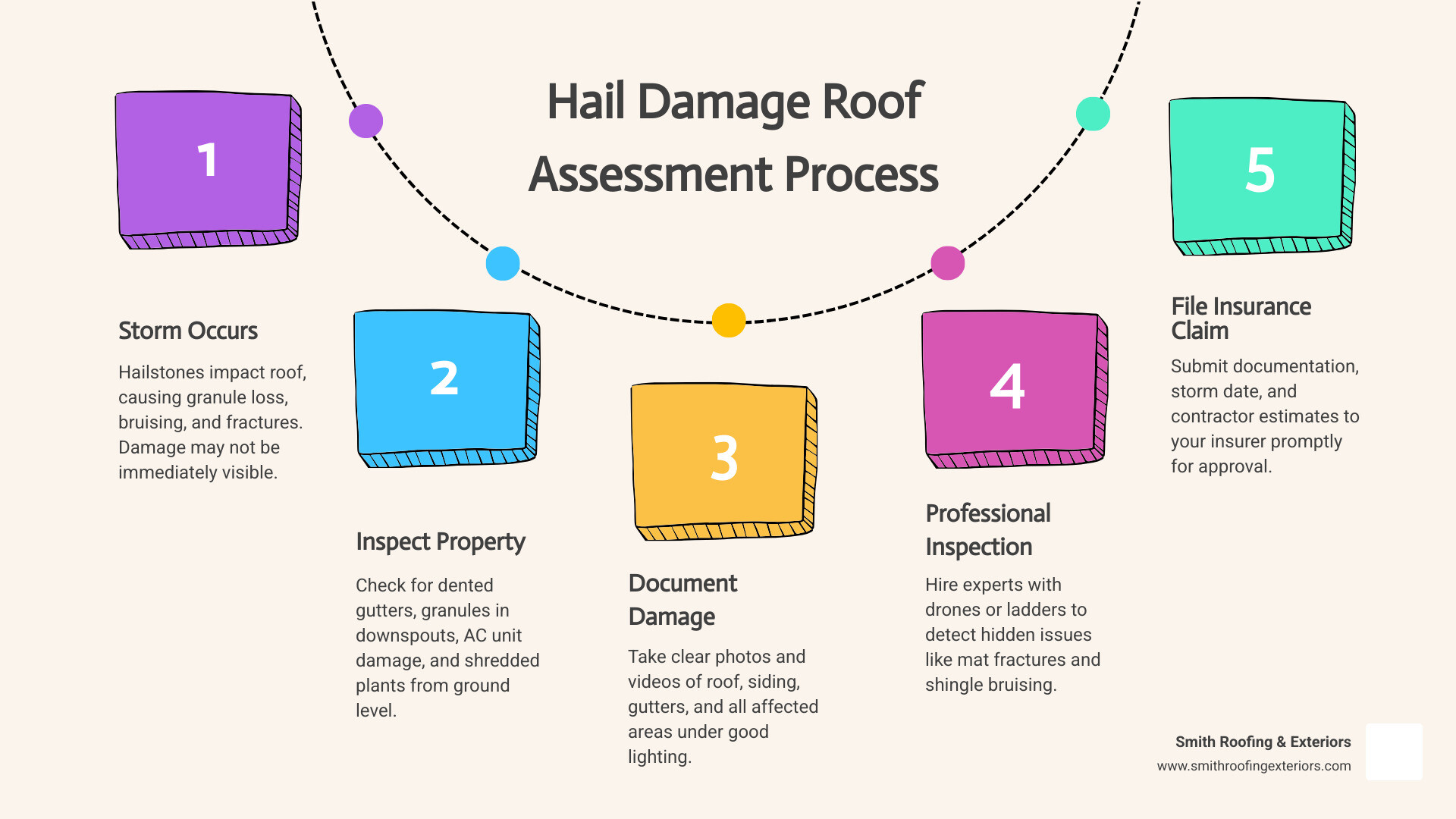
Here’s a quick overview of what to do after a hailstorm:
- Stay safe — wait until the storm fully passes before going outside
- Check for obvious signs — dented gutters, granules in downspouts, shredded plants
- Document everything — take photos of your roof, siding, and property before anything is disturbed
- Schedule a professional inspection — many hidden damage types (bruised shingles, micro-fractures) aren’t visible from the ground
- Contact your insurance company — report the damage promptly and note the storm date
- Get contractor estimates — before any repairs begin
Hail-related property damage in the U.S. now exceeds $1 billion every year — and that number keeps climbing. Even a brief storm can leave behind damage that isn’t obvious right away but quietly weakens your roof over the following months, leading to leaks, mold, and costly structural repairs down the road.
The tricky part? Hail damage doesn’t always look dramatic. Sometimes it’s a soft bruise on a shingle. Sometimes it’s a thin layer of granules sitting in your gutters. And sometimes, you won’t notice anything at all — until water starts coming through your ceiling.
I’m Matt Smith, owner of Smith Roofing & Exteriors, and I’ve spent years helping Wisconsin homeowners identify and recover from hail damage roof situations just like this one. I’ll walk you through everything you need to know to assess your roof, work with your insurer, and make smart repair decisions.
Identifying Hail Damage on Your Roof
Identifying a hail damage roof isn’t always as simple as looking for a hole. In fact, most hail damage is subtle. It’s April 2026, and as we move into the peak of the storm season here in Southeastern Wisconsin—from Fort Atkinson to Lake Geneva—understanding what to look for can save you thousands in the long run.
When hailstones hit asphalt shingles, they displace the protective granules. These granules aren’t just for color; they protect the underlying asphalt from UV degradation. Without them, the sun “cooks” your shingles, leading to premature failure. You might see “black spots” where the asphalt or fiberglass mat is exposed.
Another common sign is asphalt bruising. Much like a bruise on an apple, you might not see a break in the surface, but the structure underneath is crushed. If you press on these spots, they feel soft or spongy. Over time, these bruises turn into mat fractures, which are physical cracks in the shingle’s reinforcement layer that allow water to seep through.
For a deeper dive into these visual cues, check out this guide on How To Identify and Fix Roof Hail Damage.
Signs of a Hail Damage Roof Around Your Property
You don’t always have to climb a ladder to know your roof is in trouble. Often, the best evidence of a hail damage roof is found at ground level. We recommend doing a “perimeter check” after any significant storm in the Jefferson or Lake Mills area.
- Dented Gutters and Downspouts: Gutters are made of thin metal. If they have dings or “craters,” your shingles likely took a similar beating.
- AC Condenser Fins: Check your outdoor air conditioning unit. The thin metal fins are very sensitive; if they look flattened or “combed” by ice, it’s a major red flag.
- Shredded Plants: If your hostas look like they went through a paper shredder or your trees are stripped of leaves, the hail was likely large enough to damage roofing materials.
- Window Screens and Siding: Look for tears in screens or “splatter marks” on siding where the hail knocked off oxidation or dirt.
If you have a commercial property or a flat-roofed home, the signs can be even more specialized. Learn more about how to check your flat roof for hail damage after a storm to ensure you aren’t missing ponding water issues or membrane punctures.
Material-Specific Damage Indicators
Different roofing materials react differently to ice impacts. While asphalt shingles are on about 75% of U.S. homes, we see plenty of variety in Wisconsin.
- Metal Roofing: Usually, this damage is cosmetic—think of it like a “hail-dimpled” car hood. However, large hail can damage the protective coating, leading to rust.
- Clay and Concrete Tiles: These don’t bruise; they crack or shatter. You’ll see sharp-edged chips or half-moon fractures.
- Wood Shakes: Look for random splits that are orange or brown in the center. If the split is gray, it’s likely old weather-related wear, not new hail damage.
- TPO/Flat Roofs: On commercial roofs, hail can cause “crow’s feet” cracks or circular fractures in the membrane.
For those with specialized metal systems, we’ve put together a specific resource: Hail No A Guide To Assessing Colorbond Roof Damage And Insurance Payouts.
What Size Hail Causes Roof Damage?
How big does the ice have to be to cause a problem? Generally, hail must reach about 1 inch in diameter (roughly the size of a quarter) to cause noticeable damage to asphalt shingles. However, size isn’t the only factor.
| Hail Size | Comparison | Potential Damage Level |
|---|---|---|
| 0.25″ – 0.50″ | Pea to Marble | Usually minor; may dislodge loose granules on old roofs. |
| 0.75″ | Penny | Can damage siding and gutters; rarely causes functional roof damage. |
| 1.00″ | Quarter | Threshold for damage. Can bruise shingles and crack older materials. |
| 1.50″ | Ping Pong Ball | Moderate damage likely; cracks in tile and wood shakes. |
| 1.75″ – 2.00″ | Golf Ball | Severe damage; likely requires significant repair or replacement. |
| 2.50″+ | Tennis Ball | Catastrophic; can puncture roof decking and destroy vents. |
Wind speed is the great multiplier. A 1-inch hailstone falling in a 60-mph wind hits with much more force than one falling in still air. The age of your roof also matters—older shingles are more brittle and crack more easily. For more on these variables, see Roof Hail Damage: Signs, Repair Costs & Insurance Claims.
Cosmetic vs. Functional Damage
This is a distinction your insurance adjuster will care about deeply.
- Cosmetic Damage: Dents in a metal roof or a soft-metal vent that don’t affect the roof’s ability to shed water. Some modern insurance policies actually exclude cosmetic-only damage.
- Functional Damage: This is damage that shortens the expected life of the roof or creates an immediate leak risk. Granule displacement and mat fractures are functional because they lead to UV rot and water intrusion.
In places like Fort Atkinson, where we see heavy snow loads in winter, even “minor” functional damage can become a disaster when ice dams form later in the year. Our commercial roofing in Fort Atkinson WI storm damage guide explains how these small issues can escalate in a business environment.
Navigating Insurance Claims for a Hail Damage Roof
Filing a claim for a hail damage roof can feel like a second storm. The most important thing you can do is document. Take wide-angle shots of your house and close-ups of any visible dings. Keep a record of the storm date—insurers rely on weather data to verify your claim.
Most homeowners insurance policies cover hail as an “Act of God,” meaning filing a claim shouldn’t single-handedly cause your rates to spike (though regional rates may rise if the whole neighborhood is hit). You typically have a one-year window to file, but we recommend acting within the first 30 to 60 days.
When the adjuster arrives, it’s helpful to have your contractor there too. We often meet adjusters on-site in Burlington or Elkhorn to ensure they see the same “bruising” and mat damage that we found. For immediate steps after the clouds clear, read Emergency roof repair after a storm what to do.
Avoiding Common Post-Storm Mistakes
After a big storm, “storm chasers” often flood Southeastern Wisconsin. These are out-of-state contractors who follow storms, do quick (and often poor) work, and disappear before the warranty can be tested.
Common Mistakes Include:
- Waiting for a leak: If you wait until the ceiling is dripping, you might have missed your insurance filing window or developed mold.
- Signing “Contingency Agreements” too early: Never sign a contract until you’ve seen a full estimate and verified the contractor’s local credentials.
- Ignoring documentation gaps: If you can’t prove the damage happened on a specific date, the claim might be denied.
Our guide on Fort Atkinson/Roofing/Commercial/Storm Damage offers more tips on navigating these professional pitfalls.
Repairing vs. Replacing Your Hail-Damaged Roof
Does hail always mean a total replacement? Not necessarily.
- Repair: If the damage is localized (e.g., only one slope was hit) and the roof is relatively new, we can often replace individual shingles or sections. Repairs can range from $375 to $1,500.
- Replacement: If more than 25% of the roof is affected, or if the shingles are nearing the end of their life, a full replacement is usually the better financial move. Insurance will often cover the full cost (minus your deductible) if the damage is widespread.
Replacement costs for a standard roof typically range from $4,000 to $20,000 depending on size and material. To see how these costs are calculated, view the Ultimate Hail Damage on Roof: Inspection & Claim Guide.
Preventing Future Hail Damage
If you’re replacing your roof, consider upgrading to Class 4 Impact-Resistant Shingles. These are tested under UL 2218 standards, where steel balls are dropped on them to simulate hail.
While they cost slightly more upfront, Class 4 shingles can:
- Withstand hail that would destroy standard shingles.
- Earn you a significant discount on your homeowners insurance premiums (sometimes up to 20%).
- Increase your home’s resale value.
We specialize in these upgrades across Walworth and Delavan. Learn more about Fort Atkinson/Roofing/Residential/Storm Damage and how impact resistance can protect your investment.
Frequently Asked Questions about Hail Damage
How soon after a hailstorm should I file an insurance claim?
You should document the damage immediately and contact your insurer as soon as you have a professional inspection report. Most policies have a one-year limit, but the sooner you file, the easier it is to prove the damage was caused by that specific storm.
Can hail damage a roof without visible signs from the ground?
Absolutely. Mat bruising and micro-fractures are almost impossible to see from 20 feet below. We use professional drones and high-resolution moisture detection to find damage that the naked eye might miss. If your neighbors are getting their roofs replaced but yours “looks fine,” it’s worth a professional look.
Does hail damage automatically mean I need a new roof?
No. If the impact was light or the storm was brief, you might just need a few shingle replacements or some new flashing. However, if the granule loss is widespread, a replacement is the only way to prevent your roof from failing prematurely due to UV exposure.
Conclusion
A hail damage roof is a ticking clock. What starts as a few missing granules in April 2026 can become a major structural leak by the time the Wisconsin winter rolls around.
At Smith Roofing & Exteriors, we pride ourselves on being the local team you can trust. From our home base in Fort Atkinson to our neighbors in Edgerton and Lake Mills, we offer 24/7 emergency response and transparent pricing. We don’t just fix roofs; we help you navigate the insurance maze and ensure your home is better protected than it was before the storm.
Don’t leave your home’s safety to chance. Schedule your professional hail damage inspection today and let us give you the peace of mind you deserve.