How to Stop a Leak in Your Garage Roof
For a leak in garage roof shingles or felt, move stored items away from the drip and catch the water in a bucket. Look for stains inside, then check the roof from the ground for missing shingles, damaged edges, or overflowing gutters. Do not climb onto a wet or sagging roof. A small, isolated defect may be repairable, but soft decking or leaks in several places call for a professional inspection.
I’m Matt Smith, owner of Smith Roofing & Exteriors in Fort Atkinson. I help homeowners understand what to do about a leak in garage roof materials so they can protect their belongings and plan a lasting fix.
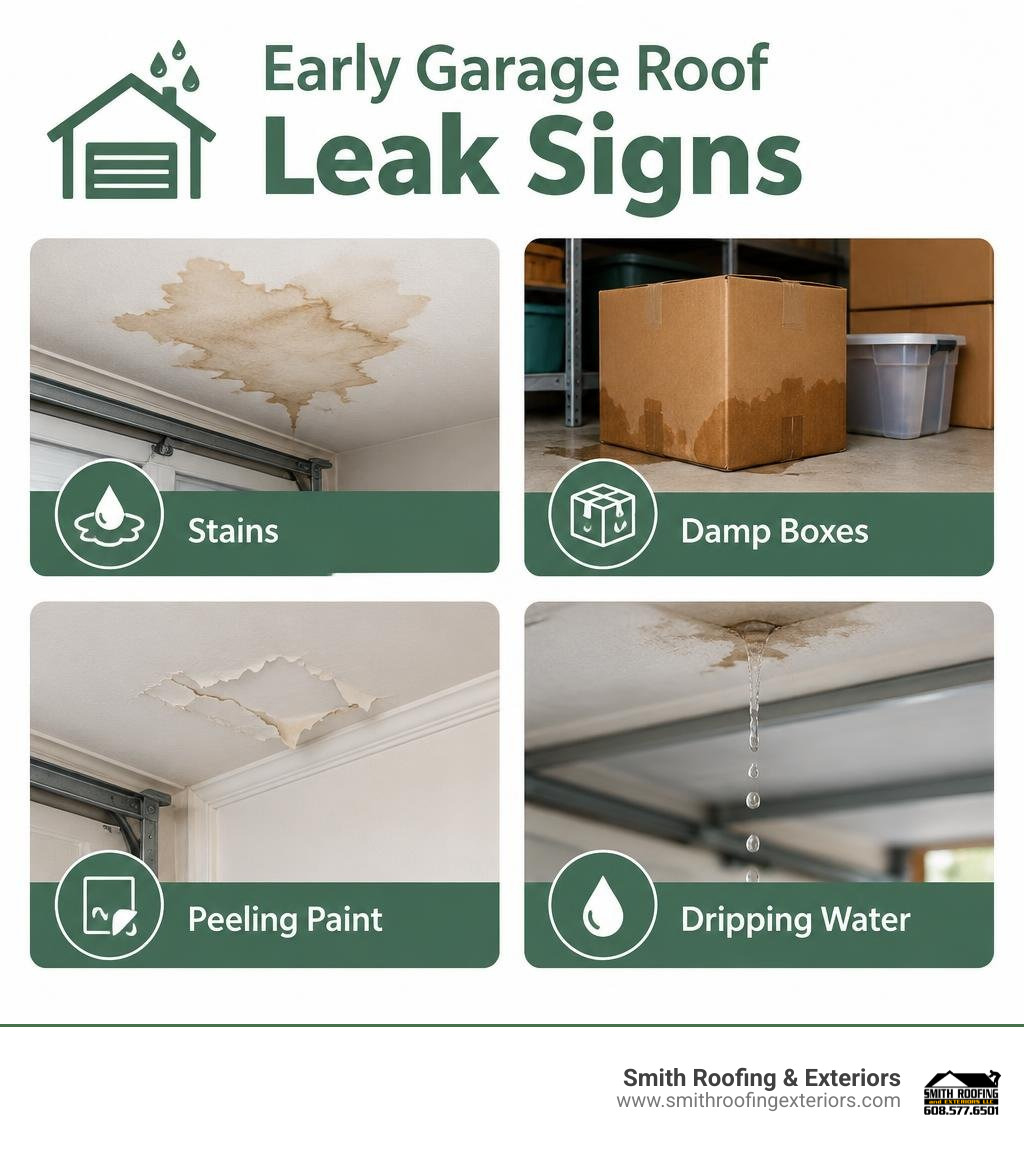
Basic leak in garage roof glossary:
How to Diagnose and Fix a Leak in Garage Roof Structures
A dripping ceiling over your parked car or workbench is easy to brush off as a minor headache, but water intrusion rarely stays small. Garages often endure the brunt of harsh Wisconsin weather while receiving far less maintenance than our main living spaces. Because many outbuildings start with economy materials and lighter fixings, their roofing components frequently reach their general end-of-life years ahead of the main house.
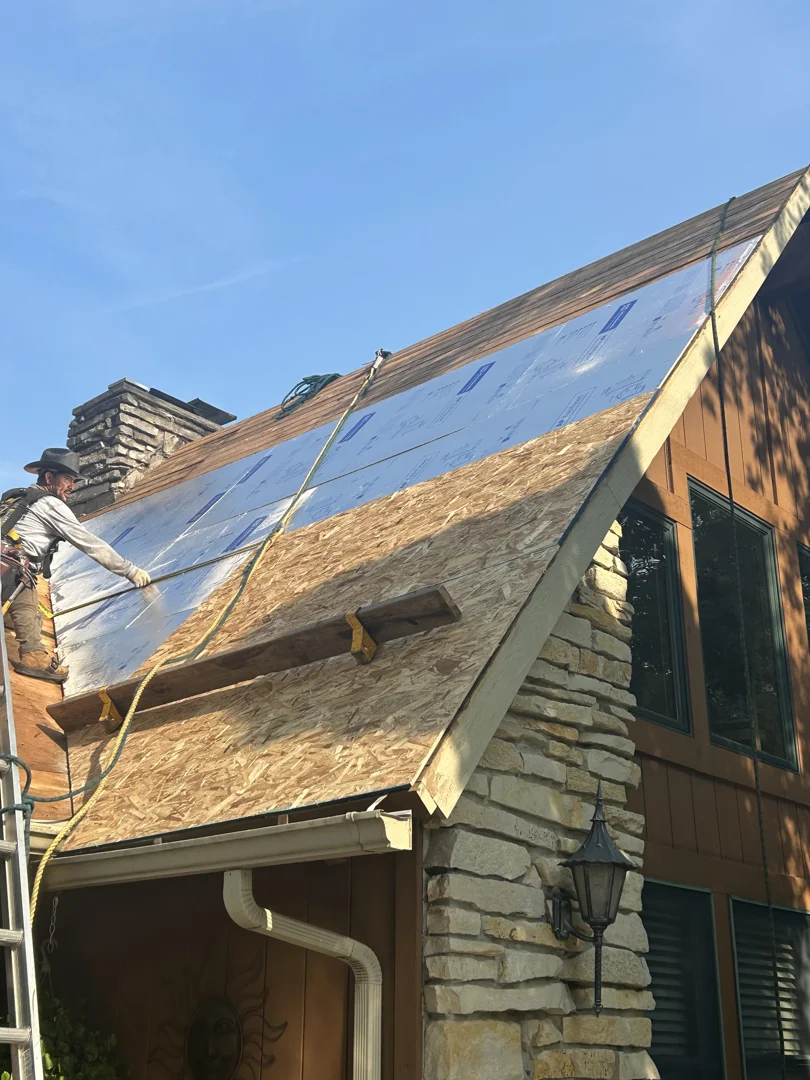
When water breaches the exterior barrier, it travels along rafters and sheathing before finally dripping onto your stored tools, holiday decorations, or vehicle. Understanding how to track water paths and assess structural stability is essential before attempting any DIY repair.
Pinpointing the Source of a Leak in the Garage Roof
Water follows gravity and the path of least resistance, meaning where moisture drips inside rarely aligns perfectly with where it entered outside. Finding the actual entry point requires careful detective work.
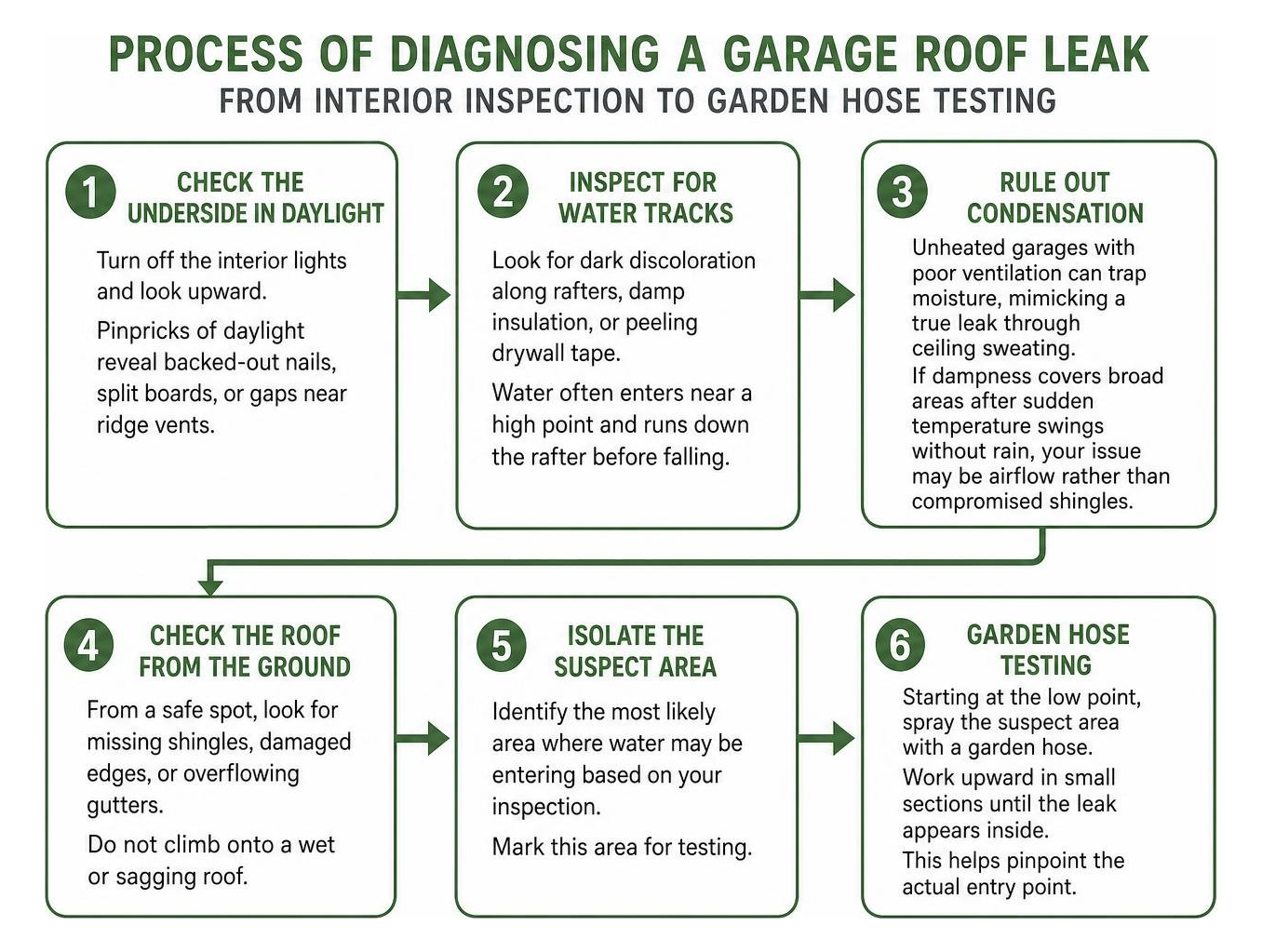
To isolate the entry point safely and accurately:
- Check the Underside in Daylight: Head into the garage on a bright afternoon. Turn off the interior lights and look upward. Pinpricks of daylight shining through the decking reveal backed-out roofing nails, split boards, or gaps near ridge vents.
- Inspect for Water Tracks: Look for dark discoloration along rafters, damp insulation, or peeling drywall tape. Water often enters near a high point and runs down the rafter before falling.
- Rule Out Condensation: Unheated garages with poor ventilation can trap moisture, mimicking a true leak through ceiling sweating. If dampness covers broad areas after sudden temperature swings without rain, your issue may be airflow rather than compromised shingles.
- Conduct a Controlled Garden Hose Test: If visual checks fail, have a helper stand inside with a flashlight while you run a garden hose on low pressure over isolated sections of the roof. Start at the low eaves and work slowly upward toward the ridge, spending several minutes on each section until water appears inside.
Understanding why you should never ignore a residential roof leak protects your garage framing from premature rot and costly structural failure.
Repair vs. Replace: Evaluating Roof Damage
Because a garage roof covers a fraction of a house’s square footage, re-roofing it costs significantly less. Deciding whether to patch a single spot or replace the entire surface comes down to material age, structural deck integrity, and the failure type.
Detail failures (such as a pulled piece of flashing or an isolated cracked shingle) are prime candidates for localized repair. Material failures (such as brittle, curling shingles across the entire slope or widespread cracking on flat membrane) indicate the system has reached the end of its useful lifespan.
| Factor | Spot Repair | Full Replacement |
|---|---|---|
| Roof Decking Condition | Solid, dry, no bounce or sag | Soft spots, rot, widespread sagging |
| Material Lifespan | Shingles under 15 years; felt under 10 years | Shingles 20+ years; felt 15–20 years |
| Leak Scope | Single localized drip or penetration | Multiple leaks across several areas |
| Past Repair History | First or second isolated repair | Repeated patch failures in the same zone |
| Material Performance | Intact mineral granules, flexible felt | Brittle surface, bald spots, curling edges |
When multiple weak spots appear, understanding the critical reasons to address roof damage quickly prevents small structural issues from spreading into expensive framing overhauls.
Temporary Emergency Stopgaps for Active Drips
If severe weather is rolling across Southeastern Wisconsin, you cannot wait for ideal conditions to execute a permanent fix. You need immediate mitigation to keep your storage dry until dry weather arrives.
- Exterior Tarps: Secure a heavy-duty waterproof tarp over the damaged slope. Drape the top edge over the roof ridge to prevent water from running underneath, and anchor the edges with 2×4 lumber boards rather than driving nails directly into the deck.
- Interior Underside Sealant Injection: If you have an exposed rafter bay with a slow drip entering around a loose nail hole, you can temporarily inject an elastomeric roofing sealant into the hole from below using a caulking gun. This acts strictly as a stopgap to redirect water while you plan your exterior repair.
- Emergency Wet-Patch Compounds: Keep a tub of quick-setting flashing cement on hand. Specialized wet-patch formulations can be applied in damp conditions to bridge cracked seams or lifted felt laps.
For sudden downpours, our guide on managing unexpected roof leaks effectively walks you through protecting your interior space without risking your safety.
Step-by-Step Fixes for a Leak in Garage Roof Shingles and Flat Decks
Once the storm clears and surfaces dry out, you can tackle permanent spot repairs.

Fixing Damaged Asphalt Shingles
- Lift the Damaged Shingle: Gently slide a flat pry bar beneath the damaged shingle and the shingle directly above it to break the adhesive sealant strip.
- Remove Fasteners: Pry out the exposed roofing nails holding the torn or cracked shingle in place.
- Slide in the Replacement: Position a matching new shingle into the slot, ensuring it aligns with the surrounding courses.
- Fasten and Seal: Drive galvanized roofing nails just above the shingle cutout slots. Apply a dab of asphalt roofing cement beneath the tabs and press firmly to reseal.
Patching Flat Felt or Bitumen Garage Roofs
Traditional flat felt systems provide around 15 to 20 years of service, but perimeter seams and blisters can fail prematurely. Cold-applied liquid adhesives provide a dependable, torch-free fix that conforms to DIY safety needs.
- Clean the Surface: Sweep away loose mineral granules, moss, and dirt around the leak zone. The surface must be bone dry.
- Address Blisters (Cross-Cut Method): If moisture formed a raised bubble, slice an “X” through the center with a utility knife. Peel back the four flaps, wipe out any trapped water, and let the wood dry thoroughly.
- Apply Bituminous Primer & Adhesive: Coat the underlying deck with roofing adhesive, press the flaps back down flat, and nail the edges using large-head clout nails.
- Embed Scrim Reinforcement: Cut a piece of polyester or fiberglass reinforcing scrim extending at least 4 inches beyond the repair area. Sandwich it between two generous layers of cold-applied bitumen compound.
- Top Coat: Dust the wet patch with fine mineral granules or apply a UV-reflective coating to prevent premature weathering.
You can also reference our step-by-step ceiling and roof leak repair guide for tips on restoring interior finishes once exterior water entry has ceased.
Preventing Future Leaks and When to Hire a Pro
A successful roof repair is only half the battle; stopping future water penetration requires ongoing exterior care and attention to critical drainage points.
Maintaining Gutters, Flashings, and Proper Drainage
Perimeter details and junctions account for nearly 40% of all garage water leaks. Gutters clogged with autumn leaves cause water to back up beneath lower shingles or overflow onto wooden fascia boards, leading to rot along the eaves.
- Inspect Wall Step Flashing: Where a garage roof meets the side wall of your home, individual step flashing pieces must channel water over each shingle course. Continuous L-flashing or dried-out caulk lines often split, allowing wind-driven rain to penetrate wall cavities.
- Maintain Drainage Slopes: Flat and low-slope garage roofs need clean scuppers and downspouts. Standing water that remains 48 hours after rain weakens seams and accelerates membrane breakdown.
- Clear Tree Branches: Trim overhanging limbs at least six feet back from your garage roof. Rubbing branches scrape off protective shingle granules and drop debris directly into drainage troughs.
- Prevent Winter Ice Dams: Ensure roof rafter bays have adequate ventilation to prevent snow from melting and refreezing into heavy ridges along unheated garage eaves.
If you are tired of dealing with temporary shingle patches on low-pitch outbuildings, consider upgrading to a durable metal garage roof for superior resistance against winter ice and wind-driven rain.
Professional Roofing Solutions for Guaranteed Protection
While basic shingle replacement or cold-applied patches fit within a weekend DIY scope, certain situations demand experienced professionals:
- Soft, Sagging Roof Decks: Spongy sheathing indicates structural timber rot beneath the membrane that requires framing reinforcement.
- Widespread Granule Loss or Blistering: When deterioration spans the entire slope, localized patching simply chases leaks from one seam to another.
- Steep or Unsafe Pitches: Working on high-pitch structures or navigating slick two-story garage attachments introduces serious fall hazards.
- Persistent Hidden Leaks: If water continues entering despite multiple patch attempts, the source likely involves complex sidewall flashing, deteriorated underlayment, or chimney junctions.
At Smith Roofing & Exteriors, we take pride in serving our neighbors throughout Fort Atkinson, Lake Mills, Jefferson, Burlington, Delavan, Elkhorn, Lake Geneva, Walworth, Edgerton, and across Southeastern Wisconsin. Our experienced local team uses superior materials, provides 24/7 emergency response, and delivers transparent pricing backed by comprehensive workmanship warranties.
If you are dealing with persistent moisture problems or need a definitive assessment, explore our expert residential roof repair services in Fort Atkinson to get your garage protected and your stored valuables bone dry.