Why a Residential Roof Leak Is Never “Just a Small Problem”
A residential roof leak — even a tiny one — can quietly cause thousands of dollars in damage before you ever notice it. Here are the most common reasons leaks happen:
- Damaged or missing shingles — cracked, curled, or blown-off shingles leave the roof deck exposed
- Failed flashing — metal strips around chimneys, skylights, and vents corrode or pull away over time
- Ice dams — ridges of ice trap meltwater and force it under shingles (a real problem in Wisconsin winters)
- Clogged gutters — backed-up water seeps under the roofline
- Worn pipe boots — rubber seals around vent pipes crack and let water in
- Roof age — asphalt shingles, the most common type, have one of the shortest lifespans and become more leak-prone over time
Picture this: it’s a cold Wisconsin night, a storm is rattling the windows, and you notice a small brownish stain spreading across your living room ceiling. It seems minor. Maybe you set a bucket down and tell yourself you’ll deal with it later.
That decision can cost you far more than you’d expect.
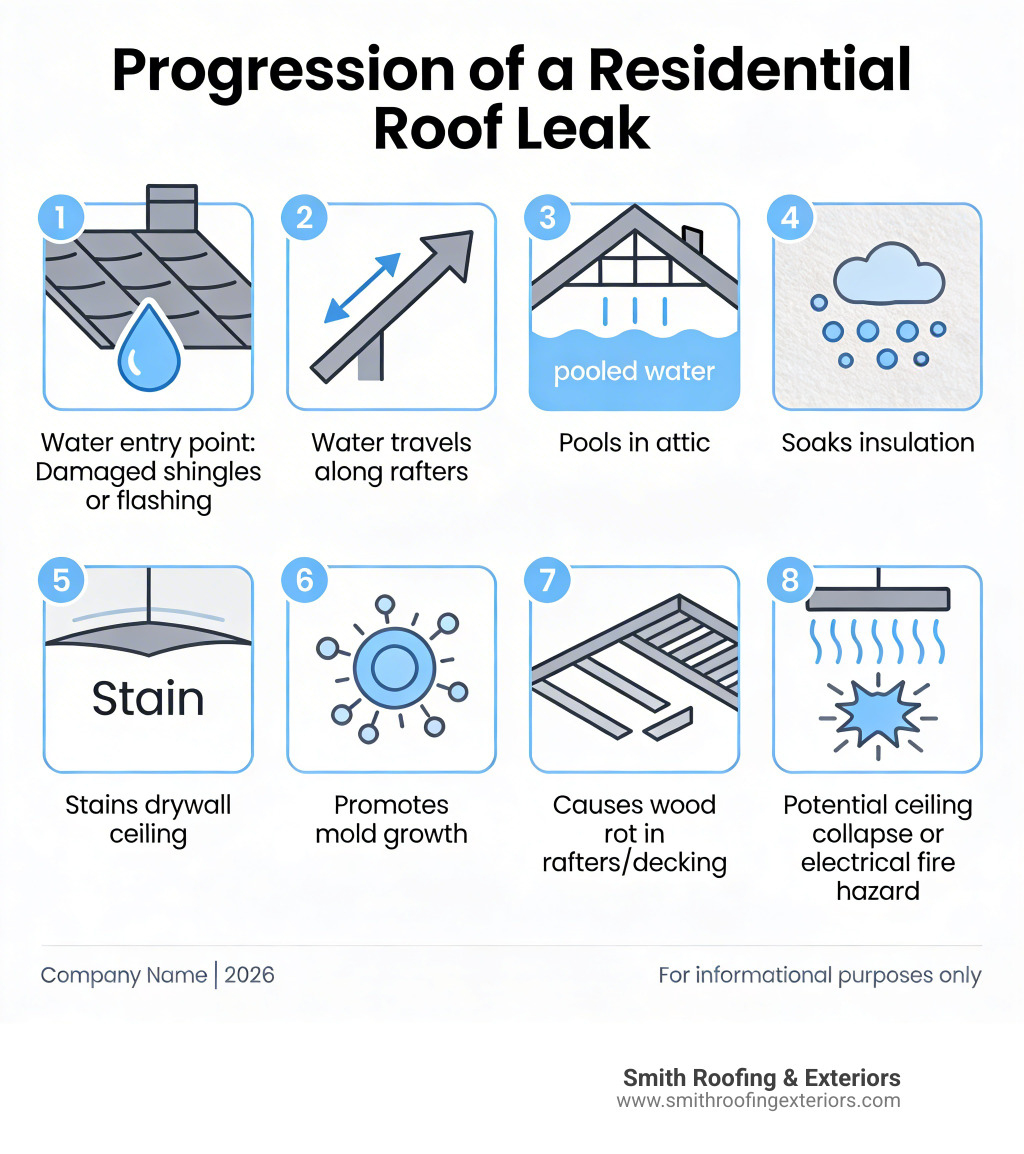
Water doesn’t stay where it enters. It travels along rafters and beams, pooling in places you can’t see, slowly rotting wood, soaking insulation, and creating the damp conditions that mold needs to grow. What starts as a small drip can become a structural problem — or a health hazard — in a surprisingly short time.
I’m Matt Smith, owner of Smith Roofing & Exteriors, and with years of hands-on experience diagnosing and repairing residential roof leaks across rural Wisconsin, I’ve seen how quickly a small leak turns into a costly repair. Let’s walk through everything you need to know to protect your home.
Common Causes of a Residential Roof Leak

Understanding the “why” behind a leak is the first step toward a permanent fix. In our experience serving homeowners from Fort Atkinson to Lake Geneva, we’ve found that most leaks aren’t caused by a single catastrophic event, but rather by the slow degradation of specific components.
Vulnerable Penetration Points
The vast majority of leaks occur where something pokes through your roof. These “penetrations” are the most difficult areas to waterproof.
- Skylights: While they offer beautiful natural light, the seals and flashing around skylights can dry out and crack. If the installation was faulty from the start, you might see a residential roof leak the very first time it rains.
- Vent Pipes and Pipe Boots: These are the small pipes that stick out of your roof for plumbing or HVAC exhaust. They are sealed with a “boot”—usually made of rubber or plastic. Over time, the sun’s UV rays cause the rubber to crack or rot, allowing water to slide right down the pipe into your attic.
- Chimneys: Chimneys are notorious for leaks. The flashing (the metal transition between the bricks and the shingles) can pull away, or the mortar between the bricks can become “sponge-like” as it ages, absorbing water and letting it seep downward.
- Dormer Walls: Where a vertical wall meets the slanted roof, there should be “step flashing.” If this flashing is rusted or missing, water will find its way behind your siding and into your wall cavities.
For more details on these tricky spots, check out this guide on How to Detect and Address a Roof Leak or learn about Common Causes That Lead to Emergency Roof Repair.
Environmental and Weather Factors
Living in Southeastern Wisconsin means our roofs take a beating from all four seasons.
- High Winds and Hail: Strong gusts can lift shingles, breaking the adhesive seal. Once a shingle is “wind-lifted,” it may look fine from the ground, but it’s no longer sheds water correctly. Hail, on the other hand, can bruise or puncture shingles, knocking off the protective granules that shield the asphalt from the sun.
- Freeze-Thaw Cycles and Ice Dams: This is the classic Wisconsin problem. Heat escaping from your attic melts snow on the upper parts of the roof. That water runs down to the cold eaves and freezes, forming a ridge of ice. This “dam” backs up meltwater, which then seeps under the shingles.
- Tree Branches: Overhanging limbs can scrape shingles like sandpaper or, worse, break off during a storm and puncture the roof deck entirely.
Knowing these triggers helps you stay ahead of the game. For urgent situations, review the Top 7 Signs Your Home Needs Emergency Roof Repair.
How to Spot and Locate a Residential Roof Leak
Finding the source of a residential roof leak is often harder than fixing it. Water is sneaky; it follows the path of least resistance. It might enter at the ridge of your roof, run down a rafter for ten feet, and then drip onto your bedroom ceiling.
Early Warning Signs of a Residential Roof Leak
You don’t always have to wait for a drip to know there’s a problem. Keep an eye out for these subtle clues:
- Musty Odors: If your attic or an upstairs room smells like a damp basement, moisture is likely trapped somewhere.
- Peeling Paint: Water seeping into walls can cause paint to bubble or peel near the ceiling or around window frames.
- Granules in Gutters: If your gutters look like they’re filled with coffee grounds, your shingles are losing their protective layer and are nearing the end of their life.
- Sagging Drywall: If a section of your ceiling looks like it’s “dipping,” that’s a sign that water is pooling on top of the drywall. This is a high-risk situation for a ceiling collapse!
If you notice these, it’s a clear sign you need a roofing company for repairs or replacement.
Safe Methods to Locate a Residential Roof Leak
If you’re feeling adventurous and want to investigate safely, follow this “inside-out” approach:
- The Attic Inspection: Go into your attic with a bright flashlight. Look for dark stains on the wood (sheathing or rafters) or “shiny” spots that indicate active moisture. Even if it’s not raining, look for “rust” marks around nails—a sure sign of water entry.
- The Garden Hose Test: This requires two people. One person stays in the attic with a flashlight, while the other goes on the roof with a garden hose. Start low and soak one small area at a time (like a single vent pipe) for several minutes before moving up. This methodical approach helps you pinpoint the exact entry point.
- Measuring Distances: Once you find a wet spot in the attic, measure its distance from the chimney or the roof peak. This helps us find the corresponding spot on the exterior much faster.
For more technical tips, you can read about How To Find & Repair Roof Leaks or follow this step-by-step on How to Find a Roof Leak.
The Hidden Dangers of Ignoring Roof Damage
It’s tempting to think, “It’s just a small stain, I’ll fix it next summer.” But in roofing, time is your enemy.
Structural and Health Consequences
A residential roof leak isn’t just a cosmetic issue; it’s a threat to your home’s “skeleton.”
- Wood Rot: Constant moisture causes rafters and roof decking to soften and rot. If left long enough, the structural integrity of the roof is compromised, which can lead to a partial collapse.
- Mold and Mycotoxins: It only takes 24 to 48 hours for mold to start growing in wet insulation or drywall. These spores can release mycotoxins that irritate the respiratory system, which is especially dangerous for kids or anyone with asthma.
- Electrical Hazards: Water and electricity don’t mix. If a leak travels down a wall and hits an outlet or a light fixture, it creates a significant fire risk.
There are many reasons to fix roof leaks ASAP to avoid these dangers. You’d be surprised at the difference that a timely roof repair can make.
Financial Impact of Delayed Action
Let’s talk numbers. A professional roof repair typically costs homeowners an average of $750 nationally. In contrast, a full roof replacement can cost thousands.
| Service Type | Average Cost | Potential Savings |
|---|---|---|
| Professional Inspection | ~$200 | Catching a leak early saves $500+ |
| Minor Leak Repair | ~$350 – $1,200 | Prevents full deck replacement |
| Full Roof Replacement | $3,700 – $10,000+ | N/A |
By spending a small amount on an inspection now, you can save thousands in repairs later.
Immediate Steps and Professional Repair Solutions
When you discover an active residential roof leak, don’t panic. Take these immediate steps to minimize the damage:
- Contain the Water: Place a bucket under the drip. Pro-tip: put a small piece of wood in the bucket so the water hits the wood and rolls off—it stops that annoying “plink-plink” sound that keeps you up at night!
- Protect Your Belongings: Move furniture, electronics, and valuables out of the splash zone.
- Relieve Pressure: If the drywall on your ceiling is bubbling or sagging, it’s holding a lot of water. Poking a small hole in the center of the bubble with a screwdriver can allow the water to drain into a bucket, preventing the entire ceiling from collapsing under the weight.
Temporary DIY Fixes vs. Permanent Repairs
While you wait for us to arrive, you might consider a temporary fix.
- Emergency Tarping: If there is a large hole from a tree limb, a heavy-duty tarp secured with 2×4 boards is the best way to stop the bleeding.
- Roof Sealant: For small cracks in flashing or around a vent, a tube of high-quality roofing cement can buy you some time.
- The Risk of DIY: Be careful—sealants applied directly to shingles can sometimes void your warranty. Also, fixing a leak from the inside (inside the attic) usually just diverts the water to another part of your roof deck, causing rot elsewhere.
Deciding between Roof Repair vs Replacement is a big move, and we’re here to help you make the right choice.
Navigating Homeowners Insurance and Prevention
Is a residential roof leak covered by insurance? The answer is: it depends.
- Covered: Sudden, “accidental” damage like a tree falling on the roof or a massive hailstorm is usually covered.
- Not Covered: Leaks caused by “wear and tear,” age, or lack of maintenance (like leaving gutters clogged for years) are often denied.
The best way to ensure coverage is to keep records of your bi-annual maintenance and professional inspections. When you call a roof repair contractor to fix your roof, we can help document the damage for your claim.
Frequently Asked Questions about Roof Leaks
How much does it typically cost to repair a roof leak?
Nationally, most homeowners spend about $750. However, in Southeastern Wisconsin, costs vary based on the pitch of your roof and the materials used. A simple shingle replacement might be as low as $350, while complex flashing repair around a chimney could reach $1,200.
Is a leaking roof covered by homeowners insurance?
If the leak was caused by a specific storm event (wind, hail, lightning), it is likely covered. If the leak is due to the roof being 30 years old and simply wearing out, insurance typically will not pay for the repair.
Can I repair a roof leak from the inside of my attic?
We strongly advise against this. While you can use a “patch” inside to stop a drip from hitting your floor, that water is still trapped against the wood of your roof deck. This leads to rapid wood rot and mold growth. A roof must always be repaired from the outside to ensure it is watertight.
Conclusion
At Smith Roofing & Exteriors, we take pride in being the local experts that homeowners in Fort Atkinson, Lake Mills, and Jefferson trust. We know Wisconsin weather, and we know how to stop a residential roof leak in its tracks. Whether you need a 24/7 emergency repair or a routine seasonal check-up, our team offers transparent pricing and superior materials to keep your home safe.
Don’t let a small drip turn into a disaster. Schedule your professional roof inspection today and let us give you the peace of mind you deserve.