When Flex Seal Roof Leak Repair Actually Makes Sense (And When It Doesn’t)
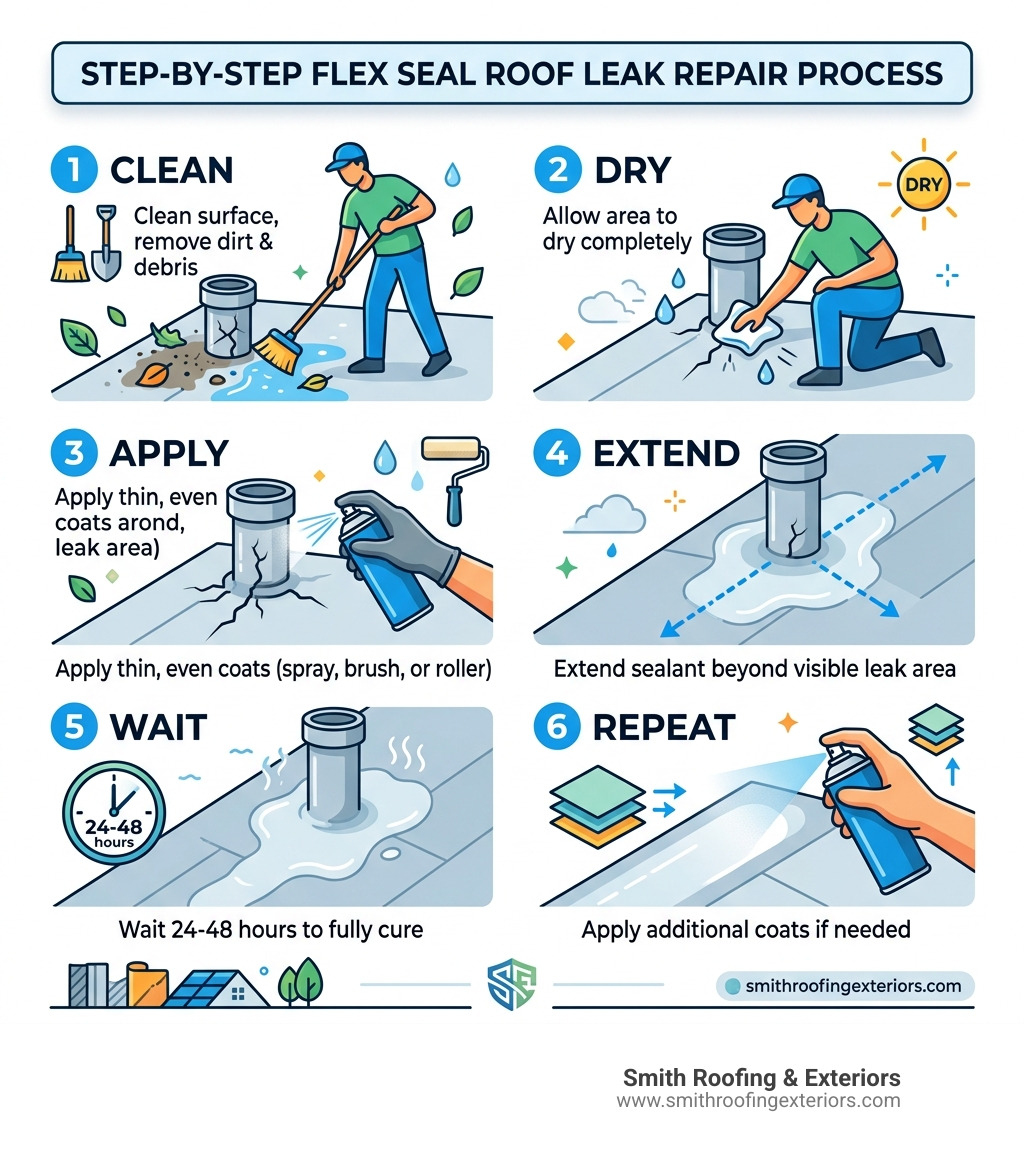
Quick answer: How to use Flex Seal for a roof leak
- Clean the surface — remove dirt, debris, and oil
- Dry the area completely before applying
- Apply thin, even coats using a spray, brush, or roller
- Extend the sealant several inches beyond the visible leak
- Wait 24–48 hours to fully cure before rain exposure
- Repeat with additional coats as needed
Bottom line: Flex Seal works well as a temporary fix for minor leaks — around flashing, vent pipes, gutter seams, or worn shingles. It is not a permanent replacement for professional roof repair.
A flex seal roof leak repair is one of the most searched DIY solutions for homeowners dealing with a dripping ceiling after a Wisconsin storm. And honestly, it makes sense — a can of Flex Seal is cheap, fast, and available at your local hardware store.
But there’s a big difference between stopping a leak temporarily and actually fixing your roof.
Before you climb up there with a can, it helps to know exactly what Flex Seal can and can’t do — so you don’t waste time or make a small problem worse.
I’m Matt Smith, owner of Smith Roofing & Exteriors, and after years of inspecting roofs across rural Wisconsin and helping homeowners navigate everything from minor flex seal roof leak repair patches to full replacements, I’ve seen what works and what gets expensive fast. Let’s walk through everything you need to know.
Flex seal roof leak repair definitions:
Understanding Flex Seal Roof Leak Repair: How It Works
Flex Seal has become a household name, largely thanks to those famous commercials featuring boats made of screen doors. But how does it handle a 45-degree pitch roof in Lake Mills or a flat commercial roof in Jefferson?
At its core, Flex Seal is a liquid rubber coating. When you spray it or brush it on, it starts as a thick liquid that seeps into cracks, crevices, and holes. As it dries, it transforms into a flexible, watertight, and rubberized barrier. It’s designed to be UV-resistant and weatherproof, which is essential for our unpredictable Wisconsin climate.
In our experience at Smith Roofing & Exteriors, we see homeowners using it most effectively on:
- Roof Flashing: The metal pieces around chimneys or dormers that often pull away.
- Vent Pipes: Sealing the base where the rubber boot might have cracked.
- Gutter Seams: Stopping those annoying drips right above your front door.
- Minor Shingle Damage: Covering a small puncture from a fallen branch.
According to flexsealproducts.com, Flex Seal Liquid is trusted by many, boasting over 6,200 five-star reviews, while the Spray version has over 5,790 five-star reviews. It’s clear that for many quick fixes, it gets the job done.
However, we always remind our neighbors in Fort Atkinson that while stopping the water is great, you have to address the “why.” There are 5 reasons to fix roof leaks ASAP, and most of them involve preventing mold and structural rot. This is why you should never ignore a residential roof leak even if it is small. A little bit of rubber on top won’t fix the soggy insulation underneath.
Is Flex Seal a Permanent Fix for Roof Leaks?
This is the million-dollar question. In the roofing industry, we categorize flex seal roof leak repair as a “stopgap” or a “temporary to semi-permanent” solution.
It is an excellent emergency patch. If it’s Saturday night in Delavan and rain is pouring into your living room, Flex Seal is your best friend. It buys you time. However, it is not a structural repair. It doesn’t replace the integrity of a properly installed shingle or a professionally soldered piece of flashing.
Over time, the expansion and contraction of your roof (thermal cycling) can cause DIY sealants to lose their grip, especially if the surface wasn’t perfectly prepared. If you have a flat roof, you might be looking for the best roof sealant for flat roofs and where to find them, but even then, a liquid rubber patch is usually just the first step toward a professional assessment.
Step-by-Step Guide to Applying Flex Seal on a Roof
If you’ve decided to tackle a flex seal roof leak repair yourself, preparation is 90% of the battle. You can’t just spray rubber over a pile of wet leaves and expect it to hold.
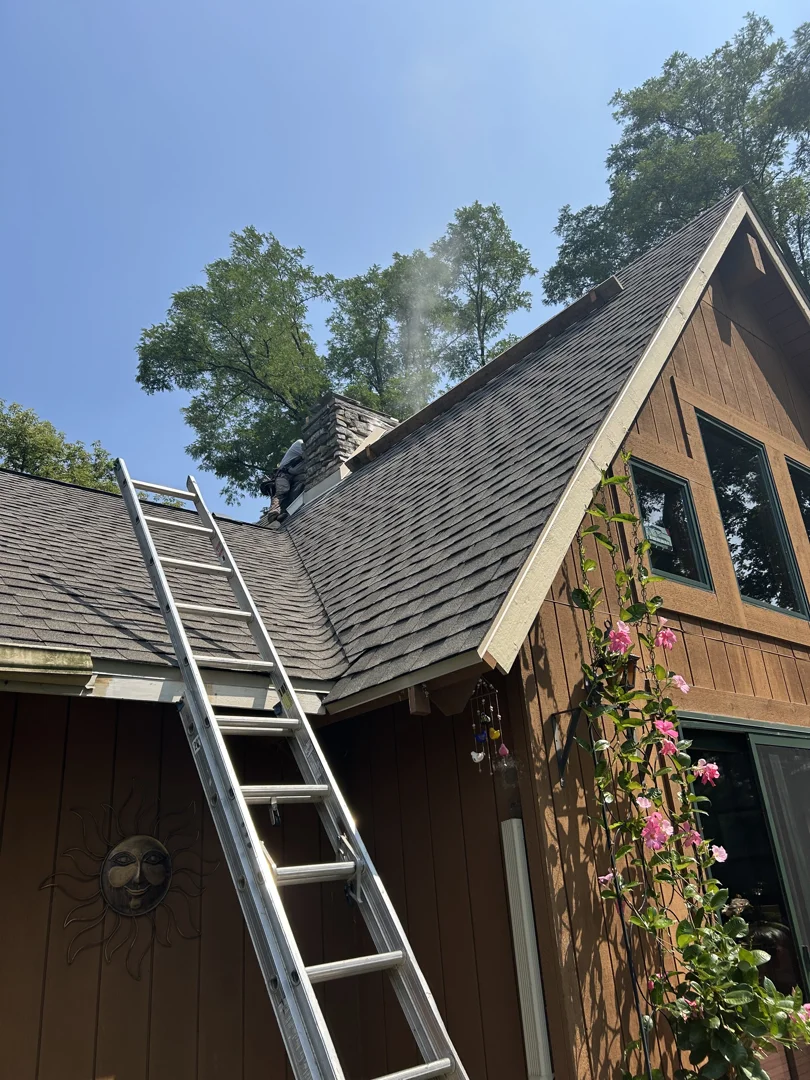
1. Safety First (PPE)
Before you even look at the ladder, gear up. We recommend:
- Safety glasses: To protect against overspray.
- Gloves: This stuff is called “Flex Seal” for a reason — it seals to everything, including your skin.
- Proper Footwear: Soft-soled shoes with good grip.
- Fall Protection: If you’re heading high up, use a harness.
2. Locate the Leak
This is harder than it sounds. Water often travels along rafters before dripping. A common trick we use is the “water test.” Have someone inside the attic with a flashlight while you gently run a hose over suspected areas on the roof. Once you find the entry point, mark it.
3. Surface Preparation
The surface must be clean, dry, and free of grease or oil.
- Use a stiff brush to scrub away dirt and loose shingle granules.
- If you’re applying it to a metal roof in Elkhorn, you might need to lightly etch the surface with sandpaper to help the sealant bond.
- Crucial Step: The area must be bone dry. Moisture is the #1 reason for Flex Seal failure.
4. Application
- Shake the can: Vigorously for at least 10 seconds.
- The Motion: Use an even, sweeping motion from about 8 to 12 inches away.
- The “Feather” Technique: Spray a larger area than the leak itself and feather the edges to create a seamless transition.
- Layering: Don’t try to fill a big hole with one giant glob. Apply a thin coat, let it dry, and then apply another.
For more detailed shingle-specific advice, check out the easiest way to fix roof leak or our guide on how to repair asphalt roof in 7 easy to follow steps.
Best Practices for Flex Seal Roof Leak Repair
To get the most out of your DIY fix, follow these professional tips:
- Temperature Matters: It’s best to apply Flex Seal when temperatures are above 60°F. In the middle of a Walworth winter, the product won’t cure correctly.
- Curing Time: While it might feel dry to the touch in a few hours, it takes 24 to 48 hours to fully cure. Don’t apply it if a massive thunderstorm is forecasted for three hours from now.
- Check Your Work: If you can still see light through the area you sprayed (if looking from the attic), you need more coats.
- Paintability: Once fully cured, you can actually paint over Flex Seal to match your roof color. This helps with the “aesthetic” downside of having a big black rubber patch on your tan shingles.
As noted by Flex Seal Australia, you should always apply multiple coats until all cracks and holes are completely filled. You can also seal your shingles and stop the leak by focusing specifically on the tabs that have lifted.
Pros, Cons, and Common Mistakes to Avoid
Is a flex seal roof leak repair right for you? Let’s weigh it out.
| Feature | Flex Seal DIY | Professional Repair |
|---|---|---|
| Cost | Very Low ($20-$50) | Moderate to High |
| Speed | Instant | Requires Scheduling |
| Longevity | Temporary (Months/Seasons) | Permanent (Years/Decades) |
| Aesthetics | Visible Patch | Seamless Integration |
| Warranty | None | Workmanship & Material Warranty |
The Pros:
- Accessibility: You can buy it in Lake Geneva or Edgerton at almost any hardware store.
- Versatility: Works on metal, tile, asphalt, and even wood.
- Emergency Utility: It stops water now, which prevents interior damage.
The Cons:
- Limited Coverage: One can doesn’t go as far as you think.
- Aesthetic Changes: It can look like a “handyman in a can” mess if not applied carefully.
- UV Degradation: Despite being UV resistant, extreme sun exposure over several Wisconsin summers will eventually cause it to crack.
Common Mistakes We See in Southeastern Wisconsin:
- Applying to Wet Surfaces: We get it — it’s raining, and you want the leak to stop. But the spray won’t stick to a soaking wet shingle. In emergencies, use Flex Tape or Flex Glue, which are better suited for damp conditions.
- Ignoring the Rot: If your roof deck is soft or “spongy,” the wood underneath is rotting. Spraying rubber on top is like putting a band-aid on a broken leg.
- Applying Too Thick: One thick layer often traps solvents and prevents proper curing, leading to bubbles or peeling.
If you’re working with a tight budget, you might look into how to repair flat roof on a budget. But always keep in mind the long-term goal: roof repair vs replacement — what’s the right move?
When to Choose Professional Flex Seal Roof Leak Repair Alternatives
While we love a proactive homeowner, there are times when you need to put the can down and call in the pros at Smith Roofing & Exteriors.
Call us if:
- The leak is over a “valley”: These are high-volume water areas that require complex flashing.
- There is structural sagging: This indicates the rafters or decking are compromised.
- The leak persists: If you’ve applied Flex Seal three times and it’s still dripping, the water entry point is elsewhere.
- Large Holes: For gaps larger than 1/4 inch, a simple spray isn’t enough. You’d need Flex Paste with wire mesh, or better yet, a new piece of roofing material.
Understanding the price of protection: shingle roof repair cost guide can help you decide if a DIY patch is worth the risk or if it’s time for fast and reliable emergency roof repair.
Frequently Asked Questions about Flex Seal

How long does Flex Seal take to dry and cure on a roof?
Flex Seal typically becomes dry to the touch in 2 to 3 hours. However, it takes 24 to 48 hours to fully cure. High humidity (common in our Wisconsin summers) or cooler temperatures (common in our falls) will extend this time. We recommend waiting the full 48 hours before testing the area with a hose or expecting it to withstand a heavy downpour.
Does Flex Seal work on asphalt shingles, metal, and tile?
Yes! Flex Seal is compatible with a wide range of materials including:
- Asphalt Shingles: Great for small punctures or sealing around nails.
- Metal Roofs: Excellent for pinhole leaks or seams.
- Tile and Concrete: It adheres well to masonry.
- Modern Membranes: It also works on TPO, PVC, and EPDM, though you should always test a small area first to ensure adhesion.
What weather conditions affect Flex Seal’s performance?
For the best bond, apply Flex Seal when it is above 60°F. If the temperature is below 50°F, the liquid won’t flow correctly and the chemical bond will be weak. Also, avoid application if rain is in the forecast within the 24-hour curing window. Long-term, extreme UV exposure in unshaded areas can accelerate the degradation of the rubberized coating.
Conclusion
At the end of the day, flex seal roof leak repair is a fantastic tool to have in your homeowner’s arsenal. It’s the “handyman in a can” that can save your ceiling during a midnight storm in Burlington or Walworth. It buys you the most valuable thing a homeowner can have: time.
However, a roof is a system. It’s not just the top layer; it’s the underlayment, the decking, the ventilation, and the flashing working together. A patch is a great temporary fix, but for long-term protection and peace of mind, a professional inspection is irreplaceable.
Whether you’re in Fort Atkinson, Lake Geneva, or anywhere in Southeastern Wisconsin, Smith Roofing & Exteriors is here to help. We offer 24/7 emergency services and transparent pricing to ensure your home stays dry, no matter what the weather throws at us.
If your DIY patch has reached its limit, or if you want a permanent solution to that nagging drip, don’t hesitate to reach out. We’re your local experts for Professional Residential Roof Repair.
Stay dry out there!