What to Do When Your Shingle Roof Is Leaking
Shingle roof leak repair is something most homeowners will face at least once. The good news? Many leaks can be fixed without replacing your entire roof.
Here’s a quick overview of how to handle it:
- Find the leak – Check your attic for water stains, then trace back to the roof surface
- Identify the damage – Look for cracked, curled, or missing shingles, failed flashing, or damaged vents
- Apply a temporary fix – Use roofing cement or a tarp to stop water entry right away
- Make the permanent repair – Replace damaged shingles, reseal flashing, or patch the underlayment
- Call a pro if needed – Sagging decks, widespread damage, or steep slopes require professional help
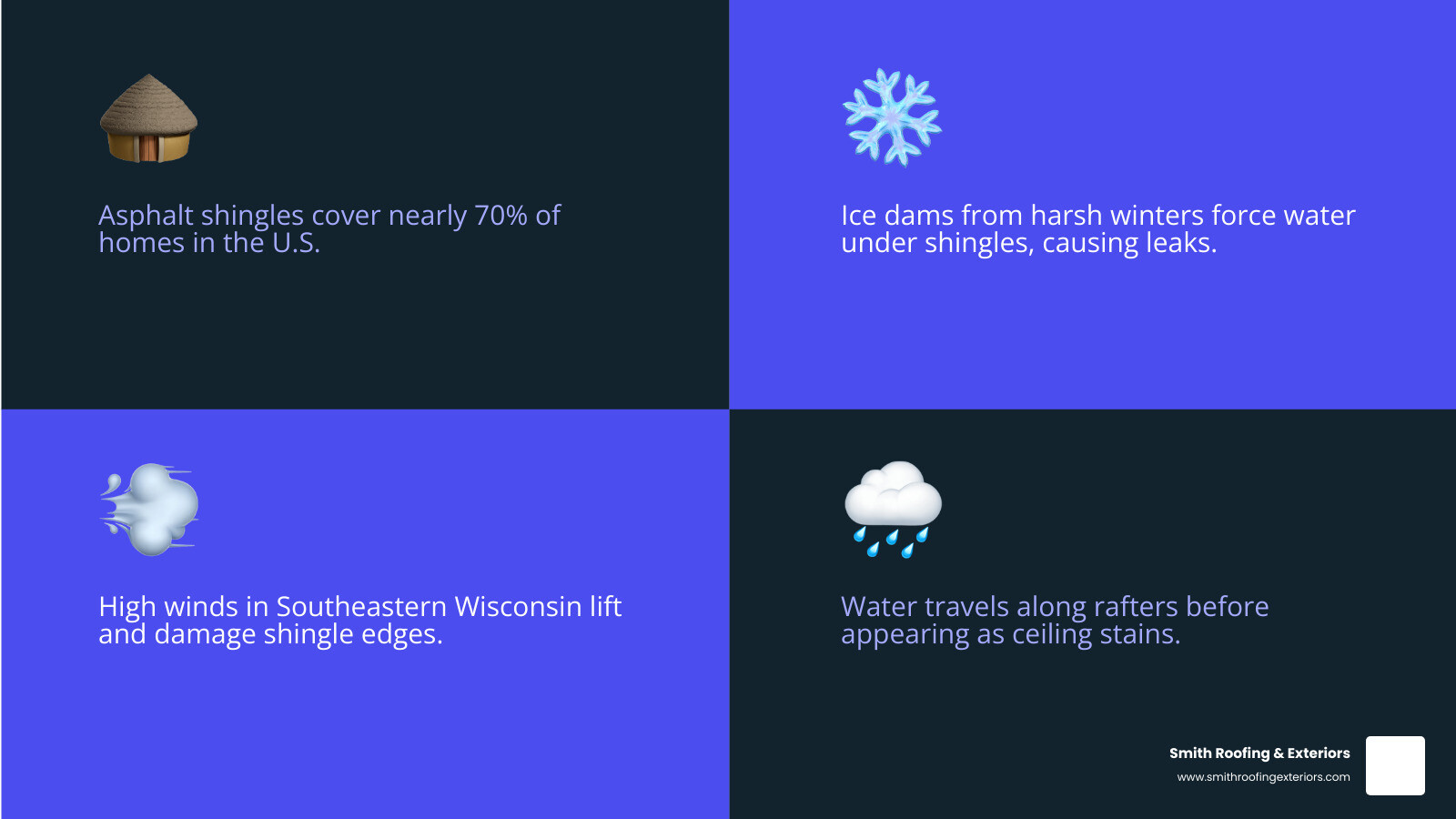
Asphalt shingles cover nearly 70% of homes in the U.S. They’re durable — but not invincible. Wisconsin’s harsh winters, ice, and wind put real stress on a roof. A small leak left alone can quickly turn into mold, rot, and costly structural damage.
Water is sneaky too. The drip you see on your ceiling is often not directly below the entry point on the roof. It travels along rafters and sheathing before it ever shows up inside.
I’m Matt Smith, owner of Smith Roofing & Exteriors, and I’ve spent years helping Wisconsin homeowners diagnose and fix shingle roof leak repair problems of every size — from a single cracked shingle to widespread storm damage. In this guide, I’ll walk you through exactly what to do, step by step.
Common Causes of Shingle Roof Leaks
Understanding why your roof is leaking is the first step toward a successful shingle roof leak repair. According to the National Roofing Contractors Association, asphalt shingles are the most popular roofing material because they are cost-effective and durable, but even the best materials eventually succumb to the elements.
In Southeastern Wisconsin, we see a few usual suspects more often than others:
- Flashing Failure: Flashing is the thin metal installed at transitions—like where the roof meets a wall or a chimney. Over time, the sealant dries out, or the metal pulls away, creating a direct path for water.
- Ice Dams: This is a classic Wisconsin problem. Snow melts on the upper part of the roof, runs down to the cold eaves, and refreezes. This “dam” forces water back up under the shingles. This is one of the top 5 reasons to fix roof leaks ASAP to prevent massive interior damage.
- Cracked Vent Boots: The rubber seals around your plumbing vents (the pipes sticking out of your roof) are often the first things to fail. They dry out and crack in the sun, letting water run straight down the pipe into your walls.
- Valley Wear: Valleys are where two roof slopes meet. They handle a high volume of water. If the shingles weren’t “tipped” (corners cut) correctly or if the underlayment has failed, leaks are inevitable.
- Chimney Masonry: Sometimes the leak isn’t the shingles at all, but the brick and mortar of the chimney itself absorbing water or a cracked chimney cap.
How to Safely Locate the Source of a Roof Leak
Finding the entry point is often harder than the actual shingle roof leak repair. As we mentioned, water rarely travels in a straight line. It hits the roof deck, runs down a rafter, and might drip ten feet away from where it started.
The Attic Inspection
The best place to start is in the dark. Go into your attic with a high-powered flashlight. Look for:
- Wet spots or dark stains on the plywood sheathing.
- Molding or “white” tracks on the rafters.
- Damp insulation (fiberglass insulation loses its R-value when wet).
The Garden Hose Test
If you can’t find the source visually, you may need to find where the leak is coming from by simulating rain. This requires two people: one on the roof with a garden hose and one in the attic with a flashlight and a cell phone.
Start low. Run the hose over a specific area (like a vent or a valley) for several minutes while the person inside watches. If nothing happens, move up the roof. Be patient—it can take time for the water to soak through and show up. For more tips on detection, check out our Category Roof Leak section.
Safety First
We cannot stress this enough: Roofing is dangerous.
- Ladder Stability: Ensure your ladder is on level ground and extends at least three feet above the roof edge.
- Safety Harness: If you are getting on a roof, use a fall arrest system.
- Weather: Never get on a roof that is wet, icy, or during high winds.
Essential Tools and Materials for Shingle Roof Leak Repair
Before you start, gather your supplies. Having everything on hand prevents multiple trips up and down the ladder.
| Item | Purpose | Estimated DIY Cost |
|---|---|---|
| Roofing Cement | Sealing cracks and securing tabs | $10 – $15 |
| Flat Pry Bar | Prying up shingles and pulling nails | $10 – $20 |
| Utility Knife | Cutting shingles and underlayment | $5 – $15 |
| Galvanized Nails | Securing new shingles (1-1/4 inch) | $5 – $10 |
| Caulk Gun | Applying sealant precisely | $10 – $25 |
| Replacement Shingles | To replace damaged or missing pieces | $30 – $60 (per bundle) |
| Professional Repair | Expert labor and warranty | $350 – $1,200 |
For a deeper dive into the costs of professional versus DIY work, you can read more about How To Find & Repair Roof Leaks.
Step-by-Step Guide to Shingle Roof Leak Repair
Once you’ve located the leak and have your tools, it’s time to get to work. Most shingle roof leak repair jobs involve replacing a few damaged shingles or resealing a specific area.
The Repair Process
- Loosen the Shingles: Use your flat bar to gently break the sealant strip on the damaged shingle and the two shingles directly above it.
- Pull the Nails: You’ll need to remove the nails from the damaged shingle and the shingle above it, as those nails also pass through the top of the damaged piece.
- Remove the Shingle: Slide the damaged piece out. If the underlayment (the black paper) is torn, apply a patch of roofing cement over the hole.
- Seal and Secure: Slide the new shingle into place. Nail it down using four to six galvanized nails, typically placed just above the sealant strip.
- Final Seal: Apply a small dab of roofing cement to the underside of each tab to help the new shingle bond to the ones around it.
Taking the time to do this correctly shows the difference that a timely roof repair can make in the lifespan of your home.
Replacing Damaged Shingles for Permanent Shingle Roof Leak Repair
For a truly professional look and a lasting seal, there are a few “pro tips” to follow. First, use a utility knife to round the back corners of the new shingle. This makes it much easier to slide it under the existing shingles without catching on the underlayment.
Always check the alignment. Shingles are designed to overlap in a specific pattern to shed water. If you’re unsure of the pattern, consult a guide on How to Repair a Leaky Roof to ensure your nailing pattern matches the manufacturer’s specifications.
Temporary Fixes for Emergency Shingle Roof Leak Repair
Sometimes the weather won’t cooperate for a permanent fix. If it’s pouring rain or middle-of-the-night in Fort Atkinson, you need an emergency solution.
- Roofing Tarps: This is the most effective temporary fix. Use a tarp that extends over the ridge of the roof so water can’t get under the top edge. Secure it with 2×4 boards screwed into the roof (yes, you’ll have to fix those holes later, but it beats a flooded living room).
- Plastic Sheeting: For very small areas, heavy-duty plastic and roofing cement can buy you a few days of dry weather.
- Emergency Sealants: Products like “Wet Patch” are designed to be applied even in standing water.
If you aren’t sure if your situation qualifies as an emergency, look for the top 7 signs your home needs emergency roof repair or browse our Category Emergency Roof Repair for more immediate advice.
When to Call a Professional for Roof Repairs
While we love a good DIY project, some shingle roof leak repair jobs are best left to the experts at Smith Roofing & Exteriors.
- Structural Sagging: If you see the roof line dipping or the sheathing feels “spongy” under your feet, the wood is rotting. This requires structural work, not just new shingles.
- Widespread Damage: If you are losing shingles in multiple areas, your roof may be at the end of its life. You’ll need to decide on roof repair vs replacement.
- Steep Pitches: If your roof is too steep to walk on comfortably, don’t risk your life. We have the safety equipment and training to handle high-pitch roofs safely.
- Insurance Claims: If your leak was caused by a storm or hail, your insurance company will likely require a professional estimate and a licensed contractor to perform the work.
- Warranty Protection: DIY repairs can sometimes void your manufacturer’s warranty. A professional repair keeps your long-term protection intact.
Recognizing the signs you need a roofing company for repairs or replacement early can save you thousands of dollars in the long run.
Frequently Asked Questions about Shingle Roofs
Can a roof leak be fixed without replacing the entire roof?
Absolutely. In fact, most of the calls we get in Lake Mills and Jefferson are for localized repairs. If the rest of your shingles are in good shape—meaning they aren’t losing all their granules and aren’t brittle—a patch or a flashing repair can easily extend the life of your roof by several years.
How much does the average shingle roof leak repair cost?
Nationally, homeowners pay an average of $750 for a professional repair, with most jobs falling between $350 and $1,200. A DIY fix can cost as little as $50 to $100 in materials, but your time and safety also have a value!
How often should I inspect my shingle roof for potential leaks?
We recommend a bi-annual “check-up”—once in the spring after the snow melts and once in the fall before the first freeze. You should also do a quick visual check from the ground with binoculars after any major wind or hail storm. Keeping your gutters clean is also vital; clogged gutters can back water up under your shingles, causing “mystery leaks” at the eaves.
Conclusion
A leaking roof is a headache, but shingle roof leak repair doesn’t have to be a nightmare. By catching leaks early, using the right materials, and knowing when to call in the pros, you can protect your home and your wallet.
At Smith Roofing & Exteriors, we take pride in being the local experts that Southeastern Wisconsin trusts. Whether you’re in Fort Atkinson, Delavan, or Lake Geneva, our team is ready to provide transparent pricing and superior workmanship to keep your home dry.
Don’t let a small drip turn into a big disaster. Schedule your professional residential roof inspection today and let us give you the peace of mind you deserve.