What Is Roof Ventilation — and Why Does It Matter?
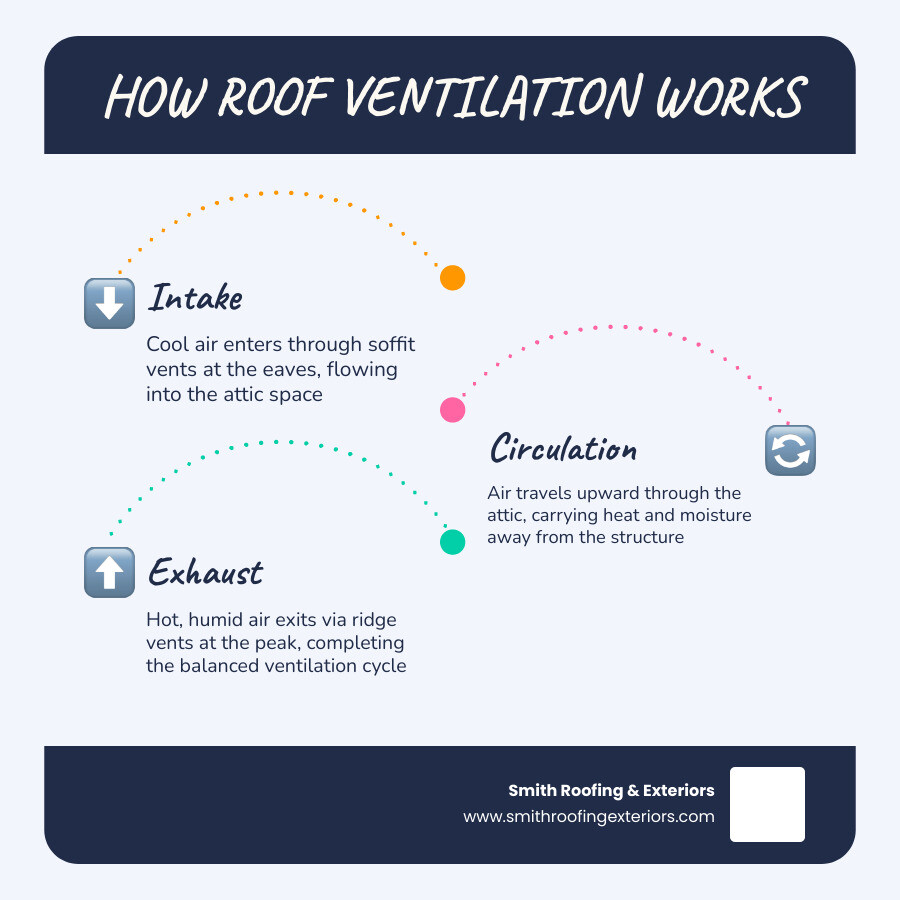
Roof ventilation is the system that moves fresh air through your attic, bringing cool air in at the bottom and pushing hot, moist air out at the top.
Here’s a quick summary of what you need to know:
- What it is: A balanced system of intake vents (at the soffits) and exhaust vents (at the ridge) that keeps air circulating through your attic
- Why it matters: Without it, attic temperatures can climb to 140°F on a 90°F day — damaging shingles, rotting wood, and driving up energy bills
- The standard: The U.S. Federal Housing Authority recommends 1 square foot of ventilation for every 300 square feet of attic floor space, split evenly between intake and exhaust
- Signs of a problem: Ice dams in winter, mold or musty odors, hot ceilings, or unusually high cooling costs
- The fix: A properly balanced ventilation system using soffit vents, ridge vents, and — when needed — powered or solar attic fans
Most homeowners don’t think about their attic until something goes wrong. But by then, the damage is already done. A well-ventilated roof quietly protects your home every season — keeping it cooler in summer, drier in winter, and structurally sound year-round. That’s especially true in Wisconsin, where temperature swings between seasons put serious stress on roofing systems.
I’m Matt Smith, owner of Smith Roofing & Exteriors, and with years of hands-on experience diagnosing and fixing roof ventilation problems across rural Wisconsin, I’ve seen how much damage a poorly ventilated attic can cause. In this guide, I’ll walk you through everything you need to know to protect your home.
Why Proper Roof Ventilation is Essential for Your Home
When we talk about roof ventilation, we aren’t just talking about a few holes in your roof. We are talking about the “lungs” of your home. If your house can’t breathe, things start to go south very quickly. In our service areas like Fort Atkinson and Lake Mills, we see homes face everything from humid July afternoons to sub-zero January nights. Without a way to regulate that environment, your roofing system is under constant attack.
One of the biggest reasons for proper venting is heat removal. On a typical 90°F summer day in Southeastern Wisconsin, a poorly ventilated attic can trap heat until it reaches a staggering 140°F. This “super-heated” air doesn’t just stay in the attic; it radiates down into your living spaces, forcing your air conditioner to work overtime. This is why understanding The Role of Roofing in Energy Efficiency is so critical for local homeowners looking to lower their utility bills.
Beyond comfort, ventilation is about shingle longevity and structural integrity. According to the Asphalt Roofing Manufacturers Association (ARMA), excessive heat buildup can cause shingles to age prematurely, lose their protective granules, and even buckle. Moisture is the other enemy. Everyday activities like showering, cooking, and doing laundry release moisture vapor that rises into the attic. If it can’t escape, it condenses on the underside of your roof deck, leading to wood rot and mold.

Understanding Balanced Attic Ventilation Systems
The “secret sauce” to a healthy roof is balance. You can’t just have one type of vent and call it a day. A truly effective system relies on a 50/50 ratio of intake and exhaust. If you have too much exhaust and not enough intake, the system might actually start pulling conditioned air out of your house through the ceiling—basically throwing your money out the window!
This airflow is powered by two natural forces:
- The Stack Effect: Hot air is naturally less dense than cold air, so it rises. As it escapes through the exhaust vents at the top of your roof, it creates a vacuum that pulls fresh, cooler air in through the intake vents at the bottom.
- The Wind Effect: Even a slight breeze blowing over the ridge of your roof creates a low-pressure zone that “sucks” air out of the attic, keeping the cycle moving.
Following Roof Ventilation Fundamentals ensures that these forces work for you, not against you. Part of this process involves regular check-ups, which we discuss in our guide on how to properly maintain your roof to avoid leaks.
The Role of Intake Vents in Roof Ventilation
Intake vents are the “inhale” of the system. They are typically located at the lowest part of your roof, usually under the eaves in the soffits. As The Home Depot’s guide on vent types points out, these are essential for drawing in that fresh outside air.
Common intake options include:
- Soffit Vents: These are the most popular. They can be individual rectangular vents or continuous strips that run the length of your eaves.
- Drip Edge Vents: Used on homes with little to no soffit overhang, these allow air to enter right at the gutter line.
- Air Baffles (Rafter Vents): These are vital! Baffles are plastic or foam channels installed between rafters to ensure that your attic insulation doesn’t block the airflow coming from the soffit vents.
Exhaust Vents and the Science of Airflow
Exhaust vents are the “exhale.” They should be placed at or near the highest point of the roof—the ridge—where the hottest air naturally collects.
- Ridge Vents: These run along the entire peak of the roof and are often covered with shingles so they are nearly invisible. They provide the most uniform ventilation.
- Static Vents (Box Vents): These are the square-shaped vents you see sitting on the back slopes of roofs. They have no moving parts and rely entirely on the stack effect.
- Turbine Vents: Often called “whirlybirds,” these use the wind to spin a fan that pulls air out of the attic.
- Powered Ventilators & Solar Fans: These use electricity or solar power to force air out. While powerful, they must be paired with plenty of intake vents to avoid creating a vacuum in your home.

Calculating Your Needs: The 1/300 Rule and Standards
How do you know if you have enough vents? Professionals use a measurement called Net Free Area (NFA). This is the total unobstructed area through which air can pass. You can’t just measure the outside of a vent; you have to account for the grates and screens that reduce the actual opening.
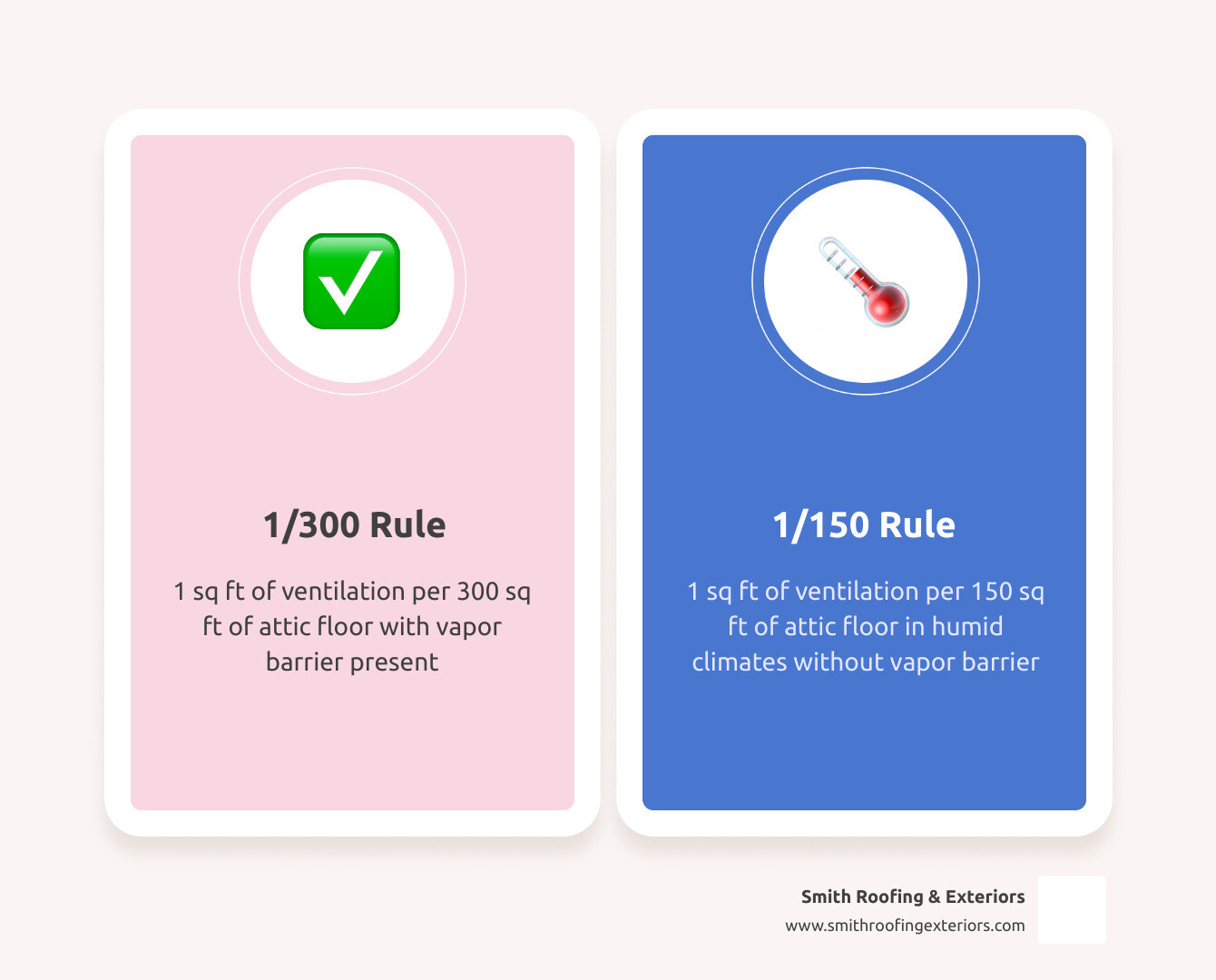
The standard most building codes follow is the 1/300 rule. This means you need 1 square foot of ventilation for every 300 square feet of attic floor space. However, this rule assumes you have a vapor barrier on the “warm side” of your ceiling. If you don’t, or if you live in a particularly humid climate, you might need to follow the 1/150 rule (doubling the ventilation).
According to Bob Vila’s expert advice, calculating this correctly is the difference between a roof that lasts 30 years and one that fails in 15. If you’re unsure about your current setup, it’s often a good idea to include a check-up during your regular roof tune-ups and preventative care to ensure you are meeting local Wisconsin building codes.
Seasonal Benefits and Preventing Common Problems
In places like Jefferson and Burlington, WI, our roofs face two very different battles depending on the season.
In the Winter: Proper ventilation keeps your roof deck cold. You might think, “Why would I want a cold attic?” The answer is ice dams. When heat escapes from your house into the attic, it warms the roof deck and melts the snow on top. That water runs down to the cold eaves (which aren’t over the warm attic) and freezes, creating a dam of ice. This dam backs up water under your shingles, causing leaks. ENERGY STAR notes that keeping the attic air temperature within 15 degrees of the outside temperature is the best way to prevent this.
In the Summer: Ventilation removes the super-heated air that bakes your shingles and makes your upstairs bedrooms feel like saunas. It also helps manage moisture from bathrooms. We always tell our customers: never vent your bathroom fan directly into the attic! It should go all the way out through the roof. For more on this, check out our ultimate guide to bathroom roof ventilation.
Maximizing Summer Efficiency with Roof Ventilation
A cool attic means a happy HVAC system. When your attic stays at a reasonable temperature, your air conditioner doesn’t have to fight against a 140-degree ceiling. This extends the life of your cooling equipment and keeps your home much more comfortable.
When choosing vents, we often recommend aluminum over galvanized steel. Aluminum vents never rust, even after decades of exposure to Wisconsin snow and rain. While galvanized steel is strong, once the coating is scratched or worn, it will begin to corrode. Aluminum maintains its structural integrity and aesthetic look much longer. If you’re looking for even more ways to brighten and vent your home, you might consider the benefits of adding skylights, which can sometimes offer additional passive venting options.
Frequently Asked Questions about Roof Ventilation
How do I know if my attic is poorly ventilated?
There are several “red flags” homeowners should watch for:
- The Touch Test: On a hot day, if your ceiling feels warm to the touch, your attic is likely trapping too much heat.
- Ice Dams: If you see large icicles or thick ridges of ice along your gutters in winter, you have a ventilation or insulation problem.
- Musty Odors: This is a sign of trapped moisture and potential mold growth.
- High Bills: An unexplained spike in cooling costs often points to an overheated attic.
Is aluminum better than galvanized steel for roof vents?
Yes, in almost every case. Aluminum is naturally corrosion-resistant. In our region, where we use salt on the roads and experience high humidity, galvanized steel vents will eventually rust and leave streaks on your roof. Aluminum vents stay looking new and won’t develop holes that could allow pests or water to enter.
Can I have too much ventilation in my roof?
It’s less about “too much” and more about “unbalanced.” If you have massive exhaust fans but no intake, you’ll create a vacuum that pulls air from your house. Also, if you mix different types of exhaust vents—like putting a box vent right next to a ridge vent—you can “short-circuit” the system. The air will just move between those two vents instead of pulling fresh air up from the soffits.
Conclusion
At Smith Roofing & Exteriors, we believe that a roof is more than just shingles—it’s a complex system that protects your biggest investment. Whether you are in Elkhorn, Delavan, or right here in Fort Atkinson, ensuring your roof ventilation is balanced and functional is the best way to avoid mold, rot, and high energy bills.
If you’re worried your attic might be running too hot or you’ve noticed ice dams forming in the winter, don’t wait for a leak to happen. Our experienced local team can provide a professional ventilation assessment and help you choose the right materials to keep your home breathing easy for years to come. A healthy home starts with a healthy roof! For more tips on keeping your home in top shape, revisit our guide on the role of roofing in energy efficiency.