What You Need to Know About Bathroom Roof Ventilation
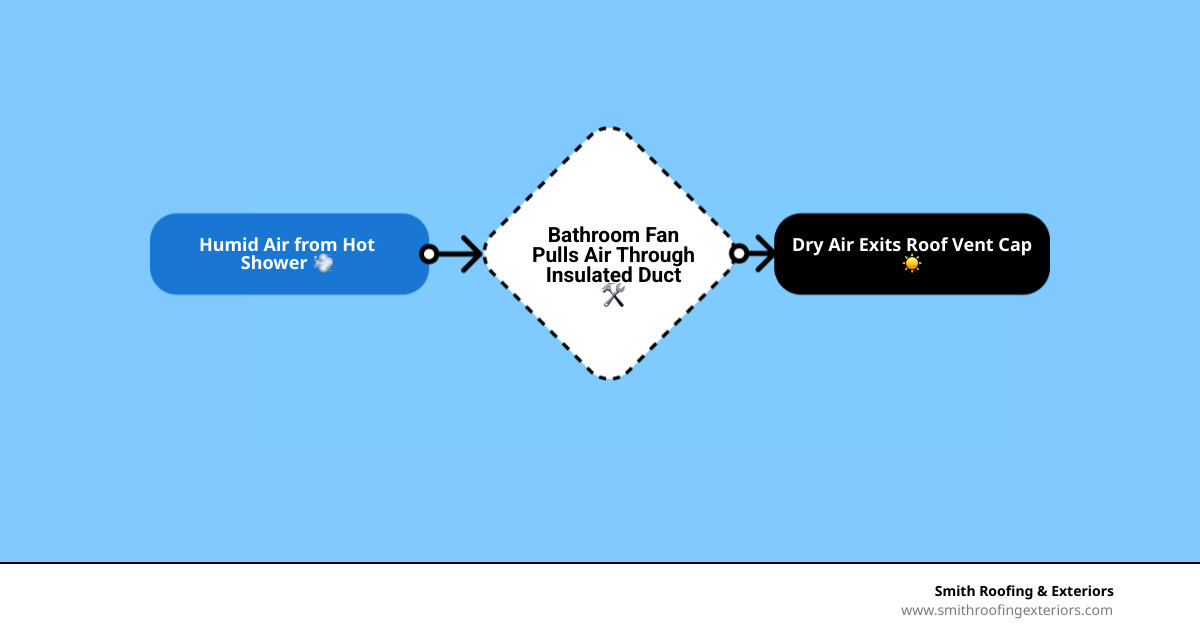
Bathroom roof ventilation is the system that moves humid, stale air from your bathroom through a duct and out through a vent cap on your roof — keeping moisture from destroying your home from the inside out.
Here’s a quick overview of how it works and what you need:
| Step | What It Involves |
|---|---|
| Fan selection | Choose a fan rated for your bathroom size (min. 50 CFM for small, 100+ CFM for large) |
| Duct routing | Run insulated duct from fan through attic to roof — shortest path possible |
| Roof vent cap | Install a weatherproof cap with damper and pest screen at the roof exit point |
| Sealing | Flash and seal around the vent to keep rain and wind out |
| Maintenance | Clean screens, inspect flashing, and test airflow at least once a year |
Without a working system, warm bathroom air rises and condenses on your attic framing, insulation, and roof deck. Over time, that hidden moisture causes wood rot, mold, and structural damage — problems that are expensive to fix and easy to prevent.
Wisconsin winters make this even more urgent. Cold attics and warm bathroom air are a recipe for ice dams, frost buildup in ductwork, and mold that spreads silently behind your walls.
I’m Matt Smith, owner of Smith Roofing & Exteriors, and I’ve seen how poor bathroom roof ventilation quietly destroys roofs and attics across Wisconsin — and how straightforward it is to do it right. Let’s walk through everything you need to know.
Why Proper Bathroom Roof Ventilation is Essential
When we talk to homeowners in Fort Atkinson or Lake Mills, they often think the bathroom fan is just for “smells.” While that’s a nice perk, the real job of bathroom roof ventilation is moisture management. Every time you take a hot shower, you’re releasing gallons of water vapor into the air. If that air isn’t physically moved outside, it looks for the first cool surface it can find to turn back into liquid water.
In our neck of the woods, that surface is usually your roof deck or attic rafters. This leads to several nasty issues:
- Wood Rot and Structural Integrity: Persistent moisture softens plywood and rafters. Over time, this can lead to sagging rooflines and compromised structural strength.
- Attic Health: A damp attic is a breeding ground for black mold. Once mold takes hold in your insulation, it reduces the R-value (insulating power) and can eventually impact the air quality inside your living space.
- Ice Damming: In the winter, if your bathroom vent leaks warm air into the attic instead of sending it through the roof, it warms the roof deck. This melts the snow above, which then refreezes at the cold eaves, creating ice dams that can tear off gutters and cause interior leaks.
Properly venting through the roof is widely considered the gold standard. According to the expert insights at Wilmington Roof Pro, roof-mounted vents reduce backdraft risks because they exit at a higher point than wall vents, taking advantage of natural heat rise.
Furthermore, 2026 building standards emphasize that a bathroom exhaust must be a dedicated system. You cannot simply “aim” a duct toward a ridge vent or a soffit vent. Those are intake and exhaust points for the attic itself; mixing moist bathroom air into that flow disrupts the balance and almost guarantees condensation on the underside of your shingles.
Selecting the Best Bathroom Roof Ventilation Hardware
Not all roof vents are created equal. When we perform installations in Jefferson or Elkhorn, we look for hardware that can withstand the “Big Four”: wind, rain, snow, and critters.
- Static Vents vs. Powered Fans: Most residential setups use a ceiling-mounted fan connected to a static roof “cap” or “jack.” However, for very large bathrooms or long duct runs, a powered roof-mount fan can provide extra pulling power.
- The Roof Jack: Products like the Bath PRO™ Roof Jack are favorites because they are designed specifically for this task. They often feature integrated flanges that work on any roof pitch and built-in dampers.
- Material Durability: Look for galvanized steel with epoxy finishes or high-density polyethylene with UV inhibitors. These won’t crack under the harsh Wisconsin sun or rust during a humid July.
- Wildlife Guards and Dampers: A good vent must have a screen to keep out nesting birds and squirrels. Just as importantly, it needs a backdraft damper—a little flap that opens when the fan is on but stays shut when it’s off to keep cold winter air from blowing into your bathroom.
- Impact Ratings: In areas prone to hail, look for a UL 2218 Class 4 impact rating. This means the vent can withstand a 2-inch steel ball dropped from 20 feet without breaking. It’s the highest rating available and a must-have for long-term peace of mind.
Sizing and Planning Your Ventilation System
One of the most common mistakes we see is “under-sizing.” If your fan is too weak, the steam stays in the room. If the vent cap is too small, the fan has to work twice as hard, leading to early motor failure.
The CFM Calculation
Airflow is measured in Cubic Feet per Minute (CFM). The general rule of thumb is 1 CFM for every square foot of bathroom space. However, fixtures add to the load.
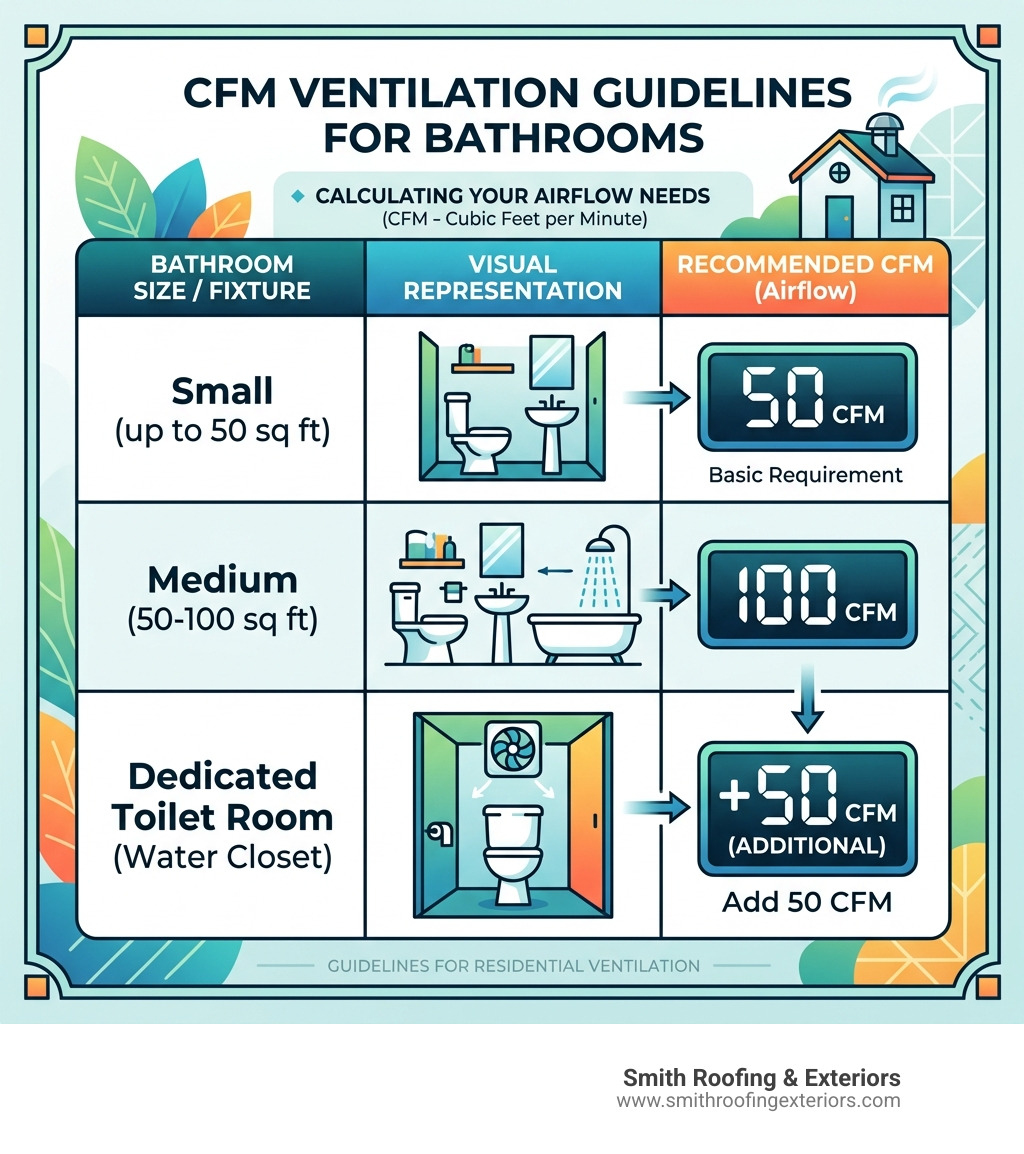
| Bathroom Size/Feature | Recommended CFM |
|---|---|
| Small (up to 50 sq ft) | 50 CFM |
| Medium (50-100 sq ft) | 100 CFM |
| Toilet Room | +50 CFM |
| Shower | +50 CFM |
| Bathtub | +50 CFM |
| Jetted/Whirlpool Tub | +100 CFM |
If you have a 100-square-foot bathroom with a jetted tub, you shouldn’t settle for a basic 50 CFM fan. You’ll likely need something in the 150 CFM range to clear the air effectively.
Sones and Noise
Don’t forget the “Sone” rating. A sone is a measure of sound. A rating of 4.0 sones sounds like a loud office or a buzzing refrigerator. A rating of 1.0 or less is nearly silent. If you want a spa-like experience in your Lake Geneva home, aim for a fan under 1.5 sones.
Net Free Area (NFA) and Codes
Building codes are very specific: most rooftop bath vents must provide a minimum of 12.5 square inches of net free ventilation area. This ensures the air can actually escape without resistance. When planning the location, keep the vent at least 3 feet away from any attic intake vents (like soffit vents) to prevent the moist air from being sucked right back into your attic.
Step-by-Step Guide to Installing Bathroom Roof Ventilation
Installing a vent is a two-part job: the electrical/ceiling work inside and the roofing work outside. Safety first: Always use a harness when working on the roof and a voltage tester when touching wires.
Tools You’ll Need
- Drill and 4 1/4-inch hole saw (or a reciprocating saw)
- Roofing nails and hammer
- High-quality roofing cement and caulk gun
- Pry bar (for lifting shingles)
- Aviation snips
- Insulated ducting and foil tape
The Installation Process
- Mark Your Spot: From inside the attic, find a spot between the rafters (ceiling joists are typically 16 to 24 inches apart). Drive a long nail up through the roof deck so you can find the spot from the outside.
- Cut the Hole: On the roof, use your nail as the center point. For a standard 4-inch duct, you’ll usually cut a 5.5-inch diameter opening to allow for the vent neck and some wiggle room.
- Prepare the Shingles: Use a pry bar to carefully loosen the shingles above the hole. You need to be able to slide the top flange of the vent cap underneath them.
- Seal and Secure: Apply a generous bead of roofing cement to the bottom of the vent flange. Slide the top half under the shingles and let the bottom half sit on top of the shingles (this creates a “shingle effect” where water flows over the vent and down the roof).
- Nail It Down: Use roofing nails in the pre-punched slots. Cover the nail heads with a dab of sealant.
- The “This Old House” Method: As noted by the experts at This Old House, creating a secure connection is key. You can use a sheet metal sleeve with small slits bent into tabs to securely “sandwich” the roof deck, providing a rock-solid base for your ducting.
Proper Ducting for Bathroom Roof Ventilation
The duct is the bridge between your bathroom and the outside world. If the bridge is broken, the moisture never leaves.
- Insulation is Non-Negotiable: In Southeastern Wisconsin, you must use insulated ducting (minimum R-6 value). Without insulation, the warm air hitting the cold duct in the attic will turn into water immediately, running back down the pipe and dripping out of your fan onto your bathroom floor.
- Material Choice: Rigid metal ducting is best for airflow, but flexible insulated ducting is often easier for DIYers. If using flex duct, keep it pulled tight.
- Avoid “The Slinky”: Do not leave excess ducting coiled in the attic. Every bend and sag creates resistance and traps condensation. Keep the path as straight and short as possible.
- Seal the Joints: Never use “duck” tape (the fabric kind). It dries out and falls off. Use UL-listed foil duct tape or mechanical clamps to ensure airtight seals at both the fan and the roof cap.
Maintenance and Troubleshooting for Long-Term Performance
A bathroom roof ventilation system is “out of sight, out of mind” until a brown stain appears on your ceiling. We recommend a quick check-up every spring.
- Clean the Grille: Dust builds up on the bathroom ceiling intake. If the grille is clogged, the fan can’t pull air. Pop it off and wash it in soapy water once a year.
- Check the Roof Cap: From the outside (or using binoculars), look for bird nests or debris stuck in the screen. If the screen is blocked, your fan is just spinning its wheels.
- Listen for Noise: If the fan starts grinding or rattling, the motor may be failing or the damper might be stuck. A stuck damper can cause “ghost noises” during windstorms.
- Inspect the Flashing: After a heavy Wisconsin storm or a winter with significant snow, check the base of the vent for cracked sealant. Our local 110 mph wind-driven rain testing (TAS100A standards) shows that even the best vents can leak if the sealant isn’t maintained.
- The Toilet Paper Test: Not sure if your fan is actually working? Hold a single square of toilet paper up to the intake grille while the fan is running. It should be held firmly against the grille by the suction. If it falls, you have a blockage or a failing motor.
Frequently Asked Questions about Bathroom Venting
How do I calculate the correct CFM for my bathroom?
Measure the square footage of your floor (length x width). For a standard 8-foot ceiling, you need at least 1 CFM per square foot. If your bathroom is 8×10 (80 sq ft), you need an 80 CFM fan. If your ceilings are higher than 8 feet, use the formula: (Square Footage x Ceiling Height x 0.13), then round up to the nearest 10.
Can I vent my bathroom fan directly into the attic?
Absolutely not. This is one of the most damaging mistakes a homeowner can make. Venting into the attic dumps gallons of moisture onto your wood structure and insulation. It leads to mold growth within months and can rot your roof deck from the inside out. In Wisconsin, this also leads to massive frost buildup in the winter, which melts and causes “phantom leaks” in the spring.
What is the best location on the roof for an exhaust vent?
The best location is the shortest, straightest path from the bathroom ceiling. Ideally, the vent should be placed on the back slope of the roof (away from the street for aesthetics) and at least 3 feet away from any windows, doors, or air intakes. Avoid placing it too close to the eaves, as snow buildup can block the exhaust.
Conclusion
Mastering bathroom roof ventilation isn’t just about following building codes; it’s about protecting the massive investment you’ve made in your home. By choosing the right hardware, sizing your fan correctly, and ensuring a watertight installation, you keep your attic dry and your indoor air fresh.
While many homeowners in Walworth or Edgerton tackle the fan replacement themselves, cutting holes in your roof and ensuring a 50-year weatherproof seal is a high-stakes job. If you aren’t comfortable on a ladder or worried about matching your shingles, we’re here to help.
At Smith Roofing & Exteriors, we understand the unique challenges of Wisconsin weather. Whether you need a new vent installed or a storm-damaged one repaired, our team brings transparent pricing and superior materials to every job. Proper ventilation is a key part of how your home breathes and stays efficient. To learn more about how your roof impacts your home’s performance, check out our guide on The Role of Roofing in Energy Efficiency.
Don’t let a little steam turn into a big headache. Give us a call at our Fort Atkinson office, and let’s make sure your home is venting the right way!