What Are Soffit and Fascia? (And Why They Matter More Than You Think)
Soffit and fascia are two of the most important — and most overlooked — parts of your home’s exterior.
Here’s a quick breakdown:
| Component | Location | Primary Role |
|---|---|---|
| Soffit | Underside of the roof overhang | Ventilates the attic, blocks pests, controls moisture |
| Fascia | Horizontal board along the roof edge | Supports gutters, covers rafter ends, seals the roofline |
Together, they protect your home from water damage, mold, pests, and heat buildup — while giving your roofline a clean, finished look.
Most homeowners know their shingles and gutters. Far fewer think about what holds it all together at the roof’s edge. But when soffit or fascia fails, the consequences can be serious — rotting wood, pest infestations, poor attic ventilation, and repair bills that can exceed $5,000.
In Wisconsin’s climate, where ice dams, heavy snow, and temperature swings are part of life, keeping these components in good shape isn’t optional. It’s essential.
I’m Matt Smith, owner of Smith Roofing & Exteriors, and I’ve spent years helping Wisconsin homeowners understand, repair, and upgrade their soffit and fascia to protect their homes through every season. Let’s walk through everything you need to know.
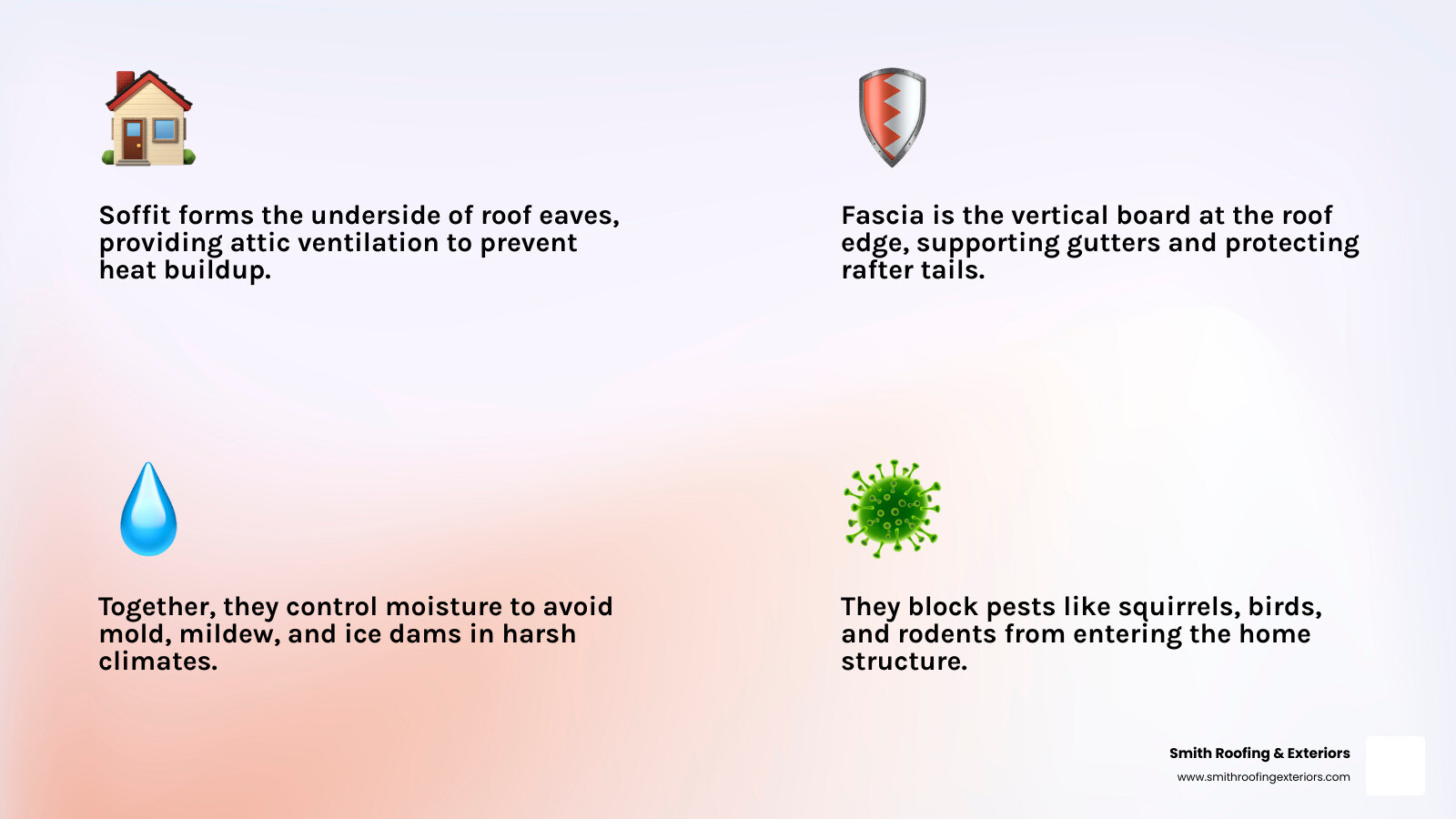
Understanding Soffit and Fascia: Definitions and Functions
To the untrained eye, the roofline might just look like a decorative trim. However, as local experts serving Fort Atkinson, Lake Mills, and Jefferson, we see these as high-performance components. They are the “skin” that protects the skeleton of your roof—specifically the rafter tails and trusses—from the harsh Wisconsin elements.

When you stand directly under your roof’s overhang and look up, you are looking at the soffit. When you look at your home from the street and see the flat, horizontal board where your gutters are mounted, you are looking at the fascia. For a deeper dive into these basics, you can check out Soffit and Fascia 101: What homeowners should know – Gentek Building Products – US.
What is a Soffit?
The word “soffit” actually has a rather sophisticated history, derived from the 17th-century French and Italian words for “ceiling” or “fastened below.” In modern roofing, it refers to the material that covers the underside of your roof’s overhang.
Its primary job is two-fold: aesthetics and ventilation. Without a soffit, your rafter beams would be exposed to the world, inviting birds and squirrels to make a home in your attic. More importantly, the soffit is the primary intake point for your attic’s ventilation system. By using perforated or vented panels, air is drawn into the attic, pushing hot, moist air out through the ridge vents. This cycle is critical for preventing wood rot and ice dams. If you’re noticing issues in this area, our The Homeowner Guide To Specialized Roof And Soffit Repairs offers excellent insights into how we handle these specific fixes.
What is a Fascia Board?
If the soffit is the “ceiling,” the fascia is the “band” or “strip” (from the Latin fascia). This is the vertical finishing edge that connects the ends of the rafters. It acts as the transition trim between your roof and your siding.
The fascia board does the heavy lifting—literally. It serves as the structural backing for your gutter system. During a heavy Wisconsin downpour or a spring snowmelt, your gutters can weigh hundreds of pounds. The fascia must be strong enough to support that weight without warping or pulling away from the house. It also creates a moisture barrier that prevents rain from being blown up under the shingles and into your home’s interior.
Why Your Home Needs High-Quality Soffit and Fascia
You might be surprised to learn that according to the Lawrence Berkeley Laboratory, 47% of homes in the U.S. do not have proper ventilation. In our service areas like Elkhorn and Delavan, we often find that poor attic airflow is the root cause of premature roof failure.
High-quality soffit and fascia are the first line of defense in managing the “breathability” of your home. When heat and moisture get trapped in your attic, they don’t just sit there; they cause the plywood sheathing to delaminate, shingles to “cook” from the inside out, and energy bills to skyrocket as your AC fights the rising heat from above. For more on this, Why Soffits and Fascias Are Important breaks down the protective roles these components play.
How Soffit and Fascia Protect Your Roof
The relationship between these components is a performance trio: ventilation, moisture management, and heat regulation.
- Moisture Management: By sealing the rafter tails, fascia prevents water from “wicking” into the wood.
- Mold Prevention: Vented soffits ensure that humidity from showers and cooking doesn’t condense in the attic, which is the leading cause of mold and mildew.
- Net Free Air (NFA): This is a technical term we use to measure how much air can actually pass through a vent. For example, Diamond Kote soffit systems provide a high NFA rating of 10, whereas standard vinyl or cement systems often average only 5 to 7. Higher NFA means better protection for your roof warranty.
Preventing Pest Infestations
In Southeastern Wisconsin, we share our environment with plenty of wildlife—but we don’t want them in our attics. Squirrels, birds, wasps, and rodents view a damaged or rotting soffit as an “Open” sign.
Squirrels, in particular, are notorious for finding a small soft spot in a wooden fascia board and chewing their way through. Once inside, they can destroy insulation and chew on electrical wires, creating a fire hazard. A professionally installed, gap-free soffit and fascia system acts as a structural seal that keeps the “great outdoors” exactly where it belongs: outdoors.
Comparing Materials for Your Soffit and Fascia
Choosing the right material is a balance of budget, maintenance, and the architectural style of your home. Whether you live in a historic home in Lake Geneva or a modern build in Edgerton, the material you choose matters.
| Material | Pros | Cons | Best For |
|---|---|---|---|
| Wood | Beautiful, natural insulator, historically accurate | High maintenance, prone to rot/pests | Historic/Craftsman homes |
| Vinyl | Affordable, no painting, rot-resistant | Can become brittle in extreme cold | Budget-conscious homeowners |
| Aluminum | Durable, fire-resistant, high tensile strength | Can dent, poor insulator | Long-term durability |
| Composite | Realistic wood look, very durable | Higher upfront cost | High-end siding projects |
For a detailed comparison of these types, Soffit and Fascia: What Are They and Which Type Is Best? – WindsorONE is a great resource.
Wood and Composite Options
Wood is often considered the “gold standard” for aesthetics. It provides natural insulation—in fact, aluminum is 1,770 times less effective as an insulator than wood. This means wood can actually help keep your attic cooler by not absorbing and radiating sun heat.
However, wood requires regular painting and sealing. If the paint chips, Wisconsin’s humidity will quickly lead to rot. Modern composites, like Diamond Kote or WindsorONE, offer the beauty of wood with significantly higher resistance to insects and mold, often backed by 30-year warranties.
Vinyl and Aluminum Solutions
Vinyl and aluminum are the most popular choices for homeowners in Fort Atkinson and Walworth because they are virtually maintenance-free.
- Vinyl: Modern vinyl soffits come in “hidden vent” styles. This gives you the ventilation you need without the “grill” look, maintaining a smooth, clean aesthetic.
- Aluminum: We often recommend high-tensile aluminum for fascia. It provides a crisp, clean line that doesn’t “oil can” (ripple) and is incredibly resistant to the dings and dents from ladders or hail.
If you’re considering a full upgrade, our page on Fort Atkinson Wi Soffit Fascia Gutter Replacement explains how we integrate these materials into a complete exterior system.
Signs It’s Time for Repair or Replacement
You shouldn’t wait for a leak to check your roofline. We recommend a quick visual inspection every spring and fall.
Keep an eye out for these “red flags”:
- Peeling Paint: This isn’t just an aesthetic issue. On wood fascia, peeling paint means the wood is exposed to moisture and is likely starting to soften.
- Soggy Soffits: If you see water stains or “bubbles” on your soffit, it usually means your gutters are overflowing or your roof’s drip edge is failing.
- Pest Activity: Seeing birds constantly flying into your eaves? They’ve likely found a hole.
- Sagging Gutters: If your gutters look like they are pulling away from the house, the fascia board behind them is likely rotting and can no longer hold the screws.
Ignoring these signs can be expensive. While replacing a few feet of fascia is affordable, waiting until the rot spreads to your rafters and interior drywall can lead to repair costs of $5,000 or more.
Maintenance and Installation Best Practices
Maintenance for soffit and fascia is mostly about “preventative defense.”
- Clean Your Gutters: This is the single most important thing you can do. Clogged gutters back up, sending water directly onto the fascia and into the soffit.
- Inspect After Storms: High winds can sometimes loosen soffit panels. A quick walk-around can catch a loose panel before a squirrel finds it.
- Check Ventilation Balance: Ensure your soffit vents aren’t blocked by attic insulation. We often see “DIY” insulation jobs where the homeowner accidentally covers the intake vents, effectively suffocating the house.
- Verify NFVA: Professional installers should always calculate the Net Free Ventilation Area to ensure your attic meets local building codes and manufacturer warranty requirements.
Frequently Asked Questions about Soffit and Fascia
We get a lot of questions from homeowners in Burlington and Lake Mills about the logistics of these repairs. Here are the most common:
How much does it cost to replace soffit and fascia?
Costs can vary based on the height of your home and the materials used. On average:
- Soffit replacement: Typically costs between $20 to $30 per linear foot installed.
- Fascia replacement: Typically costs between $15 to $25 per linear foot installed.
That if we find rot in the rafter tails during replacement, the cost will increase to cover the structural repairs. This is why we always provide transparent, up-front pricing after a physical inspection.
What is the difference between vented and solid soffit?
A “solid” soffit panel has no holes, while a “vented” (or perforated) panel is full of tiny holes to allow air through. Most homes use a combination. We strategically place vented panels in areas that will create the best cross-breeze in your attic, while using solid panels in areas where ventilation isn’t needed or to maintain a specific look.
Can I replace fascia without replacing the roof?
Yes! You do not need to wait for a full roof replacement to fix your fascia. However, the two systems are closely linked. When we replace fascia, we carefully work around the existing “drip edge” (the metal flashing under your first row of shingles) to ensure the water-tight seal remains intact. In many cases, it is actually the best time to upgrade your gutters as well, since the gutters must be removed to access the fascia.
Conclusion
Your home’s soffit and fascia might be small components in the grand scheme of your house, but they play a massive role in protecting your investment. From keeping your attic cool in the summer to preventing ice dams in the winter, they are the unsung heroes of your roofline.
At Smith Roofing & Exteriors, we take pride in being the local team that homeowners in Fort Atkinson, Lake Geneva, and throughout Southeastern Wisconsin trust. Whether you’ve noticed a bit of peeling paint or you’re ready for a full exterior makeover with modern, low-maintenance materials, we are here to help. Our 24/7 emergency services and commitment to superior materials ensure that your home stays protected, no matter what the Wisconsin weather throws at it.
Don’t wait for the rot to set in. Schedule your gutter and trim inspection today and let us help you keep your home’s exterior in peak condition.