Assessing the Damage: When to Fix Cracked Vinyl Siding
Fix cracked vinyl siding before it turns into a much bigger — and more expensive — problem.
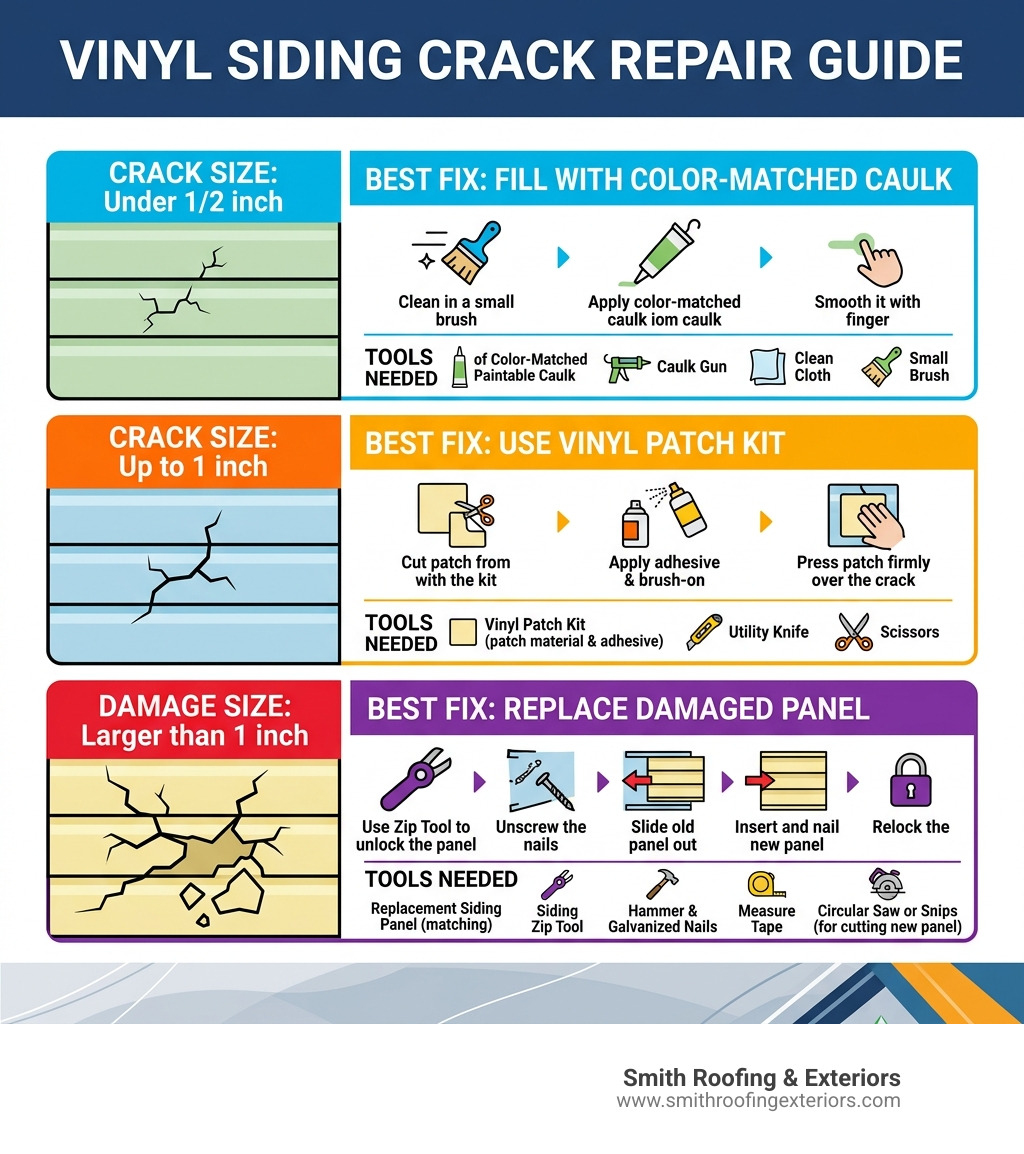
Here’s the quick answer on how to fix cracked vinyl siding, based on crack size:
| Damage Size | Best Fix |
|---|---|
| Under 1/2 inch | Fill with color-matched paintable caulk |
| Up to 1 inch | Use a vinyl patch kit with adhesive backing |
| Larger than 1 inch | Replace the damaged panel entirely |
Vinyl siding is tough. It’s designed to handle decades of rain, wind, and sun — and in Wisconsin, that means a lot of punishment. But even the most durable siding has its limits. A stray baseball, a hailstorm, or just years of freeze-thaw cycles can leave your siding cracked, split, or worse.
The good news? Most cracks are fixable without tearing everything down.
The bad news? Ignoring even a small crack can let moisture sneak behind the panel — and once water gets into your walls, you’re looking at mold, rot, and costly structural repairs.
The right fix depends on how bad the damage is. Small cracks take 20 minutes and a caulk gun. Bigger damage might mean swapping out a full panel. Either way, this guide walks you through every option — step by step.
I’m Matt Smith, owner of Smith Roofing & Exteriors, and I’ve spent years helping Wisconsin homeowners fix cracked vinyl siding damaged by everything from hailstorms to lawnmower rocks. Let’s get your home’s exterior back in shape.
Basic fix cracked vinyl siding glossary:
Before you grab your ladder, we need to take a close look at what we’re dealing with. Not all damage is created equal. In our neck of the woods—from Fort Atkinson to Lake Geneva—the most common culprit is impact damage. Maybe a rock flew out from the lawnmower, or a frozen branch snapped during a winter storm and smacked the house.
Because vinyl is relatively thin, these impacts often cause “star” cracks or clean punctures. However, we also see damage caused by thermal expansion. Vinyl is designed to “float” on your walls, expanding and contracting as the temperature swings from a humid 90°F July day to a -10°F January night. If the siding was nailed too tightly, it can’t move, leading to buckling or cracks around the nail hem.
Understanding Vinyl Siding Replacement or Repair Importance is the first step. A small crack might seem like a cosmetic “oopsie,” but vinyl siding is your home’s first line of defense against Wisconsin’s moisture. According to Vinyl Siding Repair & Replacement, even small openings can allow water to seep behind the water-resistive barrier, potentially rotting the OSB or plywood sheathing underneath.
| Factor | Repair | Full Replacement |
|---|---|---|
| Average Cost | ~$100 per area | $5,000 – $15,000+ |
| Time | 30 – 60 minutes | 2 – 5 days |
| DIY Friendly? | Yes, for minor cracks | No, usually requires a pro |
| Durability | Good for isolated spots | Best for whole-home protection |
Signs Your Siding Needs Immediate Attention
Sometimes a crack is just a crack, but other times it’s a symptom of a deeper problem. If you see hairline cracks, you can usually fix cracked vinyl siding with a quick patch. However, if you notice bulging panels or warping, the vinyl might be trapping moisture or heat.
Keep an eye out for mold or mildew growing in the cracks or along the seams. This is a red flag that water is sitting behind the panel. If you see these signs, it might be Time to Call a Siding Replacement Company to ensure your wall studs aren’t rotting away.
Understanding the Lifespan of Vinyl
Most modern vinyl siding has a lifespan of 30 to 40 years. However, UV degradation is real. Over decades, the sun “bakes” the PVC, making it brittle. If your siding is 30 years old and you find that it cracks every time a tennis ball hits it, the material has likely reached the end of its life.
One of the 4 Great Advantages of Vinyl Siding is that it doesn’t rot like wood, but it does fade. This makes repairs tricky because a brand-new “white” panel won’t match the “weathered white” panel that’s been sitting in the sun for ten years.
Essential Tools and Materials for Siding Repair
To fix cracked vinyl siding properly, you need the right “surgical” tools. You can’t just wing it with a screwdriver and some duct tape (please, don’t use duct tape—it doesn’t handle Wisconsin winters well!).
If you’re planning a Fort Atkinson Siding Repair, here is your shopping list:
- Zip Tool (Siding Removal Tool): This is the “magic wand” of siding. It has a small hook that allows you to unzip the locking flange of one panel from the one below it without snapping the plastic.
- Utility Knife & Tin Snips: For cutting through the vinyl.
- Pry Bar & Hammer: For removing old galvanized nails.
- Galvanized Siding Nails: These won’t rust. We never use staples or standard screws.
- Paintable Silicone Caulk: Specifically labeled for exterior use.
- Vinyl Patch Kit: These are often peel-and-stick PVC sheets that mimic the woodgrain texture of your siding.
- Safety Gear: Safety glasses are a must—shattered vinyl can be sharp!
Step-by-Step Guide to Fix Cracked Vinyl Siding
Ready to get to work? The best time to fix cracked vinyl siding is during moderate weather—ideally between 40°F and 80°F. If it’s too cold, the vinyl becomes brittle and will shatter when you try to work with it. If it’s too hot, it becomes overly pliable and can stretch out of shape.
First, prep the area. Clean the damaged section with warm, soapy water to remove dirt and oxidation. If the edges of the crack are jagged, lightly sand them with 220-grit sandpaper to create a smooth surface for the adhesive or caulk to bond to. As noted in How to Repair Vinyl Siding – This Old House, a clean surface is the difference between a repair that lasts ten years and one that falls off in ten days.
Repairing Small Cracks and Holes with Caulk
For those tiny holes (under 1/2 inch) caused by a stray pebble or a nail, caulk is your best friend. This is a common Burlington Siding Repair technique.
- Step 1: Cut the tip of your caulk tube at a 45-degree angle.
- Step 2: Squeeze the caulk into the hole, overfilling it slightly. Vinyl expands and contracts, so you want enough material to stay flexible.
- Step 3: Use a damp putty knife or your finger to smooth the caulk flat against the siding.
- Step 4: Once dry (usually 24 hours), you can dab on some color-matched paint.
Using a Patch Kit to Fix Cracked Vinyl Siding
If the crack is closer to an inch long, a patch kit is the way to go. These kits come with thin PVC patches that have an adhesive backing. We use these frequently for Walworth Siding Repair because they are nearly invisible from the street.
- Step 1: Clean and dry the area thoroughly.
- Step 2: Cut the patch so it overlaps the crack by at least half an inch on all sides.
- Step 3: Peel the backing and press firmly, starting from the center and moving outward to remove any air bubbles.
- Step 4: The patch will often have a woodgrain texture. Once applied, you can paint it to match your home’s color perfectly.
How to Fix Cracked Vinyl Siding by Replacing Panels
When the damage is severe—like a 6-inch split—you need to replace the panel. This is the most “pro” way to fix cracked vinyl siding.
- Unlock the Siding: Slide your zip tool under the bottom edge of the panel above the damaged one. Hook the lip and pull down and out to “unzip” the seam.
- Expose the Nails: Lift that upper panel to see the nail hem of the damaged piece.
- Remove Nails: Use your pry bar to gently pull the nails. Be careful not to damage the house wrap underneath.
- Cut the New Piece: Measure your replacement panel. It should be the same length as the old one, but when you nail it in, leave a 1/32-inch gap between the nail head and the siding.
- The “Float” Rule: Never drive the nail flush! The siding needs to slide back and forth to handle the temperature changes we get in Lake Geneva Siding Repair jobs.
- Lock it Back: Use the zip tool to pull the upper panel back over the new one and snap it into place.
Advanced Repairs: Corner Trim and Widespread Damage
Sometimes the crack isn’t on a flat panel; it’s on the corner post. Corner posts are structural “anchors” for your siding. If a corner post is cracked, water can pour directly into the corner of your home’s framing.
To fix a corner, you don’t necessarily have to tear off all the siding. You can “cap” the corner. This involves cutting the nailing flanges off a new corner post and fitting it over the old, damaged one, then securing it with pop rivets or specialized adhesive and caulk. However, if the damage is structural, a full Lake Geneva Siding Replacement of that section is safer.
When to Call a Professional for Siding Issues
We love a good DIY project, but some things are best left to the experts. You should call us for Fort Atkinson Siding Replacement if:
- The damage is high up: Don’t risk a two-story fall on a shaky ladder.
- You see “waves”: If multiple panels are warping or waving, you likely have an installation error or structural heat issue.
- Hidden Mold: If you pull back a panel and see black mold or soft wood, the problem is no longer “cosmetic.”
- Electrical/Plumbing: If the crack is near an outdoor outlet or faucet, you run the risk of water hitting electrical wires.
Maintenance Tips to Prevent Future Cracks
The best way to fix cracked vinyl siding is to prevent it from cracking in the first place! A little TLC goes a long way in our Wisconsin climate.
- Annual Cleaning: Use a mild detergent and a soft-bristle brush. Avoid high-pressure power washing, which can force water behind the panels and cause the very mold issues we’re trying to avoid.
- Vegetation Trimming: Keep shrubs and tree branches at least 3 feet away from your siding. In high winds, a branch rubbing against vinyl is like sandpaper. Check out our guide on Elkhorn Siding Maintenance for more tips.
- Storm Inspections: After a big hail event or a windstorm in Walworth or Delavan, do a lap around the house. Finding a crack early makes the repair much easier.
- Snow Removal: When shoveling, be careful not to bank heavy, wet snow against the siding, and never use a metal shovel to scrape ice off your bottom panels.
For more localized advice, see our Lake Geneva Siding Maintenance checklist.
Frequently Asked Questions about Siding Repair
How much does it cost to repair one piece of vinyl siding?
The average starting cost for a professional to repair or replace a single piece of siding is approximately $100. This covers the labor, the specialized tools, and the material. If you do it yourself, your main cost will be the $10 zip tool and the cost of the replacement panel (usually $15–$30).
Can I paint over a vinyl siding patch?
Yes! In fact, you should. Most patch kits are white or gray. To make the repair disappear, use a high-quality exterior acrylic latex paint. Pro Tip: Don’t paint a dark color over light siding. Dark colors absorb more heat and can cause the vinyl to warp or buckle.
What is the best temperature to perform vinyl siding repairs?
Aim for a day when it’s between 50°F and 75°F. If you try to fix cracked vinyl siding when it’s freezing outside, the panels will be as brittle as a potato chip. If you must work in the cold, keep the replacement panel inside the warm house until the very second you are ready to nail it up.
Conclusion
Repairing your siding isn’t just about making the house look pretty for the neighbors—it’s about protecting your biggest investment. Whether you use a dab of caulk for a tiny hole or swap out a full panel after a storm, staying on top of these small fixes will save you thousands in the long run.
At Smith Roofing & Exteriors, we take pride in being the local experts for Southeastern Wisconsin. From Fort Atkinson to Walworth, we’ve seen it all. If you’ve looked at the cracks on your home and realized the job is a bit bigger than a weekend DIY project, we’re here to help. We offer transparent pricing, superior materials, and a team that actually knows how to handle the “Wisconsin wiggle” of thermal expansion.
Don’t let a small crack turn into a major headache. Get more info about Elkhorn siding services or contact us today for a professional inspection. We’ll help you patch things up the right way!