Your Home Deserves More Than a Leaky Roof: What to Know About Roof Tune Up Services
Roof tune up services are professional maintenance visits where a roofing technician inspects your roof, makes minor repairs, and cleans key components — all to prevent small problems from turning into expensive damage.
Here’s what a roof tune-up typically covers:
- Inspection of shingles, flashing, gutters, and penetrations
- Sealing exposed nails, cracks, and sealant gaps
- Replacing a small number of damaged or missing shingles
- Cleaning gutters and removing debris
- A photo report of findings
Average cost: $200–$500 — compared to $8,600+ for a full roof replacement.
Recommended frequency: Every 3–5 years, or annually for older or weather-exposed roofs.
Think of it like a car tune-up. You don’t wait for the engine to fail before you change the oil. Your roof works the same way. Wisconsin winters, heavy rain, and strong winds put real stress on your shingles and flashing every single year. Without routine care, small issues — a loose shingle here, a cracked sealant there — quietly grow into leaks, rot, and costly structural damage.
I’m Matt Smith, owner of Smith Roofing & Exteriors, and after years of delivering roof tune up services to homeowners across rural Wisconsin, I’ve seen how a simple maintenance visit can add years to a roof’s life — and save thousands in the process.
What is Included in Professional Roof Tune Up Services?
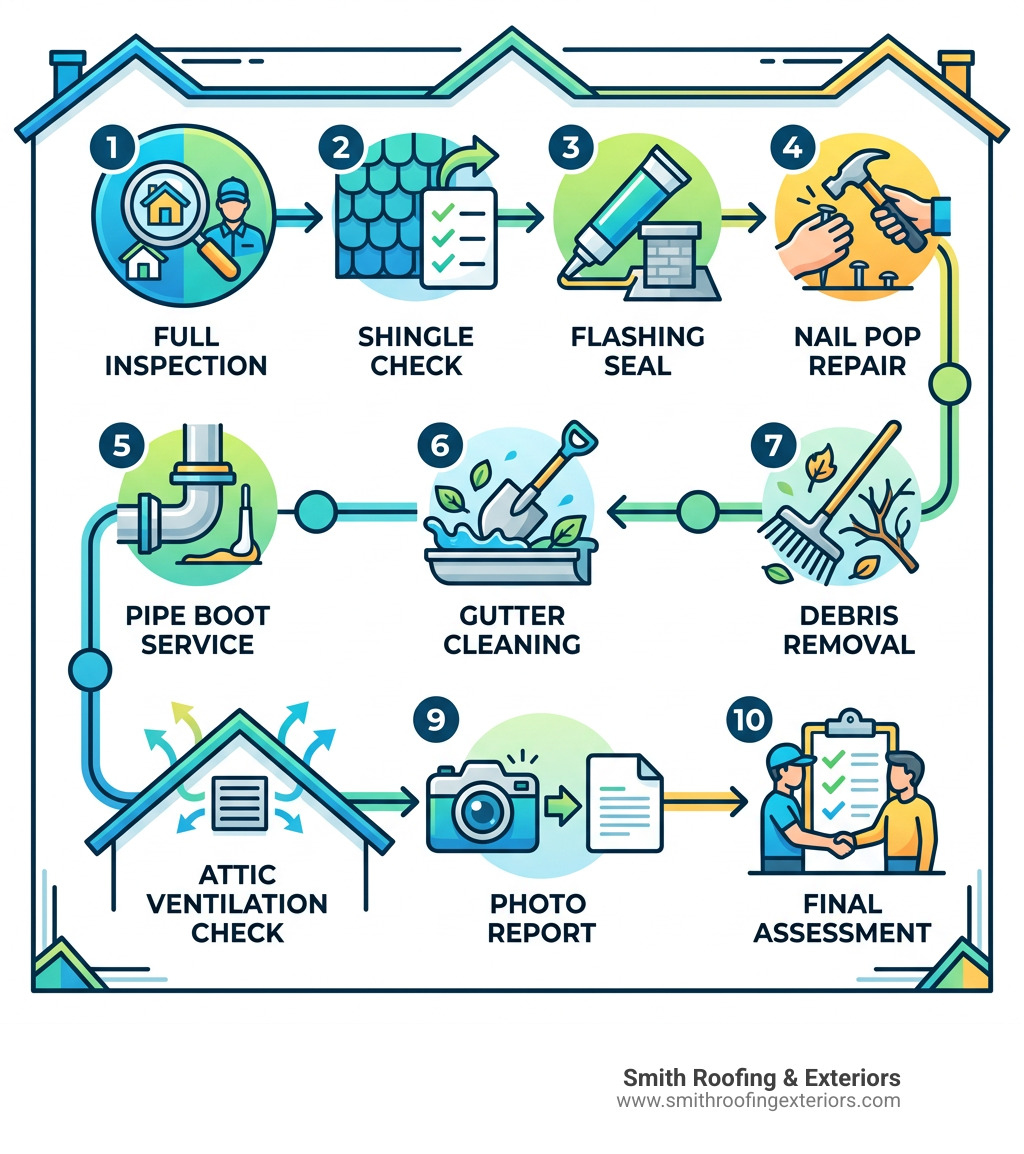
When we arrive at a home in Fort Atkinson or Lake Mills for roof tune up services, we aren’t just glancing at the shingles from the driveway. A professional tune-up is a comprehensive “health check” for your entire roofing system. Because your roof is a complex assembly of layers, every component needs to be in sync to keep your living room dry.

A typical professional service includes:
- Comprehensive Inspection: We look at the shingles, the decking (where visible), the attic ventilation, and all “penetrations” (pipes, vents, and chimneys).
- Shingle Replacement: Most tune-ups include the replacement of a limited number of shingles (usually up to 5 or 10) that have been damaged by wind or hail.
- Flashing Repair: Flashing is the metal material used to direct water away from critical areas. We ensure it is secure and not rusted or pulled away from the structure.
- Caulking and Sealing: Over time, the sealants around vents and pipes can dry out and crack. We apply high-grade roofing sealant to these gaps.
- Pipe Boot Maintenance: Pipe boots are the rubber or lead seals around your plumbing vents. These are notorious for cracking after a few Wisconsin winters.
- Gutter Cleaning and Debris Removal: We clear out leaves, twigs, and the “roof gravel” (granules) that can clog your drainage system.
By bundling these small tasks into one visit, we provide 5 Benefits of Professional Roof Maintenance that help you avoid the “emergency call” during a midnight rainstorm.
The Inspection Phase
The foundation of any good maintenance plan is a visual assessment. Our team looks for signs of aging that the untrained eye might miss. For example, we check for “blistering” or “curling” in asphalt shingles, which indicates the material is reaching the end of its lifespan.
In some cases, we utilize advanced technology such as thermal imaging to detect moisture trapped under the surface or drone technology to get a close-up view of steep or dangerous roof sections without walking on fragile materials. We then provide a photo report so you can see exactly what we see. This transparency ensures you aren’t just taking our word for it; you have the evidence in hand.
Minor Repairs and Sealing
Once the inspection is complete, we move into the “active” part of the tune-up. One of the most common issues we find is “nail pops.” This happens when a nail backs out of the wood decking, pushing the shingle up and creating a tiny tent where water can enter. We reset these nails and seal the area.
We also focus heavily on counterflashing and sealant touch-ups. If your chimney flashing has a gap, it doesn’t matter how good your shingles are — water will find its way into your walls. This is How a Roofing Contractor Can Extend the Life of Your Roof Through Simple Maintenance; by fixing the small entry points, we keep the interior of your home safe.
The Financial Benefits of Regular Maintenance
We understand that a roof is a significant investment. Most homeowners in Southeastern Wisconsin spend an average of $8,600 on a new roof replacement, and that number can climb much higher depending on the size and material.
Spending a few hundred dollars on roof tune up services might seem like an extra expense, but the ROI (Return on Investment) is massive. Consider the following comparison:
| Service Type | Average Cost | Potential Life Extension |
|---|---|---|
| Roof Tune-Up | $200 – $500 | 3 – 5 Years per service |
| Minor Repair | $500 – $900 | Varies |
| Full Replacement | $8,600+ | 20 – 30 Years |
Beyond the direct cost of the roof, regular maintenance can help lower your insurance premiums. Many insurance companies offer better rates or easier claim processes for homeowners who can prove they have maintained their property. Furthermore, a well-sealed roof improves energy efficiency by ensuring your attic stays properly ventilated and your insulation remains dry.
When you keep your roof in top shape, you are protecting your property value. If you ever decide to sell your home in Jefferson or Burlington, a recent tune-up report is a fantastic selling point. It shows buyers that the home has been meticulously cared for. This is exactly How Roof Inspections Can Save Homeowners Thousands in Repairs — by catching the $300 leak before it becomes a $3,000 drywall and mold remediation project.
When to Schedule Your Roof Maintenance
Timing is everything. In Wisconsin, our roofs take a beating from heavy snow loads in the winter and humid heat in the summer. We generally recommend scheduling roof tune up services during the “shoulder seasons” — Spring and Fall.
- Spring: This is the best time to check for damage caused by ice dams or heavy snow. We look for shingles that may have been loosened by the freeze-thaw cycle.
- Fall: This is “prep season.” We want to ensure your roof is watertight and your gutters are clear before the first snowfall hits.
However, you should also consider a post-storm check. If a severe windstorm or hailstorm rolls through Delavan or Elkhorn, a quick professional look can identify “bruised” shingles that might not leak today but will fail in six months. This proactive approach is Why Regular Roof Maintenance Is Crucial for Homeowners.
Recognizing the Signs You Need Roof Tune Up Services
While we recommend a professional visit every few years, your roof might “talk” to you between appointments. Watch for these telltale signs:
- Missing or Cracked Shingles: If you find shingle pieces in your yard, your roof is losing its defense.
- Water Stains: Check your ceilings and attic. Even a small brown spot is a sign of a leak.
- Granules in Gutters: If your gutters look like they are filled with black sand, your shingles are losing their protective coating.
- Sagging Roofline: This can indicate structural issues or rotted decking that needs immediate attention.
- Exposed Nails: If you can see nail heads on the surface of your roof, they are potential leak points.
If you spot any of these, don’t wait. Check out these Signs You Need a Roofing Company for Repairs or Replacement to determine your next steps.
Ideal Frequency for Roof Tune Up Services
The general industry guideline is to have a tune-up every 3 to 5 years. However, several factors can change this timeline:
- Roof Age: If your asphalt shingle roof is over 15 years old, you should move to an annual or bi-annual schedule. Older roofs are more prone to brittle shingles and failing sealants.
- Tree Cover: If your home is in a heavily wooded area, your gutters will clog faster, and falling branches can cause frequent minor damage.
- Severe Weather: Following any major weather event, a tune-up is a wise move to ensure no hidden damage occurred.
Regularly following this schedule is How Roof Maintenance Can Help Extend the Life of Your Roof, potentially pushing the lifespan of a standard 20-year roof closer to 30 years.
DIY Maintenance Tips to Complement Professional Care
While we always recommend hiring a professional for on-roof work (safety first!), there are several things you can do from the ground or a ladder to help your roof stay healthy.
- Keep Gutters Clear: Clogged gutters cause water to back up under your shingles, leading to rotted eaves.
- Trim Overhanging Branches: Branches that rub against your roof can “scrub” the granules off your shingles. Trim them back at least 3-6 feet.
- Remove Debris: If you can safely reach it with a telescopic roof rake, remove piles of leaves or pine needles. These hold moisture and can lead to moss or algae growth.
- Moss and Algae Removal: Moss can actually lift shingles and allow water underneath. It also creates health hazards if mold begins to grow and enter your attic.
- Visual Ground Checks: After a windy day, walk around your house and look up. Do you see anything flapping or out of place?
Always follow strict safety protocols. If you aren’t comfortable on a ladder, don’t risk it. The cost of a professional service is much lower than a trip to the emergency room! Understanding The Difference That a Timely Roof Repair Can Make starts with these small, consistent actions.
Frequently Asked Questions about Roof Maintenance
How does a tune-up differ from a full roof repair or replacement?
A tune-up is preventative. It is designed for a roof that is generally in good shape but needs minor adjustments to stay that way. A “repair” is reactive, usually triggered by an active leak or visible damage. A “replacement” is the total removal and installation of a new system.
The scope of work in a tune-up is limited (e.g., replacing 5 shingles), whereas a repair might involve replacing an entire section of decking. If you’re unsure which you need, read our guide on Roof Repair vs Replacement: What’s the Right Move.
Which types of roofs benefit most from a tune-up?
- Asphalt Shingles: These benefit the most because they are prone to wind damage, granule loss, and nail pops.
- Metal Roofing: These are lower maintenance but still need inspections for rust or loose fasteners.
- Tile Roofs: These are very durable but can crack during hailstorms. A tune-up for a tile roof usually involves replacing cracked tiles before they cause a leak.
Do roof tune-ups come with warranties or guarantees?
Many professional roof tune up services come with a labor warranty. At Smith Roofing & Exteriors, we stand behind our work. Some premium tune-up packages even offer a “leak-free certification” for a set period (like 12 to 36 months). This provides immense peace of mind, especially if you are a landlord or a homeowner planning to travel for the winter.
Conclusion
Your roof is the most important shield your home has against the unpredictable Wisconsin weather. Whether you are in Lake Geneva, Walworth, or right here in Fort Atkinson, proactive care is the key to a long-lasting roofing system.
At Smith Roofing & Exteriors, our experienced local team uses superior materials and transparent pricing to ensure your home stays protected. We understand the local weather patterns because we live here too. Don’t wait for the ceiling to drip to start thinking about your roof.
Schedule your roof tune-up in Janesville today and let us help you maximize your investment. We are here for you 24/7 for emergencies, but we’d much rather help you prevent them with a professional tune-up!