Colored Hardie Siding Colors That Work Together
Start with a siding color that suits your home, then choose trim that gives it contrast. For a bright modern farmhouse, try Arctic White siding with dark trim. For a bolder look, pair Iron Gray siding with white trim. If your home has brick or stone, compare samples against those materials before you decide. Colored hardie siding comes in factory-finished palettes, including the Statement, Dream, and Magnolia Home collections, so you can explore both familiar neutrals and more distinctive shades.
In Fort Atkinson, Wisconsin, check your favorites outdoors in sun, shade, and cloudy light. A color that looks right on a screen may look different beside your roof and masonry.
I’m Matt Smith, owner of Smith Roofing & Exteriors. I help homeowners weigh the short- and long-term choices behind exterior projects, and this guide will help you narrow down colored hardie siding combinations with confidence.
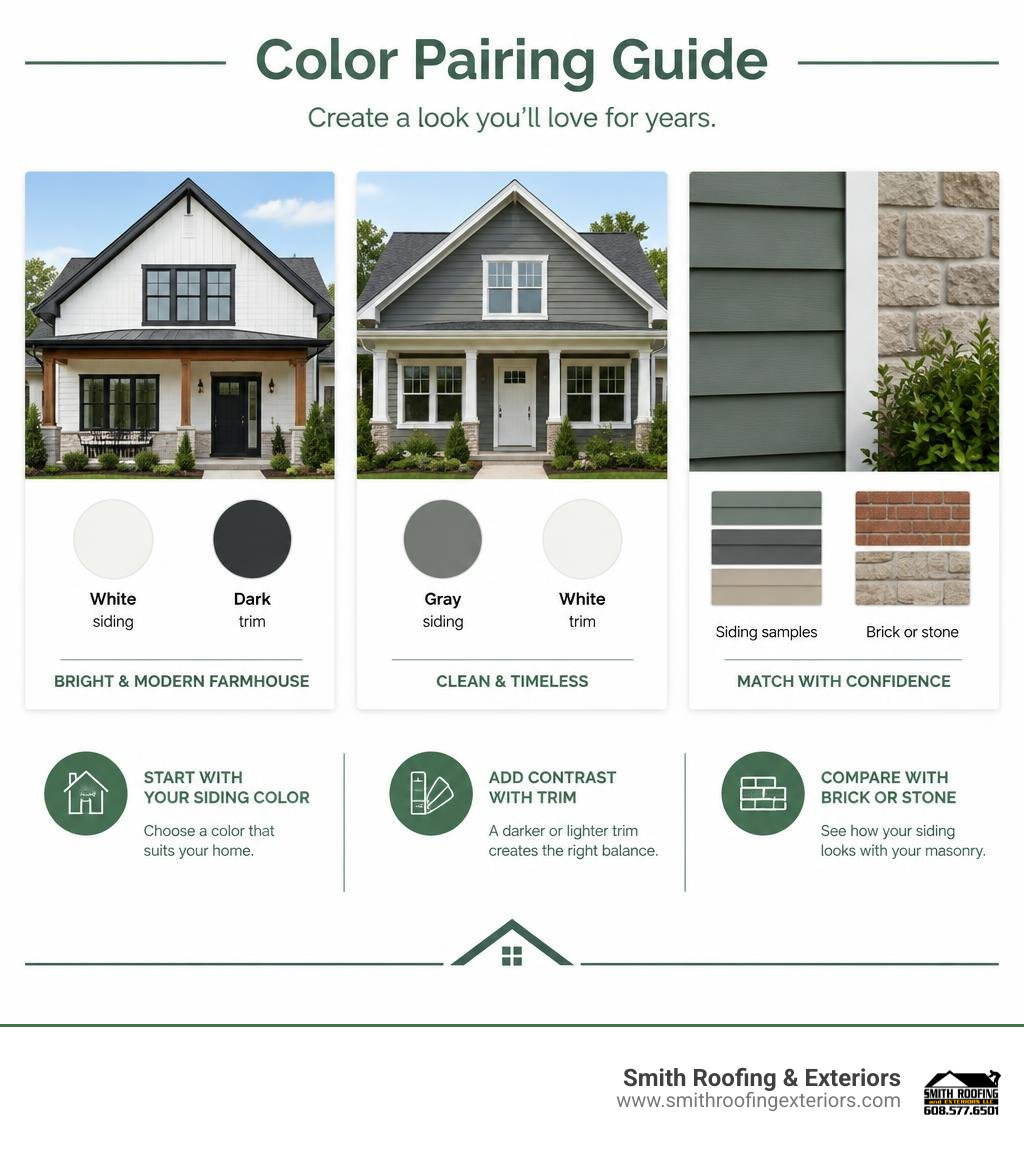
Basic colored hardie siding vocab:
Exploring Colored Hardie Siding Collections and ColorPlus Technology
Fiber cement siding provides unmatched structural resilience against harsh seasonal swings, but the real magic happens in how that color is applied. Standard exterior house paint sits on the surface of siding boards like a film, making it susceptible to blistering, peeling, and sun fading. James Hardie solved this issue by creating ColorPlus Technology: a proprietary, factory-applied finish where multiple coats of paint are baked directly onto the fiber cement boards between applications.
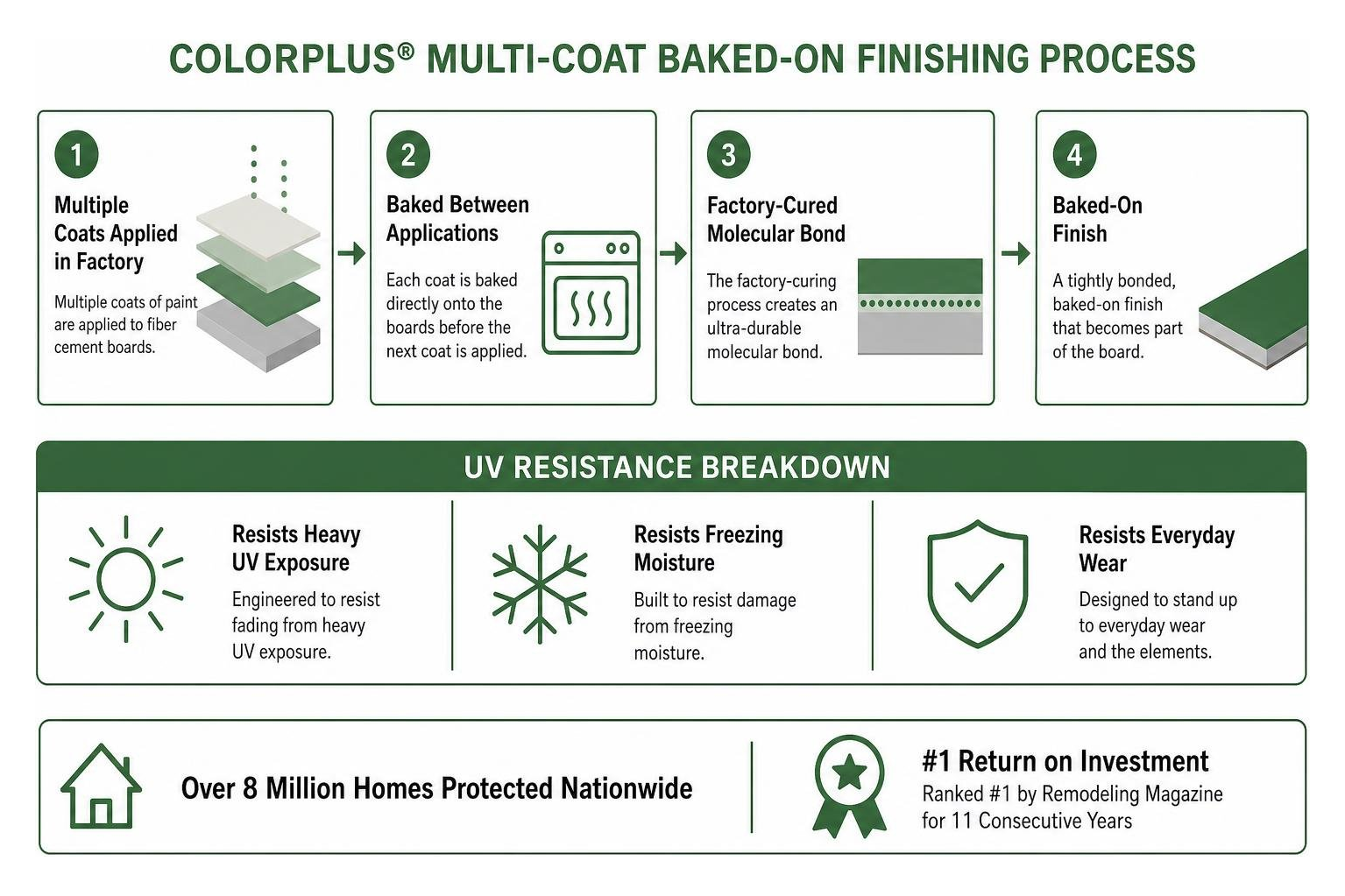
This factory-curing process creates an ultra-durable molecular bond that resists heavy UV exposure, freezing moisture, and everyday wear. With over 8 million homes protected nationwide, fiber cement engineered with baked-on finishes has earned the #1 return on investment ranking from Remodeling Magazine for 11 consecutive years. You can browse full product lines in the official James Hardie siding catalog to see the range of factory-treated profiles available today.
Statement, Dream, and Magnolia Home: Navigating Colored Hardie Siding Palettes
Choosing your siding palette begins with understanding the three primary James Hardie color pathways:
- The Statement Collection: This collection features 24 core shades curated regionally to reflect classic architectural tastes. Because distributors stock these locally, lead times are fast (typically 2 to 4 weeks), and there is no extra custom-run upcharge. Favorites include Arctic White, Cobble Stone, Navajo Beige, Monterey Taupe, Khaki Brown, Pearl Gray, Gray Slate, Night Gray, and Boothbay Blue.
- The Dream Collection: If you want a unique aesthetic or need an exact match for Sherwin-Williams or Benjamin Moore exterior paints, the James Hardie Dream Collection offers more than 700 custom hues. These made-to-order shades usually carry a modest upcharge (around $0.40 to $0.80 per square foot) and require a 4 to 8 week lead time for specialized factory coating.
- The Magnolia Home Collection: Curated in partnership with Joanna Gaines, this line brings warm earth tones, mossy greens, creamy neutrals, and deep accents to life. Reviewing the curated Magnolia Home exterior palette helps when you want a grounded, modern-rustic exterior.
When deciding between these palettes, comparing Hardie plank siding options side by side will clarify how board widths and textures influence the final look of each shade.
ColorPlus Technology vs. Field Painting: Durability, Cost, and Warranties
When planning an exterior renovation, homeowners often debate whether to buy pre-finished ColorPlus siding or install primed boards and paint them on-site. While primed siding has a lower initial invoice, field painting rarely matches the long-term economics of a factory-cured finish.
ColorPlus finishes come with a dedicated 15-year limited warranty protecting against chipping, cracking, and peeling, in addition to James Hardie’s 30-year non-prorated substrate warranty. Field paint rarely carries more than a 2- to 5-year labor guarantee from a painting contractor.
| Performance Factor | ColorPlus Technology Finish | Field-Primed & Painted Siding |
|---|---|---|
| Application Method | Multi-coat factory-applied, thermally cured | Sprayed/rolled on-site after board hanging |
| Finish Warranty | 15-year limited finish warranty | Varies (typically 2–5 year painter warranty) |
| Substrate Warranty | 30-year limited non-prorated | 30-year limited non-prorated |
| Average Repaint Cycle | 12 to 18 years | 5 to 7 years |
| Initial Cost (Material + Labor) | $9 to $11 per sq. ft. installed | $6 to $8 per sq. ft. installed |
| 30-Year Maintenance Cost | 0 to 1 repaint cycle ($8,000–$12,000) | 3 to 4 repaint cycles ($24,000–$36,000) |
| 30-Year Total Investment (2,500 sq ft) | $33,000 – $39,000 | $39,000 – $53,000 |
Over a 30-year horizon, choosing ColorPlus eliminates multiple expensive repainting cycles, saving between $16,000 and $24,000 in deferred labor and materials on an average 2,500-square-foot home. To evaluate your complete budget, consult our fiber cement siding cost guide and review our detailed residing cost breakdown.
Profiles, Textures, and Climate Performance for Dark Colored Hardie Siding
Your color selection interacts directly with the texture and board profile you specify:
- Select Cedarmill: Features a natural wood-grain pattern that softens bold colors and mimics traditional timber. Products like Statement Collection Pearl Gray Cedarmill use this texture to catch daylight across the grain, adding depth.
- Smooth: Provides a sleek, clean surface that creates crisp shadow lines for modern, transitional, and minimalist architecture.
- Beaded Porch Panel & Beaded Lap: Incorporates a distinctive bottom bead channel, suited for traditional bungalows and historic restorations.
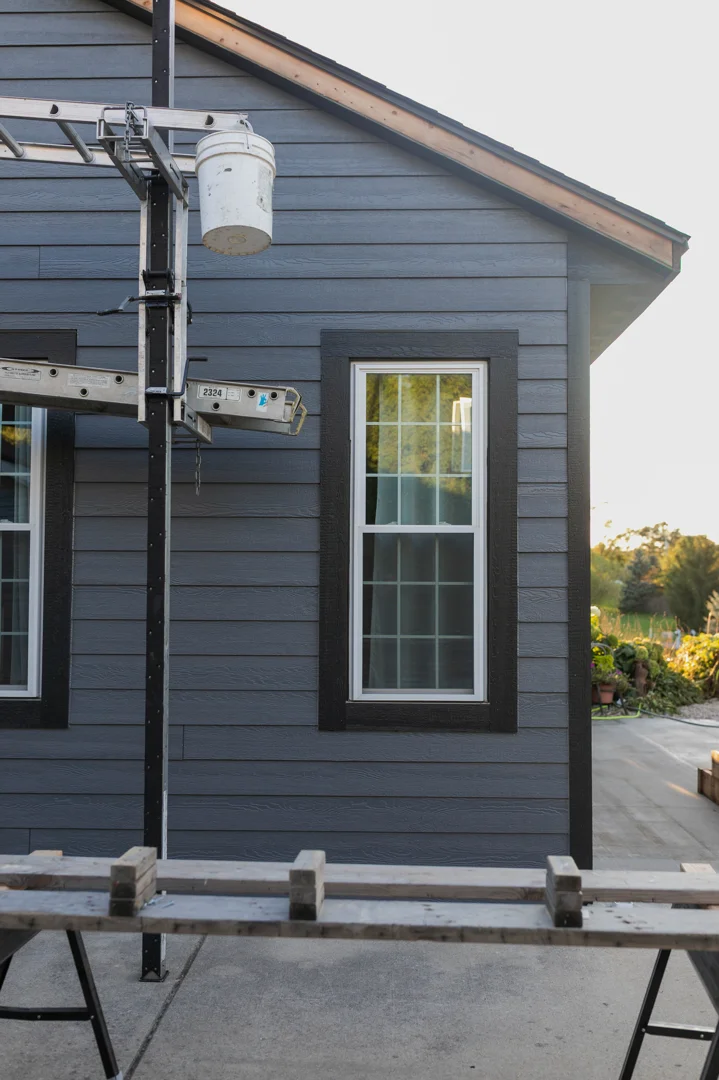
A common concern with dark shades like Iron Gray, Deep Ocean, and Night Gray is thermal heat absorption. Dark exterior finishes absorb solar radiation, causing surface temperatures to rise 30°F to 40°F higher than lighter boards on hot summer afternoons. Unlike vinyl siding—which can warp, buckle, or melt under high heat—fiber cement is dimensionally stable. It does not expand or contract significantly with temperature swings.
Minor scuffs that occur during installation or ladder use can be resolved with factory-matched touch-up kits, which blend seamlessly when viewed from normal yard distances.
Designing Your Exterior with 2026 Color Trends and Material Pairings
A great exterior scheme creates visual harmony between your siding, roof pitch, trim lines, and surrounding landscaping. Before committing to a color package, estimating the cost of Hardie panel siding in 2026 can help you budget for dynamic accent walls, vertical paneling, and contrasting trim boards.

Trending 2026 Color Combinations Across Architectural Styles
Different home styles call for deliberate color pairings:
- Modern Farmhouse: Arctic White remains the undisputed leader, appearing in 31% of farmhouse simulations in 2026. Contrast Arctic White siding with Black or Iron Gray trim, dark window frames, and natural timber porch posts.
- Transitional & Contemporary: Deep neutrals such as Iron Gray, Night Gray, and Aged Pewter deliver an upscale, grounded appearance when paired with crisp white trim and minimalist black light fixtures.
- Mid-Tone Naturals: Light Mist has emerged as a breakout favorite for homeowners seeking a light, airy neutral that feels softer and warmer than stark white without turning beige.
- Craftsman & Bungalow: Mountain Sage, Monterey Taupe, and Timber Bark complement organic environments, low-pitched rooflines, and exposed structural brackets.
- Coastal & Waterfront: Boothbay Blue and Deep Ocean paired with Arctic White corner boards create an enduring nautical aesthetic that holds its richness against bright water reflections.
To create vertical visual interest on gables or accent walls, using board and batten pro installation techniques gives your siding bold, modern lines.
Pairing Hardie Colors with Brick, Stone, and Accent Materials
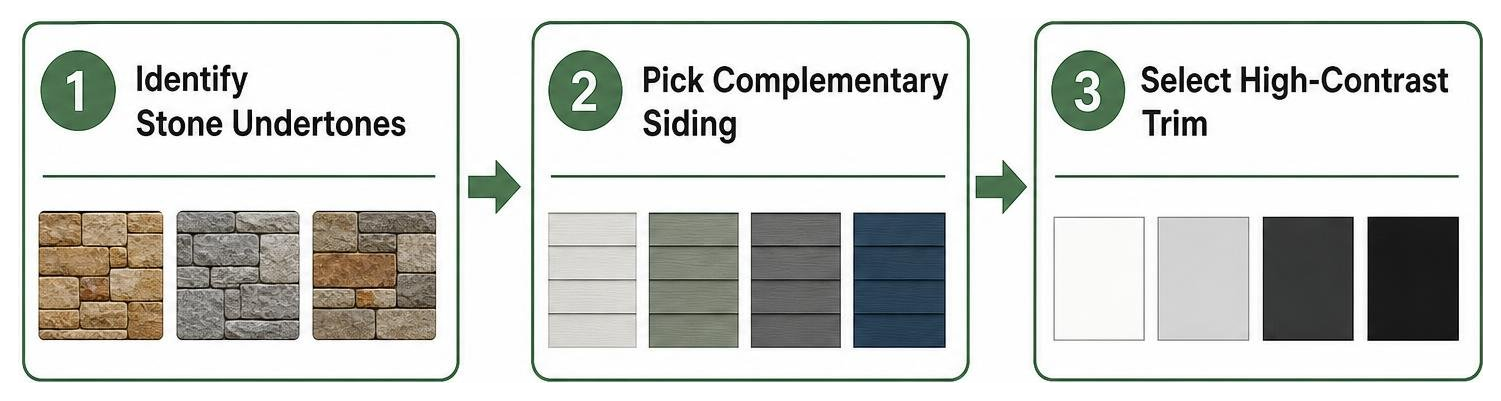
Most residential transformations involve balancing siding alongside fixed exterior elements like masonry, chimneys, and stone veneers. Because brick and stone are permanent features, your siding color needs to complement their undertones:
- Red & Orange Brick: Balance warm red brick with cool-neutral siding tones like Aged Pewter, Boothbay Blue, or Light Mist. Avoid overly warm yellows or tan hues that compete with the brick.
- Earth-Tone & Tan Stone: Complement brown or sandstone facades with Monterey Taupe, Khaki Brown, or Timber Bark to create a cohesive earthy palette.
- Gray Limestone & Slate: Pair with Iron Gray, Arctic White, or Night Gray for a structured, multi-tonal contemporary look.
- Natural Cedar Shake Accents: Deep blue or dark charcoal siding makes honey-toned natural cedar gables pop.
When pairing siding with masonry, moisture management around the transition zones is critical. Ensuring proper clearance and preventing visible Hardie board seams will keep your exterior watertight and visually seamless. Similarly, integrating Hardie panel flashing and window details prevents water from infiltrating behind mixed-material junctions.
Testing Samples and Using Visualizers for Flawless Curb Appeal
Never choose a siding color solely from a digital render or a small paint brochure swatch. Exterior colors shift significantly under different lighting conditions. A soft gray can look crisp and bright in direct midday sun, yet pull cool blue or violet undertones on an overcast morning.
To select your palette with complete confidence:
- Use 3D Visualizer Tools: Upload actual photos of your house to tools like the HOVER Design Studio or Hardie Designer to experiment with different siding and trim combinations on your roofline.
- Order Physical Cedarmill Sample Boards: James Hardie provides physical ColorPlus sample planks. Hold them directly against your exterior walls, masonry, and foundation.
- Evaluate at Three Times of Day: Check your physical samples at 8:00 AM (morning light), 1:00 PM (direct overhead sun), and 7:00 PM (dusk/golden hour) on both sunny and overcast days.
- Confirm HOA Guidelines: Check your neighborhood covenants for approved exterior color lists before ordering materials.
With the right color palette, factory-applied ColorPlus durability, and professional installation, your home will maintain its curb appeal for decades. If you ever run into maintenance needs down the road, restoring and maintaining flawless Hardie plank siding will keep your investment looking as sharp as the day it was installed.