What You Need to Know About Flat Roof Repair (Without Blowing Your Budget)
Flat roof repair is the process of fixing damage to a low-slope roof membrane — including cracks, punctures, blisters, leaks, and seam failures — to stop water intrusion and extend your roof’s lifespan.
Here’s a quick overview of the most common flat roof repairs:
| Problem | DIY Difficulty | Typical Cost Range |
|---|---|---|
| Small cracks or holes | Easy | $150 – $500 |
| Blisters or bubbles | Moderate | $200 – $600 |
| Seam separation | Moderate | $200 – $550 |
| Larger membrane damage | Hard | $500 – $1,500 |
| Full resealing | Hard | $1,200 – $1,500 |
Flat roofs are practical and affordable — but they come with a catch. Unlike sloped roofs, they don’t shed water easily. That means ponding water, UV exposure, and freeze-thaw cycles can wear them down faster, especially in Wisconsin’s brutal winters.
The good news? Many flat roof problems can be caught early and fixed on a budget — if you know what to look for.
Most flat roofs last 10 to 25 years with proper maintenance. Minor repairs done promptly can add years to that lifespan and help you avoid a full replacement, which can run anywhere from $4,000 to $10,000 or more.
I’m Matt Smith, owner of Smith Roofing & Exteriors, and I’ve spent years helping Wisconsin homeowners diagnose and tackle flat roof repair challenges across a wide range of materials and roof conditions. Let’s walk through everything you need to know to fix your flat roof the right way — without overspending.
Identifying Common Causes of Flat Roof Damage
Before we grab the ladder, we need to understand why flat roofs fail. In South Central Wisconsin—from Fort Atkinson to Lake Geneva—our roofs face a unique set of stressors.
Ponding Water: The Silent Killer
Flat roofs are actually “low-slope” roofs, designed with a slight pitch (usually 1/4 inch per foot) to move water toward drains. When debris blocks those drains or the roof begins to sag, water pools. If water sits for more than 48 hours, it’s called “ponding.” This standing water puts immense pressure on seams and can eventually seep through the tiniest pinhole.
UV Radiation and Temperature Swings
The sun is a constant enemy. UV rays cause roofing membranes to become brittle over time. Furthermore, Scientific research on extreme temperature fluctuations shows that the constant expansion and contraction of roofing materials leads to “alligatoring” (cracks that look like reptile skin) and membrane shrinkage.
The Wisconsin Winter Factor
In places like Jefferson and Elkhorn, we deal with heavy snow loads and freeze-thaw cycles. When snow melts during the day and freezes at night, it can create ice dams or force water into small cracks. As that water freezes and expands, it rips the membrane further apart.
Debris and Clogged Drains
Leaves, twigs, and even wind-blown trash can turn your roof into a bathtub. When drains or gutters are clogged, water has nowhere to go but down into your home’s structure.
How to Safely Locate and Assess a Flat Roof Leak
Finding a leak on a flat roof is often harder than fixing it. Because water can travel laterally between roof layers, the spot where water drips from your ceiling might be 20 feet away from the actual hole in the roof.
The Indoor Measurement Technique
Start inside. Measure the distance of the leak from two perpendicular walls. Go up on the roof and replicate those measurements. This gives you a “starting point,” but remember: always look “uphill” from that spot, as water follows the slope.
The Hose Test Method
If you can’t find the breach visually, have a partner stay inside while you use a garden hose on the roof. Start at the lowest point and work your way up slowly, soaking one section for 10–15 minutes at a time. When the person inside sees a drip, you’ve found your zone.
Safety First: Don’t Skip This
Roofing is dangerous. Always use a sturdy ladder that extends at least 3 feet above the roofline. If the roof is wet or you’re working near an edge, use a safety harness and have a spotter. If you aren’t comfortable with heights or the roof feels “spongy” (a sign of structural rot), stop immediately. You can find more info about commercial roof repair if you’re dealing with larger, more complex structures.
What to Look For
- Blisters: These look like bubbles. They happen when moisture is trapped between layers and heats up.
- Flashing Failures: Over 90% of leaks occur at the flashing—the metal transitions around chimneys, vents, and walls.
- Split Seams: Look for areas where the glue or heat-welded bond has popped open.
Step-by-Step Guide to DIY Flat Roof Repair
Once you’ve found the damage, it’s time to act. Successful flat roof repair is 90% preparation and 10% application.
Repair Methods by Material
| Material | Repair Technique | Key Material Used |
|---|---|---|
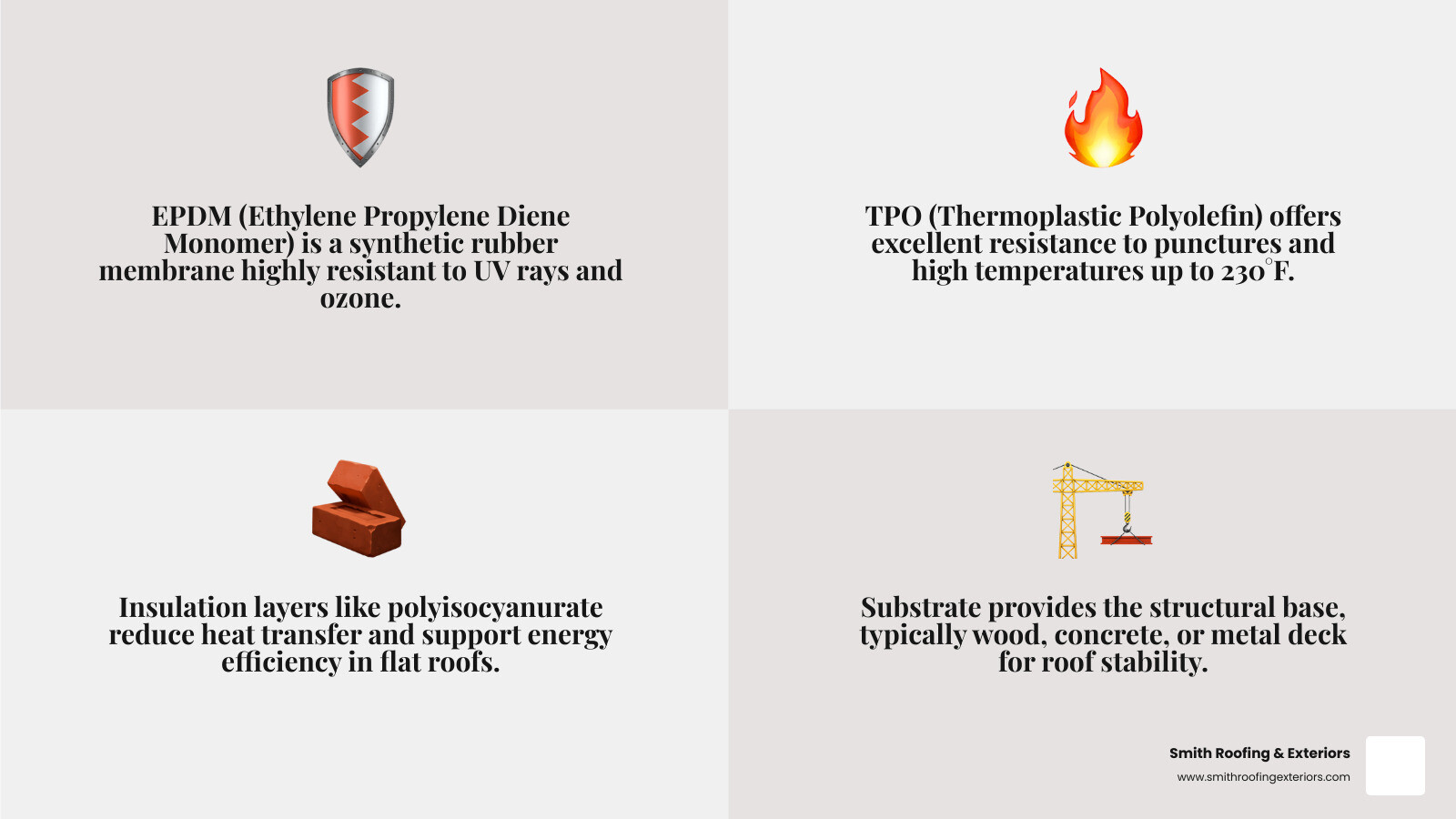
| EPDM (Rubber) | Peel-and-stick patch | EPDM primer and adhesive tape |
| TPO / PVC | Heat welding or specialized tape | TPO patch (No silicone!) |
| Modified Bitumen | “Three-course” method | Roofing cement and mesh |
The “Three-Course” Patching Method
For asphalt-based roofs (Modified Bitumen or BUR), use this budget-friendly technique:
- Clean: Scrub the area with a wire brush and ensure it is bone-dry.
- Cement: Apply a 1/8-inch layer of roofing cement 6 inches beyond the damage.
- Mesh: Embed a piece of fiberglass mesh into the cement.
- Top Coat: Apply another layer of cement over the mesh to seal it.
- Gravel: If your roof has gravel, sprinkle some back on top to protect the patch from UV rays.
For more specific DIY advice for flat roofing, always check the manufacturer’s recommendations for your specific membrane.
Materials Needed for Flat Roof Repair
To do the job right, you’ll need a basic toolkit:
- Roofing cement: The “glue” for most asphalt repairs.
- Fiberglass mesh: Adds structural strength to the patch.
- EPDM tape/patches: For rubber roofs.
- Seam roller: Essential for removing air bubbles from patches.
- Utility knife: For cutting away damaged sections or trimming patches.
- Cleaning supplies: Broom, wire brush, and rags.
If you are unsure which material your roof is made of, check out our guide on choosing the right commercial roofing system.
Common Mistakes in Flat Roof Repair
- Material Mismatch: This is the #1 mistake. Never use asphalt-based products on EPDM (rubber) roofs; the petroleum will literally dissolve the rubber.
- Wet Surfaces: Patches will not stick to damp membranes. Use a leaf blower or towels to ensure the area is dry.
- Trapped Moisture: If you patch over a wet blister without drying it first, you’re just sealing in the rot.
- Rounding Corners: Always round the corners of your patches. Square corners peel up much easier in the wind.
When to Choose Professional Repair vs. Replacement
Sometimes a DIY patch is just a Band-Aid on a bullet wound. Knowing when to call us for a professional assessment can save you thousands in “collateral damage” like mold or structural wood rot.
The 30% Damage Rule
If more than 30% of your roof surface is covered in patches, blisters, or cracks, the membrane has likely reached the end of its life. At this point, you’re just “throwing good money after bad.”
The 20-Year Threshold
Most flat roofs (except for high-end EPDM) start to fail after 15–20 years. If your roof is in this age bracket and starts leaking in multiple spots, it’s time to consider a replacement.
Structural Integrity
If you walk on the roof and it feels soft or “bouncy,” the wood decking underneath is likely rotting. This is a safety hazard and requires a professional tear-off. You can learn more about the differences in flat vs sloped commercial roofing to see if a change in system might benefit your building long-term.
Warranty and Labor
A professional repair usually comes with a warranty. While labor makes up about 70% of the cost (averaging $50–$80 per hour), the peace of mind knowing the job was done by certified installers is often worth the investment.
Frequently Asked Questions about Flat Roof Repair
How much does a typical flat roof repair cost?
For minor issues like a single puncture or a small split seam, expect to pay between $150 and $500 if you hire a pro. If you go the DIY route, materials might only cost you $50 to $100. Larger “all-day” repairs involving multiple patches or flashing work typically range from $1,200 to $1,500.
Can I use standard silicone caulk for flat roof leaks?
We generally advise against it. While silicone is great for windows, it often fails to bond permanently with roofing membranes like EPDM or Modified Bitumen. Use specialized roofing sealants or “lap sealants” designed specifically for your roof type. And a big warning: never use petroleum-based caulk on EPDM rubber!
How long will a DIY patch last on a rubber roof?
If you clean the area properly and use a high-quality EPDM primer and peel-and-stick patch, the repair can last 5 to 10 years. However, if you skip the cleaning phase or use the wrong glue, it might fail during the next big Wisconsin rainstorm.
Conclusion
A leaking flat roof doesn’t have to be a financial disaster. By catching ponding water early, keeping your drains clear, and performing small flat roof repair tasks yourself, you can significantly extend the life of your investment.
At Smith Roofing & Exteriors, we’ve seen it all—from the historic rooftops of Fort Atkinson to modern commercial buildings in Lake Mills and Jefferson. Our team is here to provide honest evaluations, whether you need a quick fix or a complete overhaul. We pride ourselves on transparent pricing and our “local-first” approach.
Pro-Tip for Longevity: Clear your gutters twice a year and inspect your roof after every major storm. If you’re looking for expert solutions for commercial roofing or need a residential inspection, don’t wait for the next big snowmelt.
Give us a call at Smith Roofing & Exteriors today—we’ll help you keep your home dry without breaking the bank!