What Is a Public Adjuster for Roofing Claims — and Do You Need One?
Public adjuster roofing claims can be confusing territory for most homeowners. Here’s a quick answer before we dive in:
A public adjuster is a licensed professional who represents you — not your insurance company — when filing a roof damage claim. They inspect the damage, document evidence, and negotiate with your insurer to help maximize your settlement.
Quick overview:
- What they do: Assess damage, prepare claim documentation, negotiate with insurers
- Who they work for: You, the policyholder (not the insurance company)
- How they get paid: Typically 10–15% of your total settlement
- When to consider one: Complex claims, denied claims, or when you believe you’ve been underpaid
- Key risk: Their fee can reduce your net payout — sometimes below the insurer’s original offer
After a bad hailstorm or wind event in Wisconsin, the damage to your roof can feel overwhelming. Then comes the insurance claim process — and suddenly you’re navigating policy language, adjuster appointments, and settlement offers you’re not sure you can trust.
That’s exactly where questions about public adjusters come up. Are they worth it? What do they actually do? And how do they fit alongside your roofing contractor?
This guide breaks it all down in plain language so you can make a confident decision.
I’m Matt Smith, owner of Smith Roofing & Exteriors, and I’ve worked alongside homeowners navigating public adjuster roofing situations — seeing what helps, what hurts, and what the insurance company doesn’t always volunteer upfront. Let’s walk through everything you need to know.
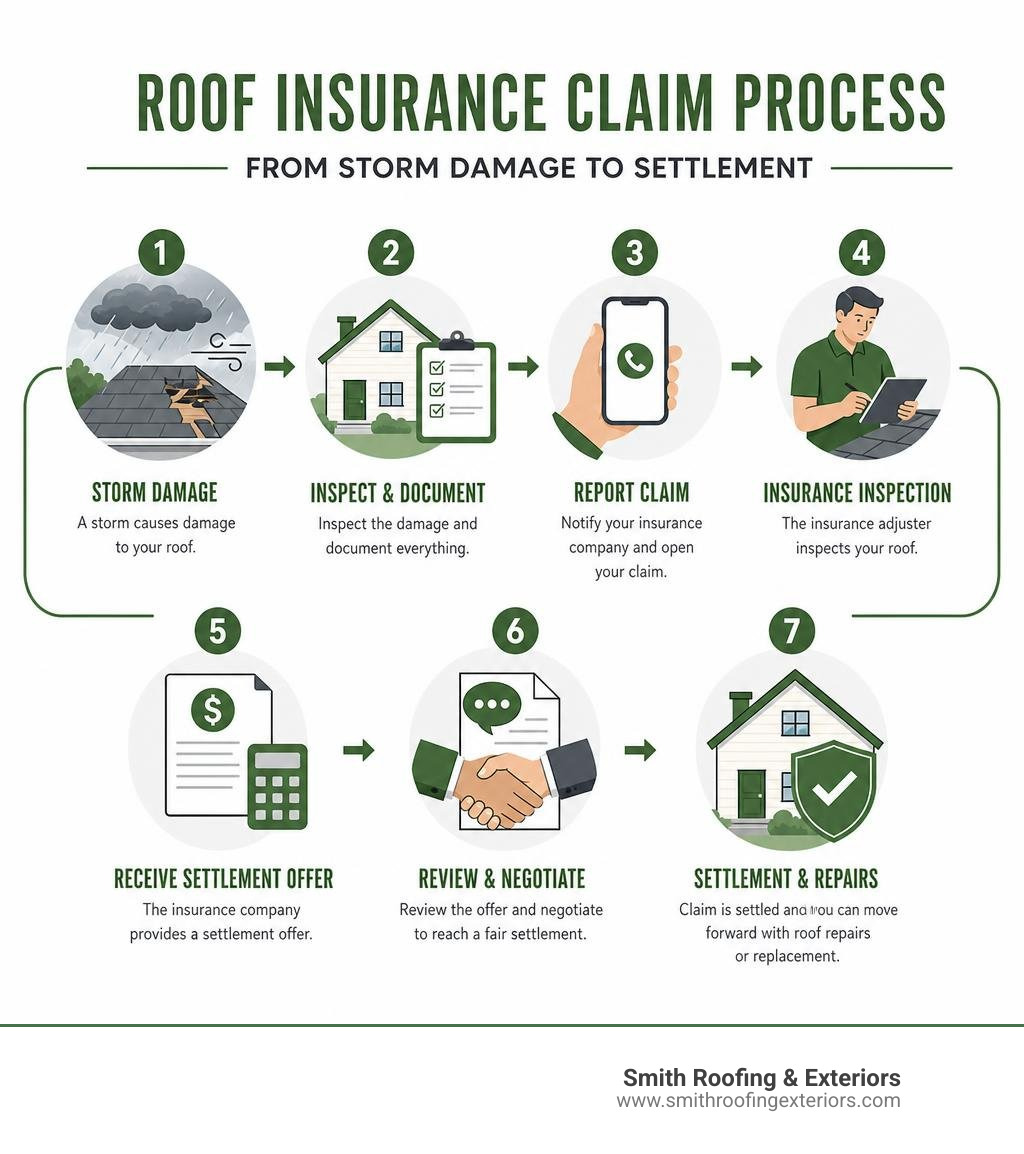
Quick look at public adjuster roofing:
What is a Public Adjuster and How Do They Differ from Company Adjusters?
When you file an insurance claim for your roof, a few different professionals with the word “adjuster” in their job titles might enter your life. It is incredibly important to understand who represents whom, because their loyalties lie in completely different places.
There are three primary types of insurance adjusters:
- Company Adjusters (Staff Adjusters): These are full-time employees of your insurance company. Their salary is paid by the insurer, and their job is to evaluate your claim according to corporate guidelines. While they aim to be professional, their ultimate loyalty is to their employer’s bottom line.
- Independent Adjusters: These are third-party adjusters hired by your insurance company. Insurers often bring them in during busy storm seasons when staff adjusters are overwhelmed. Even though they are “independent,” they are paid by your insurance company, meaning they still report directly to the carrier and follow their payout metrics.
- Public Adjusters (PAs): These are independent, licensed professionals hired exclusively by you, the policyholder. They have no relationship with the insurance company. Their sole job is to act as your advocate, evaluating the damage, analyzing your policy, and negotiating the highest possible settlement.
If you are feeling overwhelmed by the paperwork and back-and-forth phone calls, a public adjuster steps in to manage the entire process on your behalf. However, before you hand over the keys to your claim, it helps to know how to navigate the basics yourself. Check out our comprehensive guide on how to file roof insurance claims in 7 easy steps to see what the traditional process looks like.
How a Public Adjuster Roofing Specialist Maximizes Your Claim
If you choose to work with a public adjuster who specializes in roofing, they will employ several advanced strategies and forensic tools to build an airtight case for your insurance carrier. Insurance companies often try to minimize payouts by claiming storm damage is actually just “cosmetic” or the result of normal wear and tear. A public adjuster’s job is to prove otherwise.
Here is how a specialized public adjuster works to maximize your claim:
- Forensic Inspections: They don’t just look at your roof from the driveway. They perform highly detailed, physical inspections of your shingles, flashings, valleys, and underlayment to find structural compromises.
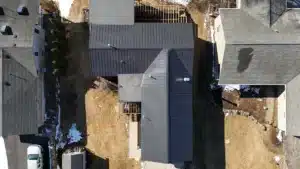
- Drone Photography & High-Tech Tools: Many reputable adjusters use aerial drones to capture high-definition, close-up images of hail impacts and wind lift. They may also utilize thermal imaging (moisture mapping) to detect hidden water intrusion beneath your shingles before it stains your ceilings.
- Code Compliance & The 25 Percent Rule: This is a major factor that insurance carriers often gloss over. In many jurisdictions, building codes dictate that if more than 25% of a roof is damaged, the entire roof must be replaced to meet modern safety codes. A public adjuster knows local building codes inside and out and will fight to ensure your carrier pays for a full code-compliant replacement, rather than a cheap patch job.
By carefully documenting every single compromised shingle, a public adjuster can significantly increase the chances that your carrier approves a full replacement. You can learn more about how these professionals build their arguments in this detailed guide on how public adjusters help maximize your roof insurance claim.
That hail damage behaves differently depending on your shingle type. To understand what actual structural hail damage looks like on your roof, read our resource on hail damage roof 101.
The Financial Reality: Fees, Contracts, and Potential Risks
While the idea of having a dedicated advocate sound fantastic, public adjusters do not work for free. The financial reality of hiring a public adjuster is one of the most important things to weigh before signing a contract.
The Contingency Fee Structure
Public adjusters typically charge a contingency fee, which is a percentage of the total claim payout. This fee usually ranges between 10% and 15% of the final settlement.
The critical detail many homeowners miss is that this percentage applies to the entire settlement, not just the extra money the adjuster negotiates for you.
For example, if your insurance company immediately offers you $30,000 to replace your roof, and a public adjuster steps in and negotiates that payout up to $35,000, their 15% fee is calculated from the entire $35,000.
Let’s look at how the math actually shakes out:
| Claim Scenario | Without a Public Adjuster | With a Public Adjuster (15% Fee) |
|---|---|---|
| Carrier’s Initial Offer | $30,000 | $30,000 |
| Negotiated Final Settlement | $30,000 | $35,000 |
| Public Adjuster Fee (15%) | $0 | $5,250 |
| Net Payout to Homeowner | $30,000 | $29,750 |
| Actual Cost of Roof Replacement | $30,000 | $30,000 |
| Homeowner’s Out-of-Pocket Shortfall | $0 | $250 |
In this very realistic scenario, hiring a public adjuster actually left the homeowner with less money to put toward their actual roof repairs than the insurance company’s original, undisputed offer. Because you must pay your roofing contractor the full cost of the physical materials and labor, you are left to cover that $250 shortfall out of your own pocket.
This is why we always recommend being incredibly careful about when you bring a public adjuster into the mix. To understand why your roofing contractor needs to look closely at your insurance scope of loss to help prevent these exact shortfalls, read our guide on why contractors need your insurance paperwork.
Strict Contract Rules
Once you sign a contract with a public adjuster, you are legally bound to pay their fee out of your insurance proceeds. It can be incredibly difficult to back out of these agreements.
State laws vary regarding cancellation windows. For example, in Illinois, public adjuster contracts can only be canceled within 5 business days of signing, while other states have 72-hour cancellation policies. If you live near state lines or work with out-of-state companies, you must read the fine print carefully.
If you are looking for highly rated local public adjusting services in our region, you can research options like Fortitude Public Adjusters, but always verify their fees and contract terms upfront.
Public Adjusters vs. Roofing Contractors: Roles, Licenses, and Collaboration

A common point of confusion for homeowners is the difference between a roofing contractor and a public adjuster. Can’t your roofer just handle the negotiations with your insurance company?
The short answer is: No, they legally cannot.
While both professionals are essential during a storm restoration project, they play completely different roles, hold different licenses, and have strict legal boundaries.
| Feature | Roofing Contractor | Public Adjuster |
|---|---|---|
| Primary Focus | Inspecting, repairing, and replacing the physical roof. | Documenting the financial loss and negotiating settlement terms. |
| Licensing | State/local contractor or dwelling contractor credentials. | State Department of Insurance public adjuster license. |
| Can They Negotiate Claims? | No. It is illegal for a contractor to negotiate policy terms or settlements. | Yes. They are legally authorized to negotiate on your behalf. |
| Payment Model | Paid directly for completed construction work. | Paid via a percentage (10-15%) of the insurance payout. |
The Legal Limits of a Public Adjuster Roofing Advocate
In almost every state, including Wisconsin, there are strict laws against the Unauthorized Practice of Public Adjusting (UPPA).
A roofing contractor can legally inspect your roof, provide a detailed, itemized estimate for repairs, and even meet with your insurance company’s adjuster to point out storm damage. However, your contractor cannot interpret your insurance policy, argue about your coverage limits, or negotiate the financial settlement with your insurer.
In places like Oklahoma, roofing contractors who advertise as “insurance claim specialists” or offer to negotiate claims without a public adjuster license are acting illegally. Similarly, in Illinois, public adjusters are prohibited from soliciting clients during an active natural disaster or between the hours of 7:00 p.m. and 8:00 a.m. to protect vulnerable homeowners.
Understanding these legal boundaries keeps you safe from bad actors. For a deeper dive into managing this process locally, check out our guide on navigating your insurance roof claim in Burlington like a pro.
How to Choose a Reputable Public Adjuster Roofing Professional
If you decide that your claim is complex enough to warrant hiring a public adjuster, you must vet them carefully to avoid “storm chasers” — transient adjusters who travel from state to state following storms, sign homeowners to binding contracts, and then disappear once they collect their fees.
Here are a few steps to protect yourself:
- Verify Licensing: Always ask for their active license number and verify it with the Wisconsin Department of Insurance.
- Check the BBB: Look for an established business with a strong rating and positive local reviews.
- Use Trusted Directories: Check reputable industry directories, such as the list of the Best Public Adjuster Contractors in Fort Atkinson, WI on Directorii, to find vetted local professionals.
- Avoid High-Pressure Door Knockers: If an adjuster knocks on your door immediately after a storm demanding you sign a contract on the spot, treat it as a major red flag.
For urgent situations where storm damage has left your home exposed, read the Janesville homeowners guide to urgent roof repairs to learn how to secure your property safely while you sort out your claim.
When Should You Hire a Public Adjuster vs. Handling It Yourself?
Hiring a public adjuster is not a one-size-fits-all solution. In many cases, it is completely unnecessary, while in others, it can save your financial skin.
When You PROBABLY Don’t Need a Public Adjuster:
- The damage is straightforward: If a storm blew off a clear section of shingles, your contractor provides an estimate, and your insurance company agrees to pay for the replacement minus your deductible, there is no reason to hire a public adjuster. Doing so will only needlessly cost you 10-15% of your payout.
- You have a trusted local contractor: An experienced, local roofing contractor can provide your insurer with all the technical documentation, measurements, and photos they need to approve a fair payout for free.
When You SHOULD Consider a Public Adjuster:
- Your claim was completely denied: If your roof has obvious storm damage but your insurance company insists it is just “old age” and denies the claim entirely, a public adjuster can step in to reopen the claim and present forensic evidence to dispute the denial.
- Severe underpayment: If your contractor’s estimate to replace your roof is $25,000 (based on local material and labor costs), but your insurance company is refusing to pay more than $12,000, a public adjuster can negotiate to bridge that massive gap.
- Large, complex, or commercial claims: If you are dealing with a large commercial flat roof or multi-family property with complex policy endorsements, a professional public adjuster is highly valuable.
If you are trying to decide whether your roof needs a full replacement or just a simple repair before involving insurance, take a look at the shingle life guide to getting your roof replaced by insurance.
Frequently Asked Questions About Roof Insurance Claims
Navigating roof claims brings up plenty of questions. Here are some of the most common things we hear from homeowners in Southeastern Wisconsin.
Can a roofing contractor legally negotiate my insurance claim?
No. As mentioned earlier, negotiating an insurance claim on behalf of a policyholder requires a public adjuster license. A roofing contractor who attempts to negotiate policy coverages or settlement amounts with an insurer is committing the Unauthorized Practice of Public Adjusting (UPPA). Your roofer can, however, provide detailed, itemized estimates and meet with the insurance adjuster on-site to discuss the physical damage they found.
Will filing a wind or hail damage claim raise my insurance rates?
Filing a single claim for wind or hail damage should not directly cause your individual insurance rates to skyrocket. Hail and wind storms are classified as “acts of God” or catastrophic weather events, meaning they are entirely out of your control. Instead of raising rates for individual homeowners who file claims, insurance companies typically adjust rates annually across entire zip codes based on the collective storm damage in that area. If a severe storm hits your neighborhood, your rates will likely go up slightly whether you file a claim or not — so you might as well get your roof fixed!
What should I avoid saying to an insurance company adjuster?
When speaking with your insurance company’s adjuster, stick strictly to the facts. Avoid speculating about the cause, cost, or timing of the damage.
- Do not say: “I think the roof was already leaking before the storm,” or “It might just be old age.” This gives the carrier immediate grounds to deny your claim as “wear and tear” or “pre-existing damage.”
- Instead, say: “We noticed water spot damage on our ceiling immediately following the high winds on Tuesday,” or “Our contractor inspected the roof and identified fresh hail impacts.” Let your contractor’s professional inspection report and photos do the talking.
Conclusion
Filing a roof insurance claim doesn’t have to be a stressful battle. While public adjusters can be valuable advocates for highly complex or wrongfully denied claims, most straightforward storm damage claims can be resolved smoothly by working directly with a trusted, local roofing contractor and your insurance agent.
At Smith Roofing & Exteriors, we believe in complete transparency. We don’t use high-pressure sales tactics, and we don’t play games with your insurance paperwork. Our experienced local team is proud to serve homeowners across Fort Atkinson, WI, and surrounding communities like Lake Mills, Burlington, Delavan, and Lake Geneva with honest inspections, superior materials, and 24/7 emergency services when you need us most.
If your roof was recently hit by a storm, don’t face the insurance process alone. Contact us today to schedule a thorough, honest inspection, or learn more about our professional storm damage restoration services. We’ll make sure your home is completely protected!