What Makes the Best Wet Roof Patch Different From Standard Sealants?
When water is actively dripping into your living room, opening a standard caulk tube or dry-surface roof sealant will only lead to frustration. Standard roof sealants need a dry, dust-free surface to cure and stick. If you attempt to smear standard acrylic or water-based sealant over a wet shingle, the standing water acts as a barrier, causing the sealant to float right off without bonding.
The best wet roof patch products use heavy-duty, solvent-based asphalt and modified-rubber formulations. These dense compounds cut straight through liquid layers, pushing the water out of the way and sticking directly to the underlying roof material. Understanding why you need a specialized patch boils down to 5 Reasons to Fix Roof Leaks ASAP—primarily preventing structural rot and hidden mold growth before a small drip becomes an expensive rebuild.
Water Displacement and ASTM D3409 Standards
Not all wet patches are created equal. When evaluating emergency repair compounds, contractors look for specific performance ratings, such as the ASTM D3409 standard. This rating measures an asphalt roof cement’s ability to adhere to damp, wet, or fully underwater surfaces.
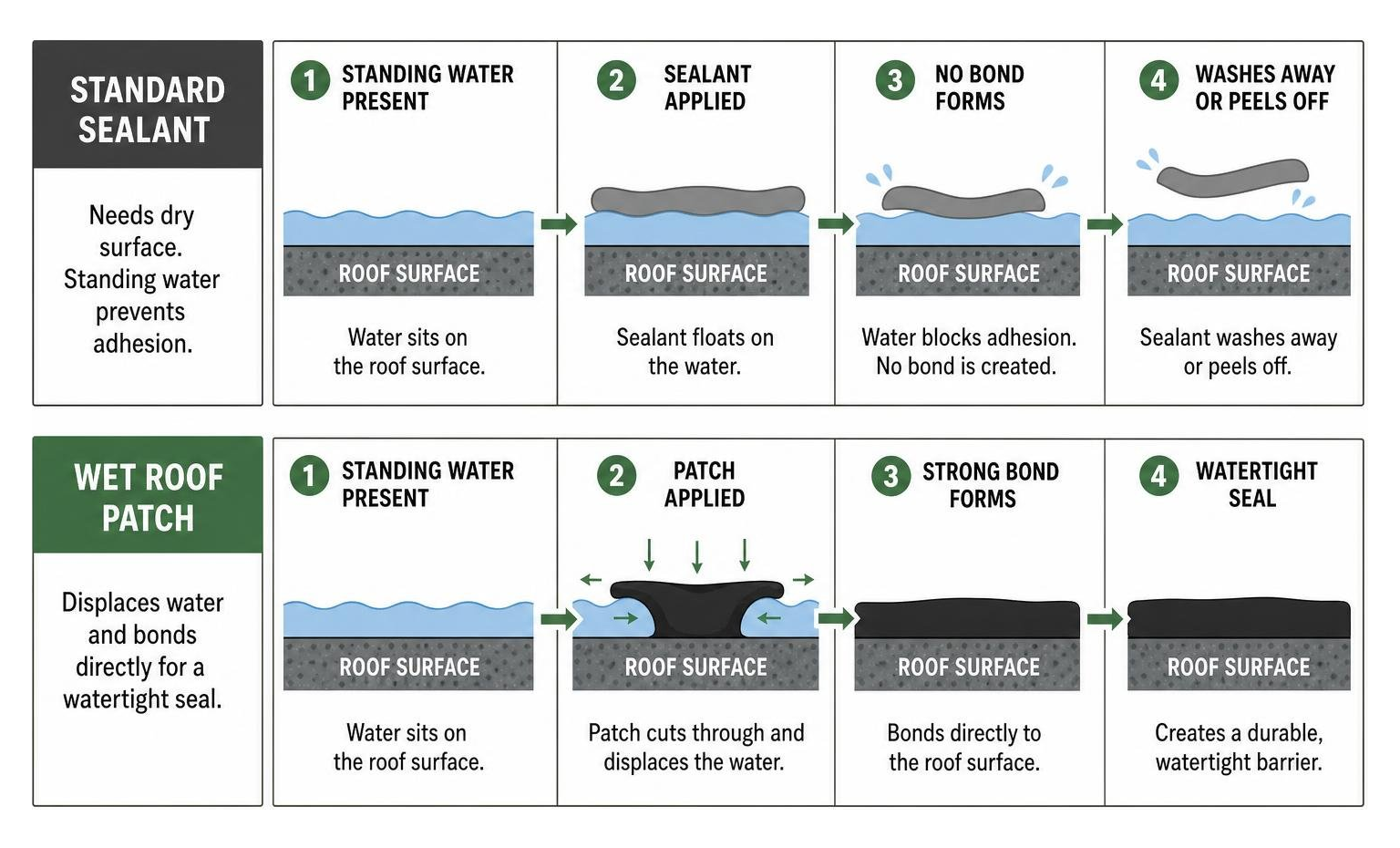
A high-grade wet patch rated for 100% wet surface adhesion according to ASTM D3409 creates an immediate, impenetrable barrier under standing water. Standard silicone or elastomeric coatings, by contrast, fail under hydrostatic pressure when submerged, washing away or peeling off before they ever set.
Compatible Substrates and Surfaces to Avoid
Before spreading compound across your roof, double-check that your material is compatible with asphalt- or rubber-based solvent products.
Compatible Surfaces:
- Aged asphalt shingles and roll roofing
- Built-Up Roofs (BUR) and SBS Modified Bitumen
- Metal roofing panels, flashing, and gutters
- Concrete, masonry, and brick chimneys
- Aged single-ply membranes like EPDM and TPO (product-specific formulations like Henry 209XR)
Surfaces to Avoid:
- Gravel roofs: Loose aggregate prevents the patch from creating a continuous seal down to the membrane.
- APP Torch-Down Membranes: High solvent content can degrade certain APP modified bitumen cap sheets.
- Wood Shingles: Oil-based wet patches can stain, damage, or fail to adhere properly to natural wood shakes.
- Flexible PVC and Polycarbonate: Strong solvents may soften or warp plastic light panels.
Top Emergency Roof Sealants and Wet Patch Formulas
Selecting the right compound depends on your roof layout, the current temperature outside, and whether the repair is at a high-stress, flexing seam.
| Product | Key Advantage | Application Temp | Warranty Coverage | ASTM Rating |
|---|---|---|---|---|
| Henry 208R Rubberized | Excellent cold-weather usability | 0°F to 120°F | 10-Year Limited | ASTM D3409 / D4586 |
| Henry 209XR Extreme | Superior flexibility at moving joints | -20°F to 120°F | Varies by substrate | ASTM D3409 / D4586 |
| Henry 208 Standard | Proven flashing and spot protection | 20°F to 120°F | 7-Year Limited | ASTM D3409 / D4586 |
Henry 208R Rubberized: The Best Wet Roof Patch for Cold Weather
If you need a reliable, high-performance product during a severe Midwest cold snap, 208R Rubberized Wet Patch Black Roof Leak Repair Sealant 0.90 gal. stands out as a top contender for the best wet roof patch.
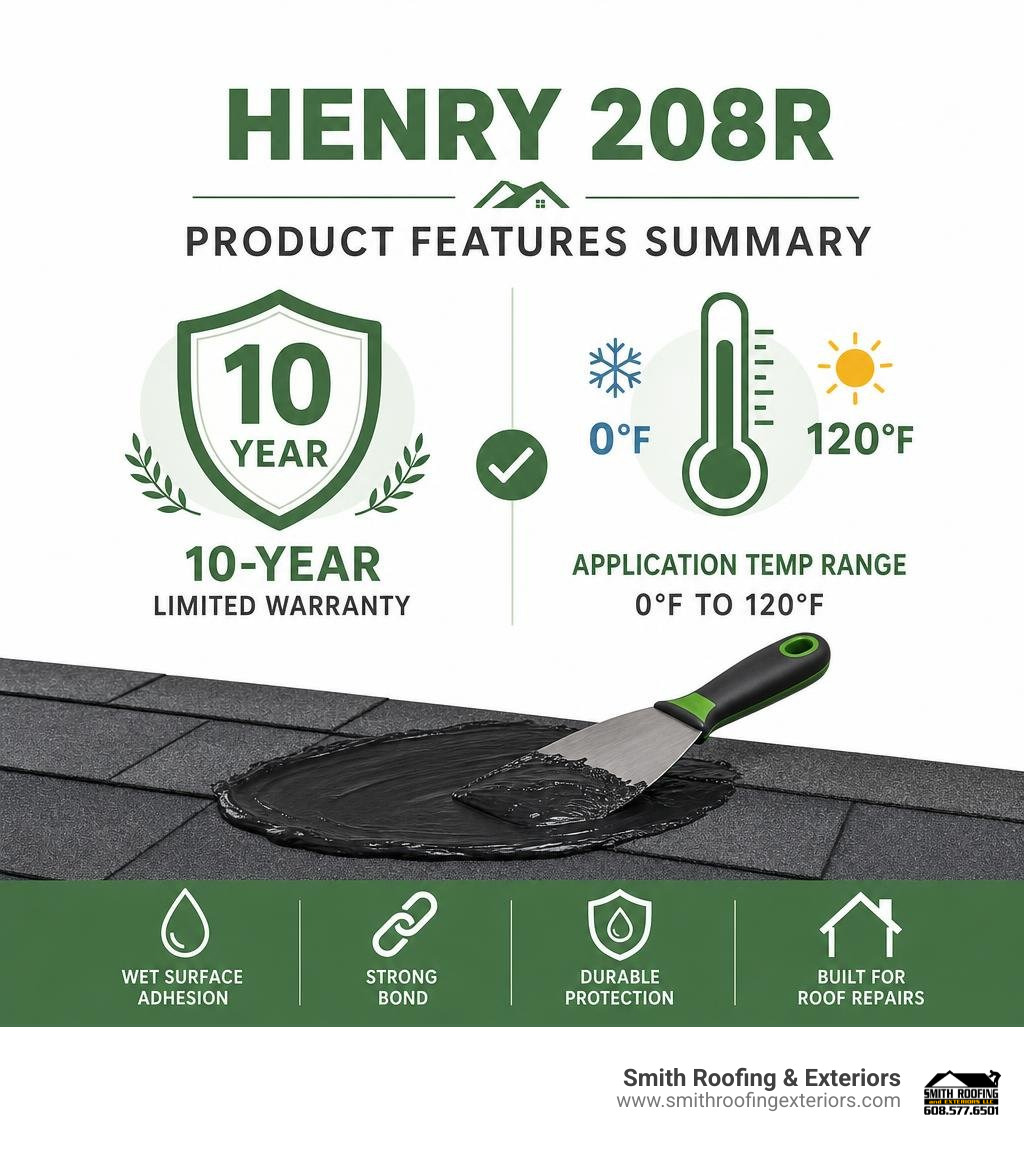
This compound remains easy to spread even when ambient temperatures plunge down to 0°F (-18°C), making it ideal for winter ice-dam mitigation. It provides 100% wet surface adhesion per ASTM D3409, covers up to 12.5 sq. ft. per gallon at 1/8-inch thickness, and carries a robust 10-year limited warranty. Understanding these seasonal vulnerabilities helps clarify the Common Causes That Lead to Emergency Roof Repair throughout the year.
Henry 209XR Extreme: The Best Wet Roof Patch for Moving Joints
Roofing components expand and contract continuously as temperatures shift. For areas subject to high thermal movement—such as metal roof seams, expansion joints, or valley transitions—Henry 209 Extreme Wet Patch Roof Leak Repair: Ultimate Leak Protection in All Conditions provides maximum elasticity.
Formulated with UV-modified rubber compounds, Henry 209XR withstands extreme sub-zero application down to -20°F without becoming brittle. It sticks tenaciously to aged BUR, TPO, EPDM, PVC, fiberglass, metal, and concrete, preserving its rubberized stretch over time.
Henry 208 Standard Wet Patch: Weatherproof Protection for Flashing
For basic spot repairs around dormers, vent pipes, and chimney flashings in milder weather, Henry 208 Wet Patch Roof Leak Repair: Reliable, Weatherproof Protection for Roof Leaks offers trusted performance.
Operating in a temperature range of 20°F to 120°F, Henry 208 complies fully with ASTM D4586 non-sagging specifications. It delivers roughly 8 to 10 linear feet of 1/4-inch bead coverage per 16 oz tube, backed by a 7-year limited warranty.
How to Properly Apply a Wet Roof Patch to Stop Leaks
Slapping wet cement onto a hole without prep might stop a drip for an hour, but it won’t hold up long-term. Following a structured application protocol ensures your emergency patch stays intact until permanent repairs can be completed. Check out our guide on The Easiest Way to Fix Roof Leak for additional localized strategies.
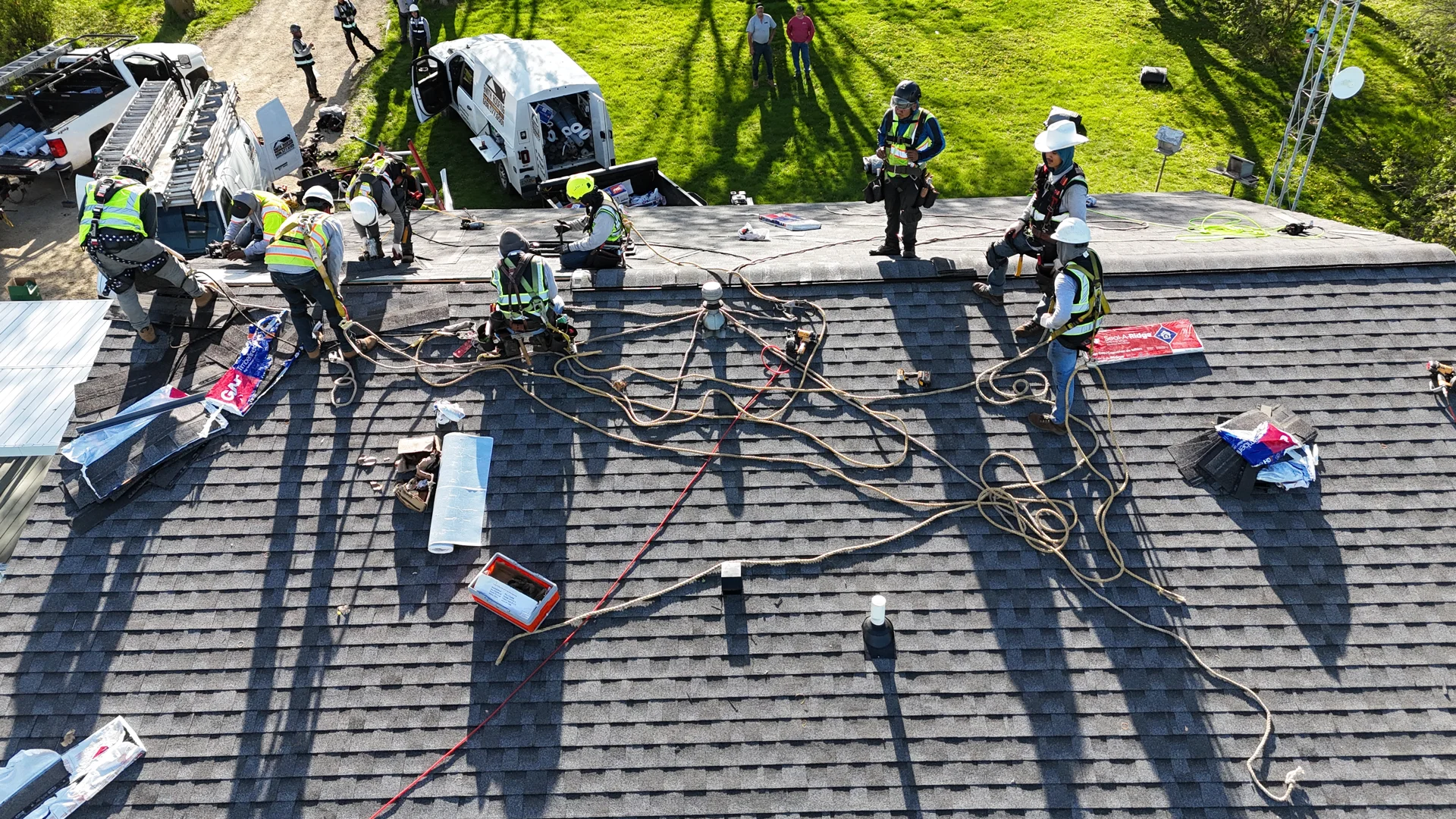
Surface Preparation and Cleaning Wet Substrates
Even when working underwater or during heavy rain, cleaning the immediate repair area is critical:
- Clear Debris: Use a plastic putty knife or brush to remove loose gravel, algae, leaves, and dirt.
- Scrape Loose Material: Flake away rust scale from metal or cracked, brittle layers of old roof cement.
- Trace the Path: Ensure you locate the true entry point, extending the patch 2 to 4 inches beyond the visible crack or tear to keep water from tracking under the edges.
The 3-Course Patching Technique with Reinforcement Fabric
For cracks wider than 1/4 inch or splits longer than 2 inches, standard asphalt cement alone can crack as the roof moves. Using a 3-course patch creates a structural, reinforced bridge across the gap.
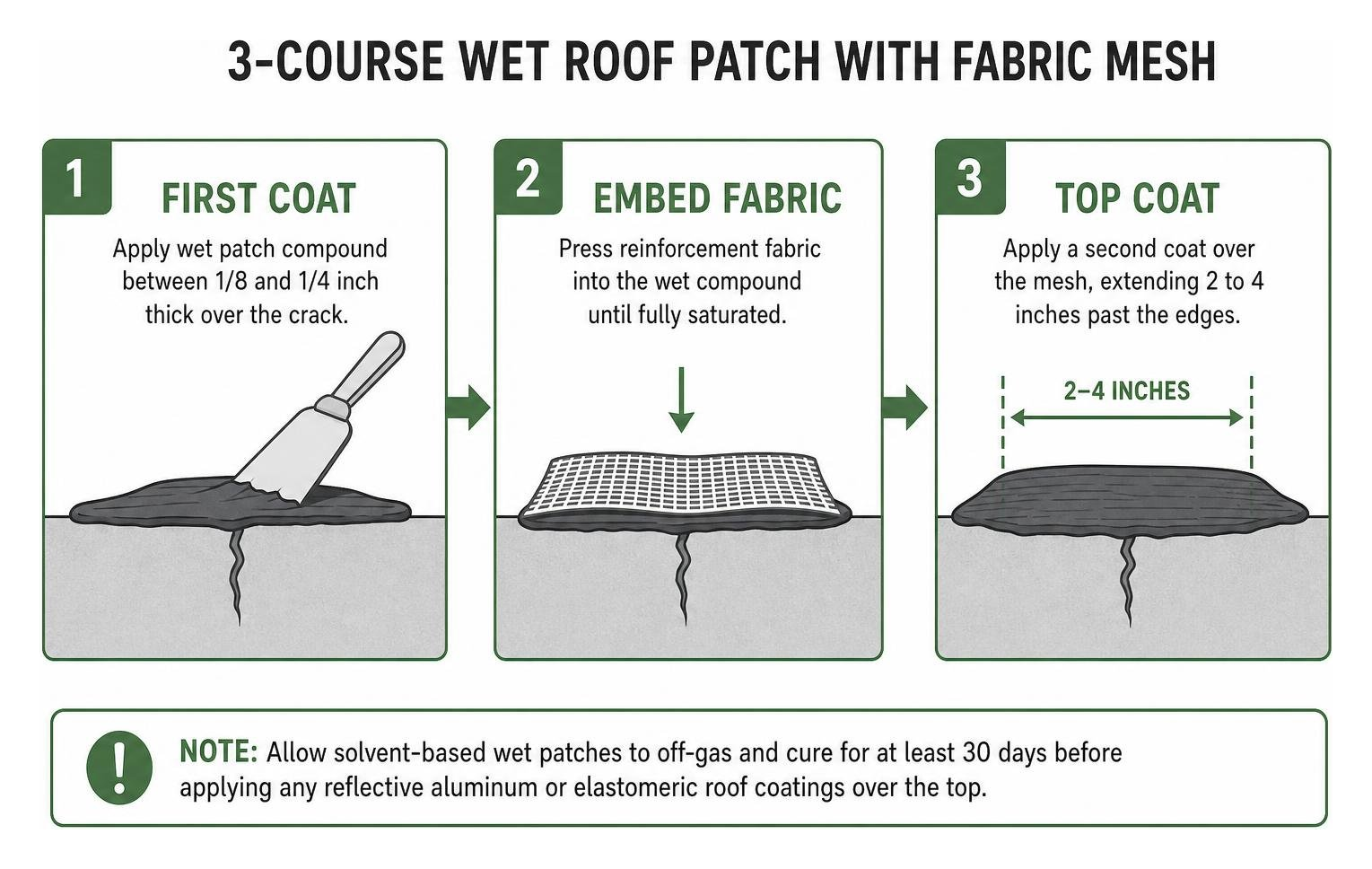
- First Coat: Apply a layer of wet patch compound between 1/8 and 1/4 inch thick over the crack using a trowel or putty knife.
- Embed Fabric: Press heavy-duty reinforcement fabric (such as Henry 181 or Henry 183 woven glass fabric) directly into the wet sealant until it saturates.
- Top Coat: Apply a second layer of wet patch compound over the mesh, extending 2 to 4 inches past the fabric edges and feathering the borders smooth.
Note: Allow solvent-based wet patches to off-gas and cure for at least 30 days before applying any reflective aluminum or elastomeric roof coatings over the top.
Comparing Wet Patches to Tapes, Tarps, and Temporary Seals

When disaster strikes, homeowners often debate whether to use liquid wet patches, peel-and-stick waterproof tapes, or blue tarps. Reviewing How to Repair Flat Roof on a Budget can help weigh costs, but here is how these emergency methods compare:
- Peel-and-Stick Tapes: Quick for clean, flat surfaces, but struggle to conform around irregular roof penetrations, rough granules, or underwater gaps.
- Blue Tarps: Great for covering widespread storm or hail damage, but vulnerable to high winds and difficult to anchor securely on wet, steep-sloped roofs.
- Rubberized Wet Patch: The primary choice for targeted leaks, deep splits, and active standing water. It conforms seamlessly to complex shapes and fills voids completely.
Frequently Asked Questions About Wet Roof Patch Leak Repair
Can a wet roof patch be applied underwater or during active rainfall?
Yes. High-quality wet roof patches rated under ASTM D3409 feature specialized water-displacing agents. When troweled firmly into place, the thick asphalt compound displaces water molecules and bonds directly to the roof decking or membrane underneath, stopping active leaks instantly.
How long does a wet roof patch last and how long until it cures?
While a wet patch stops leaks instantly upon application, full chemical curing takes time. Solvents off-gas over approximately 30 days. Most premium rubberized wet patch products carry 7-to-10-year manufacturer warranties, but they should generally be viewed as long-term temporary solutions until a professional evaluates the underlying structure.
What are the most common mistakes to avoid when repairing a roof leak?
- Skipping Reinforcement Mesh: Applying cement over wide splits without fabric mesh almost guarantees the seam will re-crack during thermal expansion.
- Applying Too Thin: Spreading compound thinner than 1/8 inch reduces its waterproofing lifespan dramatically.
- Ignoring Attic Tracing: Water travels along rafters before dripping down through drywall. Always trace the leak back to its origin on the roof deck rather than patching directly above the ceiling stain.
- Applying Over Incompatible Materials: Smearing asphalt cement across unapproved single-ply membranes or wood shakes can ruin substrate materials.
Conclusion
Emergency roof leaks are stressful, but having a tub or tube of rubberized wet patch on hand keeps you in control when bad weather strikes. Knowing how to quickly apply a reinforced 3-course patch can mean the difference between a simple cleanup and thousands of dollars in water damage.
While a DIY patch stops the drip today, temporary seals are no substitute for professional evaluation. If your roof has suffered severe storm damage, aged beyond its lifespan, or continues to leak, our experienced local team at Smith Roofing & Exteriors is here to help. We provide 24/7 emergency response, transparent pricing, and robust long-term roofing systems across Fort Atkinson and surrounding communities.
Don’t let a small leak turn into major structural repairs. Contact us today to schedule expert residential roof repair services in Fort Atkinson and restore total peace of mind to your home!