Is Aluminum Corrugated Siding Right for Your Property?
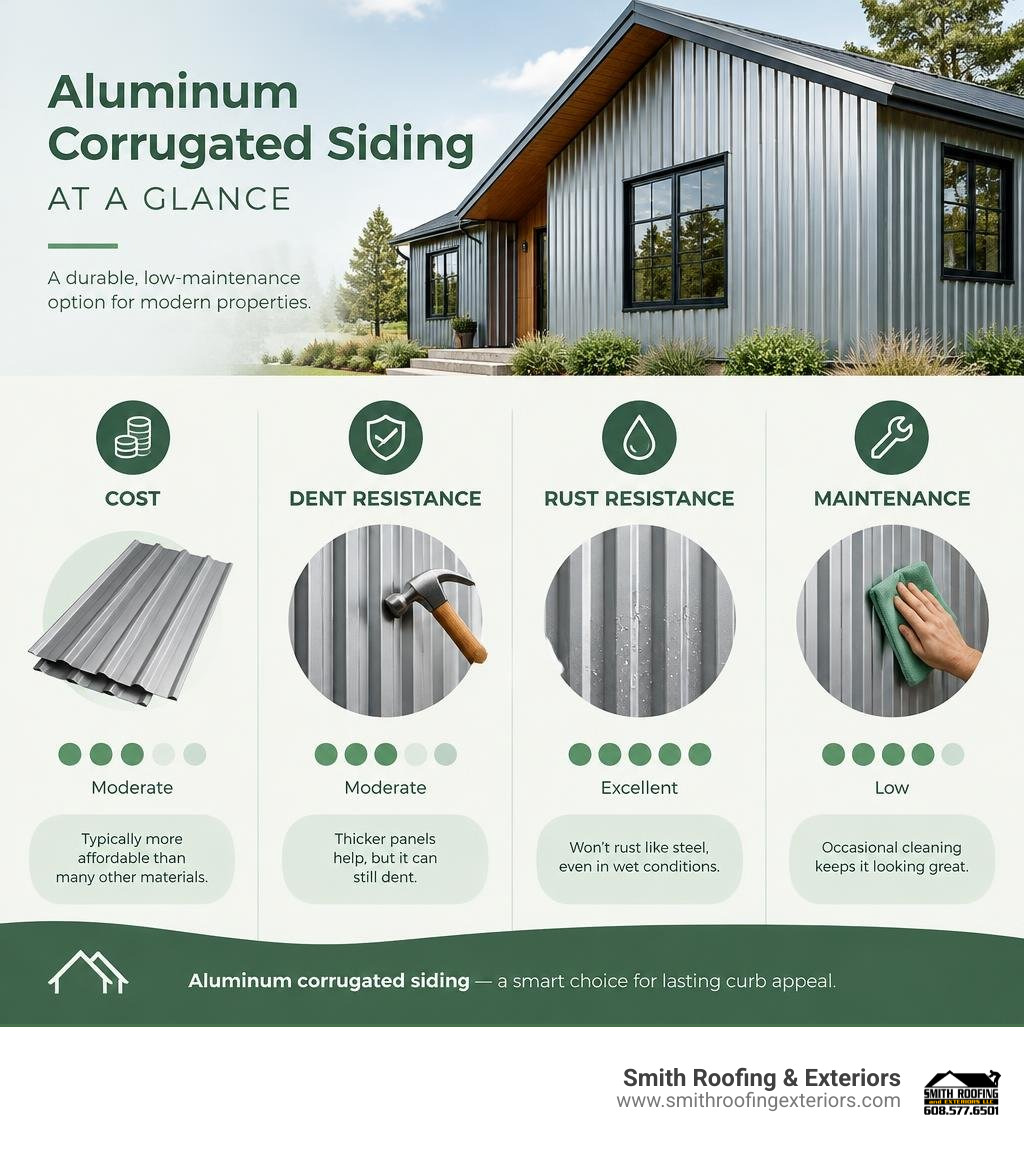
Aluminum corrugated siding is a lightweight, rust-resistant option for homes, outbuildings, and trailers. Its ridged shape adds stiffness, while its finish can reduce the need for painting. To compare options, start with the panel thickness, profile, coating, and installed cost. Thicker panels can better resist dents, but they usually cost more.
For a property facing Wisconsin’s wind, snow, and hail, the trade-off is worth a close look: aluminum will not rust like steel, but it can dent, and its weather protection depends on proper fastening and sealed joints. Compare quotes for the full installation, not just the panels.
I’m Matt Smith, owner of Smith Roofing & Exteriors. I help homeowners understand the short- and long-term value of exterior choices, including aluminum corrugated siding.
Aluminum corrugated siding terms to learn:
For broader industry context on aluminum’s corrosion resistance in exterior building products, the Aluminum Association provides technical resources on aluminum alloys and finishes.
Performance and Durability of Aluminum Corrugated Siding

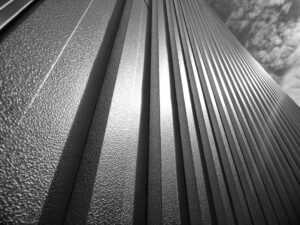
When selecting exterior cladding across Southeastern Wisconsin, balancing weight, structural rigidity, and weather defense is vital. Flat metal sheets can bend or warp under pressure, but roll-forming aluminum into repeating waves or ribs adds significant structural strength without adding extra weight to your wall frames.
Unlike steel, which relies strictly on its outer coating to prevent red rust, aluminum naturally forms a protective oxide layer when exposed to air. Even if the surface gets scratched during a rough winter storm in Lake Geneva or Delavan, the exposed metal resists corrosion, rot, and insect damage.
Aluminum Corrugated Siding Performance Considerations
Selecting the proper configuration involves evaluating profile geometry, alloy temper, and panel thickness. Thinner gauges keep materials lightweight and affordable, while thicker industrial profiles withstand heavy impacts.
Impact resistance remains an important factor during Midwest storm seasons. While aluminum will never crack like vinyl or rot like wood, hail and flying debris can leave marks. If a severe storm rolls through Lake Mills or Burlington, identifying metal siding hail damage early helps you decide whether minor cosmetic dimpling or panel replacements are necessary.
| Gauge / Thickness | Typical Profile | Primary Coating | Best Application |
|---|---|---|---|
| 0.024″ (24-Gauge) | Mesa / S-Lock / Sinusoidal | Polyester / Two-Coat Acrylic | RVs, trailers, residential accents |
| 0.032″ (Standard) | Classic 7/8″ Corrugated / Box Rib | 70% PVDF (Kynar 500) | Residential cladding, lakefront cottages |
| 0.040″ (Heavy-Duty) | Deep Wave / Industrial R-Panel | Multi-layer PVDF / Anodized | Light commercial, exposed farm outbuildings |
| 0.050″ – 0.063″ (Custom) | Heavy Structural Rib | High-Performance PVDF | Commercial facades, severe-exposure walls |
Weather Resistance, Coatings, and Gauge Profiles
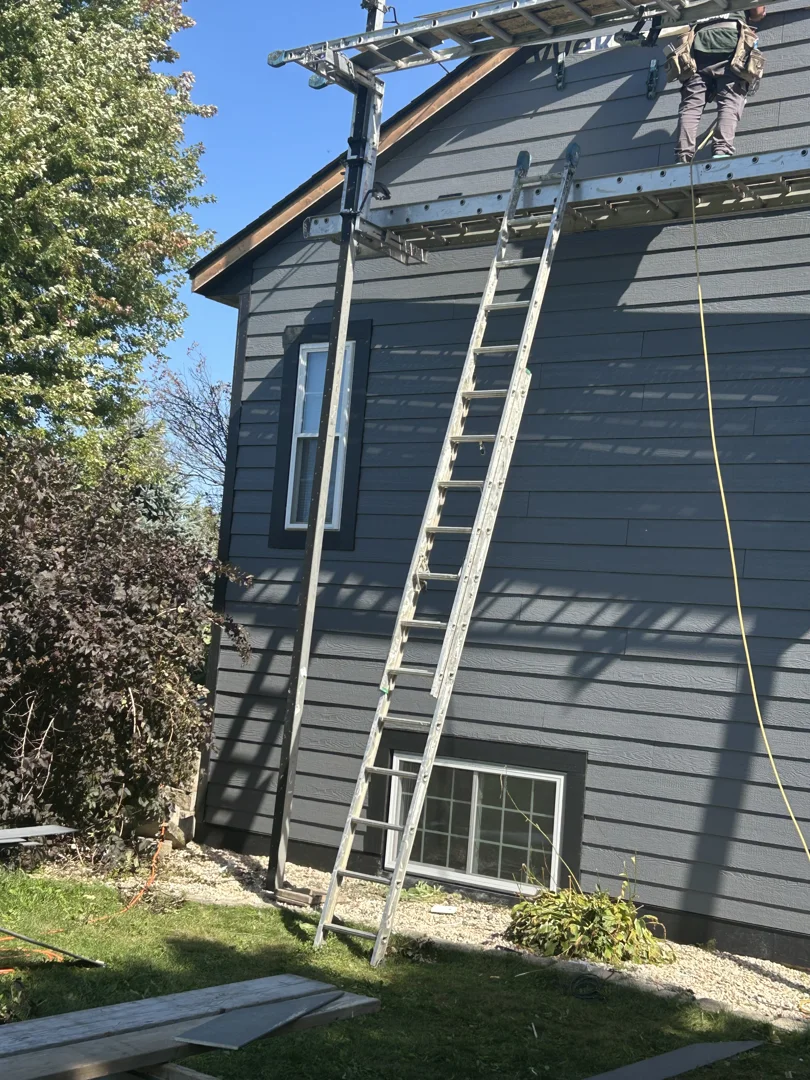
The longevity of your siding relies heavily on factory-applied protective finishes. Premium panels utilize high-performance coatings, such as 70% PVDF (Polyvinylidene Difluoride) resin systems or multi-coat acrylics like Alumalure 2000. These advanced finishes shield the metal against intense UV degradation, chalking, and color fading for 20 to 40 years.
Engineered aluminum wall systems also deliver outstanding safety benchmarks:
- Fire Safety: Achieves a UL 790 Class A fire rating, offering non-combustible protection against flying embers.
- Impact Strength: Premium .032″ and .040″ profiles can achieve a UL 2218 Class 4 impact rating, the highest industry standard for hail resistance.
- Wind Resistance: When paired with structural fasteners and continuous backing, corrugated panels meet UL 580 Class 90 wind uplift standards.
Environmental Sustainability and Recyclability
Aluminum is among the most sustainable exterior cladding materials on the market. Most manufactured aluminum siding contains between 40% and 85% recycled content, with select product lines incorporating even higher levels.
At the end of its long functional lifespan, aluminum is 100% recyclable without any degradation of its mechanical properties. Beyond raw materials, pre-painted aluminum panels featuring cool-roof and cool-wall pigments reflect solar infrared radiation away from your structure. This keeps interior spaces cooler in hot summer months and reduces overall cooling loads.
Cost Analysis, Applications, and Selection Guide
Investing in exterior cladding requires evaluating upfront installation costs against life-cycle maintenance savings. Working with top aluminum siding installers ensures that your home or building receives precise weather barriers, flashings, and secure attachments for decades of dependable performance.
Cost Factors and Pricing for Aluminum Corrugated Siding
Corrugated aluminum material pricing generally runs 20% to 30% higher than standard galvanized steel due to the premium raw alloy and specialized roll-forming processes. However, aluminum eliminates long-term repainting and rust remediation expenses.
Key variables affecting your total project investment include:
- Metal Thickness: Stepping up from standard 0.024″ to heavy-duty .032″ or .040″ thickness increases raw material costs while dramatically enhancing dent resistance.
- Finish Formulation: Specialized multi-coat PVDF architectural finishes carry a modest premium over standard polyester coatings but provide superior fade protection.
- Trim and Flashing Details: Custom corner posts, window drip caps, and base J-channels require precise metal brake fabrication.
Review our detailed metal siding cost breakdown to see how various metal profiles compare for modern exterior upgrades.
Residential and Light Commercial Applications
Corrugated aluminum panels adapt easily to diverse architectural styles across Jefferson, Edgerton, and Walworth:
- Modern Residential Accents: Installing 7/8″ wave corrugated panels vertically or horizontally creates deep, eye-catching shadow lines on modern entryways, gables, and bump-outs.
- Light Commercial & Outbuildings: Box rib and exposed-fastener corrugated sheets provide clean, industrial protection for workshops, retail facades, and storage structures.
- Trailers and Mobile Applications: Lightweight 0.024-gauge Mesa panels with interlocking joints deliver weather-tight shells without straining vehicle suspension frames.
Installation Steps and Long-Term Maintenance
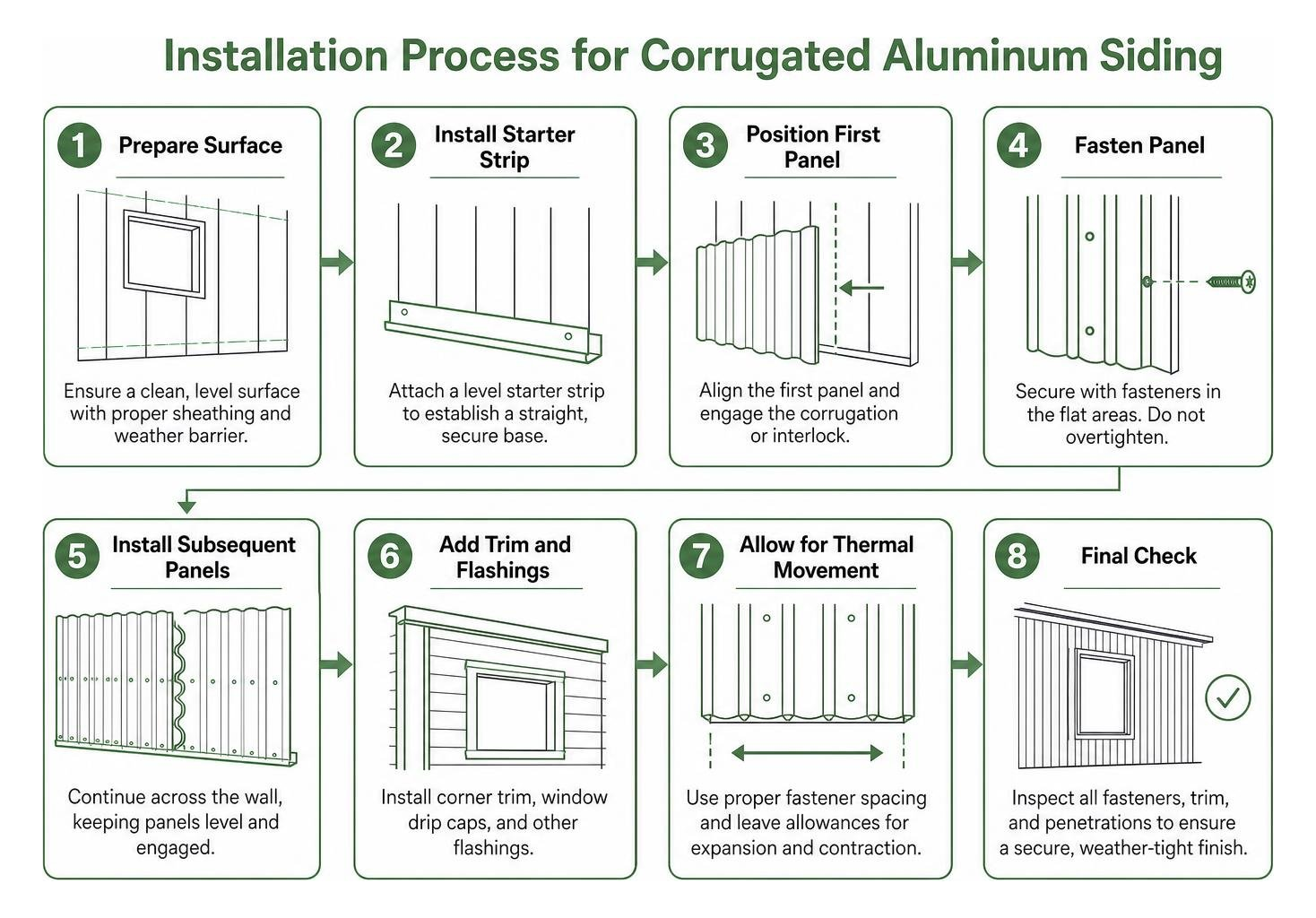
Proper installation ensures your siding handles seasonal temperature shifts without buckling or leaking. Aluminum expands and contracts with ambient temperature swings, requiring careful fastener spacing and movement allowances.
Essential Installation Steps & Practices:
- Substrate Preparation: Install a high-performance weather-resistive barrier over level wall sheathing.
- Fastener Selection: Secure panels using color-matched stainless steel screws with integrated neoprene washers to create watertight seals without crushing panel ribs.
- Interlocking & Overlapping: Utilize seamless S-Lock configurations or overlap corrugated side ribs by at least one full corrugation cycle, applying butyl sealant at critical roof-to-wall transitions.
- Thermal Movement: Avoid over-tightening screws; allow panels slight room to glide naturally across mounting slots during hot summer afternoons and freezing winter nights.
Maintenance for corrugated aluminum is straightforward. Rinse the panels once a year with clean water and a mild detergent to remove surface dust, pollen, and road grime. Inspect flashings, sealant joints, and fastener washers periodically to keep your exterior completely watertight.
Ready to elevate your property’s exterior performance? Connect with our team at Smith Roofing & Exteriors for tailored recommendations, transparent estimates, and professional installations across Southeastern Wisconsin.