Why Attic Ventilation Fans Spark Debate
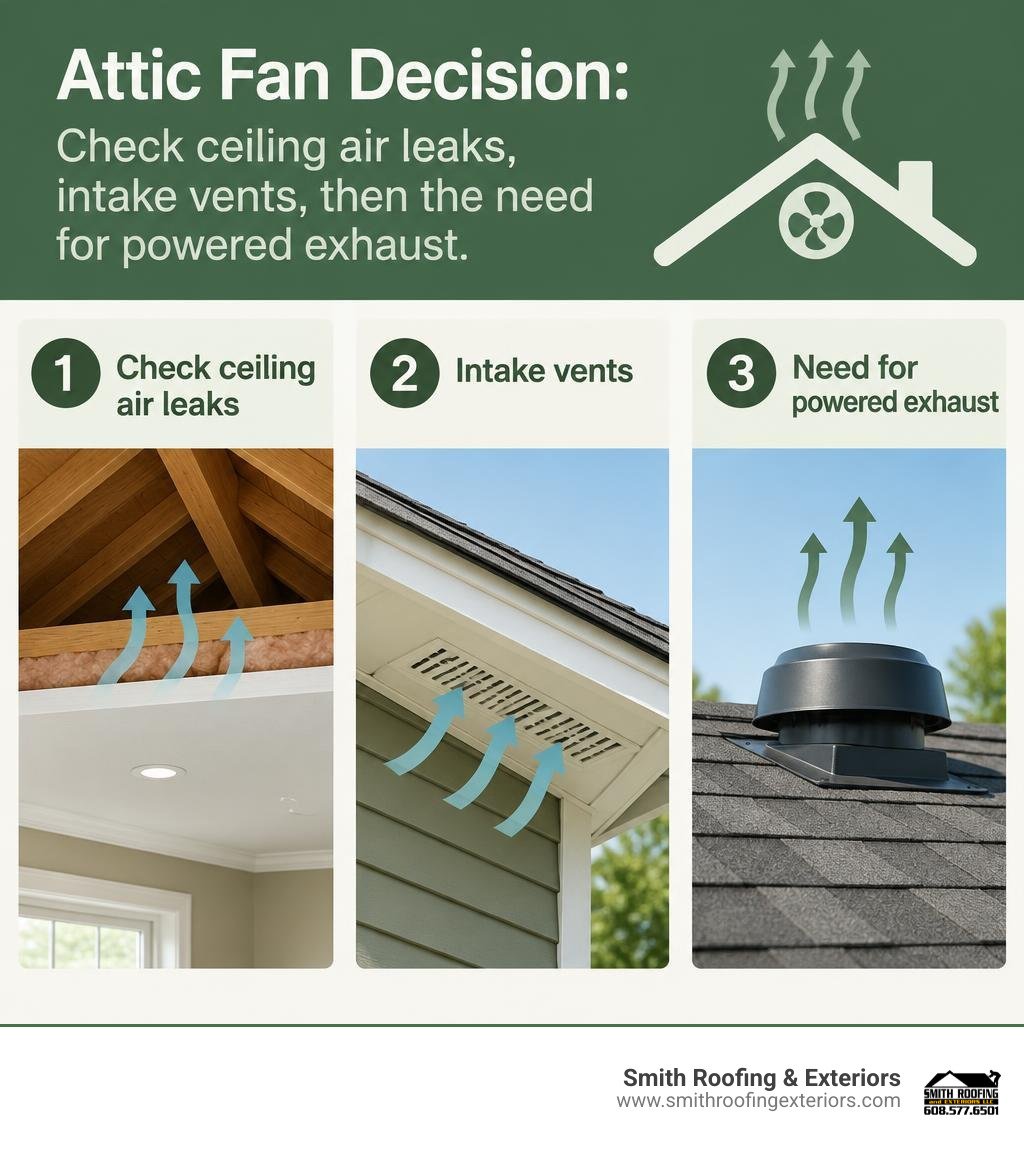
An attic ventilation fan can remove hot air, but it is not always the best fix for a hot attic. With too little intake air, it may pull cooled air from the rooms below through gaps in the ceiling. In Wisconsin, sealing those gaps and checking soffit and ridge vents should come before adding a powered fan. A fan makes more sense when the attic has enough intake air and a clear need for more airflow.
I’m Matt Smith, owner of Smith Roofing & Exteriors. I help homeowners understand roof maintenance choices, including whether an attic ventilation fan fits their home; the key is to look at the whole attic, not just its temperature. During a Wisconsin summer, attic temperatures can climb past 160°F, and that heat does not stay in the attic. It radiates downward through the ceiling, forces your air conditioner to work harder, and can shorten the life of asphalt shingles by baking the roof deck from below.
The building science debate is not about whether hot air should leave the attic. It is about how that air leaves. A powered attic ventilation fan actively exhausts hot air, but a home is a dynamic pressure system. If the fan moves more air than the intake vents can supply, the attic becomes depressurized. That negative pressure can pull conditioned air out of your living space, increase cooling costs, and even interfere with gas appliance venting. Before choosing a powered fan, homeowners should understand how roof ventilation works as a balanced system rather than a single exhaust point.
Attic ventilation fan word guide:
The Building Science Behind the Attic Ventilation Fan Debate
During peak summer afternoons, attics frequently reach 40°F to 50°F hotter than the outside air, easily exceeding 160°F. When heat accumulates in an attic, it bakes your roof decking and conducts heat downward through the ceiling into your living spaces. That heat transfer is not a minor comfort issue. It raises indoor cooling loads, makes your HVAC system run longer, and can accelerate the breakdown of roofing materials over time.
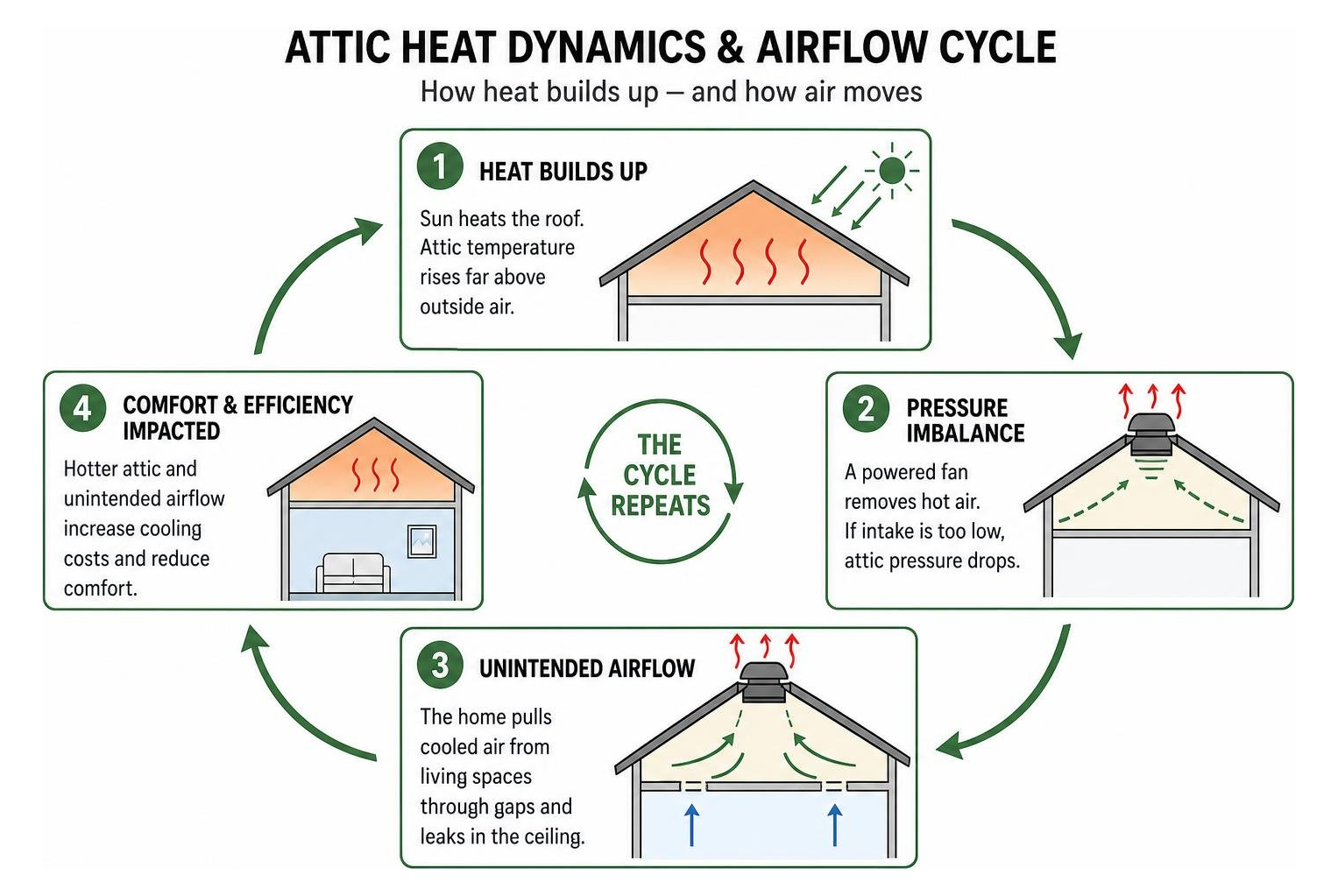
The debate among building scientists focuses on thermal dynamics and pressure relationships. While blowing hot air out mechanically seems straightforward, homes are dynamic pressure systems. If mechanical exhaust outpaces natural intake ventilation, the attic depressurizes, triggering unintended air currents from inside your home. Moisture migration also plays a role. Warm indoor air carries water vapor, and when that air is pulled into a hot attic, the moisture can condense on cooler surfaces at night or during shoulder seasons. Over time, that hidden moisture can support mold growth and rot the roof decking.
How a Powered Attic Ventilation Fan Operates
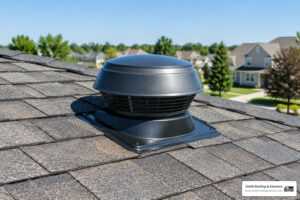
A powered attic ventilator works by actively expelling air from the attic space, measured in cubic feet per minute (CFM). The fan creates a localized low-pressure zone that draws cooler outside air through dedicated intake vents. The CFM rating tells you how much air the fan can move, but the real performance depends on whether the attic can supply that air without stealing it from the house below.
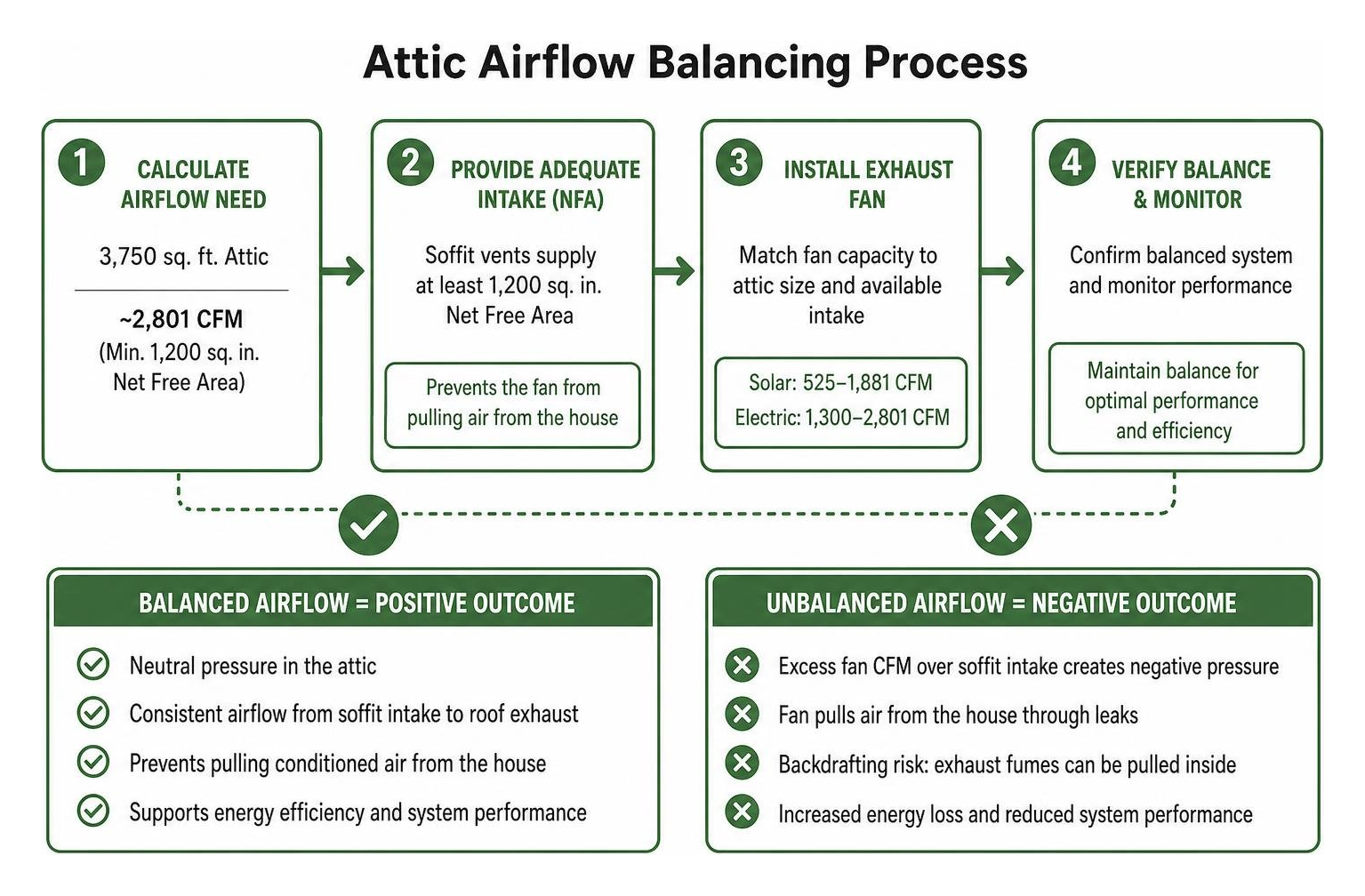
For a fan to work properly without pulling air from the house, you must have adequate Net Free Area (NFA) in your intake vents. NFA is the open portion of a vent that actually allows air to pass through, not the full physical size of the vent. If the intake NFA is too small, the fan will look for air wherever it can find it. You can learn more about configuring these systems in our guide to roof ventilation design.
Solar vs. Electric Attic Ventilation Fan Models
Homeowners can choose between electric-powered units and solar-powered models. Each approach offers specific operational characteristics:
| Feature / Metric | Solar Attic Fans | Electric Attic Fans |
|---|---|---|
| Typical Airflow Range | 525 to 1,881 CFM | 1,300 to 2,801 CFM |
| Operating Cost | $0/month (Sunlight-powered) | Modest (23W to 142W depending on speed) |
| Wiring Requirements | None (DC brushless motor) | Requires electrical connection (hardwired or 120V plug) |
| Performance Drivers | Sunlight intensity | Thermostat and humidistat triggers |
| Federal Incentives | Eligible for 30% Clean Energy Tax Credit | Typically none |
| Best Suited For | Unwired attics, sunny roof slopes | Large attics requiring continuous high CFM |
Solar attic fans use DC brushless motors and require no wiring, which makes them a practical option for detached garages, older homes, or attics without an existing electrical circuit. Their performance depends on sunlight intensity, so they move the most air during the hottest part of the day, when attic cooling is most needed. Electric attic fans typically offer higher CFM ratings and can run on demand through thermostat or humidistat controls, but they add a modest operating cost and require a safe electrical connection.
Negative Pressure, Backdrafting, and Air Conditioning Loss
When a mechanical attic fan moves more CFM than the soffit vents can provide, it creates severe negative pressure. The fan will draw air from the path of least resistance—which often means pulling conditioned air through ceiling bypasses, recessed can lights, and attic hatches. Every cubic foot of cooled air pulled into the attic is a cubic foot your air conditioner must replace, which directly reduces HVAC efficiency and raises summer energy bills.
Even worse, strong depressurization can lead to backdrafting. Gas water heaters or furnaces located in utility closets or attic spaces may have their exhaust fumes pulled back inside rather than safely rising out of the flue. Backdrafting is a serious safety concern because it can introduce carbon monoxide into the living space. For a deeper breakdown of pressure management, explore the complete guide to roof ventilation.
Balancing Attic Airflow and Energy Efficiency
A functional roof ventilation system prioritizes balance and air sealing over brute exhaust force. The goal is not to make the attic as cool as possible by any means necessary. The goal is to move enough air to protect the roof structure and reduce heat transfer without creating pressure problems that waste energy or compromise indoor air quality.
Passive Ventilation vs. Mechanical Attic Fans
Passive ventilation relies on natural thermal convection and the stack effect. Hot air rises and exits through ridge vents, drawing fresh outdoor air in through eave ventilation and soffit vents.
- Passive systems have no moving parts to wear out, consume zero electricity, and maintain neutral pressure when properly balanced. Check our review of energy efficient roof vents for continuous passive options.
- Winter performance: In freezing Wisconsin winters, balanced passive ventilation vents warm, moist air out before it condenses on roof sheathing, protecting against rot and ice dams. Ice dams form when warm attic air melts snow on the roof, and the meltwater refreezes at the colder eaves. Keeping the attic cold and dry is the most reliable way to prevent that cycle.
- Mechanical fans without humidistats often shut off in the winter, doing little to address cold-weather moisture buildup unless equipped with dual controls. A fan that only responds to temperature will not run when the attic is cold but damp, which is exactly when moisture removal matters most.
Sizing Intake Vents, Thermostats, and Fire Safety Controls
If you install a mechanical ventilator, you must verify you have adequate intake. Review our guide on attic air intake vents to calculate your NFA before mounting a fan. A common rule of thumb is to provide at least one square foot of net free intake area for every 300 square feet of attic floor space, but local codes and roof geometry can change that requirement.
When selecting an attic fan, look for these critical components:
- Adjustable Thermostats & Humidistats: Look for variable dials (typically 50°F to 120°F) or smart sensors so the fan runs only when needed. A thermostat prevents the fan from running during cool weather, while a humidistat triggers it when moisture levels rise even if the temperature is moderate.
- Fire Safety Shut-Off Switches: Essential fusible links or thermal limit switches shut the motor down immediately if high heat or flame is detected, preventing the fan from feeding a house fire. This is a non-negotiable safety feature for any powered attic ventilator.
- Internal Wildlife Screens: Heavy-duty galvanized mesh prevents birds, bats, and squirrels from nesting inside the fan assembly. Wildlife can damage wiring, block airflow, and create fire hazards with nesting material.
Making the Right Choice for Your Roof Lifespan
Lowering attic temperatures by up to 50°F preserves asphalt shingles by preventing heat-related blister damage. It also reduces moisture levels that cause decking rot. A cooler, drier attic protects the roof deck, the insulation, and the structural framing that holds everything together.
If you are managing finished spaces under your roof, take time to read about finished attic ventilation to make sure closed rafter bays stay properly ventilated. Finished attics create unique challenges because the living space changes how air moves through the roof assembly.
At Smith Roofing & Exteriors, we help homeowners across Fort Atkinson, Lake Mills, Jefferson, Burlington, Delavan, Elkhorn, Lake Geneva, Walworth, and Edgerton build efficient, durable roofing systems. To see how total roof design impacts utility bills, explore the role of roofing in energy efficiency and connect with our local team for an attic inspection.