Why Your Home’s Roofing and Siding Matter More Than You Think
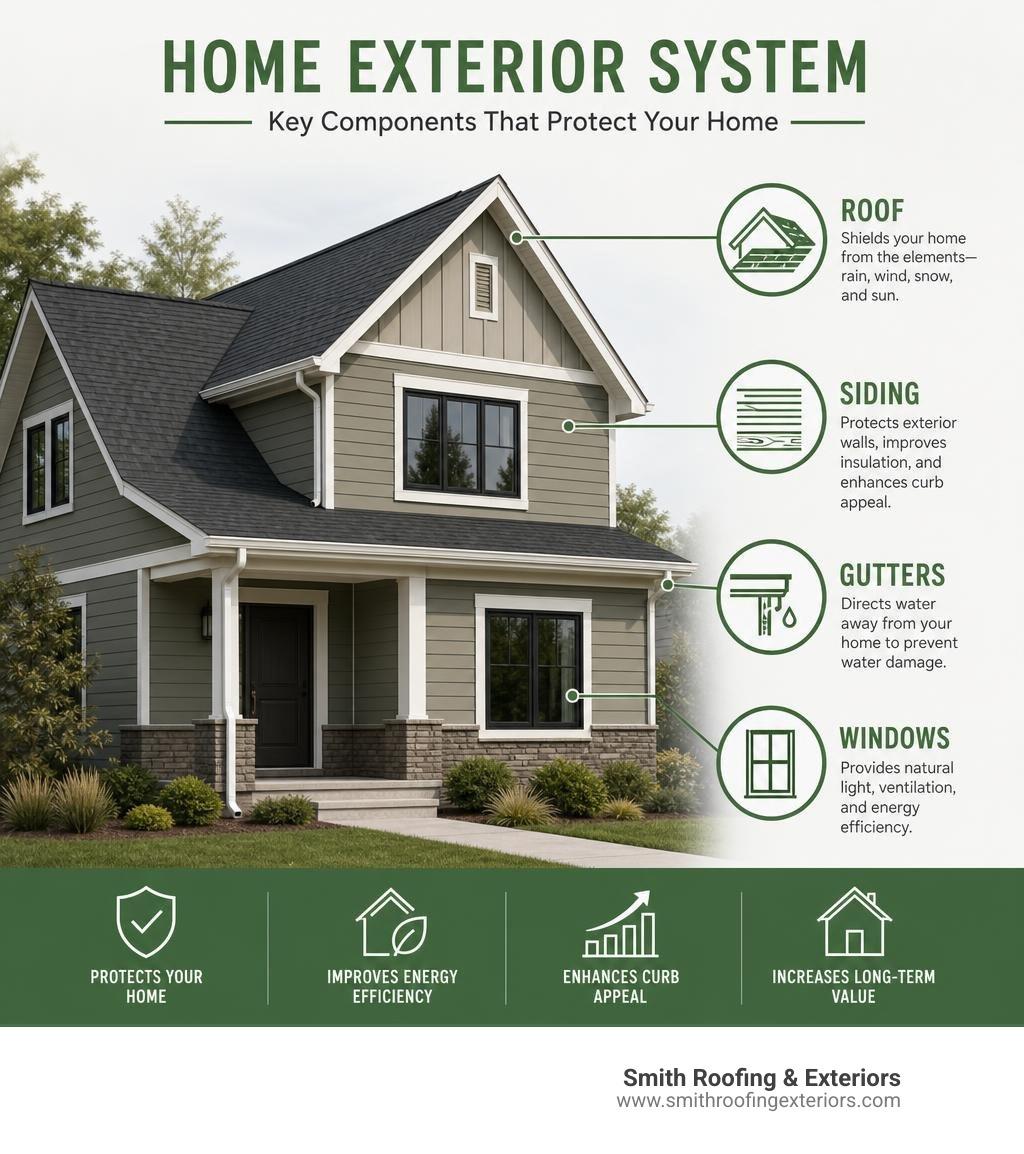
Roofing and siding are the two biggest defenders of your home — they block rain, snow, wind, and everything Wisconsin weather throws at you. When they fail, the damage spreads fast and gets expensive.
Quick answer: What should homeowners know about roofing and siding?
- Roofing protects your home’s structure from water, ice, and wind damage
- Siding acts as a weather barrier and improves insulation and curb appeal
- Common roofing materials include asphalt shingles, metal, and cedar shake
- Common siding materials include vinyl, fiber cement (like James Hardie), and engineered wood
- Signs you need replacement include leaks, warped panels, high energy bills, and visible damage
- A new roof can return about 68% of its cost when you sell your home
- New siding can cut energy costs by up to 20% through better insulation
- Always choose a licensed, insured contractor with strong reviews and clear warranties
Whether your roof took a hit from an ice storm or your siding is warping after years of harsh winters, knowing your options saves you time, money, and stress. This guide walks you through everything — materials, costs, timelines, warning signs, and how to pick the right contractor.
I’m Matt Smith, owner of Smith Roofing & Exteriors, and I’ve spent my career helping Wisconsin homeowners make smart, confident decisions about roofing and siding upgrades that protect their homes for the long haul. When you work with me, I’m the one answering your calls and showing up at your door — because trust is always the first thing I build.
Choosing the Best Roofing and Siding Materials for Your Climate
Southeastern Wisconsin sees it all: humid, hot summers, heavy spring downpours, and freezing winters piled high with snow. Selecting the right materials means balancing upfront cost, aesthetic preferences, maintenance requirements, and climate resilience.
When we evaluate options for homeowners in Fort Atkinson, Jefferson, or Lake Geneva, we always look at how well a material stands up to rapid temperature swings. Cheap materials might save you a few dollars today, but they can crack, warp, or rot when the Wisconsin freeze-thaw cycle hits.
| Material Type | Average Lifespan | Maintenance Level | Best Feature for Wisconsin Climate |
|---|---|---|---|
| Asphalt Shingles | 15–30 Years | Low to Medium | Excellent cost-to-performance ratio; handles snow loads well |
| Metal Roofing | 40–70 Years | Very Low | Sheds snow instantly; highly wind-resistant |
| Vinyl Siding | 20–40 Years | Low | Cost-effective; won’t rot or require painting |
| Fiber Cement (Hardie) | 30–50 Years | Low | Non-combustible; highly impact-resistant against hail |
| Engineered Wood | 20–50 Years | Medium | Beautiful wood aesthetic with improved moisture resistance |
High-Performance Roofing and Siding Options
For most local homes, asphalt shingles remain the go-to standard for roofing. They are reliable, highly customizable, and easy to repair. If you are looking for long-term durability and aesthetic versatility, check out the top benefits of choosing asphalt shingle roofing for your home.
However, if you want a roof that might literally outlast your mortgage, metal is an exceptional choice. It excels at shedding heavy snow and resisting high winds. You can read more in the complete guide to metal roofing.
When it comes to siding, vinyl is incredibly popular due to its low maintenance and affordability. But if you want unmatched durability, classic curb appeal, and superior fire resistance, James Hardie fiber cement siding is the gold standard. While it requires a higher initial investment, the long-term payoff is massive. To plan your budget, look at the real cost of Hardie panel siding in 2026.
Weather Resistance Against Snow, Wind, and Storms
In places like Delavan, Elkhorn, and Walworth County, winter weather is the ultimate test for your home’s exterior. Heavy snow accumulation can put immense weight on your roof structure, while freezing temperatures can cause materials to contract and become brittle.
Ice dams are another common threat in Southeastern Wisconsin. They form when heat escaping from your attic melts snow on the upper parts of your roof. The water flows down and refreezes at the colder eaves, backing up under your shingles and leaking into your home. Properly installed insulation, ventilation, and water barriers are essential to prevent this.
Windstorms can also tear weak shingles or loose siding panels right off your home. That is why working with a local specialist who understands local building codes and regional climate challenges is so critical. For expert help, you can rely on professional exterior services in Walworth County to ensure your home is fully prepared to handle whatever nature throws its way.
When to Repair vs. Replace Your Home’s Exterior
It is the classic homeowner’s dilemma: do you pay for a quick patch-up, or is it time to bite the bullet and replace the whole system? Understanding the difference can save you from throwing good money after bad.

Signs It Is Time for a New Roof
Minor issues, like a single shingle blown off in a localized windstorm, are perfect candidates for a quick repair. However, if your roof is nearing the end of its lifespan, patching it is like putting a band-aid on a dam.
If you notice widespread curling, buckling, or missing shingles, it is a clear warning sign. Indoors, keep an eye out for water stains on your ceilings or active leaks in your attic. To help you evaluate your roof’s condition, we have put together 5 warning signs that your shingle roof needs to be replaced.
Ignoring these signs can lead to structural wood rot, toxic mold growth, and compromised insulation. If you spot a leak, don’t wait for the next storm; discover the 5 reasons to fix roof leaks ASAP to protect your home’s foundation and interior.
Indicators for Siding and Window Upgrades
Siding and windows work hand-in-hand with your roof to seal your home’s envelope. If your siding is cracked, warped, rotting, or showing severe fading, it is no longer protecting your home’s sheathing from moisture.
You should also keep an eye out for peeling interior paint or wallpaper, which often indicates that moisture is penetrating through the siding. Check out these 5 signs it’s time to install new siding on your home to see if your home’s exterior is compromised.
If your energy bills are steadily climbing and you constantly feel drafts near your windows, your home is losing climate-controlled air. Upgrading to modern, energy-efficient siding and double-pane windows can dramatically lower your heating and cooling costs. If you are ready to make the switch, learn why opt for vinyl siding replacement to boost your home’s efficiency. For homeowners in the Lake Mills area, finding a trusted partner is easy with Lake Mills replacement windows and siding services designed to maximize comfort and curb appeal.
Costs, Timelines, and Financing for Exterior Remodeling
Investing in new roofing and siding is a major financial decision, but it is also one of the smartest ways to protect and increase the value of your property.

Average Costs for Roofing and Siding Projects
The total cost of your project depends on several factors, including the square footage of your home, the complexity of your roofline, and the materials you select. On average, a standard residential roof replacement in the U.S. ranges from $8,000 to $21,000.
Siding costs vary widely based on whether you choose vinyl or premium materials. To help you budget accurately, check out our guide on how much does it cost to reside a house with vinyl siding. If you prefer the unmatched durability of fiber cement, you can compare those numbers with our breakdown on how much does it cost to reside a house with Hardie board.
Project Timelines and What to Expect
A typical roof replacement for an average-sized home can often be completed in just 1 to 3 days, assuming the weather cooperates. Siding installation is a more meticulous process and usually takes 1 to 2 weeks.
During a siding or roofing project, you can expect some noise and construction debris. A professional crew will take steps to protect your landscaping, carefully tear off the old materials, inspect the underlying wood for rot, install the new system, and perform a meticulous cleanup.
To ensure water is diverted away from your new siding and foundation, gutters are often updated at the same time. You can learn more about this process in everything you need to know about drip edge and gutter installation.
How to Choose a Reliable Contractor and Handle Insurance Claims
Your choice of contractor is even more important than the materials you choose. The best materials in the world will fail if they are installed incorrectly.
Evaluating Local Contractors and Avoiding Red Flags
When searching for a contractor in Southeastern Wisconsin, always look for local references, proper licensing, and comprehensive liability and worker’s compensation insurance.
Red flags to watch out for include:
- Storm chasers who show up at your door immediately after a hailstorm with high-pressure sales tactics.
- Contractors asking for a massive deposit upfront before any materials are delivered.
- Extremely low bids that seem too good to be true (they usually indicate cut corners or hidden fees).
- A lack of a physical, local office address.
A reputable contractor will offer transparent pricing, clear written contracts, and robust manufacturer and workmanship warranties. They will also help you maintain your investment over time. Learn how a roofing contractor can extend the life of your roof through simple maintenance to keep your home protected for decades.
Navigating Storm Damage and Insurance Claims
Southeastern Wisconsin is no stranger to severe weather, from high winds to heavy hail. If your home sustains sudden damage, acting quickly is vital to prevent water from entering your living spaces.
Identify the problem immediately by reading about the top 7 signs your home needs emergency roof repair. Once you ensure your home is temporarily secured, document the damage with photos and contact a trusted local contractor.
A reliable contractor will meet with your insurance adjuster on-site to ensure all damage is accurately documented, helping you get the full coverage you are entitled to under your policy.
Frequently Asked Questions about Home Exteriors
Can I replace my siding in the winter?
Yes! Siding can absolutely be installed during the winter months in Wisconsin. In fact, doing so offers several unique benefits, such as more flexible contractor scheduling and off-season material promotions.
Professional crews know how to handle vinyl siding carefully in freezing temperatures to prevent cracking, and materials like fiber cement or engineered wood install beautifully year-round. Upgrading your siding in the winter also adds immediate insulation, helping to lower your heating bills during the coldest months of the year.
How does new siding improve home energy efficiency?
Your siding acts as a protective blanket around your home. Older, damaged siding allows drafts to penetrate your walls, forcing your furnace and air conditioner to work twice as hard.
Modern siding installations often include a layer of rigid foam insulation backing or a high-quality house wrap. This increases your home’s overall R-value) (thermal resistance), seals air leaks, and reduces thermal bridging. To understand how this translates to lower utility bills and a more comfortable home, read about how vinyl siding installation improves curb appeal and efficiency.
What are the benefits of installing gutter guards during a roof replacement?
Installing gutter guards while your roof is being replaced is highly efficient because the scaffolding is already in place and the crew is on-site. Gutter guards keep leaves, pine needles, and debris out of your gutters, ensuring rainwater and melting snow can flow freely away from your home.
This prevents water from backing up under your shingles, protects your siding from staining, and stops water from pooling around your foundation. Explore the top advantages of installing gutter guards to see how this simple upgrade saves you from dangerous gutter-cleaning chores.
Conclusion
Your home’s roofing and siding are its first and most important lines of defense. Investing in high-quality materials and professional installation protects your family, slashes your energy bills, and dramatically increases your home’s curb appeal and resale value.
At Smith Roofing & Exteriors, we take pride in serving our neighbors across Southeastern Wisconsin — from Fort Atkinson and Lake Mills to Delavan, Elkhorn, and Lake Geneva. We bring an experienced local team, superior materials, transparent pricing, and 24/7 emergency services to every single job.
If you are ready to upgrade your home’s exterior or have questions about storm damage, we are here to help. Schedule a consultation with Smith Roofing & Exteriors today, and let’s build something durable together.