What Is Metal Roofing — and Is It Right for Your Home?
Metal roofing is one of the most durable, energy-efficient, and long-lasting roof systems available to homeowners today. Here’s a quick overview of what you need to know:
- Lifespan: 50–70+ years (vs. 15–20 years for asphalt shingles)
- Cost: $7–$20 per square foot installed
- Energy savings: Reflects up to 85% of solar heat, reducing AC costs by 20% or more
- Durability: Rated for winds up to 140 mph, Class A fire resistance
- Eco-friendly: Made from 30–60% recycled material and 100% recyclable at end of life
- Insurance: Potential savings of up to 35% on homeowner’s insurance premiums
- Styles: Standing seam, exposed fastener, stamped shingles, stone-coated steel, and more
Whether you’re tired of replacing shingles after every Wisconsin winter or looking for a roof that truly goes the distance, metal roofing deserves a serious look.
Take a drive down almost any road and you’ll spot metal roofs more often than you’d expect — on farmhouses, commercial buildings, and newer homes alike. That’s no accident. More homeowners are discovering that the upfront investment pays off significantly over time compared to traditional asphalt.
In this guide, we’ll walk you through everything — materials, costs, installation, myths, and how to choose the right system for your home.
I’m Matt Smith, owner of Smith Roofing & Exteriors, and I’ve spent years helping Wisconsin homeowners navigate the real costs and benefits of metal roofing in our tough, weather-driven climate. I’ll give you the straight facts so you can make a confident, informed decision.
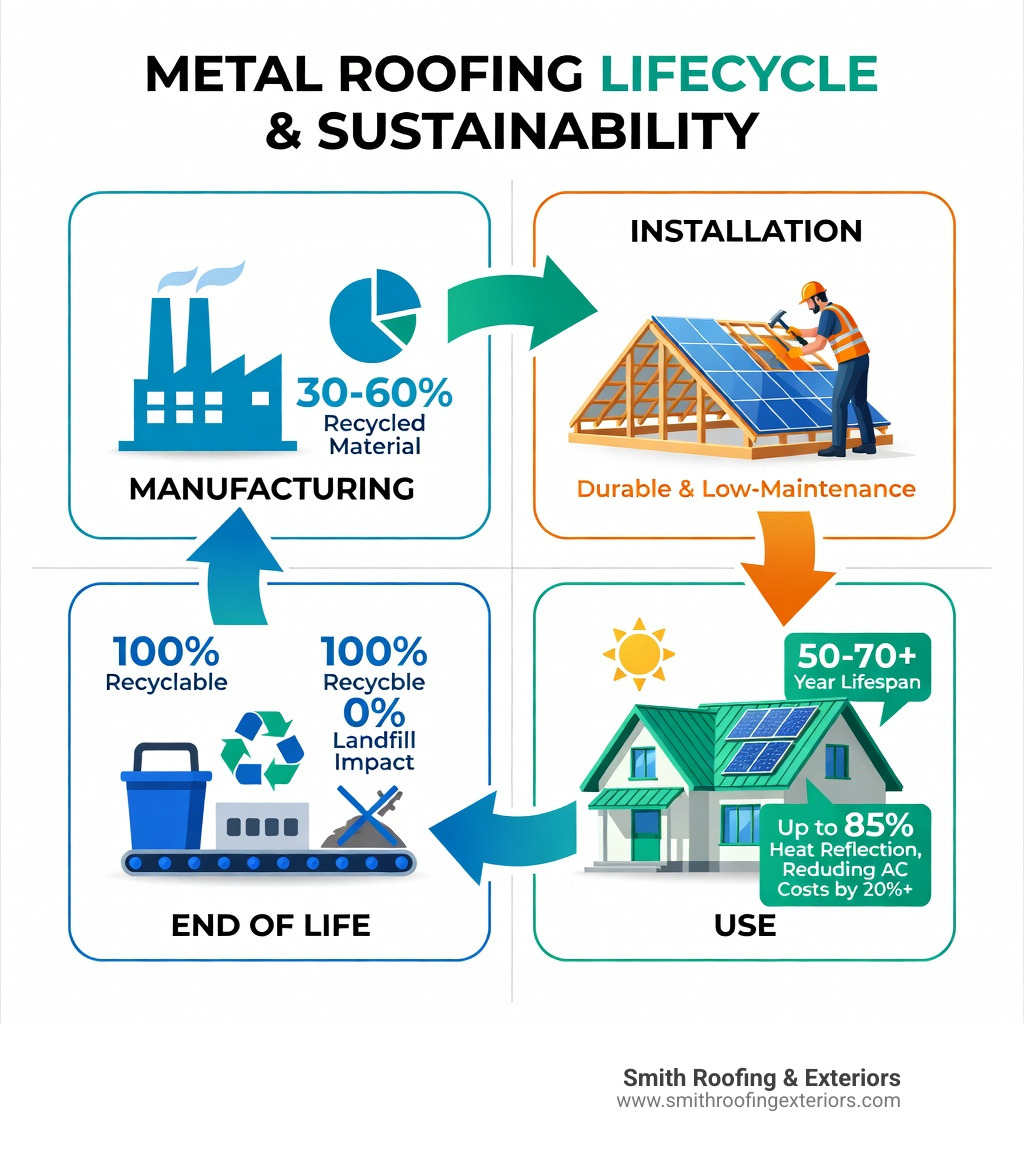
Key Benefits and Advantages of Metal Roofing
When we talk to homeowners in Fort Atkinson or Lake Mills about why it’s worth investing in metal roofing for your home, the conversation usually starts with longevity. A standard asphalt shingle roof in Southeastern Wisconsin might last 12 to 20 years before the granules wear off and the tabs start curling. In contrast, a high-quality metal roofing system is often the last roof you’ll ever buy, with a lifespan frequently exceeding 50 to 70 years.
The top benefits of installing a metal roof go far beyond just staying power. These systems are engineered to survive the most punishing conditions Mother Nature can throw at us.
- Fire Resistance: Most metal roofing materials carry a Class A fire rating, the highest possible. Because metal is non-combustible, it provides a critical shield against airborne embers from nearby wildfires or neighboring structure fires.
- Wind Resistance: In our region, high winds can easily peel back traditional shingles. Quality metal panels are often rated for winds up to 140 mph, meeting strict building codes for uplift resistance.
- Pest Resistance: Unlike wood shakes or even some asphalt products, metal is completely impervious to rot, mildew, and pests like termites or carpenter ants. You won’t have to worry about squirrels or raccoons gnawing through your roof deck.
- Shedding Snow: For those of us in Jefferson and Walworth counties, heavy snow loads are a real concern. Metal roofs allow snow to slide off easily, preventing the dangerous weight accumulation that can lead to structural strain.
As noted in Metal Roofs 101, these systems are no longer just for barns; they are sophisticated architectural elements that add massive curb appeal to any residential property.
Types of Metal Roofing Materials and Profiles
Not all metal roofing is created equal. Depending on your home’s style and your budget, you have several material options to choose from.
Steel: The Workhorse of the Industry
Steel is the most common material used in residential projects. To prevent rust, it is treated with a metallic coating.
- G90 Galvanized: This uses a thick layer of zinc (275 grams per square meter) to protect the steel core.
- Galvalume: An alloy of aluminum and zinc that offers even better long-term corrosion resistance in many environments.
Aluminum: The Coastal and Lakefront Choice
Aluminum is incredibly lightweight and naturally resistant to corrosion. Because it doesn’t rust, it’s a favorite for homes near the water in Lake Geneva or Burlington. Impressively, nearly 95% of all aluminum roofing is made from previously recycled materials.
Copper and Zinc: The Premium Legacy
If you want a roof that lasts 100 to 200 years, copper and zinc are the gold standards. These “natural” metals develop a protective patina over time. Copper turns from a bright penny color to a stately verdigris green, while zinc develops a beautiful matte gray finish.
| Material | Expected Lifespan | Relative Cost | Best Application |
|---|---|---|---|
| Steel (Galvalume) | 40–60 Years | $$ | Most Residential Homes |
| Aluminum | 50+ Years | $$$ | Lakefront/High Humidity |
| Copper | 100+ Years | $$$$$ | Historic/High-End Custom |
| Zinc | 80–100 Years | $$$$ | Modern Architectural |
Popular metal roofing panel styles
The “look” of your roof depends on the profile you choose.
- Standing Seam: This is the “sleek and modern” look. It features vertical panels joined by snap-lock seams or mechanical seams. The fasteners are concealed, which means there are no holes in the panels for water to get through.
- Exposed Fastener: Often seen in agricultural or “Classic Rib” styles, these panels are overlapped and screwed directly through the face of the metal. While more affordable, they require more maintenance to ensure the rubber washers on the screws don’t perish over time.
- Stamped Shingles and Tiles: These are metal panels formed to look like wood shakes, Victorian slate, or clay tiles. They give you the classic aesthetic of traditional materials with the indestructible nature of steel.
Choosing colors and finishes for a metal roofing system
Selecting the right finish is about more than just matching your siding. High-quality metal roofing uses PVDF (Kynar 500) coatings. Unlike cheaper paints, PVDF resists fading, chalking, and UV degradation for decades.
When choosing a color, look for the Solar Reflective Index (SRI). Lighter colors like white, light gray, or tan have higher SRI values, meaning they reflect more heat. However, even modern dark colors use “cool roof” pigments that reflect infrared light, keeping your attic significantly cooler than asphalt ever could. For our Wisconsin climate, we typically recommend 24-gauge or 26-gauge steel thickness to ensure the roof can handle heavy snow and hail without denting.
Cost Analysis: Upfront Investment vs. Long-Term Value
We’ll be honest: the initial cost of metal roofing is higher than asphalt shingles. You can expect to pay anywhere from $7 to $20 per square foot depending on the material and complexity of your roof.
However, when you look at the 60-year cost, the math changes. A mid-range shingle roof might cost $8,700 to install today, but you’ll likely have to replace it three times over the next 60 years. A single 24-gauge steel standing seam roof might cost $17,400 upfront, but it will still be standing long after those three shingle roofs have ended up in a landfill.
When deciding between metal vs. rubber for commercial roofing, the long-term maintenance savings of metal often make it the winner for facility managers looking for a “one-and-done” solution.
Financial Perks of Metal:
- Resale Value: Homes with metal roofs recoup about 6% more of their installation cost upon resale compared to asphalt.
- Insurance Discounts: Many insurance companies offer discounts of up to 35% because metal roofs are fireproof and hail-resistant.
- Energy Savings: Because metal reflects up to 85% of solar heat gain, you can see a reduction in cooling costs of 20% or more.
Energy efficiency and sustainability of metal roofing
Conventional roofing products contribute a staggering 20 billion pounds of waste to U.S. landfills annually. Metal roofing is the antidote to this environmental problem. Not only is the material made from 30–60% recycled content, but it is also 100% recyclable at the end of its long life.
By choosing a product from the Cool Roof Rating Council’s database, you are actively reducing the “urban heat island” effect and lowering your home’s carbon footprint.
Installation and Maintenance for Maximum Durability
A metal roof is only as good as the team that installs it. At Smith Roofing & Exteriors, we emphasize that professional installation is non-negotiable.
The process starts with roof deck preparation. We ensure the decking is smooth and structurally sound. Then, we apply a high-quality underlayment. In some cases, we use slip sheets (like rosin paper) to allow the metal panels to expand and contract smoothly over the underlayment without tearing it.
In Southeastern Wisconsin, we often recommend a strapping system (using wood furring strips). This creates an air gap between the old roof and the new metal, providing extra insulation and a “vented” roof system. Proper ridge venting is also critical to ensure attic air exchange, which prevents moisture buildup and ice dams in the winter. For more specific details on our local projects, you can browse our metal roof category.
Debunking common myths about metal roofing
- “It’s too noisy in the rain.” This is perhaps the most common myth. In reality, when installed over a solid roof deck with proper attic insulation, a metal roof is no louder than any other type. The insulation and the wood deck act as sound dampeners.
- “It attracts lightning.” Metal conducts electricity, but it doesn’t attract it. Lightning strikes the highest point in an area, regardless of material. If your home is struck, the metal roof actually helps safely disperse the energy, and because it’s non-combustible, it won’t catch fire.
- “It will rust.” Modern metallic coatings like G90 galvanizing or Galvalume are specifically designed to prevent oxidation. With a quality PVDF finish, your roof will look new for decades.
- “Hail will ruin it.” Most residential metal roofs have a Class IV impact resistance rating. While a massive, once-in-a-century hailstone might cause a small dent, it won’t crack or compromise the roof’s integrity like it would with shingles.
Frequently Asked Questions about Metal Roofs
How long do metal roofs actually last compared to asphalt?
While an asphalt roof is lucky to reach 20 years in the Wisconsin climate, a metal roofing system typically comes with a 50-year transferable warranty and a life expectancy of 70 years or more. Over a 60-year period, a single metal roof will outlast at least three asphalt shingle replacements.
Can a metal roof be installed over existing shingles?
Yes! This is a major benefit. Because metal is so lightweight (about half the weight of asphalt), it can often be installed directly over your old shingles using furring strips. This saves you the cost of a “tear-off” and prevents thousands of pounds of shingles from going to the landfill. However, we always check local building codes in towns like Edgerton or Delavan to ensure compliance.
Are metal roofs noisier during rain or hail?
Not at all. When we install a roof at Smith Roofing & Exteriors, we use solid sheathing and high-grade underlayment. Combined with your home’s attic insulation, the sound of rain is often quieter than it was with shingles. You won’t hear a “drumming” sound unless you’re standing in an uninsulated barn!
Conclusion
Choosing a new roof is a significant decision, but it’s also an opportunity to invest in the future of your home. Whether you are in Fort Atkinson, Jefferson, or anywhere in Southeastern Wisconsin, metal roofing offers a combination of beauty, strength, and sustainability that other materials simply can’t match.
At Smith Roofing & Exteriors, we take pride in our local expertise. We live and work in these communities, and we know exactly what it takes to build a roof that stands up to our winters. We offer superior materials, transparent pricing, and 24/7 emergency services to give you total peace of mind.
Ready to see if metal is the right fit for your home? Get a professional estimate for your metal roofing project today, and let’s build something that lasts a lifetime.