What to Know Before Hiring Aluminum Siding Installers

Aluminum siding installers can transform your home’s exterior — protecting it from harsh weather, improving energy efficiency, and boosting curb appeal for decades to come.
Quick answer: What to look for in aluminum siding installers
- Licensed and insured — always verify credentials before signing anything
- Local experience — contractors familiar with your region’s climate do better work
- Workmanship warranty — top installers back their labor, not just the materials
- Transparent pricing — get itemized estimates, not vague ballpark figures
- Verified reviews — check real homeowner feedback, not just the company website
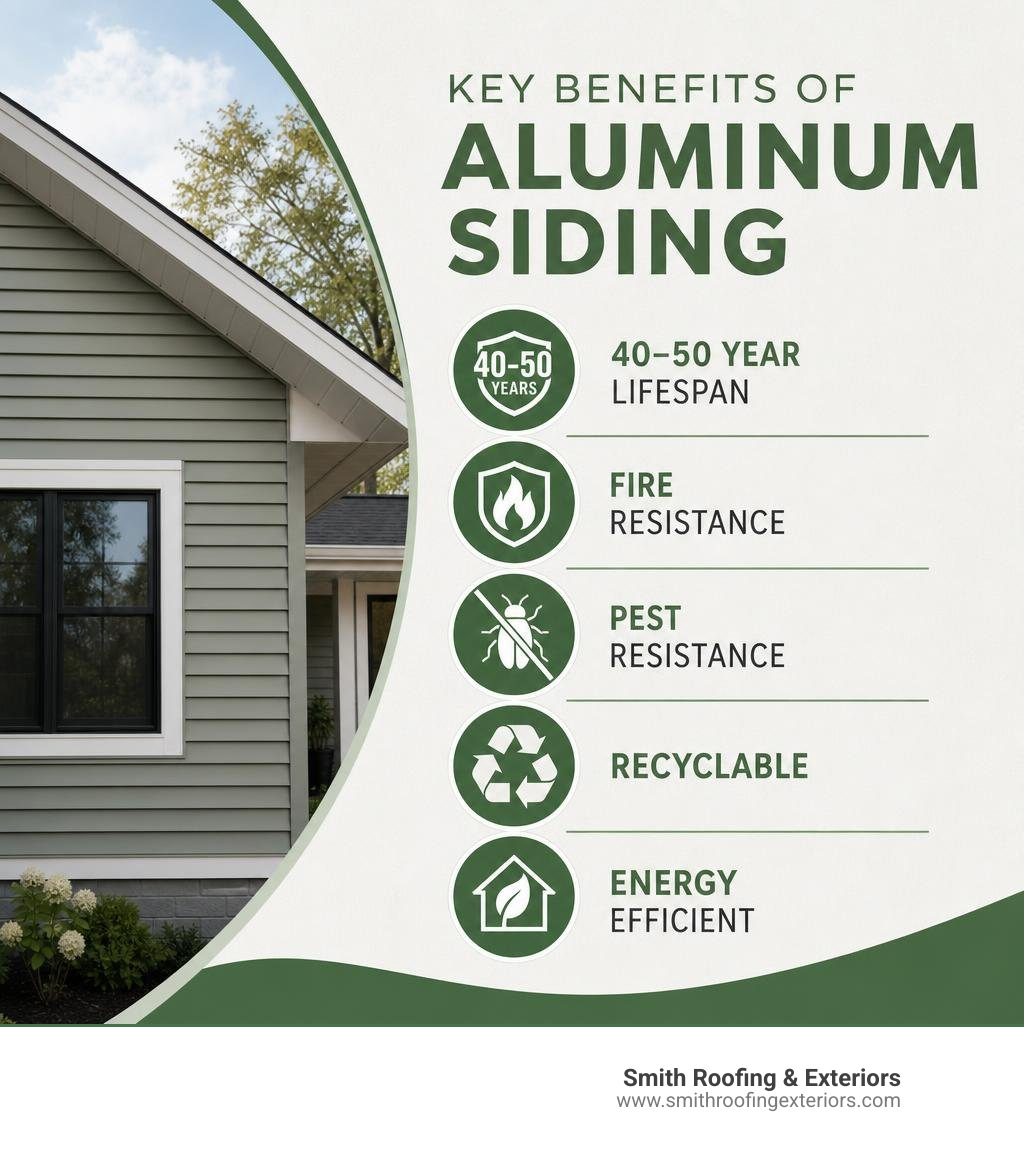
Aluminum siding is durable, low-maintenance, and can last 40–50 years with proper care. But the quality of your installation matters just as much as the material itself. A poor install can lead to moisture damage, denting, and costly repairs down the road.
I’m Matt Smith, owner of Smith Roofing & Exteriors, and I’ve spent years helping Wisconsin homeowners find the right aluminum siding installers to protect their homes through brutal winters and stormy seasons. In this guide, I’ll walk you through everything you need to make a smart, confident choice.
Must-know aluminum siding installers terms:
Why Choose Aluminum Siding for Your Home?

When selecting a cladding material for your home in Southeastern Wisconsin, you need something that can survive freezing January blizzards, humid July afternoons, and everything in between. Aluminum siding is a time-tested, heavy-duty performer that handles these dramatic climate swings with ease.
Unlike wood, which absorbs moisture and eventually rots, or vinyl, which can become brittle and crack when temperatures plummet below zero, aluminum remains structurally stable. It does not expand or contract to the extreme degrees that cause other materials to buckle, and it is entirely impervious to wood-boring pests, rot, and mold.
Energy Efficiency and Heat Reflection
One of the most overlooked benefits of aluminum is its natural thermal properties. Aluminum reflects radiant heat away from your home during our hot Wisconsin summers, helping to keep your AC bills manageable. When paired with high-quality insulation backer boards during installation, it creates an incredibly efficient thermal barrier that keeps your heating system from working overtime in the winter.
For a deeper dive into how metal siding compares financially and structurally to other options, check out The Real Metal Siding Price Guide for Modern Homeowners.
Material Comparison: Aluminum vs. The Rest
To help you weigh your options, let’s look at how aluminum stacks up against vinyl, fiber cement, and wood:
| Siding Material | Average Lifespan | Maintenance Level | Pest & Rot Resistance | Relative Cost |
|---|---|---|---|---|
| Aluminum | 40–50 Years | Low (occasional wash) | High (Impervious) | Moderate |
| Vinyl | 20–30 Years | Low | High | Low to Moderate |
| Fiber Cement | 30–50 Years | Moderate (requires paint) | High | High |
| Wood | 15–30 Years | High (stain/paint every 3-5 yrs) | Low (susceptible) | High |
While vinyl is incredibly popular for its budget-friendly nature, aluminum offers an industrial-strength durability that many homeowners prefer. If you are curious about vinyl alternatives, you can read about the Top 14 Benefits of a Vinyl Siding Installation to see which material fits your budget and aesthetic goals.
What to Look For in Reputable Aluminum Siding Installers

With 129 siding contractors listed across Wisconsin alone, finding the right team can feel a bit overwhelming. However, choosing the wrong installer can turn a premium material into a leaky, dented headache.
When vetting local aluminum siding installers, look for these non-negotiable qualities:
- Proper Licensing and Liability Insurance: Siding installation involves working at heights and using heavy tools. Never hire a contractor who cannot immediately produce up-to-date general liability insurance and state licensing documents.
- A Strong Workmanship Warranty: Manufacturer warranties only cover defects in the metal itself. If a panel falls off because it was nailed incorrectly, you need a labor warranty. Reputable contractors back their work with a dedicated workmanship guarantee.
- Deep Local Experience: Southeastern Wisconsin has unique building codes and weather patterns. You want a team that regularly works in communities like Fort Atkinson, Lake Mills, and Jefferson, ensuring they understand local wind load requirements and moisture mitigation strategies.
Before hiring, check local resources and reviews. You can browse local directories such as the Top 10 Best Siding pros in Burlington, WI – Angi or the Top 10 Best Siding pros in Lake Geneva, WI – Angi to see how contractors rate in neighboring areas.
For professional guidance on choosing the right partner for your project, take a look at our guide on 5 Reasons Why You Will Love Vinyl Siding Contractors, which outlines the customer service standards you should expect from any siding professional.
Siding Installation Process, Timelines, and Best Practices
A professional aluminum siding installation is a highly structured process. For an average-sized home in Southeastern Wisconsin, the entire project typically takes 1 to 2 weeks, depending on weather conditions and the complexity of your home’s architecture.
Here is what you can expect during a standard installation:
- Tear-Down & Inspection: The old siding is removed, and the underlying wood sheathing is inspected for rot, mold, or structural damage.
- Weather Barrier Installation: We apply a high-quality house wrap, such as DuPont Tyvek HomeWrap. This crucial layer allows trapped water vapor to escape while keeping external wind and rain from penetrating your walls.
- Insulation Integration: If you opt for insulated siding, rigid foam backer boards are installed to boost your home’s R-value.
- Hanging the Aluminum: Installers carefully measure, cut, and secure the metal panels, leaving precise gaps to accommodate thermal expansion.
- Trimming and Flashing: Custom-bent aluminum trim and flashing are installed around windows, doors, and corners to create a watertight seal.
Because proper installation requires specialized tools and permits, we recommend working with established local services. A professional hand ensures your home remains protected, which you can read about in our article on how to Transform Your Home with a Vinyl Siding Installation.
Can Aluminum Siding Installers Lay Metal Over Existing Siding?
A common question we hear is whether new metal panels can be installed directly over your old wood or vinyl siding to save on labor costs.
While it is technically possible in some scenarios using furring strips to create a flat surface, we rarely recommend it. Leaving old siding in place makes it impossible to inspect the underlying sheathing for hidden rot, pest infestations, or structural damage. If moisture is already trapped beneath your old siding, covering it with metal will only seal that moisture in, leading to severe structural decay over time.
To help determine if your current exterior needs a complete tear-off, read our guide on When to Choose Vinyl Siding Installation or Replacement.
Common Mistakes Professional Aluminum Siding Installers Avoid
Amateur installations often lead to costly mistakes. Experienced professionals know how to avoid these common pitfalls:
- Nailing Too Tight: Aluminum expands and contracts with temperature changes. If nails are driven flush against the panel, the metal will buckle and warp as the seasons change.
- Improper Flashing: Water naturally runs down your home’s exterior. Without proper kick-out flashing and window pan flashing, water will find its way behind the metal panels, leading to hidden rot.
- Poor Underlayment: Skipping the house wrap or using cheap materials will trap humidity inside your walls, ruining your indoor air quality and structural framing.
How to Maintain Your Aluminum Siding for Longevity
One of the greatest advantages of aluminum siding is how incredibly easy it is to maintain. Unlike wood, which demands scraping and staining every few years, aluminum only requires a little basic attention to look great for decades.
Follow these simple maintenance tips to protect your investment:
- Avoid High-Pressure Power Washing: While it is tempting to blast away dirt with a pressure washer, high pressure can easily dent aluminum panels or force water upward into the lap joints, trapping moisture behind your walls. Instead, use a garden hose with a spray nozzle and a soft-bristle brush.
- Use a Mild Cleaning Solution: Mix warm water with a mild biodegradable soap to scrub away dirt, pollen, and spiderwebs.
- Watch for Chalking: Over many years, the paint baked onto aluminum siding can oxidize, leaving a powdery white residue (chalking). If this happens, you can wash it off with a specialized cleaning solution.
- Repainting: If you want to change your home’s color or if the original finish has faded after 20 years, aluminum can easily be repainted! Clean the surface thoroughly, apply a high-quality exterior acrylic latex primer, and finish with premium exterior paint.
To help you decide whether painting your current exterior or replacing it entirely is the smartest financial move, check out our analysis: Vinyl Siding Installation vs Painting Best Choice.
Frequently Asked Questions About Aluminum Siding
How long does aluminum siding typically last?
With minimal maintenance, high-quality aluminum siding can easily last 40 to 50 years. Its exceptional resistance to rust, rot, fire, and pests makes it one of the longest-lasting cladding materials available on the market.
Is aluminum siding more expensive than vinyl siding?
Yes, aluminum typically has a higher upfront material cost than standard vinyl siding. However, because of its extreme durability and long lifespan, it offers outstanding long-term value. To compare initial installation costs, read our breakdown: How Much Does It Cost to Reside a House with Vinyl Siding.
Does aluminum siding dent easily?
While thinner, economy-grade aluminum can dent under heavy impact (such as large hail or a stray baseball), modern heavy-gauge aluminum siding is highly dent-resistant. Choosing a thicker gauge and opting for panels with a textured wood-grain finish can help disguise minor blemishes and keep your home looking pristine.
Conclusion
Upgrading your home’s exterior is a major investment, and choosing the right material and installation team is key to long-term satisfaction. Aluminum siding offers a unique combination of industrial-strength durability, fire resistance, and low-maintenance appeal that stands up beautifully to our harsh Wisconsin winters.
At Smith Roofing & Exteriors, we take pride in serving our neighbors throughout Fort Atkinson, Lake Mills, Jefferson, Edgerton, and the surrounding Southeastern Wisconsin communities. Our experienced local team uses only superior materials, offers transparent pricing, and provides 24/7 emergency support when you need us most.
Ready to transform your home with a beautiful, durable siding upgrade? Contact Smith Roofing & Exteriors today to schedule your consultation and get a transparent, itemized estimate!