Hot Tar Roofing Companies Near Me: What You Need to Know Before You Hire
If you’re searching for hot tar roofing companies near me, here’s a quick snapshot to help you move fast:
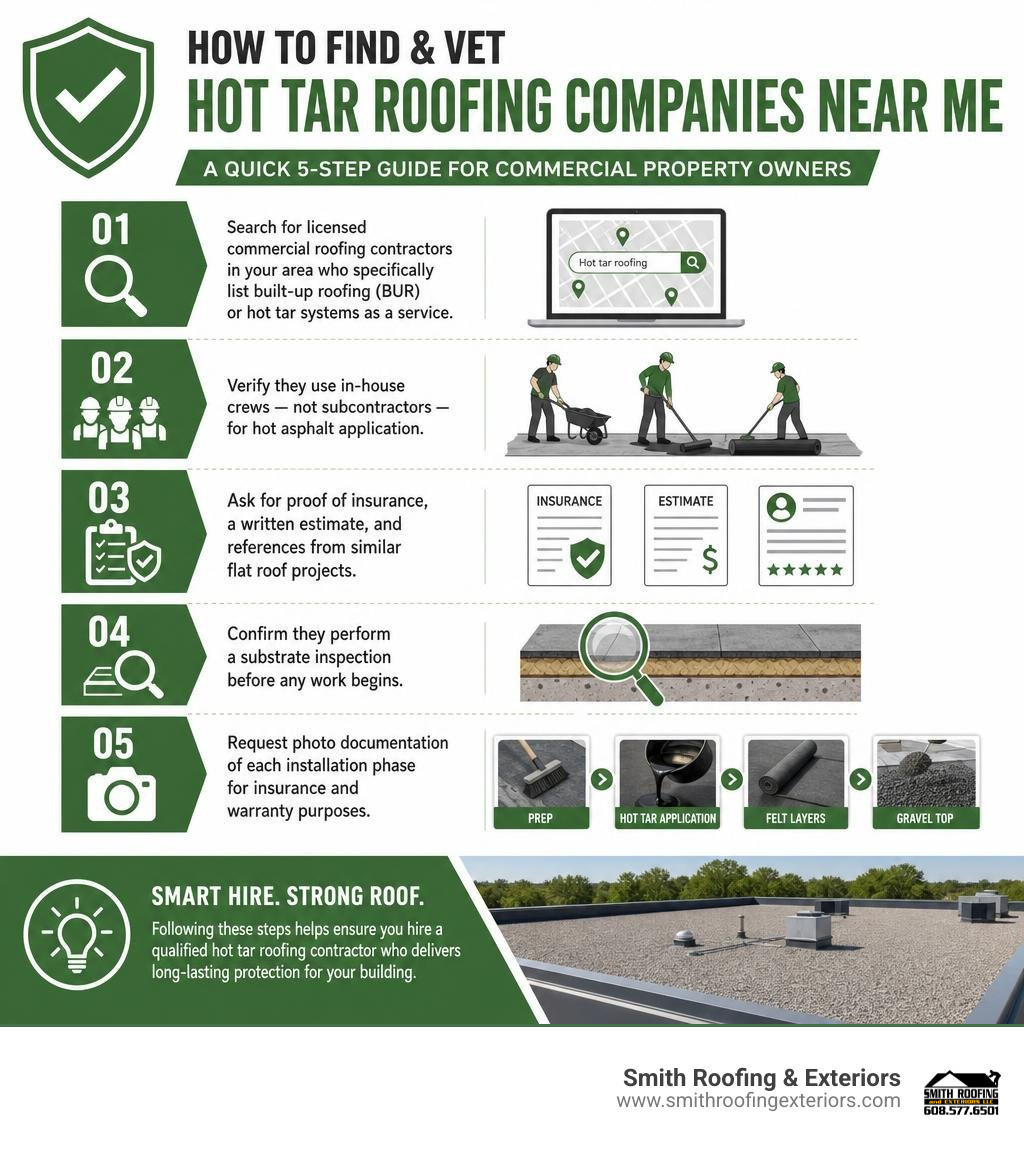
How to find a reputable hot tar roofing contractor near you:
- Search for licensed commercial roofing contractors in your area who specifically list built-up roofing (BUR) or hot tar systems as a service
- Verify they use in-house crews — not subcontractors — for hot asphalt application
- Ask for proof of insurance, a written estimate, and references from similar flat roof projects
- Confirm they perform a substrate inspection before any work begins
- Request photo documentation of each installation phase for insurance and warranty purposes
Hot tar roofing — also called built-up roofing (BUR) — is one of the oldest and most proven flat roofing systems available. It’s built from multiple alternating layers of hot asphalt and reinforced felt, topped with a gravel surface that locks everything together. The result is a roof that can last 30 to 40 years with proper care, holds up against harsh UV exposure, and creates a near-impenetrable seal against moisture.
For property owners in Wisconsin, where winters are brutal and temperature swings are extreme, that kind of durability matters. A poorly protected flat roof can fail fast — and repairs aren’t cheap.
I’m Matt Smith, owner of Smith Roofing & Exteriors, and I’ve spent years helping homeowners and business owners across rural Wisconsin navigate exactly these kinds of roofing decisions, including connecting them with the right hot tar roofing companies near me for their flat and low-slope structures. Let’s walk through everything you need to know to make a confident, informed choice.
Hot tar roofing companies near me terms at a glance:
What is Hot Tar Roofing and How Does It Work?
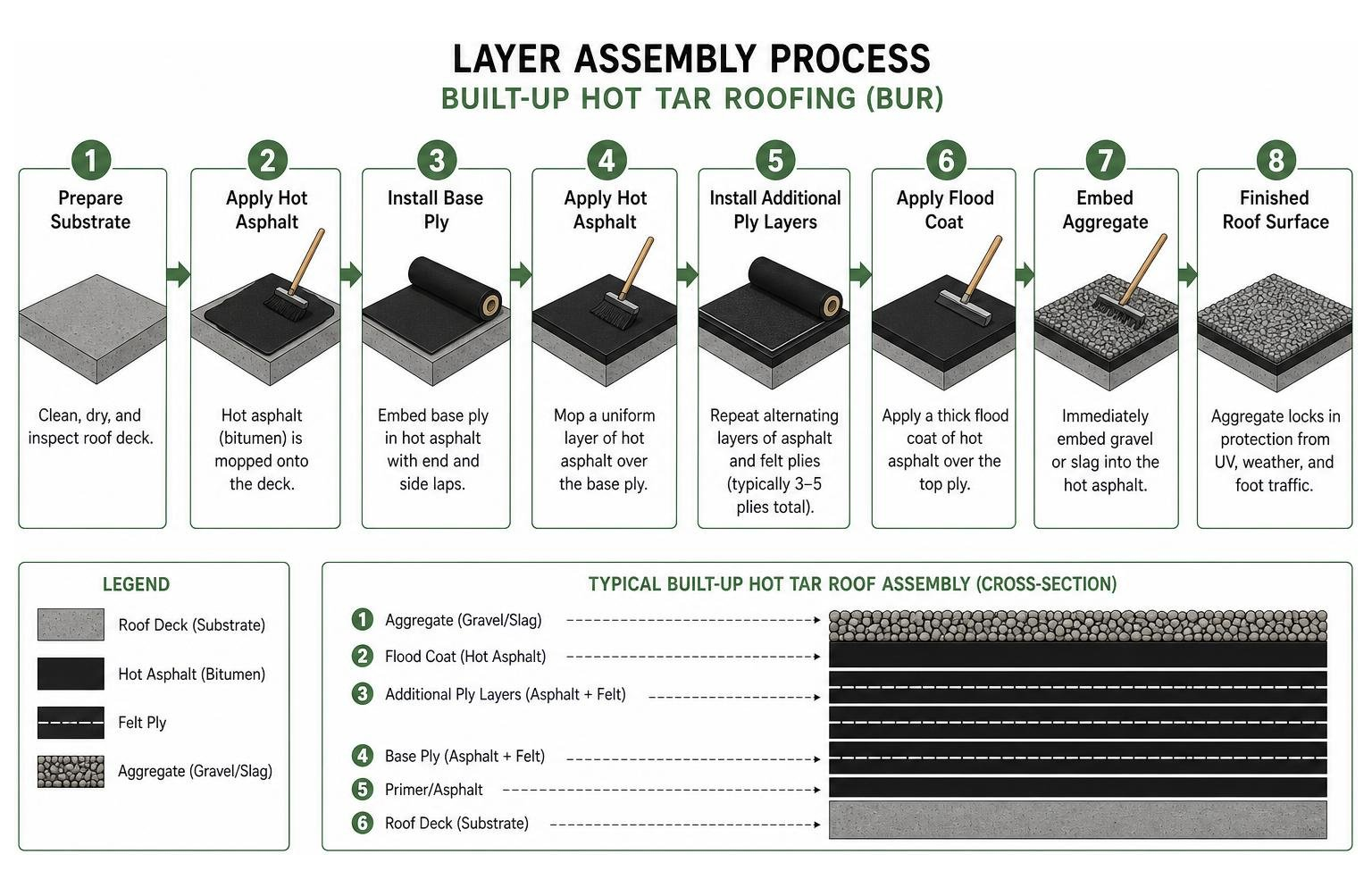
Hot tar roofing is a traditional, multi-layered waterproof roofing barrier designed primarily for low-slope and flat roof applications. When people talk about “hot tar,” they are referring to liquid asphalt bitumen heated on-site in a specialized kettle to approximately 400 degrees Fahrenheit.
The installation involves hot-mopping continuous plies of heavy-duty, fiberglass-based asphalt felt over a properly prepared roof deck. Each ply layer overlaps the previous one, and hot bitumen is spread between every sheet. Once the multi-ply assembly is formed, a thick flood coat of asphalt is applied to the top layer, followed immediately by gravel, mineral granules, or slag. This aggregate layer embeds into the hot tar, providing critical UV defense, fire resistance, and physical protection against severe weather and maintenance foot traffic.
When evaluating building improvements, choosing between flat and sloped commercial roofs is a fundamental first step. Flat roofs demand seamless moisture barriers because water drains far more slowly than on steep gables. Hot tar systems excel here because they eliminate the vulnerable exposed seams typical of single-ply materials.
The table below breaks down how traditional built-up hot tar systems evaluate against modern single-ply alternatives like TPO and EPDM:
| Feature | Hot Tar (BUR) | TPO (Thermoplastic Polyolefin) | EPDM (Ethylene Propylene Diene Monomer) |
|---|---|---|---|
| Material Composition | Alternating plies of asphalt & fiberglass felt + gravel | Single-ply reflective rubber membrane | Single-ply synthetic vulcanized rubber |
| Expected Lifespan | 20 to 40 Years (30-40 with gravel floodcoat) | 15 to 22 Years | 20 to 30 Years |
| Layer Structure | Multi-ply (3, 4, or 5 redundant waterproof layers) | Single layer | Single layer |
| Puncture Resistance | Exceptional (Thick asphalt + aggregate stone cap) | Moderate | Moderate to Low |
| Installation Method | Hot-mopped asphalt heated to ~400°F | Heat-welded seams / mechanical fasteners | Cold adhesive / tape seams |
| Moisture Vulnerability | Very low (redundant, continuous seal) | Low (reliant on heat welds) | Low (reliant on adhesive seams) |
| Foot Traffic Suitability | Excellent (handles heavy equipment service crews) | Moderate | Moderate |
Understanding Built-Up Roofing (BUR) Systems
Built-up roofing (BUR) gets its name from how the protection is created: it is literally built up on your building, layer by layer.
A standard hot tar BUR installation consists of three primary components:
- Base and Intermediate Plies: Plies of fiberglass-reinforced felt laid overlapping each other.
- Bitumen: Liquid asphalt or coal tar heated in a mobile kettle and applied hot across each felt layer.
- Surfacing Layer: Gravel, mineral aggregate, or reflective coating applied directly over the final hot flood coat.
Because the system relies on 3-ply, 4-ply, or even 5-ply configurations, it offers structural redundancy. If an object punctures the top layer of stone and asphalt, three or four fully sealed waterproofing barriers remain beneath it to prevent water from reaching the substrate or building interior.
Hot Tar vs. Single-Ply Membranes
Many property managers ask us how hot tar compares to rubber or synthetic single-ply membranes. While membranes like TPO (white synthetic) and EPDM (black synthetic rubber) have grown popular due to fast installation times, BUR remains the premier heavy-duty workhorse for high-impact environments.
If your property features heavy rooftop equipment—such as commercial HVAC units that require regular service calls—single-ply membranes can be susceptible to accidental punctures from dropped tools, sharp metal edges, or heavy boots. Hot tar roofs topped with thick gravel distribute physical impact effortlessly. When comparing metal and rubber commercial roofing systems, understanding weight loads, foot traffic expectations, and long-term climate exposure helps determine whether a multi-ply hot tar roof or a single-ply membrane fits your facility best.
Key Advantages and Considerations of Hot Tar Roofing
Like any major building component, hot tar roofing offers significant operational advantages along with distinct structural factors that require clear planning.
Unmatched Longevity and UV Protection
The greatest advantage of searching for hot tar roofing companies near me to install a classic built-up roof is long-term performance. A professionally installed 4-ply BUR system frequently delivers a 30 to 40 year lifespan.
Key advantages include:
- Complete Water and Mold Resistance: The continuous hot-mopped application seals every square inch, removing open seams where water normally penetrates. Eliminating trapped moisture prevents inner-deck mold growth.
- Superior Thermal and UV Protection: Dark asphalt absorbs and holds heat in cold weather, helping some building owners enjoy nearly 10% energy savings on winter heating bills. During hot summer months, the aggregate gravel layer shields the asphalt plies beneath from intense solar radiation and dangerous ultraviolet degradation.
- Proven Historical Track Record: Hot tar roofing systems have successfully protected commercial, industrial, and multi-family buildings across North America for well over a century.
Potential Drawbacks and Installation Factors
While hot tar provides extraordinary protection, building owners should consider the following during project planning:
- Installation Odor and Fumes: Heating asphalt bitumen to 400°F generates dark, oily petroleum fumes during installation. Proper site management, temporary HVAC air-intake shutdowns, and professional kettle placements are essential to keep workers and building occupants comfortable.
- System Weight: The combination of multiple felt layers, asphalt coats, and heavy gravel aggregate creates a substantial weight load. Structural deck evaluations must be conducted by qualified contractors prior to installation.
- Specialized Workmanship Required: Installing hot tar is a craft requiring experienced, certified crews who understand kettle temperature control, mop speed, safety protocols, and uniform asphalt distribution.
Common Hot Tar Roof Problems and Maintenance Solutions
Even the sturdiest built-up roof requires periodic attention to reach its 30- to 40-year potential. Catching minor issues early protects your structural investment.
Common issues include:
- Ponding Water: Flat roofs with poor slope or clogged drainage collect sitting water. If water remains over 48 hours, it accelerates surface wear.
- Membrane Blistering: Small air or moisture pockets trapped between felt plies expand during hot summer days, creating raised bubbles or blisters.
- Gravel Displacement: Strong wind storms or heavy downpours can shift surface gravel away from edges and high-velocity runoff zones, exposing bare asphalt to UV rays.
- Seam Separation around Flashing: Physical expansion and thermal contraction can cause stress cracking around parapet walls, chimneys, and roof drains.
Reviewing budget-friendly flat roof repair options allows facility managers to tackle minor defects immediately before they evolve into severe structural leaks.
Extending Lifespan with Protective Coatings and Repairs
Routine maintenance keeps hot tar roofs performing cleanly year after year:
- Annual Inspections: Inspect flat roofs twice per year (spring and autumn) and after major regional storms. Ensure roof drains, scuppers, and downspouts remain free of debris.
- Spot Patching: Blisters or small splits can be repaired using cold-applied modified bitumen patching cement, fiberglass mesh reinforcing tape, or hot asphalt patches.
- Protective Aluminum Coatings: Applying an elastomeric or aluminum reflective roof coating over aging smooth-surfaced BUR systems adds a durable UV layer, lowers surface temperatures, and extends overall system life by several years.
For detailed material recommendations on maintaining flat surfaces, see our guide on selecting the best flat roof sealants. Additional technical specifications on built-up roof maintenance can be explored through the Asphalt Roofing Manufacturers Association.
How to Choose the Best Hot Tar Roofing Companies Near Me
Finding standard residential roofers is easy, but identifying qualified hot tar roofing companies near me requires careful vetting. Hot asphalt application demands specialized equipment, commercial safety certifications, and specialized trade skills.
When compiling your candidate list, start by searching local contractor directories such as our directory for the best commercial roofing contractors in WI to locate regional firms with proven experience in low-slope and built-up applications.
Vetting Hot Tar Roofing Companies Near Me for Commercial Projects
When interviewing local contractors, emphasize these critical evaluation factors:
- Dedicated In-House Crews: Avoid companies that subcontract hot asphalt work to temporary labor. Hot-mopping requires precise temperature control and experienced rhythm; in-house crews deliver far superior quality control.
- Comprehensive Substrate Preparation: A great roofer always inspects the underlying roof deck, insulation board, moisture barriers, and drainage systems before laying the first ply.
- Step-by-Step Photo Documentation: Top-tier commercial contractors take detailed photos during every phase—substrate prep, base ply, intermediate hot-mopping, and final gravel flood coat. This documentation provides verified proof for insurance claims and manufacturer warranty coverage.
- Safety and Insurance Credentials: Heating tar on site presents serious safety considerations. Ensure the company holds robust general liability insurance, full workers’ compensation, and dedicated kettle safety training records.
For additional insight into commercial roof management, explore our overview of expert solutions for commercial roofs.
Key Questions to Ask Hot Tar Roofing Companies Near Me Before Hiring
Before signing a proposal, ask candidate contractors these essential questions:
- Are your hot asphalt crews directly employed by your company?
- What safety equipment and kettle placement procedures do you implement to control fumes and site risks?
- Do you provide a written substrate evaluation report before beginning installation?
- How many plies (e.g., 3-ply, 4-ply) are included in your written estimate, and what is the exact specification of the fiberglass felt?
- Do you capture photo documentation at each installation stage for our warranty records?
- What manufacturer warranties and workmanship guarantees apply to this installation?
Frequently Asked Questions About Hot Tar Roofing
How long does a hot tar roof typically last?
A professionally installed hot tar built-up roof lasts between 20 and 30 years under standard conditions, and can easily reach 30 to 40 years with regular maintenance and a solid aggregate gravel topcoat. Lifespan depends directly on the number of plies installed, local weather severity, proper drainage, and timely annual maintenance.
What makes hot tar roofing economical for flat roofs?
Hot tar roofing remains one of the most economical flat roofing choices over its complete lifecycle. While initial material and installation costs are competitive with high-end single-ply membranes, BUR’s exceptionally long service life (30–40 years) drastically reduces annualized building costs. Furthermore, its thick multi-ply structure provides superior insulation, reducing winter thermal loss by up to 10%.
What types of properties are best suited for hot tar roofs?
Hot tar systems are ideal for:
- Commercial warehouses and industrial facilities
- Multi-family housing complexes and apartment buildings
- Retail centers and office structures with flat or low-slope rooflines
- Buildings with heavy rooftop mechanical units (HVAC, solar framing) requiring heavy foot traffic resistance
Conclusion
Hot tar built-up roofing remains one of the most reliable, time-tested, and waterproof protection systems available for flat and low-slope roofs across Southeastern Wisconsin. Its multi-ply redundancy, unmatched puncture resistance, and long-term thermal efficiency make it an outstanding investment for property owners who demand serious building protection.
At Smith Roofing & Exteriors, our experienced team brings deep regional knowledge, transparent pricing, superior materials, and continuous commitment to customer satisfaction across Fort Atkinson, Lake Mills, Jefferson, Burlington, Delavan, Elkhorn, Lake Geneva, Walworth, Edgerton, and surrounding communities.
Whether you need a complete roof evaluation, minor maintenance, or commercial reroofing guidance, we’re here to help you protect your building for decades to come.
Ready to discuss your flat roof project with local experts? Learn more about our complete service approach by visiting our guide on the top benefits of choosing high-quality asphalt roofing solutions or contact Smith Roofing & Exteriors today to schedule your consultation!