Why Corrugated Steel Roofing Sheets Can Outlast Shingles
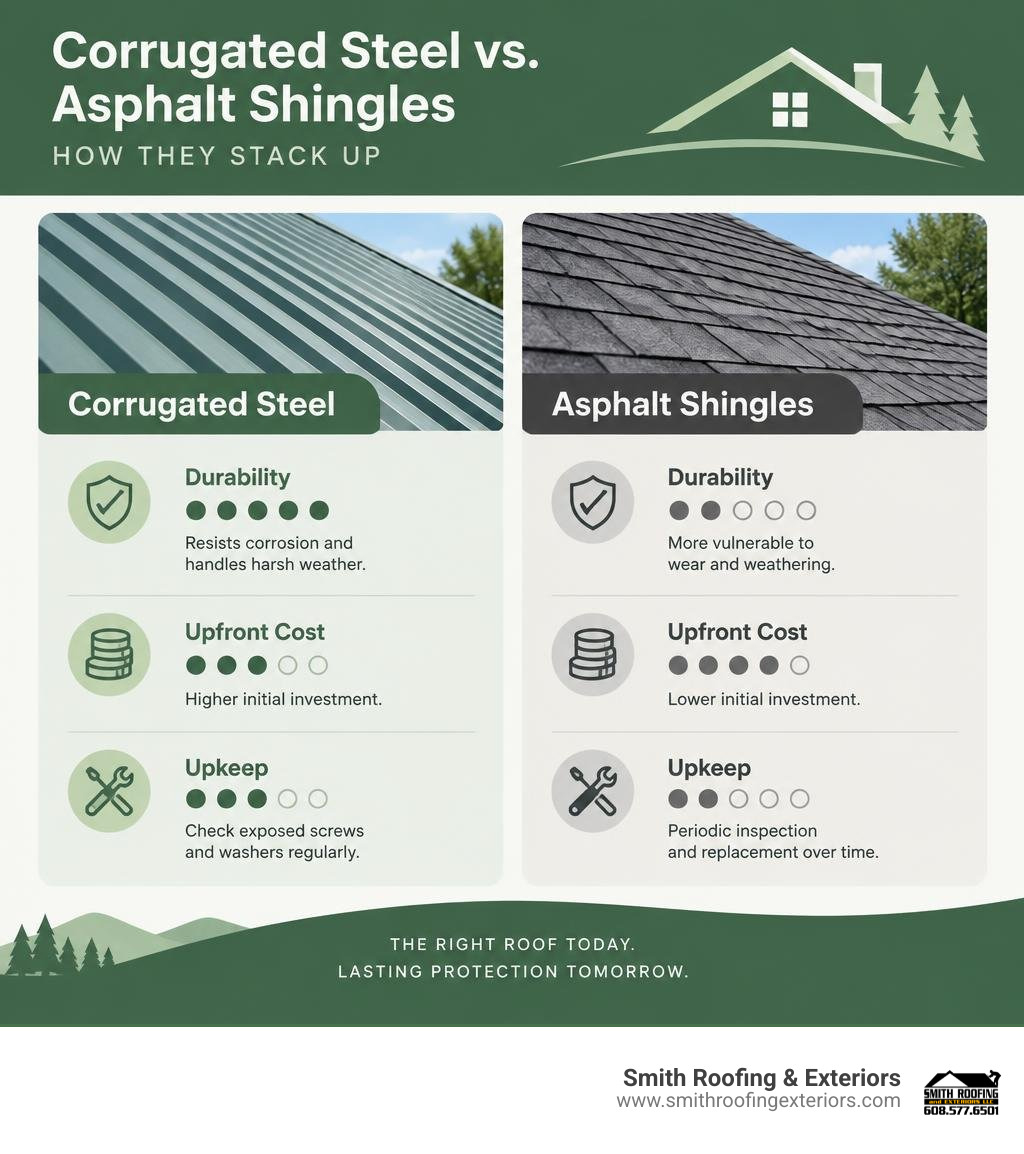
Corrugated steel roofing sheets can last longer than asphalt shingles because their protective coatings resist corrosion and their wavy shape adds strength. For a roof built to handle Wisconsin weather, start with the right panel gauge and coating for your site. Then check that the roof slope, fastener pattern, and snow-load design meet the panel maker’s instructions and local code. Good installation matters as much as the steel itself.
Shingles often cost less upfront. Corrugated steel may offer better long-term value, but exposed screws and their washers need regular checks to keep water out.
I’m Matt Smith, owner of Smith Roofing & Exteriors. My work helping homeowners plan roof and exterior improvements shapes this guide to corrugated steel roofing sheets: what to choose, what to check, and how to protect your investment.
Basic corrugated steel roofing sheets terms:
Understanding Corrugated Steel Roofing Sheets: Profiles, Coatings, and Durability Advantages

The classic “wavy” design of corrugated steel is not just for rustic charm—it is an engineering triumph. Corrugation adds incredible structural stiffness to thin metal sheets. The alternating ridges and valleys act like continuous mini-beams across the roof plane, distributing live loads (such as snow and maintenance traffic) and dead loads evenly across the deck or framing purlins.
Corrugated panels have transitioned from agricultural barns to contemporary residential homes across Southeastern Wisconsin. A primary reason is their exceptional storm resilience. High-quality steel sheets achieve top-tier wind uplift and impact certifications, making investing in metal roofing for your home an enduring upgrade against Wisconsin hailstorms, high-speed gust fronts, and punishing freeze-thaw cycles.
Core Specifications of Corrugated Steel Roofing Sheets
Corrugated panels come in several profile configurations, thicknesses, and performance classifications:
- 7/8-Inch Profile: The 7/8″ profile features deep corrugations on a 2.67″ pitch, delivering superior water drainage and load resistance. For structural engineering details, consult the 7/8″ corrugated technical data. Panels typically provide 32 inches of coverage for roofing and 34.67 inches for siding, spanning lengths up to 52 to 63 feet.
- 1/2-Inch Mini-Corrugated: Often used for accents, canopies, and siding, this profile features a 1/2″ rib height on 2.62″ centers. Read the full 1/2″ corrugated specifications for load-bearing span limitations.
- 3/4-Inch Profile: A versatile middle ground, 3/4″ corrugated panels feature 2.75″ rib centers and integrated anti-siphon grooves to prevent moisture entry along lap seams.
Metal thickness is measured in gauges:
- 29-Gauge: Lightweight (often used in basic utility or light agricultural work, weighing around 0.6–0.7 PSF; utility sheets like 31-gauge weigh roughly 7.2 lb per 16 sq. ft. panel).
- 26-Gauge: The popular standard for residential applications, striking an ideal balance of durability, cost, and dent resistance.
- 24-Gauge and 22-Gauge: Heavy commercial-grade sheets (e.g., 24-gauge curved panels at 1.26 PSF and 0.0276-inch thickness) offering peak load capacities exceeding 120–149 PSF on 24-inch spans.
These profiles undergo rigorous testing to meet ASTM E1592 structural load standards and achieve UL 580 Class 90 wind uplift ratings.
Comparing Corrugated Steel to Shingles and Standing Seam Systems
Choosing the right roofing material involves balancing upfront budgets, aesthetic goals, and maintenance expectations. Read our roofing materials comparison to explore how different systems stack up.
| Roofing System | Expected Lifespan | Impact Resistance | Wind Uplift Rating | Fire Rating | Fastener Style |
|---|---|---|---|---|---|
| Corrugated Steel | 40–60+ Years | Class 4 (UL 2218) | UL 580 Class 90 (up to 120+ mph) | Class A (UL 790) | Exposed Fasteners |
| Asphalt Shingles | 15–25 Years | Class 1–3 (Standard) | 60–110 mph (ASTM D3161/D7158) | Class A | Concealed Nails |
| Standing Seam | 50–70+ Years | Class 4 (UL 2218) | UL 580 Class 90 (130+ mph) | Class A (UL 790) | Concealed Clips |
While standing seam Galvalume systems hide all fasteners under raised seams for zero fastener exposure, corrugated steel delivers similar 40+ year metal longevity at a fraction of the installation labor cost. Light-gauge metal panels naturally experience minor “oil canning” (slight visible waviness under specific lighting), which is a normal physical property of sheet steel rather than a structural defect.
Protective Coatings and Finishes for Corrugated Steel Roofing Sheets
Raw steel must be protected from oxidation. Modern panels rely on advanced metallic substrates and baked-on paint coatings:
- Galvanized Steel: Base steel dipped in molten zinc (ranging from Z10 up to G90 / Z27 [275 g/m²] coatings). Find full specifications on galvanized steel roof sheets.
- Galvalume® (AZ50 / AZ55): An aluminum-zinc alloy barrier that provides up to double or triple the corrosion resistance of standard galvanization in non-alkaline environments.
- Factory-Applied Paint Systems:
- Silicone-Modified Polyester (SMP): Cost-effective paint (like WeatherXL™) offering high resistance to chalking, scratching, and fading.
- Polyvinylidene Fluoride (PVDF / Fluropon®): Premium 70% Kynar resin coating that preserves rich colors and resists harsh ultraviolet degradation for 35 to 40+ years.
- Unpainted Bare Galvanized: Standard plain galvanised sheets (typically 0.5 mm thick) deliver industrial utility.
PVDF and SMP coatings feature high Solar Reflectance Index (SRI) ratings that deflect solar radiation away from your attic space, cutting summer cooling loads noticeably.
How to Plan and Install Corrugated Steel Roofing for Maximum Longevity
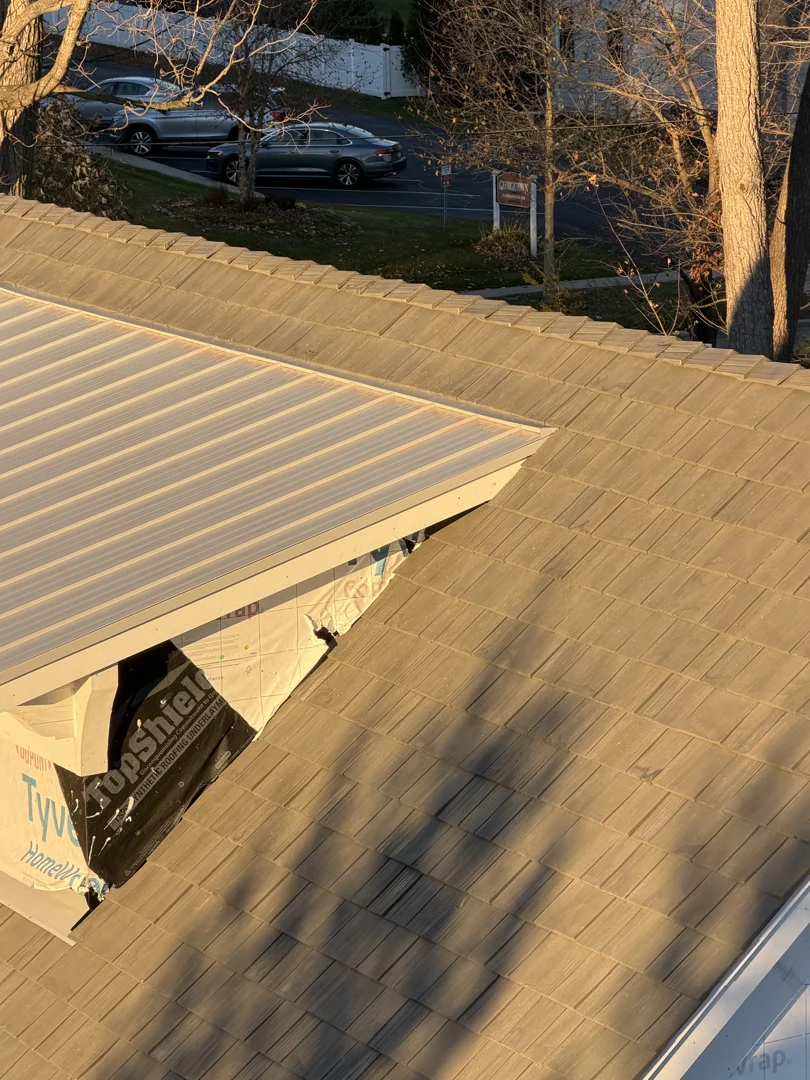
A corrugated metal roof is only as reliable as its water-shedding geometry, underlayment seal, and fastener alignment. Designing for the Wisconsin climate requires accounting for severe thermal movement, heavy snow drift loads, and ice damming. Follow our complete guide to metal roofing to understand the full installation framework.
Preparing Underlayment, Slope, and Framing for Metal Panels
Water management begins before the first steel sheet is hoisted onto the roof:
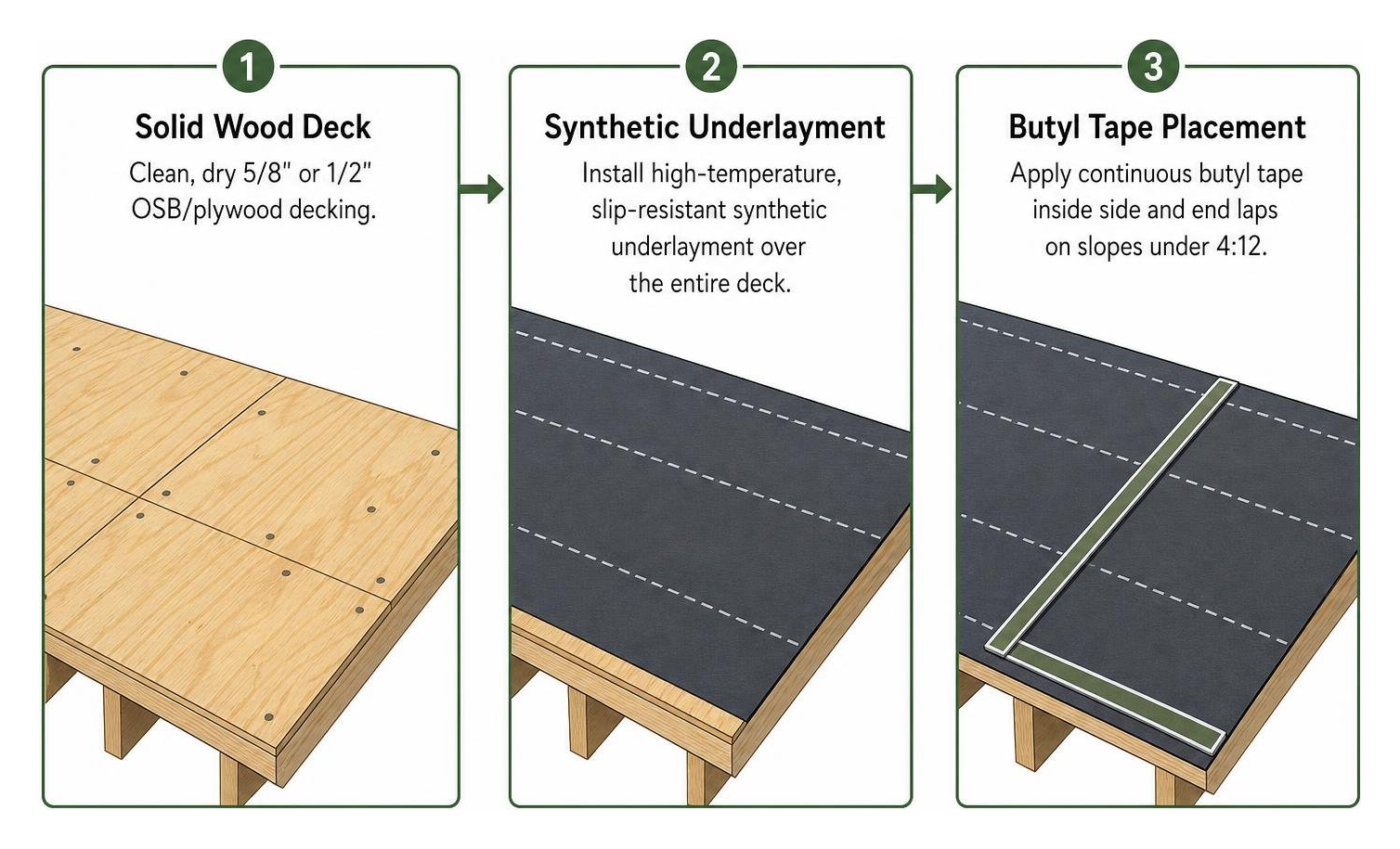
- Roof Pitch Requirements: The industry-recommended minimum slope for 7/8″ and 3/4″ corrugated panels is 3:12. Low-slope applications down to 1:12 require continuous heavy duty roof sealants, such as commercial-grade butyl tape along all side and end overlaps.
- Substrate Preparation: While corrugated panels can span open wood or steel purlins spaced 24 to 48 inches on center, residential homes perform best when sheets are fastened over solid 5/8″ or 1/2″ OSB/plywood decking.
- Underlayment Selection: Install high-temperature, slip-resistant synthetic underlayment over the entire deck. In unheated structures or over open purlins, install an anti-condensation fleece-backed membrane on the underside of the panel to absorb interior condensation during temperature drops.
Step-by-Step Installation and Fastener Attachment Best Practices
Installing exposed-fastener corrugated panels requires precision and calibrated tools. Follow our step-by-step corrugated roof installation manual and adhere to these critical best practices:
- Panel Orientation & Laps: Start laying sheets at the eave on the side of the roof opposite prevailing winds. Overlap side ribs by 1 to 1.5 corrugations, seating continuous butyl sealant tape inside the lap seam on slopes under 4:12.
- Fasteners: Use self-drilling carbon or stainless steel screws with vulcanized EPDM/neoprene sealing washers. Never use smooth nails. Fasten into the panel flats directly adjacent to the rib for solid decking, or through the rib crowns for open framing as mandated by local code.
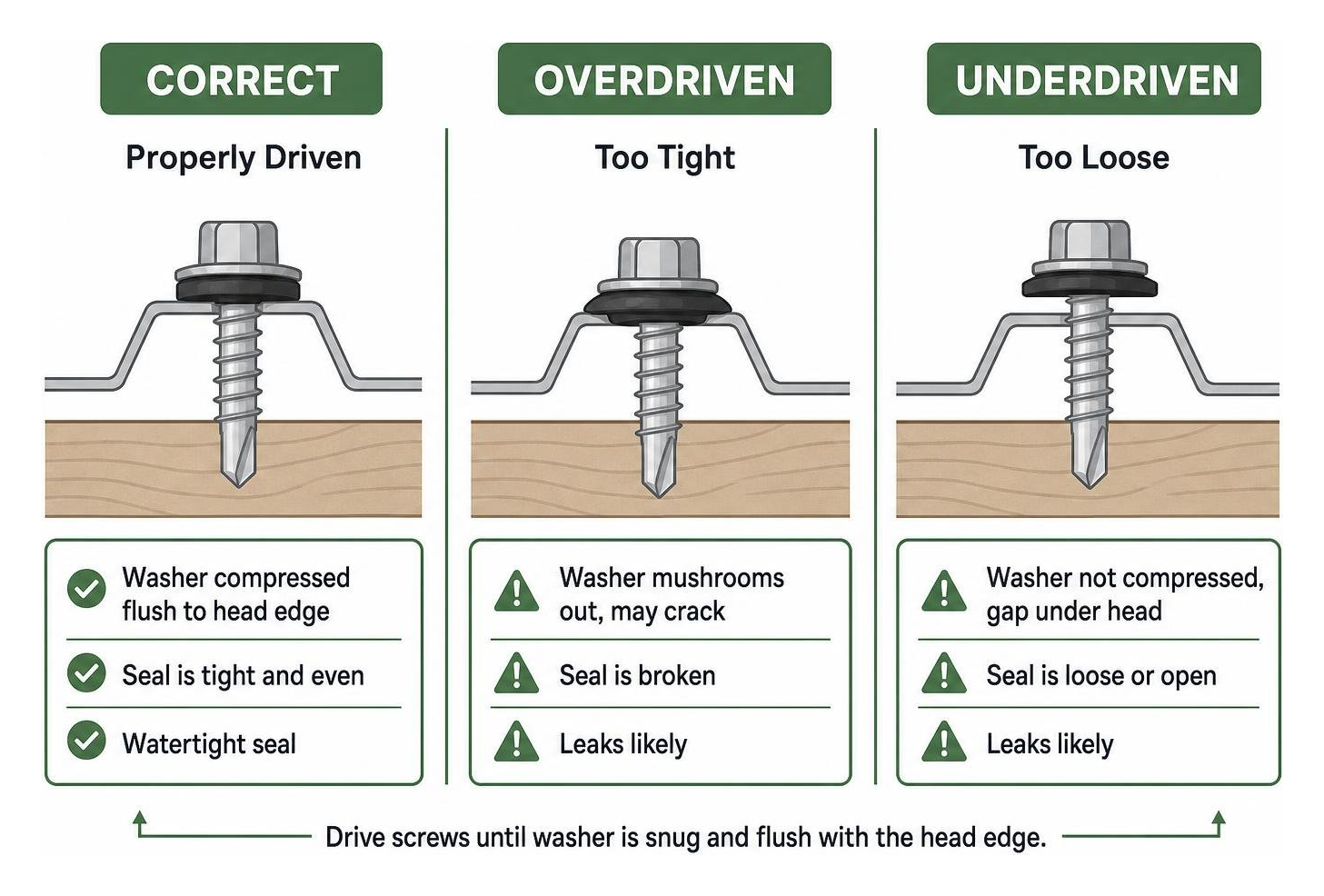
- Torque Calibration: Avoid using high-torque impact drivers. Over-tightening crushes and mushrooms the EPDM washer, breaking its seal, while under-tightening leaves a direct water leak path. Drive fasteners snug until the washer compresses flush with the screw head edge.
- System Accessories: Complete the installation using proper metal roof flashings. Install die-cut profile foam closure strips along the eave and ridge lines to block blowing snow, insects, and wind-driven rain, pairing them with vented ridge cap flashings for attic ventilation.
Routine Maintenance and Inspection Guidelines
Corrugated roofs are remarkably low-maintenance, but exposed fasteners require periodic monitoring:
- Annual Fastener Checks: EPDM washers expand and contract under severe temperature swings. We recommend conducting a professional check every 3–5 years for backed-out screws or degraded rubber washers. Learn our systematic protocol for inspecting metal roofs.
- Clear Debris: Remove accumulated pine needles, leaves, and wet organic matter from roof valleys, dormer junctions, and gutters to protect protective paint finishes.
- Surface Repairs: Treat surface scratches promptly with factory-matched touch-up paint. If deep punctures or modifications occur, review our step-by-step instructions on repairing metal roof holes.
At Smith Roofing & Exteriors, we bring decades of hands-on metal roofing expertise to homeowners and businesses throughout Fort Atkinson, Jefferson, Lake Mills, Burlington, Delavan, Elkhorn, Lake Geneva, Walworth, Edgerton, and across Southeastern Wisconsin.
Ready to replace your aging roof with a permanent metal solution? Contact Smith Roofing & Exteriors today or explore our expert metal roofing services to schedule an on-site consultation and quote.