Is a Galvalume Standing Seam Metal Roof Right for You?
If you’re comparing roofing materials, here’s the short answer:
A Galvalume standing seam metal roof is one of the most durable, low-maintenance roofing systems available. It combines a steel core coated in aluminum and zinc with a concealed-fastener profile that keeps water out and looks clean for decades.
Quick comparison at a glance:
| Feature | Galvalume Standing Seam | Asphalt Shingles | Traditional Metal (Exposed Fastener) |
|---|---|---|---|
| Lifespan | 50+ years | 15-30 years | 30-40 years |
| Fasteners | Concealed | N/A | Exposed |
| Maintenance | Very low | Moderate | Low-moderate |
| Cost | Higher upfront | Lower upfront | Mid-range |
| Corrosion resistance | Excellent | N/A | Good |
| Aesthetic options | Metallic + painted | Limited | Limited |
Wisconsin winters are brutal. Ice dams, heavy snow loads, freeze-thaw cycles — they eat through ordinary roofing fast. That’s why more homeowners and business owners across the state are taking a hard look at metal roofing, and specifically at what Galvalume standing seam systems bring to the table.
This guide breaks down everything you need to know — from how the material is made, to specs, costs, installation, and how it stacks up against other finishes.
I’m Matt Smith, owner of Smith Roofing & Exteriors, and I’ve helped homeowners and businesses in rural Wisconsin protect their properties with durable roofing systems including Galvalume standing seam metal roofs. If you want straight talk — no fluff — about whether this roof is right for your property, you’re in the right place.
Galvalume standing seam metal roof basics:
What is a Galvalume Standing Seam Metal Roof?
To understand why a galvalume standing seam metal roof is such a powerhouse, we have to look at both the material itself and the physical design of the panels.
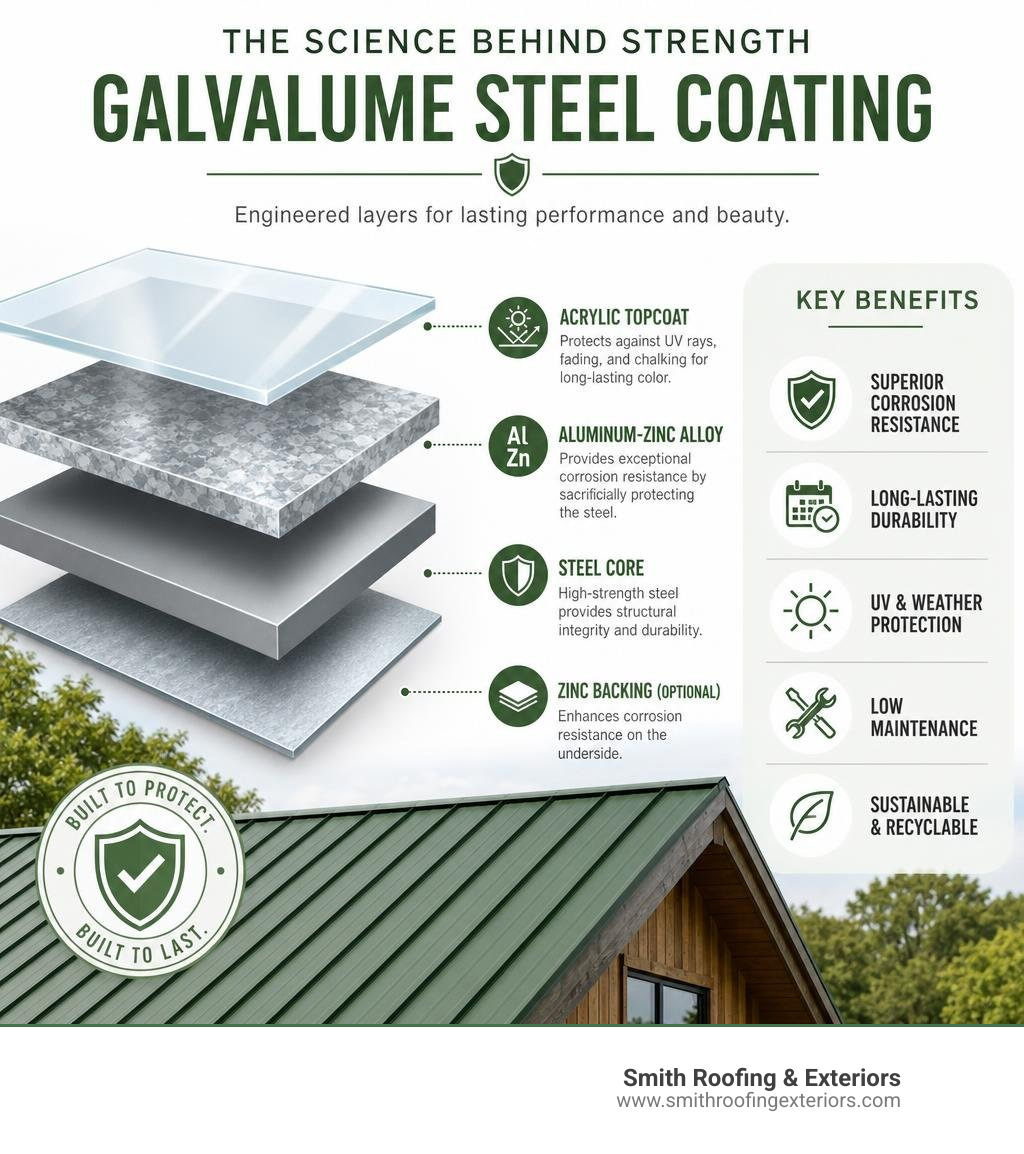
First, let’s talk about the metal. Galvalume is not just a brand name; it is a highly engineered steel substrate that revolutionized the construction industry when Bethlehem Steel introduced it in 1972. Before Galvalume, most metal roofs used simple galvanized steel, which relies entirely on a zinc coating. While galvanized steel is decent, Galvalume lasts roughly two to four times longer.
The magic lies in a hot-dip process where cold-rolled carbon steel is continuously coated with an alloy consisting of:
- 55% Aluminum: Provides outstanding barrier corrosion protection and heat reflectivity.
- 43.4% Zinc: Offers sacrificial galvanic protection, meaning it actively fights rust at cut edges and scratches.
- 1.6% Silicone: Added to ensure the alloy adheres perfectly to the steel core during the high-heat manufacturing process.
To get a complete grasp of how this compares to older-style roofs, check out The Complete Guide To Metal Roofing.
By combining these elements, the steel sheet gains a self-healing property that prevents red rust from spreading. You can read more about the history and chemical makeup of this material in this detailed guide on What Is Galvalume® Steel and How Is it Used in Metal Roofing?.
The Science Behind Galvalume Steel
Why does this chemical blend work so well? It comes down to the dual-action protection of aluminum and zinc.
Zinc is highly reactive. When the atmosphere tries to attack the steel, the zinc sacrifices itself first to protect the underlying iron. However, zinc alone wears away over time. By mixing in 55% aluminum, the coating develops microscopic pockets of aluminum oxide barrier protection. This barrier is incredibly tough and slows down the rate at which the zinc sacrifices itself.
If the panel is cut or scratched during installation, the zinc along the edge still provides “sacrificial” protection, keeping the cut edge from rusting.
When specifying these panels, you will see terms like AZ50 and AZ55:
- AZ50 (0.50 ounces of coating per square foot): This is the industry standard for painted Galvalume products. The paint layer adds its own barrier, so a slightly thinner alloy layer is perfect.
- AZ55 (0.55 ounces of coating per square foot): This is the standard for unpainted, bare, or acrylic-coated Galvalume panels. Because there is no paint, the thicker alloy layer is required to guarantee long-term rust resistance.
Understanding the Standing Seam Profile
Now, let’s look at the physical design. Traditional metal roofs use “exposed fasteners” — meaning the installer drives hundreds of screws directly through the face of the metal panel. Over time, rubber washers dry out, screws back out due to temperature changes, and you get leaks.
A standing seam system completely eliminates this vulnerability. It uses concealed fasteners. The panels are secured to the roof deck using hidden clips and screws. The next panel then snaps or is mechanically seamed over the top of those clips, hiding them completely from the elements.
The vertical ribs (or seams) rise above the flat pans of the roof, channeling water safely down the slope. These systems generally come in two styles:
- Snap-Lock Panels: The panels literally snap together over the clips. They are incredibly fast to install and perfect for residential projects.
- Mechanically Seamed Panels: A special motorized tool runs up the seam, folding the metal edges together for an airtight, watertight lock. This is typically used on very low slopes or commercial projects.
For a deeper dive into how different metal panels function structurally on your home, take a look at Heavy Metal For Your Home A Guide To Metal Panel Roofing Systems.
Comparing Finishes: Pre-Weathered, Painted PVDF, Bare, and Corten
Choosing the right finish for your galvalume standing seam metal roof dictates how your home looks, how much heat it reflects, and how long it will last.
| Finish Type | Visual Appearance | Maintenance Level | Best For | Expected Lifespan |
|---|---|---|---|---|
| Pre-Weathered Galvalume | Matte, zinc-like, textured metallic grey | Very Low | Modern & rustic residential, commercial | 50+ Years |
| Painted PVDF (Kynar 500) | Wide range of solid & metallic colors | Low | Standard residential, HOA compliance | 50+ Years |
| Bare Galvalume | Shiny, bright silver mill finish | Low-Moderate | Agricultural, industrial, modern accent | 45+ Years |
| Corten Steel | Rusty, weathered orange-brown | Moderate | Accent walls, rustic mountain cabins | 30-40 Years |
To explore the sheer variety of architectural and structural design options available with these finishes, you can check out the systems highlighted by Metal Roofing Systems | Standing Seam Metal Roofs – Englert.
The Unique Appeal of Pre-Weathered Galvalume
If you love the authentic, industrial look of natural zinc or weathered metal but don’t want to pay the premium price of zinc, Pre-Weathered Galvalume is an outstanding choice.
Unlike standard bare Galvalume, which starts shiny and bright, pre-weathered finishes are designed to mimic a naturally aged, matte-grey metallic surface right out of the box. It offers a rustic yet incredibly modern charm that looks spectacular on contemporary homes in places like Lake Geneva, WI or Delavan, WI.
However, working with pre-weathered finishes requires an experienced hand. This finish is batch-sensitive and directional. This means you must order all panels from the same coil batch to avoid slight color variations. Furthermore, the panels must be installed in the exact same direction they were rolled, or the light will reflect off the metallic flakes differently, making some panels look darker than others.
For more details on how these pre-weathered systems are engineered, see the Pre-Weathered Galvalume | Western Lock® Standing Seam specifications.
Painted PVDF vs. Bare Galvalume
For most residential applications, homeowners choose between Painted PVDF or Bare Galvalume.
Painted PVDF (Polyvinylidene Fluoride, often sold under the brand name Kynar 500): This is the gold standard of metal roof coatings. PVDF paint systems offer unmatched resistance to fading, chalking, and chemical attack. Manufacturers like Englert offer up to 28 ULTRA-Cool low-gloss, environmentally friendly finishes. These “cool roof” pigments reflect a massive portion of the sun’s infrared heat, keeping your attic cool and lowering your summer energy bills in Southeastern Wisconsin.
Bare Galvalume (Zincalume or Galvalume Plus): If you prefer a bright, metallic look, bare Galvalume features a clear acrylic topcoat (often called Galvalume Plus) that protects the metal from scuffing during installation and prevents fingerprinting. Over several years, this bright silver will naturally oxidize into a uniform, soft grey matte finish. While highly durable, it lacks the heat-reflective pigments of a PVDF painted roof.
If you are wondering how these materials compare to other rust-resistant metals, you might enjoy reading Why Aluminum Roofing Is The King Of Coastal Environments.
Technical Specifications and Recommended Applications
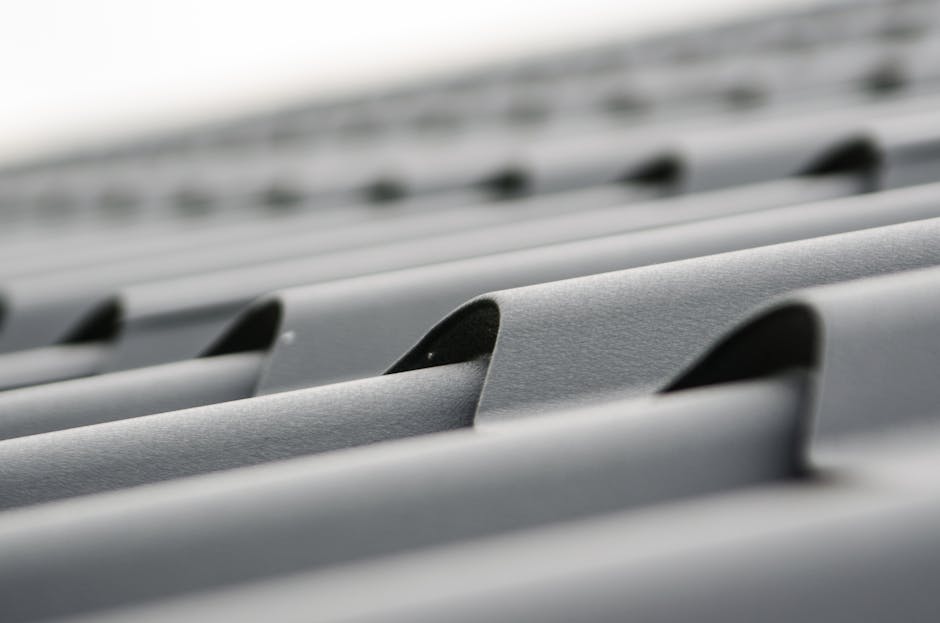
A galvalume standing seam metal roof is incredibly versatile. It is commonly used for:
- Residential Homes: Sleek lines that instantly boost curb appeal.
- Commercial Buildings: Hospitals, retail centers, and schools in Fort Atkinson, WI that need a worry-free, 50-year roof.
- Agricultural Buildings: Premium barns and storage buildings (though unpainted Galvalume should not be used inside animal confinement buildings due to corrosive ammonia fumes).
- Interior Accents: Accent walls, fireplace surrounds, and modern ceiling panels.
Panel Dimensions and Gauge Options for a Galvalume Standing Seam Metal Roof
When ordering standing seam panels, the thickness of the metal is measured in gauges. In the metal roofing world, lower numbers mean thicker metal:
- 24 Gauge: The residential and commercial standard. It is thick, highly resistant to wind uplift, and structurally rigid enough to resist denting from hail.
- 22 Gauge: Extra-thick, heavy-duty steel used for high-wind areas or commercial projects with long spans.
- 26 Gauge: Occasionally used for light residential or agricultural structures, but more susceptible to oil canning (visual waving).
Typical panel profiles include:
- Rib Height: Typically 1.5 inches to 1.75 inches. A higher rib height offers stronger wind resistance and better water shedding.
- Panel Widths: Standard widths are 12, 16, or 18 inches. Wider panels are more economical but show more oil canning, while narrower panels offer a busier, more traditional architectural look.
- Panel Lengths: Western Lock and other premium systems can be ordered in custom lengths ranging from 1 foot up to 52 feet, or even roll-formed on-site up to 60 or 75 feet to eliminate horizontal lap seams entirely.
For an example of precise panel dimensions, check out the StreamLine product data sheets.
Slope and Substrate Requirements
Can a standing seam roof go on any home? Almost, but slope is a critical factor.
Most snap-lock standing seam systems require a minimum roof slope of 3/12 (meaning the roof rises 3 inches for every 12 inches of horizontal run). Installing snap-lock panels on a slope lower than 3/12 increases the risk of water backing up under the seams during heavy rain or snow melt.
If your roof has a lower pitch, you must transition to a structural standing seam panel, such as the Versa-Span™ | Taylor Metal system, which can handle slopes as low as 2/12 with factory-applied butyl sealant injected into the seams.
Additionally, architectural standing seam panels must be installed over a solid substrate (such as CDX plywood or OSB decking) rather than open framing to ensure proper support and wind uplift resistance.
Installation Best Practices and Performance Ratings

Installing a standing seam roof is a highly technical craft. Unlike asphalt shingles, which can tolerate minor installation errors, a metal roof must be engineered to handle thermal movement.
When the sun beats down on a 40-foot metal panel, it heats up and expands. At night, it cools and contracts. If the panel is pinned tightly to the roof with exposed screws, it will buckle, warp, and eventually rip the screws out.
Essential Steps for Installing a Galvalume Standing Seam Metal Roof
To ensure your roof lasts a lifetime, we follow strict industry best practices:
- Prep the Substrate: The wood deck must be completely flat. Any high spots, stray nails, or uneven seams in the plywood will telegraph through the metal, causing severe oil canning.
- Install Premium Underlayment: We always install a high-temperature, self-adhering synthetic underlayment over the entire deck. This acts as a secondary water barrier and prevents the metal panels from sticking to the underlayment during extreme summer heat.
- Use Floating Clips: For longer panel runs, we use floating clips. These clips allow the metal panels to slide back and forth freely as they expand and contract with Wisconsin’s changing seasons.
- Proper Flashing and Trim: All edge details, valleys, and chimney flashings must be designed specifically for standing seam systems. To learn how to choose the right flashings for your home, read How To Choose The Best Metal Roof Flashings For For Your Home.
If you want to understand the basic mechanics of installing metal roof panels, you can review our guide: Nailed It A Step By Step Corrugated Roof Installation Manual.
For those interested in high-end snap-together systems, the specifications for the Slim-Lock™ | Taylor Metal panel highlight how engineered clip systems eliminate the need for mechanical seaming while maintaining ultimate security.
Warranties, Fire Ratings, and Wind Uplift Certifications
When you invest in a premium Galvalume roof, you are backed by serious performance certifications:
- UL 580 Class 90 Wind Uplift: This means the roof system has been tested to withstand extreme wind forces, keeping your panels secure even during severe Midwestern storms.
- UL 790 Class A Fire Rating: The highest rating available. Metal roofing is non-combustible and provides incredible protection against airborne embers.
- UL 2218 Class 4 Impact Rating: Tested against large hail. This rating can often qualify you for significant discounts on your homeowner’s insurance.
- Substrate Warranties: Bare Galvalume typically carries a 45-year warranty, while painted PVDF systems often come with a 50-year paint and substrate warranty.
Cost Analysis and Aesthetic Considerations
Let’s address the elephant in the room: cost.
A standing seam metal roof is an investment. It is not the cheapest option on the market, but it is almost always the most cost-effective option over the long term.
How Much Does a Galvalume Standing Seam Roof Cost?
On average, a galvalume standing seam metal roof ranges from $10.00 to $18.00 per square foot installed, depending on the complexity of your roof, the pitch, and the gauge of steel selected.
How does this compare to other options?
- Asphalt Shingles: $4.50 to $8.00 per square foot. However, you will likely have to replace an asphalt roof two or three times over the lifespan of a single Galvalume roof.
- Aluminum Standing Seam: Aluminum is highly rust-resistant (great for saltwater coastal areas), but the raw material is roughly 80% to 100% more expensive than Galvalume. For homes in landlocked Wisconsin, Galvalume offers identical lifespan performance for a fraction of the price.
- Exposed Fastener Metal: $7.00 to $11.00 per square foot. While cheaper upfront, the maintenance costs of replacing hundreds of failed rubber washers every 10 to 15 years quickly eats away at those savings.
Managing Oil Canning and Visual Expectations
If you are considering a standing seam roof, you must understand oil canning.
Oil canning is a visual waviness or distortion that can appear in the flat areas of metal panels. It is an inherent physical characteristic of light-gauge cold-rolled metal and is not a structural defect.
While it cannot be completely eliminated, we can minimize it by:
- Choosing a thicker steel (24 gauge instead of 26 gauge).
- Ordering panels with striations or rib rollers (small ridges stamped into the flat pan of the panel to break up flat space).
- Ensuring the roof deck is perfectly flat before installation.
- Requesting physical metal samples from us rather than relying on digital screen representations, as colors and textures look vastly different in real Wisconsin sunlight.
Frequently Asked Questions about Galvalume Roofing
Can Galvalume standing seam roofs be used in coastal environments?
Galvalume is highly rust-resistant, but it does have one major weakness: salt spray. Standard Galvalume warranties explicitly exclude any structures located within 1,500 feet of a salt-water coast or breaking surf. The salt air breaks down the zinc-aluminum alloy rapidly. For coastal salt-water environments, aluminum is the superior choice. However, here in landlocked Southeastern Wisconsin, salt spray is not an issue, making Galvalume the ideal choice.
What is the lifespan of a Galvalume standing seam roof?
With proper installation, a Galvalume standing seam roof will easily last 50+ years. The combination of the sacrificial zinc-aluminum coating and the absence of exposed fasteners means there are no weak points for water to penetrate.
Does Galvalume require a solid roof deck for installation?
For residential architectural standing seam panels (like snap-lock profiles), a solid roof deck (plywood or OSB) is highly recommended and often required. This ensures flat, continuous support, reduces the risk of oil canning, and allows the synthetic underlayment to create a complete secondary water barrier. Some heavy-duty structural standing seam panels can span open steel purlins on commercial buildings, but solid decking is the standard for homes.
Conclusion
A galvalume standing seam metal roof is more than just a protective cover for your home — it is a lifetime investment that enhances your property’s value, slashes your energy bills, and eliminates the stress of roof replacements forever.
At Smith Roofing & Exteriors, we take pride in delivering master-class metal roof installations across Fort Atkinson, WI, Lake Mills, WI, Jefferson, WI, and the surrounding Southeastern Wisconsin communities. We believe in transparent pricing, superior materials, and local craftsmanship that stands up to our brutal winters.
Ready to see how a Galvalume masterpiece would look on your home? Get a Quote from our team today, or contact us to look at real metal samples in person. Let’s build a roof that you’ll never have to worry about again!