Why Getting Metal Roof Flashings Right Can Save You Thousands
Metal roof flashings are thin strips of metal installed at the joints, edges, and penetrations of your roof to stop water from getting in. If you’re trying to understand what they are and which type you need, here’s the short answer:
The most common types of metal roof flashings:
| Flashing Type | Where It’s Used |
|---|---|
| Drip edge | Roof eaves and rakes |
| Valley flashing | Where two roof slopes meet |
| Step flashing | Along walls and chimneys |
| Counter flashing | Over step flashing at masonry |
| Pipe boot / vent flashing | Around vents and pipes |
| Kickout flashing | Bottom of roof-to-wall intersections |
Common materials: aluminum, galvanized steel, copper, and stainless steel.
Think of flashings as the unsung heroes of your roof. Your metal panels or shingles shed the bulk of the rain — but flashings seal every gap those panels can’t cover. Without them, even a brand-new metal roof will leak at chimneys, valleys, and vents.
For Wisconsin homeowners, this matters even more. Harsh freeze-thaw cycles, heavy snow loads, and driving rain put constant pressure on every vulnerable joint in your roof system. A small flashing failure in October can mean a soaked attic by January.
I’m Matt Smith, owner of Smith Roofing & Exteriors, and I’ve installed and repaired metal roof flashings on dozens of homes across rural Wisconsin — from exposed farmsteads to lakefront properties. In this guide, I’ll walk you through everything you need to know to choose the right flashings for your home.
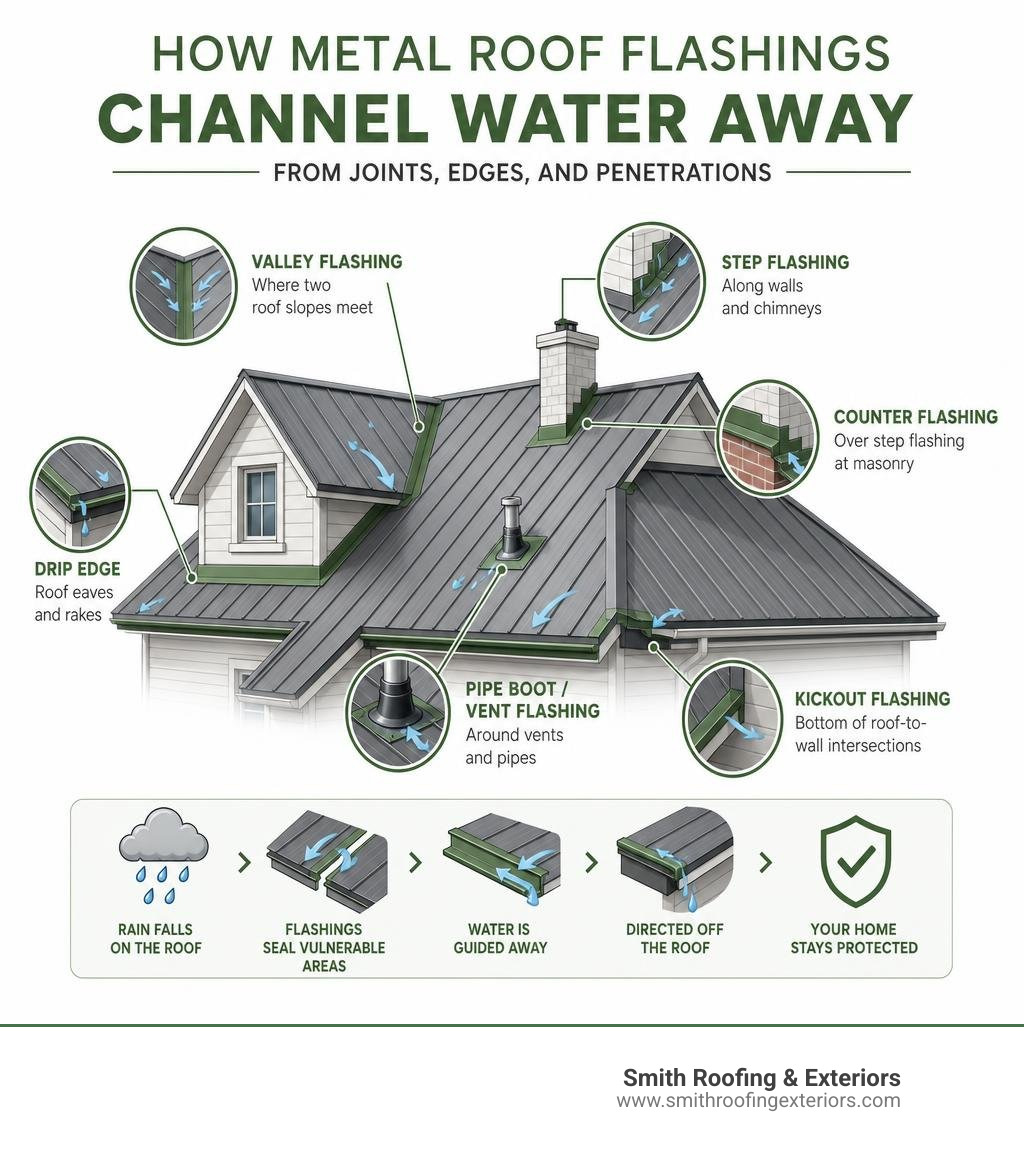
Common metal roof flashings vocab:
What Are Metal Roof Flashings and Why Do They Matter?
When we install a high-quality metal roof, the large, flat metal panels do an incredible job of shedding water. However, roofs are rarely simple, single-plane structures. They feature valleys where different slopes meet, chimneys that break through the surface, plumbing vents, dormers, and edges where the roof meets the siding.
These intersections are the most vulnerable parts of any home. Without proper protection, water will inevitably find its way into these seams. This is where metal roof flashings come into play. Flashings act as a specialized defense system, bridging the gaps between roofing panels and other building elements to create a continuous, watertight envelope.

When water flows down your roof, it follows the path of least resistance. At valleys or walls, that path leads directly into the seams. Flashing intercepts this water and safely diverts it down the roof surface and into your gutters.
If you want to understand how flashing integrates with the rest of your roofing system, check out The Complete Guide to Metal Roofing for a comprehensive look at modern metal roof design.
Essential Functions of Metal Roof Flashings
The primary job of any flashing is water diversion. However, its structural role goes far deeper than simply blocking rain. According to the Metal Flashing – Insurance Institute for Business & Home Safety, properly detailed metal flashing is critical for preserving a building’s structural integrity and preventing wind-driven rain from bypassing the outer cladding during severe weather events.
In Southeastern Wisconsin, we experience extreme weather shifts. From freezing winter blizzards in Fort Atkinson to humid summer storms in Lake Geneva, our roofs are constantly expanding, contracting, and weathering the elements.
When water gets past a compromised flashing, it pools on the wooden roof deck, leading to rot, structural sagging, and toxic mold growth. Over time, even a minor, unnoticed leak around a chimney or wall transition can rot out the rafters, resulting in thousands of dollars in structural repairs.
Common Areas Requiring Flashing Protection
Every roof has transition points that require dedicated flashing. The most common areas include:
- Chimneys: Because chimneys are typically made of brick or stone, they expand and contract at different rates than your metal roof. They require multiple layers of flashing to keep this transition watertight.
- Valleys: These are the internal angles formed where two roof slopes meet. Valleys channel massive volumes of water during heavy rainstorms, making heavy-duty flashing essential.
- Skylights: Skylights act as windows in your roof. They require specialized flashing kits to prevent water from pooling along their upper frames.
- Roof Vents and Plumbing Stacks: Any pipe or exhaust vent that penetrates the roof deck needs a specialized collar or boot to seal the round opening.
- Dormers and Side Walls: Where a sloped roof meets a vertical wall, water can easily seep behind the siding if the transition isn’t correctly flashed.
Types of Flashing Profiles and Their Applications
Choosing the right flashing profile is just as important as selecting the right metal panels. Different areas of the roof experience different water loads and wind forces, requiring uniquely shaped metal profiles to direct water safely away.

Using the wrong profile—or trying to bend a generic piece of metal to fit a complex joint—is a recipe for disaster. To see how these profiles fit into the broader picture of residential metal roofing, you can read our guide, Heavy Metal for Your Home: A Guide to Metal Panel Roofing Systems.
Drip Edge and Eave Flashings
The drip edge is installed along the eaves (the horizontal edges) and rakes (the sloped edges) of your roof. Its main job is to direct water runoff away from your fascia boards and directly into your gutters. Without a proper drip edge, water tends to cling to the edge of the metal panels, wicking backward onto the wooden fascia and roof decking, which causes rapid wood rot.
As of June 2026, local building codes across Southeastern Wisconsin strictly require the installation of a dedicated drip edge on all residential roofing systems. A properly designed drip edge features a outward-curving “kick” at the bottom, which breaks the surface tension of the water and forces it to drop cleanly into the gutter.
Valley and Wall Transition Flashings
Valleys are high-volume water channels. For metal roofs, we typically use a “W-Valley” or “V-Valley” flashing profile. The W-valley profile features a raised rib down the center. This rib acts as a barrier, preventing fast-flowing water coming down one slope from rushing up and underneath the panels on the opposing slope.
Where your roof meets a vertical wall, we install apron or roof-to-wall flashing. To prevent water from running down the wall and slipping behind the roof panels, we also utilize kickout flashing at the very bottom of the wall transition. This specialized piece of metal literally “kicks” the water outward, directing it safely into the gutter rather than allowing it to saturate your home’s exterior siding.
For step-by-step insights into how these transitions are layered during installation, take a look at our Nailed It: A Step-by-Step Corrugated Roof Installation Manual.
Penetration and Chimney Metal Roof Flashings
Penetrations—such as plumbing stacks, electrical masts, and wood stove chimneys—require flexible yet highly durable flashing systems. The most common solution is a flexible rubber or silicone pipe boot fitted with a malleable aluminum base ring. This aluminum ring allows the installer to mold the boot directly to the ridges and valleys of your metal roof profile.
For hot pipes, such as chimney exhausts, standard rubber boots won’t cut it. In these cases, we use high-temperature silicone boots or specialized metal flashing kits like the Metal Roof Flashing for Chimney Pipe Install | Rock-Vent Roof Flashing – Rockford Chimney. These systems often include a secondary storm collar that clamps tightly to the pipe above the flashing, creating a double-barrier defense against water intrusion.
For standard plumbing vents, products featured in the Pipe Flashings for Metal guide provide excellent, long-lasting seals that move naturally with the expansion and contraction of your pipes.
Comparing Flashing Materials: Aluminum, Steel, and Copper
Selecting the right material for your metal roof flashings is critical for ensuring your roof lasts its full expected lifespan. Ideally, your flashing material should match or exceed the durability of your roofing panels.
Here is a quick look at how the top three flashing materials compare:
| Material | Durability | Relative Cost | Best For | Pros | Cons |
|---|---|---|---|---|---|
| Galvanized / Galvalume Steel | High | Low to Moderate | Steel Roofs | Strong, cost-effective, matches steel panels | Can rust if coating is damaged |
| Aluminum | Very High | Moderate | Aluminum & Coastal | Rust-proof, highly malleable, lightweight | Expands and contracts significantly |
| Copper | Lifetime | High | Premium & Historic | Beautiful patina, virtually indestructible | Expensive, requires soldering |
Galvanized and Galvalume Steel
Steel is the most common flashing material used on residential roofs. To prevent rusting, the steel is coated in zinc (galvanized) or a mixture of aluminum and zinc (Galvalume). Steel flashings offer incredible structural strength, making them highly resistant to physical damage from falling branches, heavy snow loads, and ice dams.
Because steel matches the thermal expansion rate of steel roofing panels, it is the natural choice for most metal roof installations. If you’re curious about why steel is such a popular choice for Wisconsin homes, check out Why It’s Worth Investing in Metal Roofing for Your Home.
Aluminum Flashing
Aluminum is incredibly popular because it is completely immune to rust. It is also highly malleable, meaning installers can easily bend and shape it on-site to fit complex roof angles and custom chimney profiles.
Because of its natural corrosion resistance, aluminum is the gold standard for harsh environments. If you live near water or in areas prone to heavy moisture, you can learn more about its unique benefits in our article, Why Aluminum Roofing Is the King of Coastal Environments.
Copper and Stainless Steel
If you are looking for the absolute pinnacle of durability and aesthetic appeal, copper is the ultimate flashing material. Copper is virtually indestructible, often lasting over 100 years. As it ages, it develops a beautiful green patina that adds incredible character to historic and high-end homes alike.
Stainless steel offers similar lifetime durability without the changing color, making it perfect for modern architectural designs. However, both copper and stainless steel require specialized installation techniques, including hand-soldered seams, and carry a premium price tag.
Installation Best Practices and Common Mistakes to Avoid
Even the highest-quality flashing material will fail if it is installed incorrectly. In fact, over 90% of all roof leaks can be traced back to improper flashing installation.
When we install a metal roof, we follow strict industry standards to ensure every flashing joint is completely watertight. To learn more about the benefits of a professionally installed metal roof, check out What Are the Top Benefits of Installing a Metal Roof.
Managing Thermal Expansion and Dissimilar Metals
Metal is highly sensitive to temperature changes. It expands when it gets hot and contracts when it gets cold. For example, a 10-foot piece of aluminum can expand up to 0.13 inches over a 100°F temperature swing, while steel expands about half that amount.
If flashings are nailed down too tightly without room to move, they will buckle, warp, and pull their fasteners loose over time. To prevent this, we use oversized or slotted fastener holes and sliding cleats that allow the metal to breathe.
Another critical mistake is mixing dissimilar metals. When copper touches steel or aluminum in the presence of water, a chemical reaction called galvanic corrosion occurs. This reaction rapidly eats away the weaker metal, causing premature roof failure. We always separate incompatible metals using rubber membranes, neoprene washers, or specialized bituminous paint.
Proper Sealing and Fastening Techniques
Sealants and fasteners are the final piece of the puzzle. We never rely on caulk alone to keep water out; the metal profiles themselves must be lapped in a water-shedding pattern (always overlapping upper pieces over lower pieces).
We use high-grade, 100% exterior silicone sealants and premium butyl tapes between metal laps to create a secondary barrier. Fasteners must be driven straight and snug—never over-tightened, which can crush the neoprene washers and create a leak point.
Frequently Asked Questions About Metal Roof Flashings
How long do metal roof flashings typically last?
The lifespan of your flashing depends heavily on the material used and the local weather. High-quality galvanized steel and aluminum flashings typically last 20 to 30 years. Copper and stainless steel flashings can easily last 50 to 100 years. Regular inspections help catch worn sealants or minor rust before they lead to a leak.
Can you reuse old flashing when replacing a roof?
We strongly advise against it. While it might save a few dollars upfront, old flashing has already experienced years of thermal stress, nail hole wear, and weathering. Reusing old flashing on a brand-new metal roof is like putting old, worn-out tires on a luxury sports car—it compromises the entire system.
What are the signs of failing roof flashing?
Keep an eye out for these common warning signs:
- Visible rust spots or corrosion on the metal.
- Water stains on your ceilings or inside your attic space.
- Dried, cracked, or missing sealant along chimney joints.
- Warped, bent, or loose metal trim pieces pulling away from the roof.
Conclusion
Choosing and installing the right metal roof flashings is the single most important step in protecting your home from water damage. By selecting compatible, high-quality materials and ensuring they are installed by an experienced team, you can enjoy a leak-free roof for decades to come.
At Smith Roofing & Exteriors, we take pride in delivering exceptional craftsmanship to our neighbors in Fort Atkinson, WI, and across Southeastern Wisconsin—including Lake Mills, Jefferson, Burlington, Delavan, Elkhorn, Lake Geneva, Walworth, and Edgerton.
If you are planning a roof upgrade or suspect your current flashings are failing, our local experts are here to help. Explore our Metal Roofing Services or contact us today to schedule a professional roof inspection and protect your home for the long haul!