How to Choose Reliable Roofers in Madison
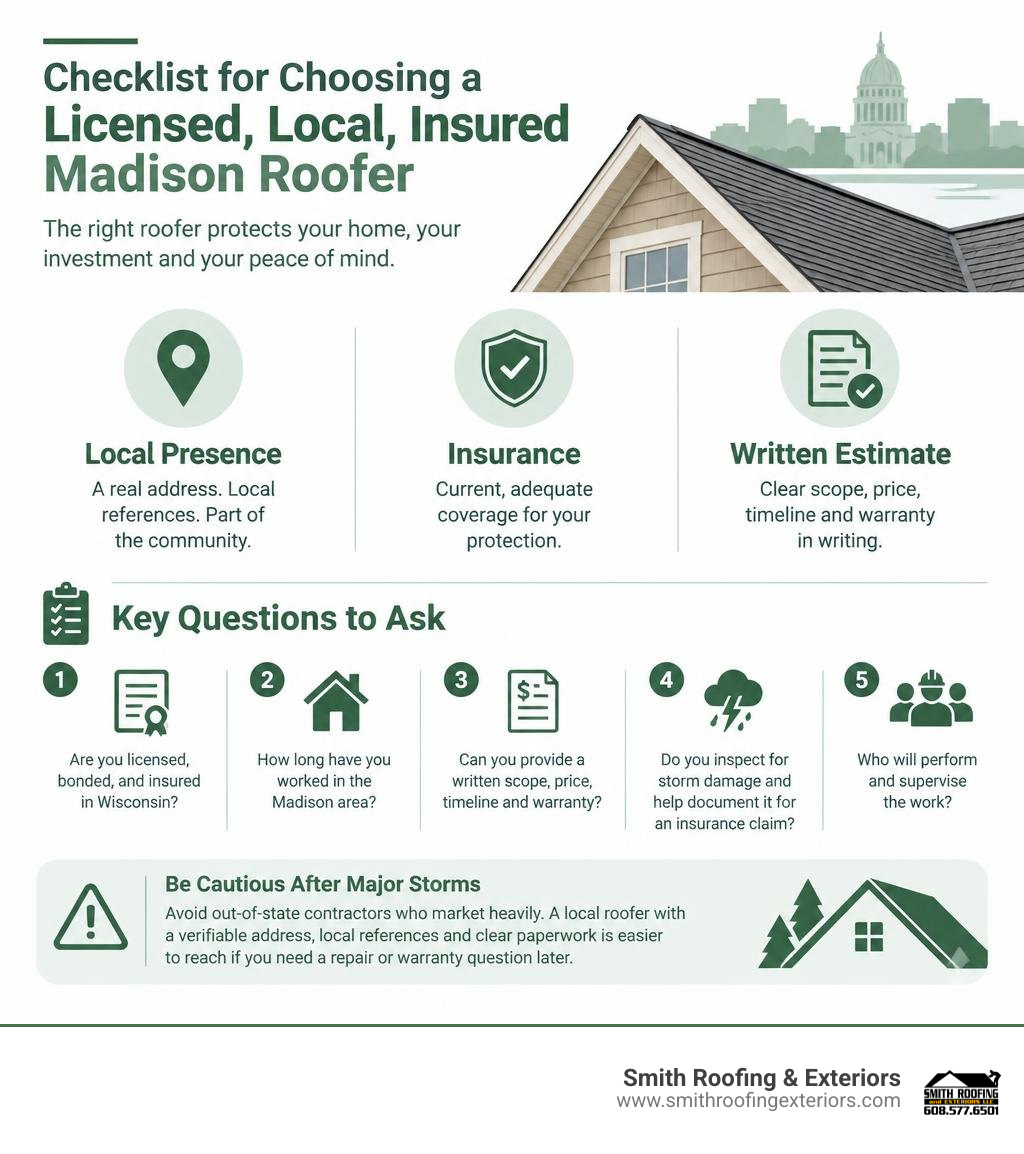
Before hiring a roofer, verify three things: a real local presence, current insurance, and a detailed written estimate. Madison roofs face snow, ice dams, wind, hail, and heavy rain, so the right contractor should also explain the materials, ventilation, flashing, cleanup, and warranty included in the job.
Use these questions to narrow your options:
- Are you licensed, bonded, and insured in Wisconsin?
- How long have you worked in the Madison area?
- Can you provide a written scope, price, timeline, and warranty?
- Do you inspect for storm damage and help document it for an insurance claim?
- Who will perform and supervise the work?
Be cautious after major storms. Some out-of-state contractors market heavily in affected neighborhoods, but a local roofer with a verifiable address, local references, and clear paperwork is often easier to reach if a repair or warranty question comes up later.
I’m Matt Smith, owner of Smith Roofing & Exteriors. I work directly with homeowners who need dependable roofers Madison residents can turn to for clear advice on roofing, siding, gutters, maintenance, and weather-related repairs.
Essential Qualifications: Licensing, Insurance, and Local Verification for Roofers Madison
Choosing the right roofing contractor to safeguard your home is one of the most critical decisions you will make as a property owner. In Dane County and across Southeastern Wisconsin, our roofs endure a demanding climate cycle—from sub-zero winter temperatures and heavy snow loads to spring hail and humid summer thunderstorms. Navigating these regional extremes requires seasoned expertise, proper trade credentials, and an unwavering commitment to local building standards.
Unfortunately, severe weather often attracts transient storm chasers who knock on doors, offer fast solutions, and disappear as soon as the weather clears. Protecting your investment begins with thorough contractor screening. Before signing any contract or handing over an insurance check, you must verify credentials, ensure adequate insurance coverage, and confirm an established presence right here in Wisconsin.
1. Are You Fully Licensed, Bonded, and Insured in Wisconsin?
The first question you should always ask addresses legal legitimacy. In the state of Wisconsin, reputable contractors must hold proper credentials issued by the Wisconsin Department of Safety and Professional Services. These include a Dwelling Contractor Certification and a Dwelling Contractor Qualifier license, which verify that the professional is knowledgeable about state building codes and safety regulations.
Working with an unbonded or uninsured contractor places enormous financial risk directly onto the homeowner. If an uninsured worker slips on an icy pitch or suffers an injury on your property, you could be held legally and financially liable for medical costs. Similarly, if an improper installation leads to structural water damage or an interior collapse, an uninsured company lacks the liability coverage to compensate you.
When evaluating potential contractors, request proof of:
- General Liability Insurance: Covers accidental damage to your home, landscaping, windows, and surrounding property during the build.
- Worker’s Compensation Insurance: Protects all crew members on your roof, ensuring complete medical and wage coverage in the event of an accident.
- Wisconsin State Licensure: Confirms active standing with the Wisconsin DSPS.
To dig deeper into the necessary documentation and legal protections, check out The Ultimate Guide to Madison Roofing Contractors for a step-by-step verification roadmap.
2. How Long Have You Operated Locally in the Madison Area?
Longevity and local roots matter tremendously in the exterior construction industry. A company that has operated in Southern and Southeastern Wisconsin for years has a proven track record, established relationships with local municipal permitting offices, and an understanding of the microclimates affecting our area.
Following heavy windstorms or severe hail events, neighborhoods frequently see a sudden spike in temporary yard signs placed by out-of-state contractors looking for quick insurance payouts. While their sales presentations might sound polished, these transient operations often lack a permanent physical address in Wisconsin. If an installation issue, hidden leak, or shingle blow-off occurs two winters down the road, finding them to honor a workmanship warranty can be virtually impossible.
Ask prospective contractors for:
- A verifiable physical business address in Southern Wisconsin (not merely a temporary P.O. Box).
- References from past clients in Madison, Jefferson, Lake Mills, Fort Atkinson, or neighboring communities.
- Proof of community standing through public directories and verified reviews from long-term local customers.
Working with an established local roofer ensures that when you pick up the phone with a question, you speak directly with professionals who live and work in your area.
Manufacturer Certifications and Warranty Protection
A dependable roof requires two equally important components: premium-grade materials and flawless installation. Roofing manufacturers recognize that the vast majority of early roof failures stem from installation errors rather than defective materials. Because of this, top manufacturers establish strict certification programs to vet, train, and endorse elite roofing companies.
3. What Manufacturer Certifications Do Your Roofers Madison Hold?

Factory certifications serve as third-party validation of a contractor’s technical skill, financial stability, and ethical business practices. Leading manufacturers like GAF—North America’s largest roofing manufacturer—offer advanced training programs to ensure shingles, starter strips, ridge caps, and leak barriers are installed in strict accordance with engineering specifications.
Top-tier credentials, such as GAF Master Elite® status or President’s Club recognition, are achieved by only a tiny fraction of roofing contractors across the country. To earn and maintain these distinctions, roofers must:
- Maintain continuous licensing and robust insurance coverage.
- Undergo ongoing factory training on advanced installation methods.
- Demonstrate an outstanding track record of customer satisfaction in their local communities.
- Comply fully with regional building codes and manufacturer installation guidelines.
Hiring a factory-certified contractor ensures your roof is installed to exact standards, keeping all factory warranties fully intact.
4. What Workmanship and Material Warranties Do You Provide?
Understanding the difference between material warranties and workmanship guarantees is essential when investing in a new roof.
- Material Warranties: Issued by the shingle manufacturer, these protect against product defects, premature granule loss, and manufacturing flaws. Standard manufacturer warranties often feature proration after the first 10 years, meaning coverage decreases over time. However, working with a certified contractor unlocks enhanced, non-prorated system warranties (such as Golden Pledge® or System Plus® coverage) that provide extended, 100% defect coverage for up to 50 years.
- Workmanship Warranties: Issued directly by your roofing contractor, these cover installation labor, flashing seals, penetrations, and structural integration. If a flashing detail fails or a shingle blows off due to improper nailing, the contractor is responsible for repairing the issue at zero cost to you.
Always confirm that your workmanship warranty is clearly stated in writing, includes specific coverage durations, and outlines the transferability terms should you choose to sell your home in the future.
5. What Specific Roofing Materials Do You Recommend for Dane County Climate?
Wisconsin’s severe seasonal shifts place immense thermal and mechanical stress on residential roofing systems. The winter freeze-thaw cycles encourage ice dam formation, heavy snow packs add significant load, and summer heat pushes attic temperatures to extreme levels.
A knowledgeable local contractor will tailor a complete roofing assembly designed specifically for Dane County weather conditions:
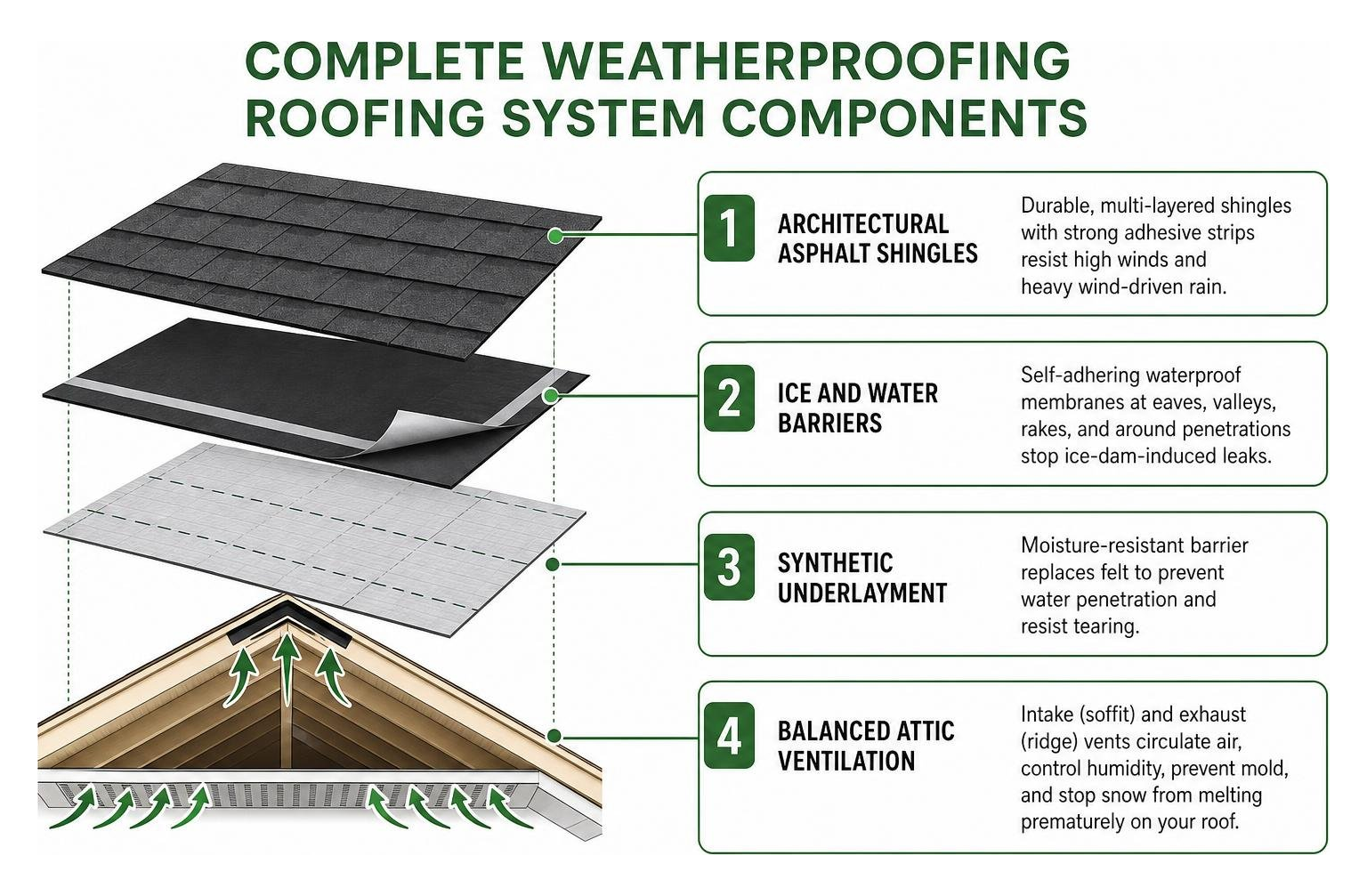
Key components of a resilient local installation include:
- Architectural Asphalt Shingles: Designed with multiple laminated layers, fiberglass mats, and robust adhesive strips that resist high winds and heavy wind-driven rain.
- Ice and Water Barriers: Self-adhering waterproof membranes installed along all eaves, valleys, rakes, and around roof penetrations (like chimneys and skylights) to stop ice-dam-induced leaks.
- Synthetic Underlayment: A moisture-resistant barrier that replaces traditional organic felt, preventing water penetration and resisting tearing during installation.
- Balanced Attic Ventilation: A calibrated combination of intake (soffit) and exhaust (ridge) vents that circulates air, controls humidity, prevents attic mold, and stops snow from melting prematurely on your roof surface.
When planning exterior upgrades, combining high-performance roofing with durable home wrapping ensures complete defense. You can explore modern solutions for roofing and siding installation across Madison to see how cohesive exterior systems enhance durability and curb appeal.
Project Scope, Timeline, and Storm Damage Experience
A successful roof replacement requires meticulous scheduling, clear communication, and comprehensive property protection from start to finish. Knowing what to expect each day eliminates surprises and keeps your home life running smoothly.
6. How Do You Handle Storm Damage Assessment and Insurance Claims?
Severe weather across Southern Wisconsin can leave hidden damage in its wake. Hail strikes bruise shingle mats, knock off protective granules, and crack fiberglass substrates, while high-velocity winds lift shingle tabs and break critical sealant bonds. Left unaddressed, these issues allow water to seep under shingles, rotting the roof decking and damaging interior ceilings.
When storm damage strikes, an experienced contractor should:
- Perform a thorough, hands-on roof and attic inspection to identify both visible and hidden structural impacts.
- Document hail strikes, wind creasing, gutter dings, and siding damage with high-resolution photos and detailed reports.
- Assist you during the insurance claims process by meeting with your insurance adjuster on-site to ensure all storm damage is accurately accounted for in their estimate.
- Provide prompt emergency services, including 24/7 tarping and temporary leak containment, to prevent secondary interior damage.
Protecting your property against water intrusion requires proactive attention. For commercial property owners and residential managers alike, exploring commercial and residential leak prevention strategies can help you stop minor moisture penetration before it becomes an expensive structural problem.
7. What Is the Step-by-Step Roof Replacement Process and Timeline?
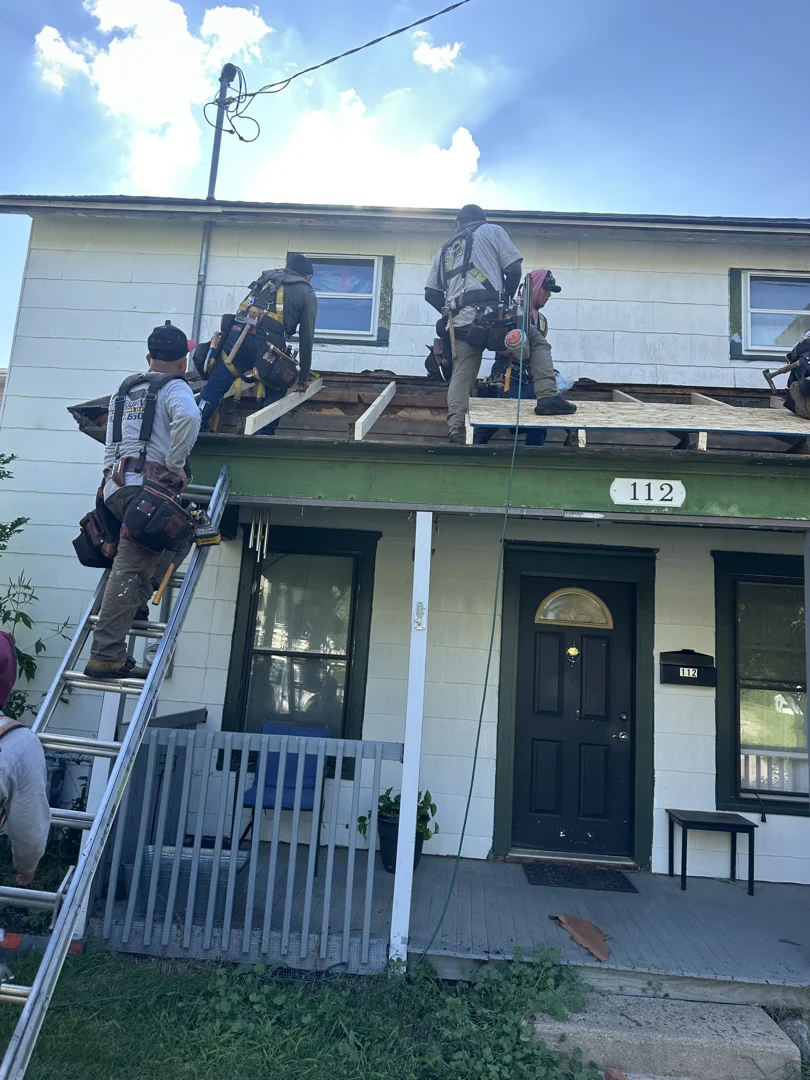
A standard residential roof replacement typically takes between 1 to 3 days, depending on your home’s square footage, the pitch of the roof, and the weather. Here is how a professional crew manages the workflow:
- Property Preparation: Tarps, plywood shields, and catch nets are placed around your home to protect siding, windows, decks, flower beds, and landscaping from falling debris.
- Complete Tear-Off: Old shingles and underlying felt are removed completely down to the bare wood sheathing. Installing new shingles over old layers is never recommended, as it hides underlying rot and adds unnecessary weight.
- Decking Inspection and Repair: Every sheet of plywood or oriented strand board (OSB) is checked for softness, water damage, and rot. Weak boards are replaced immediately to ensure a solid structural base.
- Underlayment and Flashing Installation: Ice and water shields are applied to vulnerable zones, synthetic underlayment is rolled across the deck, and heavy-gauge drip edges and flashing are secured.
- Shingle Installation: Shingles are installed using precision nailing patterns tailored to meet manufacturer wind warranty requirements.
- Ventilation and Ridge Caps: Ridge vents, pipe boots, and specialized cap shingles are installed along peaks and hips.
- Site Cleanup and Magnetic Sweep: Crews systematically rake the yard, clear gutters, haul away waste containers, and run industrial magnetic sweeps across lawns, driveways, and walkways to remove stray nails.
8. Will the Work Be Completed by In-House Crews or Subcontractors?
Many roofing companies rely entirely on third-party subcontracted crews without maintaining direct, on-site supervision. While subcontracting is common across the construction sector, problems arise when there is a lack of accountability, inconsistent training, or no dedicated site manager.
Always ask who will manage and oversee your project daily:
- Dedicated Project Manager: Is there a designated foreman on-site who speaks fluent English, understands your specific scope of work, and can answer your questions in real time?
- Crew Consistency: Have the installers received direct training on manufacturer specifications and safety standards?
- Safety Compliance: Does the crew adhere strictly to OSHA safety protocols, including harness tie-offs, eye protection, and secure ladder setups?
Clear lines of supervision guarantee that the crew treats your home with respect and completes the installation according to the highest workmanship standards.
Pricing, Contracts, and Local Value Comparison
Investing in a new roof represents a significant financial commitment. Transparent pricing, clear contracts, and comprehensive scopes of work protect you from unexpected budget overruns.
9. What Factors Determine the Estimate and Are There Hidden Costs?
A vague, single-page estimate that lists only a single lump-sum number is a major red flag. High-quality roofing estimates provide itemized transparency, detailing materials, labor, permits, and waste disposal.
Several key variables influence the overall cost of a roof replacement:
- Roof Size and Pitch: Measured in roofing “squares” (100 square feet). Steeper roofs require specialized safety harnesses, scaffolding, and slower, more deliberate installation techniques.
- Architectural Complexity: Multiple valleys, dormers, skylights, turrets, and chimneys require extensive custom metal flashing and detailed hand-sealing.
- Underlying Decking Condition: If inspections reveal widespread wood rot or deteriorated planks beneath the old shingles, additional plywood sheets must be installed. A reputable roofer will list their per-sheet replacement rate directly on the contract upfront.
- Material Quality: Premium architectural or impact-resistant shingles cost more than standard 3-tab shingles, but provide substantially greater longevity and storm resistance.
- Permits and Waste Management: Dedicated haul-away dumpsters, recycling fees, and municipal building permit costs should all be explicitly stated.
10. How Do Local Roofers Madison Compare to National Franchises?
When shopping for roofing services, homeowners often weigh local, owner-operated businesses against massive national franchises or corporate aggregators. While national chains spend heavily on advertising campaigns, local contractors provide personalized service, community accountability, and responsive long-term support.
| Feature | Local Madison Area Contractor | Large National Chain / Aggregator |
|---|---|---|
| Community Roots | Long-term presence in Southern WI; accountable to neighbors | High turnover; corporate offices often located out of state |
| Pricing Structure | Fair, transparent pricing with lower corporate overhead | High overhead costs passed down through aggressive sales margins |
| Customer Service | Direct communication with owners and dedicated local managers | Call centers, automated phone trees, and rotating sales reps |
| Emergency Response | Fast 24/7 emergency response for wind and storm damage | Slower dispatch times; limited off-hours availability |
| Warranty Support | Direct, local warranty service honoring labor and materials | Complex claims processes routed through national departments |
| Climate Knowledge | Deep familiarity with Wisconsin freeze-thaw cycles and ice dams | Standardized approaches that may overlook regional climate needs |
Staying informed about ongoing regional construction trends helps property owners make sound exterior choices. You can explore local Dane County project updates to review local installations, case studies, and practical maintenance tips.
Frequently Asked Questions About Hiring Madison Roofers
How much does a typical roof replacement cost in Madison, WI?
The average cost of a residential roof replacement in the Madison area typically ranges between $8,500 and $18,000 for standard architectural asphalt shingles on an average-sized single-family home. Exact pricing depends on the overall square footage, roof pitch, complexity (dormers and valleys), the number of tear-off layers, and the extent of any damaged plywood decking that needs replacement.
How can I spot and avoid out-of-state storm-chasing contractors?
Watch out for aggressive door-to-door sales representatives who appear immediately after a major hail or wind storm. Warning signs include out-of-state license plates on work trucks, temporary yard signs lacking a verifiable local street address, high-pressure demands to sign over insurance checks immediately, and offers to “waive” or cover your insurance deductible (which is illegal under insurance regulations). Always verify physical location and state licensing through the Wisconsin DSPS before signing.
How often should Madison homeowners schedule a professional roof inspection?
We recommend having your roof professionally inspected at least once every two to three years, as well as after any major severe weather event involving hail or damaging wind gusts. Regular inspections allow specialists to catch minor issues—such as cracked pipe boots, loose flashing, or damaged shingle granules—before seasonal freeze-thaw cycles turn them into costly interior leaks.
Conclusion
Replacing or repairing your roof is a major investment that protects everything beneath it. By asking these ten essential questions, you can cut through sales pitches, identify qualified local tradespeople, and secure a durable, weather-resistant roof for your property.
At Smith Roofing & Exteriors, we take immense pride in delivering honest communication, exceptional craftsmanship, and dependable exterior solutions across Fort Atkinson, Lake Mills, Jefferson, Burlington, Delavan, Elkhorn, Lake Geneva, Walworth, Edgerton, and the greater Madison region. Whether you are dealing with recent storm damage, planning a proactive roof upgrade, or need dependable siding and gutter installation, our team is here to help.
Take the first step toward lasting peace of mind—schedule comprehensive roofing and siding installation in Madison WI with our experienced local team today.