Why Choosing the Longest Lasting Flat Roof Material Is One of the Most Important Decisions You’ll Make
If you’re trying to find the longest lasting flat roof material for your home or building in Wisconsin, here’s the short answer:
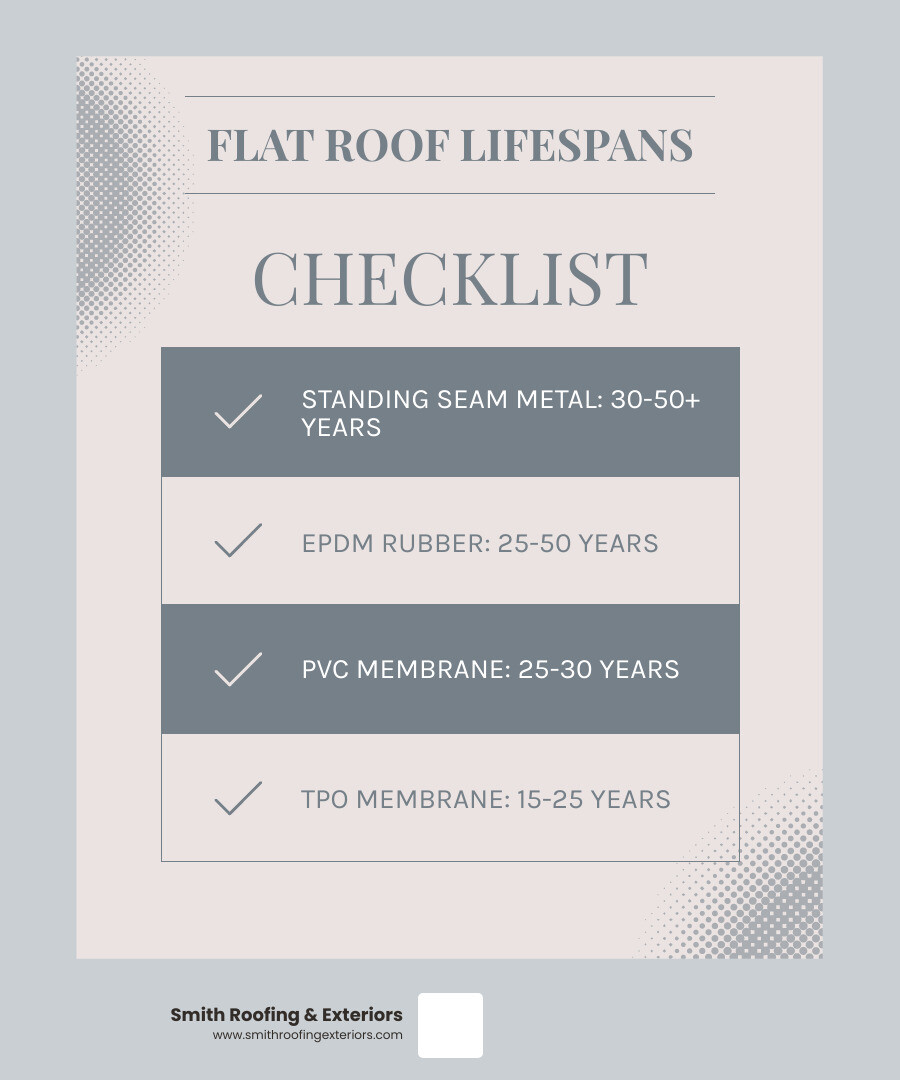
| Material | Typical Lifespan | Best For |
|---|---|---|
| Standing Seam Metal | 30-50+ years | Premium durability, low maintenance |
| EPDM Rubber | 25-50 years | Cold climates, cost-effective longevity |
| PVC Membrane | 25-30 years | Chemical resistance, grease exposure |
| TPO Membrane | 15-25 years | Energy efficiency, large commercial roofs |
| Modified Bitumen | 15-20 years | Complex geometry, budget installs |
| Built-Up Roofing (BUR) | 20-30 years | High-traffic, impact resistance |
Standing seam metal and EPDM rubber are the top two performers, with documented lifespans reaching 50 years or more under the right conditions.
Flat roofs are misleadingly named. They’re not actually flat — they require a slight pitch of at least 1/4 inch per foot to drain properly. And that small detail is just one of many things that separates a roof that lasts 15 years from one that lasts 50.
Wisconsin’s weather makes the stakes even higher. Freeze-thaw cycles, heavy snow loads, and spring thaw runoff all put serious pressure on flat roof membranes. Pick the wrong material — or the right material installed poorly — and you’ll be dealing with ponding water, cracked seams, and interior damage long before your roof should be failing.
This guide breaks down the top flat roofing materials by real-world lifespan, not just manufacturer claims, so you can make a smart, long-term investment in your property.
I’m Matt Smith, owner of Smith Roofing & Exteriors, and after years of installing and inspecting flat roofs across Wisconsin, I’ve seen which materials truly deliver the longest lasting flat roof performance and which ones fall short when our climate puts them to the test. Let’s dig into what actually holds up.
The Top Contenders for Longest Lasting Flat Roof Material
When we talk about the longest lasting flat roof material, we aren’t just looking at how long a piece of material can sit in a lab. We’re looking at how it handles the brutal reality of a January blizzard in Fort Atkinson or a humid July in Lake Geneva.
The “service life” of a roof is the period during which it remains watertight and structurally sound. While many factors influence this, the chemistry and physical properties of the material are the foundation. For instance, according to the Longevity, Long-Term Performance, & Service Life – EPDM Roofing Association, EPDM has a documented 38-year average service life, with many systems still performing at the 50-year mark.
However, even the best material can be compromised by external events. It is always wise to know How To Check Your Flat Roof For Hail Damage After A Storm to ensure a freak weather event doesn’t cut that 50-year lifespan short.
Standing Seam Metal: The Longest Lasting Flat Roof Material Gold Standard

If budget isn’t your primary concern and you want the absolute longest lasting flat roof material, standing seam metal is the “fix and forget” solution. While most people associate metal with steep-sloped barns, modern engineering allows standing seam panels to be installed on pitches as low as 1/4:12.
- Lifespan: Easily 50 years, and often much longer. Copper standing seam roofs can literally last centuries, though 24-gauge steel is the more common choice for our Southeastern Wisconsin customers.
- Thermal Expansion: Metal roofs are designed with a locking mechanism that allows the panels to expand and contract freely as the temperature changes. This is vital in Wisconsin, where the temperature can swing 40 degrees in a single day.
- Finish: High-quality panels use Kynar 500 painted finishes, which resist chalking and fading for decades.
- Maintenance: Aside from checking the flashings and ensuring the gutters are clear, metal requires almost zero maintenance. It’s also 100% recyclable at the end of its long life.
EPDM Rubber: The 50-Year Longest Lasting Flat Roof Material Workhorse
EPDM (Ethylene Propylene Diene Monomer) is often called the “workhorse” of the industry. It has been in use since the 1960s, giving us more real-world data on its longevity than almost any other modern membrane.
- The 60-Mil Standard: While EPDM comes in 45-mil thickness, we always recommend 60-mil (about the thickness of a nickel) or even 90-mil for those wanting maximum durability. A thicker membrane provides a much higher margin for error against punctures and weathering.
- Climate Resilience: EPDM is a synthetic rubber that remains flexible in subzero temperatures. It won’t crack when the thermometer dips to -20°F in Jefferson or Elkhorn.
- UV Resistance: It is naturally resistant to UV rays and ozone. While black EPDM absorbs heat (which can actually help melt snow in the winter), white options are available if cooling costs are your main priority.
For a deeper dive into why this rubber is so resilient, check out this EPDM Roofing Systems Guide | Pros, Cons & Longevity .
PVC and TPO: High-Performance Thermoplastic Membranes
If you’ve looked at the roof of a local Walmart or a new restaurant in Delavan, you’ve likely seen a white, reflective surface. These are thermoplastic membranes: PVC (Polyvinyl Chloride) and TPO (Thermoplastic Polyolefin).
- Heat-Welded Seams: Unlike EPDM, which uses adhesive tapes, PVC and TPO seams are heat-welded with hot air. This creates a physical bond that is actually stronger than the membrane itself.
- PVC for Restaurants: PVC is the gold standard for restaurants because it is highly resistant to animal fats, grease, and chemicals that come out of kitchen exhaust vents. Grease will eventually eat through EPDM, but PVC stands its ground.
- TPO Reflectivity: TPO is highly reflective, making it a “cool roof” that can significantly lower energy bills during Wisconsin’s humid summers. However, TPO is a newer technology (since the 90s), so its 25-year lifespan estimates are based on shorter historical data than EPDM.
You can learn more about the technical side of these vinyl systems in this PVC Roofing • Pros, Cons, Membranes, Lifespan & More .
Critical Factors Influencing Flat Roof Longevity
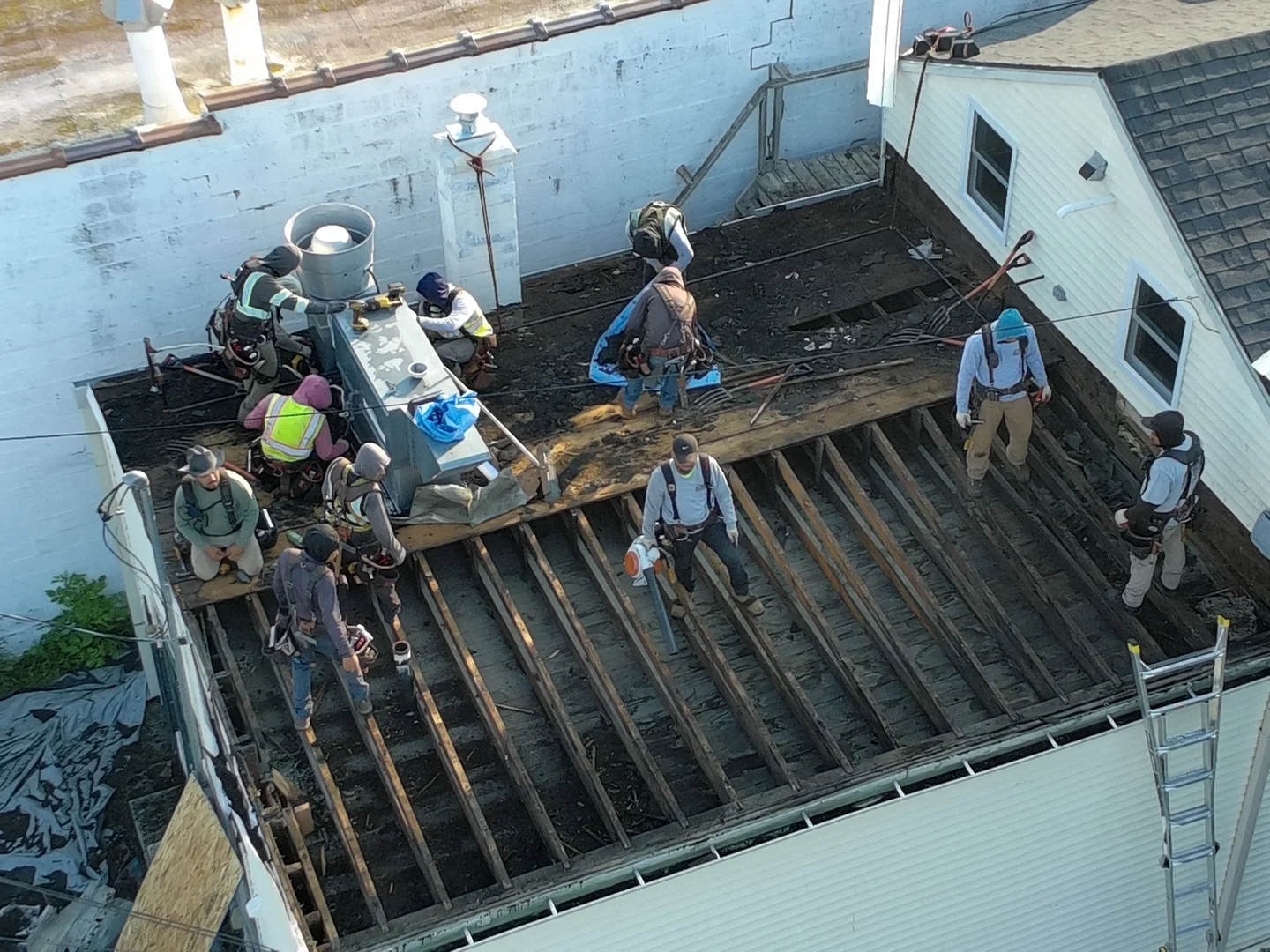
Choosing the longest lasting flat roof material is only half the battle. The other half is how that material is integrated into your building’s specific architecture. A 50-year material will fail in five years if the installation is botched or the drainage is ignored.
When deciding between systems, it’s helpful to understand the fundamental differences in how these roofs function compared to traditional homes. We break this down in our guide on Flat Vs Sloped Commercial Roofing Which Is Best.
The Importance of Proper Slope and Drainage
The biggest enemy of a flat roof isn’t snow or sun — it’s “ponding water.” In the roofing world, ponding is defined as water that remains on the roof for more than 48 hours after a rain.
If water sits on a membrane, it acts like a magnifying glass for UV rays, accelerating the breakdown of the material. It also adds immense weight and increases the risk of a leak through a seam. To prevent this, every flat roof needs:
- A 1/4-inch pitch: This ensures water moves toward the drains.
- Tapered Insulation: If your roof deck is truly flat, we install tapered foam boards to create an artificial slope.
- Clear Scuppers and Gutters: These are the exit points for the water. If they are clogged with leaves, your roof becomes a swimming pool.
Wisconsin Climate Challenges: Ice and Snow Loads
In Southeastern Wisconsin, our roofs have to carry hundreds of pounds of snow for months at a time. This creates two major issues:
- Thermal Shock: The rapid expansion and contraction of the roof as it goes from a freezing night to a sunny afternoon can cause inferior materials to crack or pull away from the flashings.
- Structural Stress: The weight of wet snow can cause “deflection” (a slight bowing of the roof deck), which creates new low spots where water can pond during the spring thaw.
If you find yourself with a leak during a heavy snow season, don’t panic. There are ways to handle it without breaking the bank, as we explain in How To Repair Flat Roof On A Budget.
Cost vs. Value: Investing in a 50-Year Roof
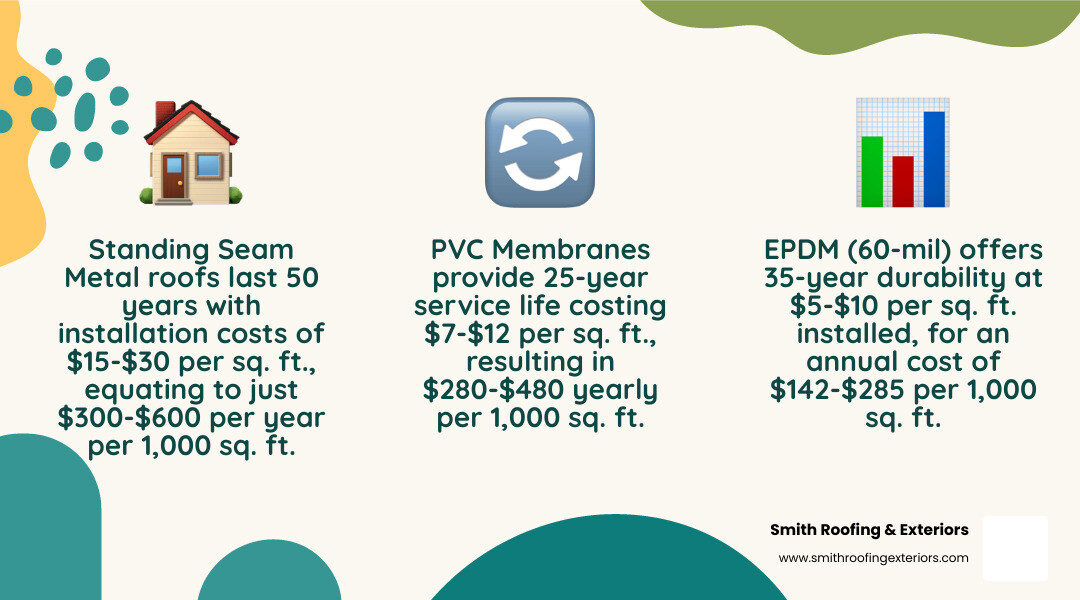
When looking for the longest lasting flat roof material, you have to look past the initial “sticker shock” and calculate the Cost Per Year. A “cheap” roof that needs replacement in 12 years is actually much more expensive than a premium roof that lasts 40.
| Material | Est. Install Cost (per sq. ft.) | Expected Life | Cost Per Year (per 1,000 sq. ft.) |
|---|---|---|---|
| Standing Seam Metal | $15.00 – $30.00 | 50 Years | $300 – $600 |
| EPDM (60-mil) | $5.00 – $10.00 | 35 Years | $142 – $285 |
| PVC Membrane | $7.00 – $12.00 | 25 Years | $280 – $480 |
| TPO Membrane | $5.50 – $9.00 | 20 Years | $275 – $450 |
| Modified Bitumen | $4.50 – $8.00 | 15 Years | $300 – $533 |
Note: Prices are estimates for 2026 and vary based on insulation requirements and roof complexity.
As you can see, EPDM often provides the best “bang for your buck” in terms of annual cost, while Metal offers the ultimate longevity for those who never want to think about their roof again. For more detailed comparisons of these membranes, refer to the Flat Roof Materials Compared: TPO, EPDM, PVC, and Modified Bitumen (2026 Guide) — RoofRanked.
Maintenance Strategies to Maximize Your Roof’s Life
Even a 50-year roof needs a “doctor’s visit” once in a while. We recommend a professional inspection twice a year: once in the spring to see how it handled the winter, and once in the fall to prepare for the snow.
Key maintenance steps include:
- Clearing Debris: Leaves and twigs can trap moisture and block drains.
- Checking Flashings: Most leaks don’t happen in the middle of the roof; they happen at the edges, vents, and chimneys.
- Seam Integrity: On rubber roofs, we check for “fish-mouthing” (where a seam begins to peel up). Catching this early is a $200 fix; waiting until it leaks is a $2,000 problem.
Using the right products for minor repairs is also essential. You can find our recommendations in The Best Roof Sealant For Flat Roofs And Where To Find Them.
Professional Inspections and Waterproofing
In Wisconsin, we often suggest a 5-year waterproofing cycle. This involves a deep cleaning of the membrane and a refresh of the sealants around high-stress areas. Think of it like changing the oil in your car — it’s a small price to pay to ensure the engine (your roof) keeps running for decades.
Frequently Asked Questions about Flat Roof Durability
Which flat roof material has the longest documented track record?
EPDM rubber takes the prize here. While metal has been around longer, EPDM is the first modern synthetic membrane with a proven track record of 40-50 years of continuous service. There are EPDM roofs installed in the 60s and 70s that are still watertight today. For more on EPDM’s history and residential use, see this EPDM Roofing Pros, Cons, Cost & Lifespan (Complete Guide 2026) .
Can you install a metal roof on a completely flat surface?
Technically, no roof should be “completely flat.” However, standing seam metal can be engineered for “low-slope” applications as minimal as a 1/4-inch vertical rise for every 12 inches of horizontal run. At this pitch, the standing seams act like small dams that keep water from ever reaching the fasteners.
Is PVC better than TPO for long-term performance?
“Better” depends on your building. PVC has a longer history and superior resistance to chemicals and fire. However, TPO is generally more affordable and offers excellent reflectivity. If you are a restaurant owner, PVC is non-negotiable. If you own a warehouse in Walworth or Edgerton, TPO might be the more cost-effective choice.
Conclusion
Finding the longest lasting flat roof material doesn’t have to be a guessing game. Whether you choose the indestructible nature of standing seam metal or the time-tested reliability of EPDM rubber, the key to a 50-year roof is a combination of premium materials and local expertise.
At Smith Roofing & Exteriors, we’ve spent years protecting homes and businesses in Fort Atkinson, Lake Mills, and across Southeastern Wisconsin. We know how the local wind, snow, and sun affect these materials, and we don’t cut corners on the details that matter — like drainage, flashing, and membrane thickness.
If you’re ready to invest in a roof that won’t let you down, we’re here to help with transparent pricing and the experienced local team you deserve.
Get more info about flat roofing installation in Madison, WI and Southeastern Wisconsin or contact us today to schedule your free inspection. Let’s build something that lasts.