Why Most Homeowners Struggle With Gutter Repair (And What Actually Works)
Gutter repair is one of those home maintenance tasks that looks simple until it isn’t. Here’s a quick overview of what you need to know:
Quick answers:
- Most common signs you need repair: sagging sections, leaking joints, water stains on fascia, overflow during rain, pooling water near your foundation
- Repair vs. replace: Repair isolated leaks and loose hangers; replace when gutters are over 20 years old, widely corroded, or pulling away in multiple spots
- How often to clean: At least twice a year — once in spring, once in fall
- Biggest risk of waiting: Foundation damage, basement flooding, and wood rot that can cost over $10,000 to fix
- Best long-term upgrade: Seamless aluminum gutters with micro-mesh guards reduce leaks and cut cleaning frequency by up to 75%
Most homeowners don’t think about their gutters until something goes wrong. A small leak becomes a stained soffit. A loose hanger turns into a sagging run that pours water right next to the foundation. By then, the damage has already started.
Wisconsin weather makes this worse. Freeze-thaw cycles pry open seams. Heavy snow loads stress mounting brackets. Fall leaves from oaks and maples pack into solid, water-trapping masses. Your gutters are working harder here than they would almost anywhere else.
The good news? Most gutter problems are fixable — if you catch them early and address the root cause instead of just slapping sealant over the symptom.
I’m Matt Smith, owner of Smith Roofing & Exteriors, and I’ve spent years helping Wisconsin homeowners diagnose and fix gutter repair problems before they turn into expensive structural damage. In this guide, I’ll walk you through everything you need to know to get it right.
Why Traditional Gutter Repair Fails: The Root Causes of Damage
If you have tried to patch a leaky gutter in the past only to watch it drip again during the next heavy storm, you are not alone. Traditional DIY repairs fail because they usually target the symptoms rather than the root causes.
The most common reason a DIY patch fails is improper surface preparation. Homeowners often buy a tube of hardware store mastic or caulk and smear it directly over a leaking joint. If you do not completely scrape away the old, failing sealant and dry the metal surface, the new sealant will fail to bond. During the next big freeze-thaw cycle in Southeastern Wisconsin, the water trapped in the joint will expand, prying the seam wide open again.
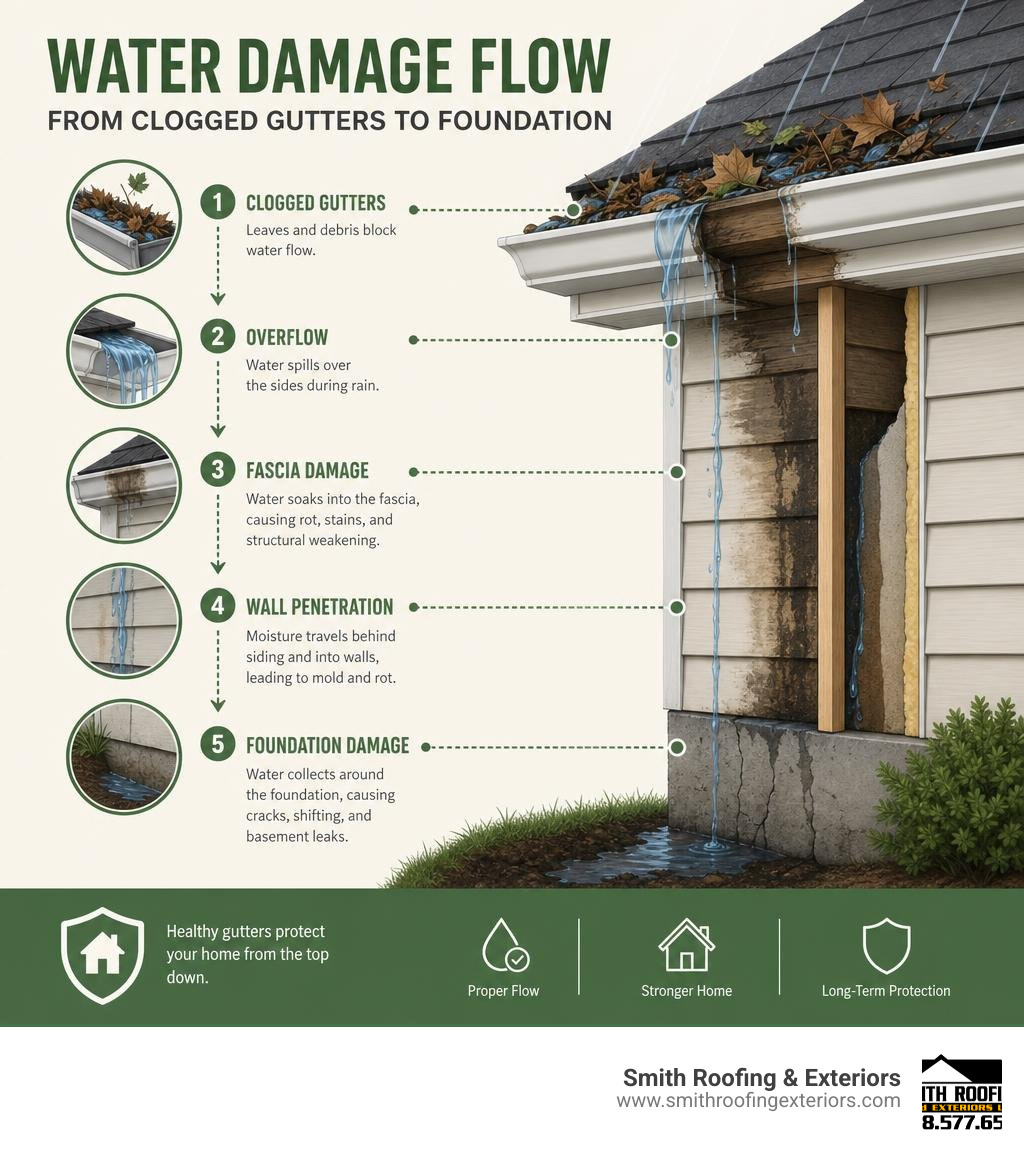
Beyond simple leaks, the structural failures of a gutter system are deeply interconnected with the rest of your home’s exterior envelope. When gutters become clogged with leaves, twigs, and organic debris, they trap standing water. This water adds immense weight to the system. A standard K-style gutter filled with water can weigh several hundred pounds, putting extreme stress on the fasteners.
Over time, this weight causes the gutters to sag. When gutters sag, they pull away from the fascia board. This creates a gap where water can overflow backward, running down your fascia, soffits, and siding.
The consequences of ignoring these early warning signs are severe. When water continuously overflows or leaks behind the gutter line, it rots the wood of your fascia boards. Once the fascia board softens, it can no longer securely hold the gutter hangers. This is a primary cause of structural gutter failure.
Worse yet, the water that spills over the edge of a clogged or damaged gutter pools directly at the base of your home. This leads to high hydrostatic pressure against your basement walls, which forces moisture through concrete pores and causes basement flooding, foundation cracks, and mold growth.
To learn more about how these issues impact your property, read our detailed guide on How Clogged Gutters Damage Your Home and Your Wallet.
Ignoring these issues is a costly gamble. Repairing foundation cracks, restoring flooded basements, and replacing rotten roof rafters can easily cost over $10,000. Understanding these risks is the first step toward protecting your home. For a deeper dive into these hazards, check out our article on Gutter Repair: The Dangers of Ignoring.
The Ultimate Guide to Gutter Repair and Diagnostics
To succeed at gutter repair, you must adopt a systematic approach to diagnostics and repair. You cannot simply guess where the water is coming from; you have to prove it.
Here is the systematic diagnostic process we use at Smith Roofing & Exteriors to identify and fix gutter issues:
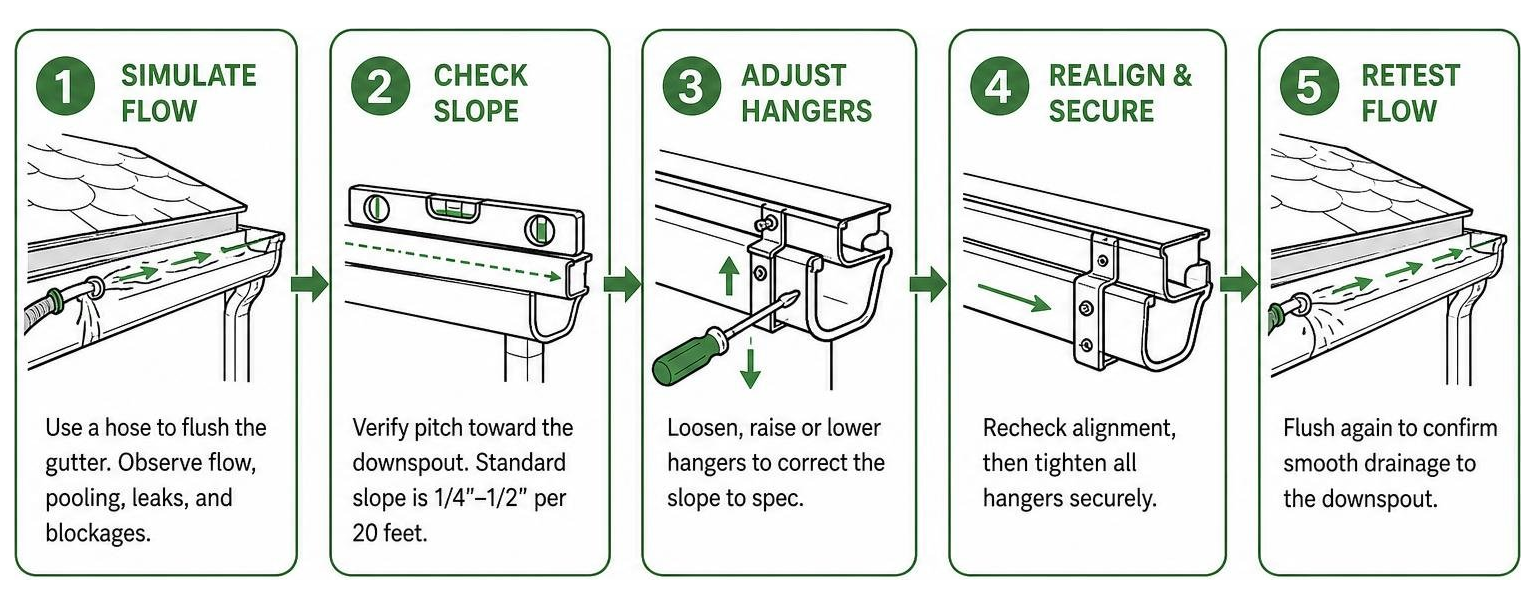
1. Perform a Simulated Flow Test
Do not wait for a rainstorm to figure out why your gutters are failing. Grab a garden hose, climb safely to the far end of the gutter run, and flush the system with water. Observe how the water travels. Does it pool in the middle of the run? Does it leak from a specific joint? Does it back up at the downspout? This test reveals hidden blockages and pitch issues immediately.
2. Calibrate the Slope (The Pitch)
Gutters are not meant to run perfectly level. To drain correctly, a gutter must have a slight downward slope toward the downspout. The industry standard is a 1/4-inch to 1/2-inch decline for every 20 feet of gutter run. If your flow test reveals standing water, you must detach the support hangers, use a level to recalculate the pitch, and re-secure the run.
3. Replace and Space Support Hangers
If your gutters are sagging, the original fasteners are likely loose or spaced too far apart. Support hangers should be spaced every 2 feet along the gutter system to handle heavy snow loads in Southeastern Wisconsin. When replacing hangers, make sure you drive the screws directly into solid, uncompromised fascia wood. If the wood is soft and rotten, the new screws will not hold, and you must replace the fascia board first.
4. Seal Leaks and Joints Correctly
To fix a leaking seam or end cap, you must do it right. First, scrape away all old, dry sealant using a wire brush or putty knife. Clean the area thoroughly with rubbing alcohol and let it dry completely. Apply a high-quality, commercial-grade flexible gutter sealant along the inside of the trough. Do not use standard silicone or mastic; you need a weather-rated sealant that can expand and contract with seasonal temperature swings.
For more indicators that your system needs professional attention, read our article on 5 Indications That It’s Time for Gutter Repair. If you are specifically dealing with dripping joints, you will find our guide on Gutter Repair for Leaks: Fix Your Dripping Joints Before It Pours highly valuable. Temporary quick-fixes will not stand up to our winters, which is why we recommend high-quality, flexible sealants over cheap alternatives. For more on this, check out Don’t Let Gutter Leaks Ruin Your Home (No Mastic Required).
Gutter Repair vs. Replacement: Making the Right Investment
As we head into July 2026, homeowners are looking for ways to maximize their home maintenance budgets while protecting their property values. One of the most common questions we get is whether a homeowner should invest in repairing their existing gutters or opt for a full replacement.
Your gutter system has a functional lifespan of about 20 years. If your gutters are approaching this age, or if they have suffered extensive, widespread damage, continuing to patch them is a losing battle. Let’s break down how to make the right choice for your home.
When to Choose Gutter Repair Over Replacement
Gutter repair is the most cost-effective choice when the damage to your system is isolated and the overall structure is still in good shape.
You should choose repair if you are dealing with:
- A single leaking seam or corner joint.
- A few loose hangers that can easily be replaced or tightened.
- Minor storm damage, such as a single dented section from a fallen branch.
- A clogged downspout that simply needs to be cleared and flushed.
If your gutters are relatively new (under 15 years old) and made of high-quality materials, targeted repairs will easily extend their life to the 20-year mark. To understand when repairs are no longer enough, read our article on Understanding When Gutter Replacement Becomes Necessary.
Upgrading Your System to Prevent Future Gutter Repair
If your gutters are sagging along multiple runs, showing extensive rust, or pulling away from rotten fascia boards across your entire roofline, it is time to consider a replacement. Upgrading your system not only protects your home from water damage but also increases your home’s equity and curb appeal.
When replacing your gutters, the most important decision is choosing between traditional sectional gutters and seamless gutters. Traditional gutters are prefabricated in 10-foot to 20-foot sections and pieced together on-site. Every joint between these sections represents a potential leak point.
Seamless gutters, on the other hand, are custom-fabricated on-site from a continuous roll of metal using a specialized machine. Because they have no seams along the straight runs, they eliminate the primary source of gutter leaks.
| Feature | Traditional Sectional Gutters | Seamless Gutters |
|---|---|---|
| Leak Vulnerability | High (joints expand and contract) | Very Low (only at corners and outlets) |
| Installation | DIY-friendly, pieced together | Professional on-site fabrication required |
| Material Share | Declining | Dominant (70% of installations use aluminum) |
| Aesthetics | Visible seams and joints | Clean, continuous lines |
| Lifespan | 10 to 15 years | 20+ years with proper maintenance |
Material choice is also critical for our local climate. Aluminum gutters are the industry standard, accounting for 70% of all gutter installations due to their excellent balance of affordability, rust resistance, and color options.
For historic homes or high-end properties in areas like Lake Geneva or Lake Mills, copper gutters offer an elegant look that adds instant appraisal value. Galvanized steel is another durable option, offering superior strength against heavy snow loads, though it requires regular maintenance to prevent rust.
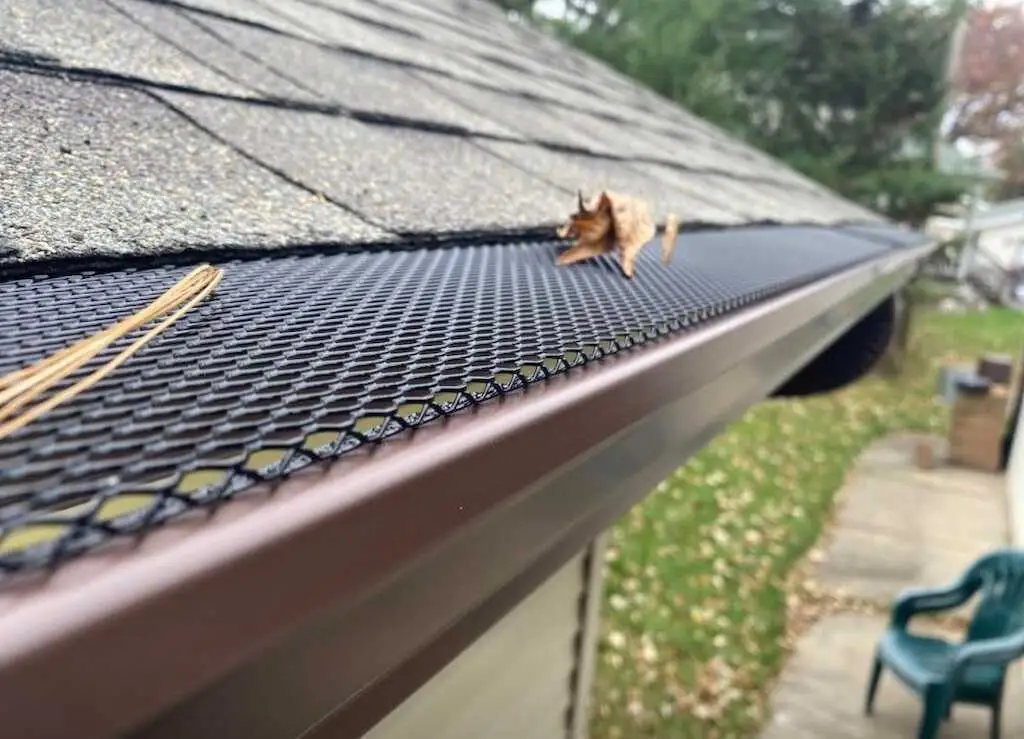
Finally, if you want to drastically reduce the frequency of your gutter maintenance, consider installing gutter guards. High-quality micro-mesh gutter guards prevent leaves, pine needles, and roof grit from entering the trough while allowing rainwater to flow freely. According to industry studies, a quality guard system can reduce gutter cleaning frequency by up to 75%.
To learn more about the signs that indicate your system is ready for an upgrade, read our guides on the Top Signs That It’s Time for Gutter Replacement and How Gutter Repair Can Help Protect Your Roof and Foundation.
Frequently Asked Questions About Gutter Repair
How much does professional gutter repair cost?
The cost of professional gutter repair depends on several factors, including the extent of the damage, the height and complexity of your roofline, and the materials involved. Simple repairs, such as sealing a few leaking joints or replacing a handful of hangers, are highly affordable.
However, if the repair requires replacing sections of damaged wood fascia, rerouting downspouts, or working on a complex multi-story home, the cost will increase. We always recommend getting a transparent, written estimate before starting any work to avoid unexpected expenses.
How often should gutters be cleaned and inspected?
At a minimum, you should clean and inspect your gutters twice a year — once in the spring to clear out winter debris, and once in the late fall after the leaves have finished dropping.
If your property has heavy tree cover, particularly from mature oaks, maples, or pines, you may need to clean them three or four times a year. It is also a good practice to perform a quick visual inspection from the ground after major storms to check for sagging runs or overflowing water.
Do gutter guards eliminate the need for cleaning?
No gutter guard system is 100% maintenance-free. While high-quality micro-mesh guards will reduce your cleaning frequency by up to 75% and prevent major clogs, fine debris like pine needles, pollen, and roof grit can still accumulate on top of the guards over time. You will still need to perform occasional seasonal checks and light cleaning to keep the system working perfectly.
Conclusion
Succeeding at gutter repair is all about addressing the root causes of water diversion issues before they threaten your home’s structural integrity. Whether you are dealing with a minor seam leak or a major structural sag, taking action early is the most cost-effective way to defend your property.
At Smith Roofing & Exteriors, we have spent years serving homeowners across Southeastern Wisconsin, including Fort Atkinson, Lake Mills, Jefferson, Burlington, Delavan, Elkhorn, Lake Geneva, Walworth, and Edgerton. Our experienced local team uses only premium materials, offers transparent pricing, and provides 24/7 emergency services to keep your home safe and dry through every season.
Do not let a small leak turn into a costly foundation repair. Schedule your professional gutter repair today and let us help you protect your home for years to come.