When Your Roof Is Damaged, Here’s What You Need to Know
Roof repair is the process of fixing localized damage to your roof — such as missing shingles, failed flashing, or active leaks — to restore its ability to protect your home from water and weather.
Quick answers at a glance:
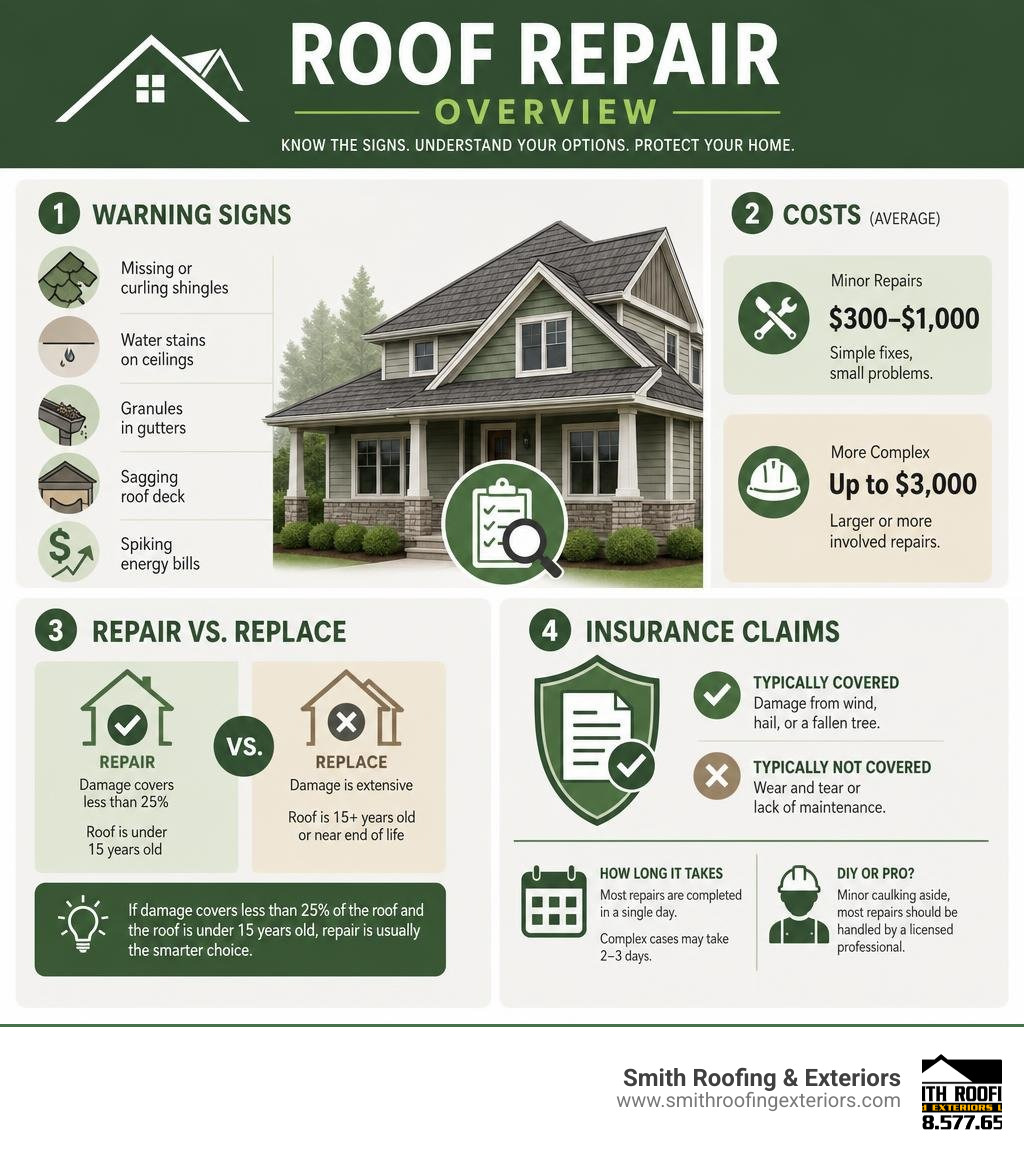
- Most common signs you need a repair: missing or curling shingles, water stains on ceilings, granules in gutters, sagging roof deck, or spiking energy bills
- Average repair cost: $300–$1,000 for minor repairs; up to $3,000 for more complex work
- Repair vs. replace: If damage covers less than 25% of the roof and the roof is under 15 years old, repair is usually the smarter choice
- How long it takes: Most repairs are completed in a single day; complex cases may take 2–3 days
- Does insurance cover it? Yes — if the damage was caused by wind, hail, or a fallen tree. Wear and tear is typically excluded
- DIY or pro? Minor caulking aside, most repairs should be handled by a licensed contractor to avoid safety risks and voided warranties
A small roof problem rarely stays small. What looks like a minor missing shingle from your driveway can quietly allow water to seep into your attic for months — rotting the decking, soaking the insulation, and eventually showing up as a water stain on your living room ceiling. By that point, a $400 repair has often turned into a $4,000 problem.
That’s especially true in rural Wisconsin, where harsh winters, ice dams, hail storms, and freeze-thaw cycles put roofs under constant stress. Acting early almost always costs less than waiting.
I’m Matt Smith, owner of Smith Roofing & Exteriors, and I’ve spent my career helping Wisconsin homeowners navigate roof repair decisions — from emergency storm damage fixes to long-term maintenance plans that add years to a roof’s life. In this guide, I’ll walk you through everything you need to know to make a confident, informed decision about your roof.
Spotting the Warning Signs of Roof Damage
You don’t need to climb a ladder in the middle of a November snowstorm to figure out if your roof is struggling. In fact, we strongly advise keeping your feet firmly on the ground. Most signs of roof damage are highly visible if you know where to look.
By catching these warning signs early, you can schedule a targeted roof repair before water compromises your home’s structural integrity. Here are the most common red flags:
- Water Stains on Ceilings and Walls: If you notice brown, yellow, or gray rings blooming on your drywall, you have an active leak. Water follows gravity, meaning the physical leak on your roof might be several feet away from where the stain actually appears inside.
- Missing, Cracked, or Curling Shingles: High winds can tear shingles clean off, while age and UV exposure cause them to curl, crack, or buckle. Exposed underlayment is highly vulnerable to water penetration.
- Excessive Shingle Granules in Gutters: It is normal for new shingles to shed a few granules. However, if you find piles of sand-like granules in your gutters or at the base of your downspouts, your shingles are losing their protective coating and reaching the end of their lifespan.
- A Sagging Roof Deck: Take a step back and look at your roofline from the street. If you notice sagging sections, dips, or curves, this is a serious structural warning sign. It typically indicates long-term water damage has rotted the underlying plywood decking.
- Clogged Gutters and Water Backup: When gutters are stuffed with leaves and debris, water cannot drain properly. Instead, it pools at the roof’s edge, rotting the fascia boards, soffits, and the edge of the roof deck.
Understanding the difference that a timely roof repair can make is the key to protecting your wallet. Addressing a localized shingle or flashing issue immediately prevents moisture from rotting your rafters, ruining your insulation, or fueling toxic mold growth in your attic.

Deciding Between Repair and Full Replacement
When faced with a damaged roof, the biggest question on every homeowner’s mind is: Do I just need a quick fix, or am I looking at a complete replacement?
An honest contractor should never push you into an expensive replacement if a targeted repair will safely extend your roof’s life. To help you evaluate your options, we use a few simple industry guidelines, including the 25% Rule: if the damaged area covers less than 25% of the total roof surface, a localized repair is almost always the most cost-effective choice.
Here is a direct comparison to help you weigh your options:
| Factor | Roof Repair | Full Roof Replacement |
|---|---|---|
| Average Cost | $300 – $1,000 (Up to $3,000 for major repairs) | $5,000 – $10,000 (Up to $16,000+ for premium systems) |
| Roof Age | Best for roofs under 12–15 years old | Recommended for roofs over 15–20+ years old |
| Scope of Damage | Localized (isolated leaks, minor storm damage) | Widespread (leaks in multiple rooms, brittle shingles) |
| Decking Condition | Sound, dry, and structurally intact | Rotted, water-logged, or sagging plywood |
| Aesthetic Goal | Functional fix (shingle colors matched closely) | Complete refresh (uniform look, boosts home value) |
If you are trying to decide which path makes sense for your property, read our detailed guide on Roof Repair vs. Replacement: What’s the Right Move? to explore how roof age, long-term budgeting, and material health impact your decision.
Identifying Common Causes of Damage Requiring Roof Repair
Roofs in Southeastern Wisconsin take a beating. From humid, storm-heavy summers to freezing winters, our local climate presents a unique set of challenges. The most common culprits behind roof damage include:
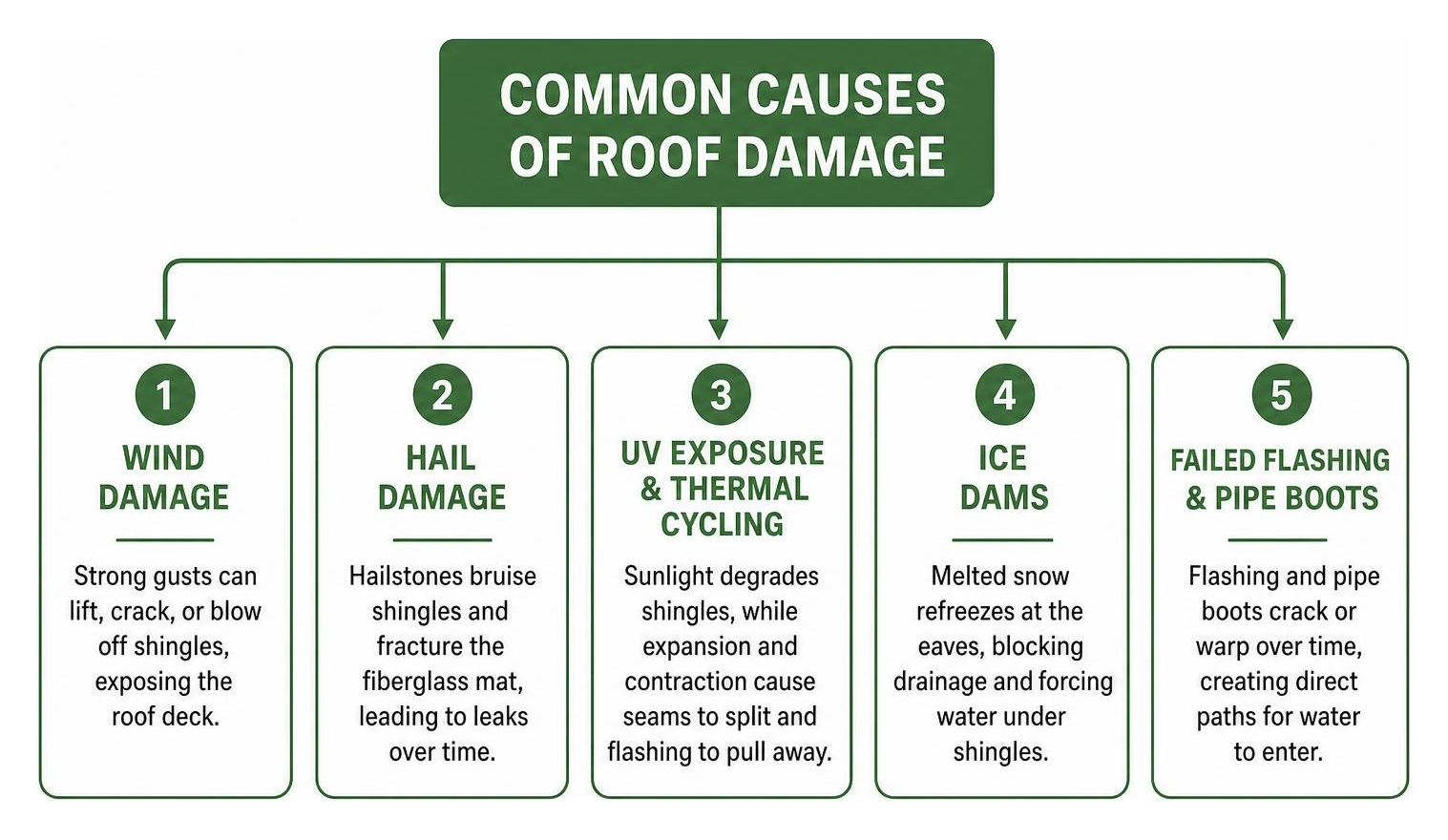
- Wind Damage: Wind speeds do not have to reach hurricane levels to cause issues. Strong gusts can lift shingles, break their sealant strips, or blow them off entirely, leaving the wood deck exposed.
- Hail Damage: Hailstones bruise shingles, creating soft spots and fracturing the fiberglass mat. This damage is often invisible from the ground but accelerates granule loss and leads to leaks over time.
- UV Exposure and Thermal Cycling: Continuous exposure to intense summer sun degrades asphalt shingles. Additionally, thermal cycling — where materials rapidly expand in the heat and contract in the cold — causes seams to split and flashing to pull away.
- Ice Dams: During cold Wisconsin winters, snow melts on the warmer upper sections of your roof and refreezes at the cold eaves. This creates ice dams — blocks of ice that prevent meltwater from draining. The backed-up water forces its way under your shingles, leading to severe interior leaks.
- Failed Flashing and Pipe Boots: Flashing (the metal installed in valleys and around chimneys) and rubber pipe boots (which seal plumbing vents) naturally degrade faster than shingles. When they crack or warp, they create direct pathways for water to enter your attic.
Evaluating DIY vs. Professional Roof Repair
It is tempting to grab a ladder, buy a tub of roofing cement at the local hardware store, and attempt to patch a leak yourself. However, we strongly caution against DIY roof repairs for several critical reasons:
- Safety Hazards: Roofing is inherently dangerous. Walking on steep slopes, carrying materials up ladders, and dealing with unexpected wind gusts require specialized safety harnesses, brackets, and training.
- Voiding Your Warranty: Major roofing manufacturers (such as GAF, CertainTeed, and Owens Corning) have strict installation standards. If a DIY repair is performed incorrectly, it can completely void your manufacturer’s material warranty.
- Temporary “Band-Aid” Fixes: Slathering roofing cement over a leak might stop the water for a few weeks, but it often traps moisture underneath, accelerating wood rot. Professional repairs address the root cause of the leak rather than masking the symptoms.
If you want to understand what goes into a proper asphalt shingle patch, check out our step-by-step guide on How to Repair Asphalt Roof in 7 Easy Steps. However, for your safety and peace of mind, read Why You Should Call a Roof Repair Contractor to Fix Your Roof to learn how professional diagnostics, proper materials, and workmanship warranties protect your home long-term.
Understanding the Costs of Professional Roof Repair
The cost of roof repair depends entirely on the size, location, and severity of the damage. While minor repairs can be highly affordable, letting a leak linger will inevitably drive up the price.
On average, homeowners can expect the following pricing tiers for professional repairs:
- Minor Repairs ($300 – $800): This covers simple fixes like replacing a few blown-off shingles, sealing a leaking pipe boot, or patching minor flashing around a chimney.
- Moderate Repairs ($800 – $2,500): This includes repairing damaged valleys, replacing larger sections of shingles, fixing minor ice dam damage, or rebuilding structural elements like soffits and fascia boards.
- Major Repairs ($2,500+): This involves extensive structural work, such as replacing water-damaged rafters, repairing large sections of rotted decking, or fixing flat roof membrane failures.
Several factors will directly influence your final estimate:
- Material Types: Standard asphalt shingles are the most affordable to repair. Specialized materials like standing seam metal, clay tile, slate, or wood shakes require specialized labor and more expensive materials.
- Roof Slope and Height: Extremely steep roofs (high-pitch) or multi-story homes require advanced safety equipment and extra labor, which increases the cost.
- Hidden Structural Damage: If water has been leaking for a long time, we may discover rotted plywood decking or moldy insulation beneath the shingles that must be replaced.
For a detailed breakdown of pricing by material and repair type, explore our comprehensive Shingle Roof Repair Cost Guide.
The Step-by-Step Process of Fixing a Roof
When you hire a professional team, the repair process should be transparent, organized, and thorough. Here is what you can expect from our step-by-step approach to restoring your roof:
- Thorough Roof Inspection: We perform a complete physical and visual inspection of your roof, attic, and ceilings to locate the exact entry point of the water.
- Written Proposal: We provide a clear, itemized estimate outlining the scope of work, materials to be used, timeline, and total cost. No hidden fees, no surprises.
- Emergency Tarping (If Needed): If your roof has suffered active storm damage and a rainstorm is on the horizon, we will install heavy-duty tarps to protect your home’s interior until permanent repairs can begin.
- Execution of Repairs: Our certified crew carefully removes damaged shingles, replaces rotted decking, installs high-quality underlayment, and secures new flashing or pipe boots using manufacturer-approved fasteners.
- Final Walkthrough & Clean-Up: We conduct a rigorous quality check and use heavy-duty magnetic sweeps to collect every stray nail from your yard and driveway, leaving your property cleaner than we found it.
If your home has a flat or low-slope roof, the repair process is slightly different. Read our practical guide on How to Repair a Flat Roof on a Budget to see how modern membrane patches and elastomeric coatings can save you money.
Navigating Homeowners Insurance and Storm Damage Claims
If your roof was damaged by a sudden, accidental event — such as a severe wind storm, hail impact, or a fallen tree branch — your homeowners insurance policy will likely cover the cost of the repair or replacement. However, insurance companies do not cover damage caused by normal wear and tear, neglect, or lack of routine maintenance.
To ensure your claim is approved, follow these essential steps:
- Document the Damage Immediately: Take clear, high-resolution photos and videos of the damage from the ground, as well as any interior water leaks, sagging drywall, or ruined insulation.
- Schedule a Professional Inspection: Before filing a claim, have a trusted local roofing contractor inspect the roof. We can provide an official, itemized assessment and temporary emergency tarping to prevent further damage.
- File the Claim Promptly: Contact your insurance carrier to initiate the claim. Provide them with your photo documentation and our professional inspection report.
- Meet with the Adjuster: The insurance company will send an adjuster to verify the damage. It is highly beneficial to have your roofing contractor present during this meeting to ensure the adjuster doesn’t miss hidden structural damage.
Extending Roof Lifespan Through Preventative Maintenance
The absolute best way to avoid expensive emergency repairs is to take care of your roof proactively. Regular maintenance can easily double the lifespan of your roof, saving you thousands of dollars over time.
Think of roof maintenance like oil changes for your car: a small, routine expense that prevents a massive mechanical failure.
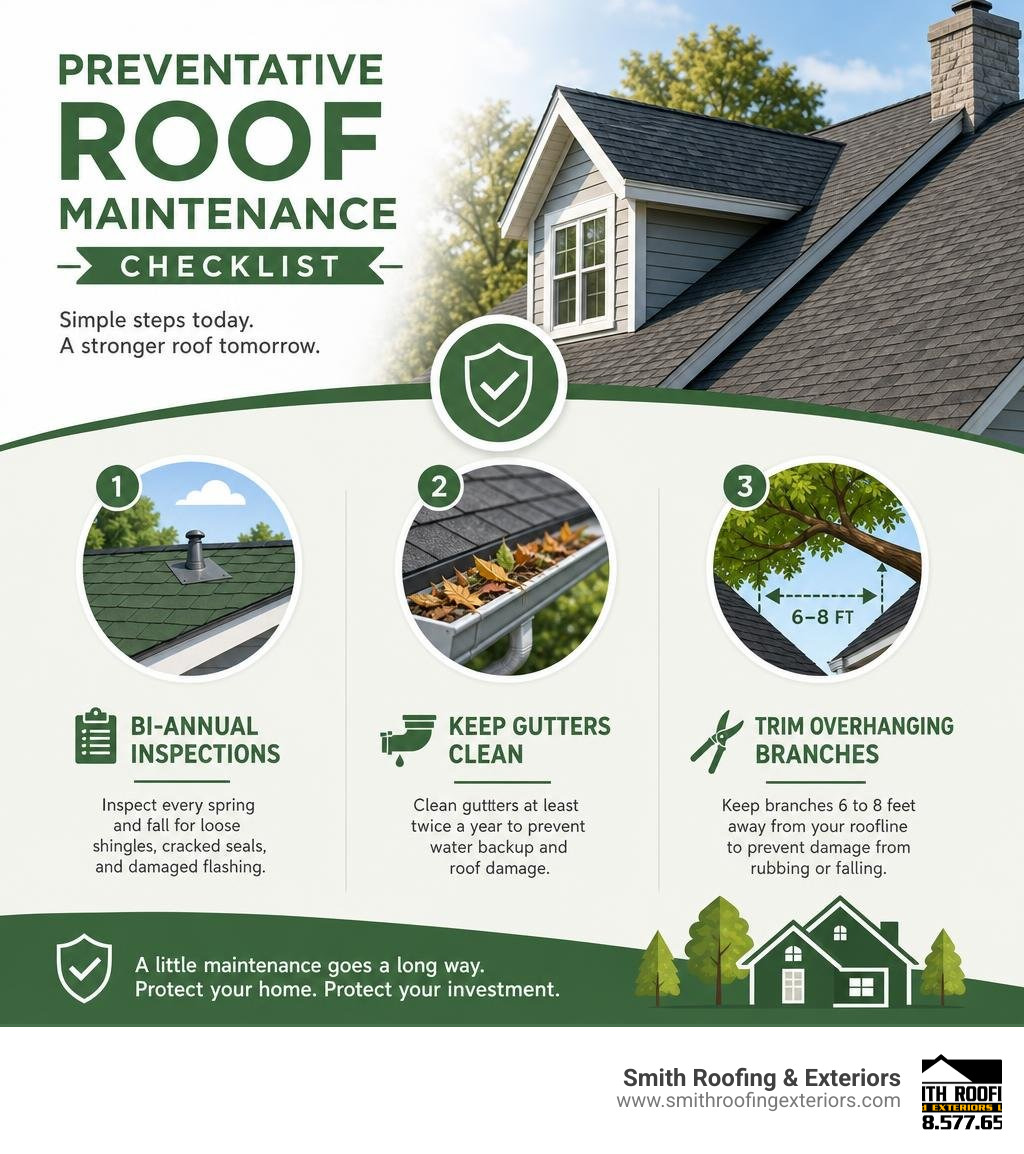
To keep your roof in peak condition, we recommend following this preventative maintenance checklist:
- Bi-Annual Inspections: Inspect your roof every spring and fall. Look for loose shingles, cracked seals around vents, or compromised flashing.
- Keep Gutters Clean: Clean your gutters at least twice a year (more often if your home is surrounded by mature trees). Free-flowing gutters prevent water from backing up under your shingles.
- Trim Overhanging Branches: Keep tree branches trimmed back at least 6 to 8 feet from your roofline. This prevents branches from rubbing against your shingles or crashing down during high winds.
- Remove Debris: Gently sweep away piles of leaves, pine needles, and twigs that accumulate in roof valleys, as they trap moisture and cause shingles to rot.
- Apply Roof Coatings (For Flat Roofs): Applying a reflective elastomeric or silicone roof coating can restore an aging flat roof, sealing minor cracks and reflecting harmful UV rays to lower your cooling bills.
Frequently Asked Questions About Fixing Your Roof
What is the typical timeline for fixing a leak?
Most standard residential roof repairs — such as replacing flashing, fixing a pipe boot, or patching a small section of shingles — are completed in one day. If we discover extensive structural damage, rotted decking, or if we are working in severe weather conditions, the repair may take 2 to 3 days. We always prioritize emergency tarping to keep your home dry while we wait for safe working weather.
Will fixing a leak void my existing roof warranty?
No, as long as the work is performed by a manufacturer-certified roofing contractor. Certified contractors use approved materials and techniques that align with your original warranty’s guidelines. However, attempting a DIY patch or hiring an unlicensed, uncertified “handyman” to perform repairs can completely void your manufacturer’s warranty.
What should I look for when choosing a local roofing contractor?
When hiring a contractor to protect your home, always verify the following:
- Proper Licensing and Insurance: Ensure they carry active general liability insurance and workers’ compensation to protect you from liability.
- Local Reputation: Work with an established team that has a physical office and a proven track record in your community.
- Manufacturer Certifications: Look for credentials like GAF Certified or Owens Corning Preferred status, which prove the crew has undergone advanced training.
- Transparent Pricing: Avoid contractors who demand large upfront deposits or refuse to provide a detailed, written estimate.
Conclusion
Your roof is your home’s primary line of defense against the elements. Ignoring a minor leak, a cracked pipe boot, or a few missing shingles today is an open invitation for expensive water damage, wood rot, and structural issues tomorrow.
At Smith Roofing & Exteriors, we believe in a repair-first philosophy. We will never try to sell you a complete roof replacement if a precise, high-quality repair will safely solve the problem. Our experienced local team is proud to serve homeowners across Southeastern Wisconsin, including Fort Atkinson, Lake Mills, Jefferson, Burlington, Delavan, Elkhorn, Lake Geneva, Walworth, and Edgerton.
Whether you need a quick leak fix, emergency storm damage assistance, or a comprehensive roof inspection, we are here to help.
Schedule a professional consultation with Smith Roofing & Exteriors today, or call us to get an honest, transparent estimate from our friendly local team.