Why Hiring the Right Home Siding Installation Contractors Makes All the Difference
Home siding installation contractors are professionals who remove old siding, inspect and repair the underlying structure, and install new exterior cladding to protect your home from the elements. Here’s what to know before you hire one:
Quick answers for homeowners:
- Verify credentials — Check for state licensing, general liability insurance, and worker’s compensation coverage.
- Confirm local experience — Look for contractors with proven track records in your specific climate and region.
- Get multiple detailed quotes — Compare material costs, labor, permits, disposal fees, and warranty terms — not just the bottom line.
- Ask about manufacturer certification — Certified installers can protect your product warranty; uncertified ones can void it.
- Watch for red flags — Vague quotes, no physical address, and pressure to sign fast are warning signs.
Your home’s siding is more than curb appeal. It’s the first line of defense against rain, wind, ice, and temperature swings — especially harsh in rural Wisconsin, where freeze-thaw cycles can destroy poorly installed or aging siding fast. Choosing the wrong contractor doesn’t just cost money. It can leave your home exposed to rot, mold, and structural damage that’s far more expensive to fix later.
Getting this decision right takes a little homework — but this guide makes it simple.
I’m Matt Smith, owner of Smith Roofing & Exteriors, and I’ve spent my career helping Wisconsin homeowners navigate home siding installation contractors — from spotting storm damage early to choosing materials built for our climate. In this guide, I’ll walk you through everything I’ve learned so you can make a confident, informed decision.
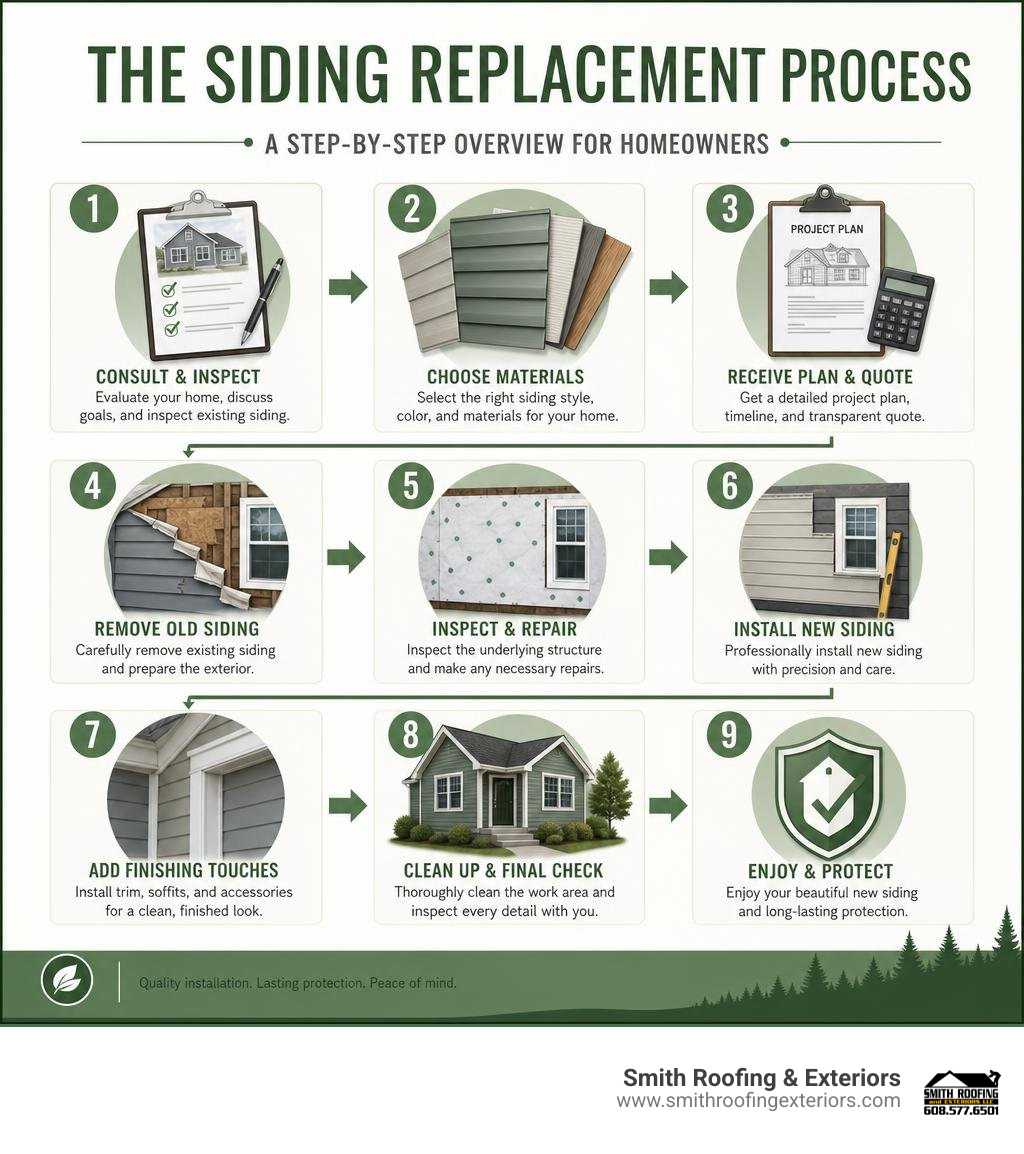
Similar topics to home siding installation contractors:
Signs Your Home Needs New Siding
Before you start interviewing home siding installation contractors, you need to determine if your home actually needs a full replacement or if a simple repair will do. Siding damage is often sneaky. It starts small—a tiny crack here, a little peeling paint there—and quickly escalates into structural rot behind the scenes.
Here are the most common signs that it is time to call a professional:
- Warping, Buckling, or Sagging Panels: Walk around your property and look at the siding from an angle. If the panels are no longer flat, or if they are bowing outward, moisture has likely penetrated the substrate, causing the underlying wood to expand and push the siding out.
- Cracked or Missing Sections: Cracked siding allows wind and rain to slip directly behind your home’s protective barrier. Over time, this exposure destroys the framing.
- Bubbling Underneath the Surface: If you notice bubbles or blisters on your vinyl or engineered wood siding, it is a clear indicator that moisture is trapped inside the plank.
- Rot, Mold, and Mildew Growth: While surface dirt can be washed away, deep-seated mold, mildew, or dry rot on or underneath the siding is a major red flag. If you notice soft spots when you press on the wood, the structural integrity is compromised.
- Peeling Interior Paint or Wallpaper: Believe it or not, your home’s interior can tell you a lot about your exterior. When siding fails, moisture seeps through the wall cavity, causing interior paint to bubble, peel, or warp.
- Skyrocketing Energy Bills: If your heating or cooling costs are rising and you cannot figure out why, your old siding may have lost its insulating value, or the underlying house wrap has degraded.
Knowing when to call a professional can save you thousands of dollars in structural repairs. For a deeper dive into these warning signs, read our article on Signs Its Time To Call A Siding Replacement Company.
Additionally, if you currently have vinyl siding and are debating whether to patch it up or replace it entirely, check out our guide on Vinyl Siding Replacement Or Repair Importance to understand the long-term benefits of a fresh installation.
Choosing the Right Siding Material for Your Climate
Southeastern Wisconsin experiences extreme seasonal shifts. From freezing winter blizzards in Lake Geneva and Delavan to hot, humid summer days in Fort Atkinson and Burlington, your home’s exterior takes a beating. The siding material you choose must be able to withstand these dramatic freeze-thaw cycles without cracking, warping, or rotting.
Let’s look at the most popular siding materials and how they perform in our local climate:
- Fiber Cement (James Hardie): As the #1 siding brand in North America, fiber cement is incredibly durable. It is engineered to resist moisture, fire, insects, and rot. It does not expand and contract like vinyl, making it perfect for Wisconsin’s extreme temperature swings. Plus, premium fiber cement products often come with an industry-leading 30-year non-prorated warranty, and finishes like James Hardie’s ColorPlus® Technology are protected by a 15-year limited warranty covering paint and labor.
- Vinyl Siding: Extremely popular due to its affordability and low maintenance. High-quality vinyl panels never need to be painted and are highly resistant to moisture. However, cheap vinyl can become brittle in sub-zero winter temperatures, making it susceptible to cracking if hit by hail or a stray baseball.
- Engineered Wood (LP SmartSide): This material combines the natural beauty of wood with the strength of engineered technology. Treated with advanced resins, waxes, and zinc borate, it resists moisture, fungal decay, and termites while offering excellent impact resistance against hail.
- Cedar Wood or Shake: Cedar offers unmatched architectural beauty and can significantly boost home value. However, it requires regular painting or staining every few years to prevent rot and insect damage, making it a high-maintenance choice.
- Aluminum Siding: A highly durable, insect-proof, and fire-resistant option that performs exceptionally well in cold climates. While it can dent, modern aluminum siding finishes offer a sleek, contemporary look. If you are considering this material, take a look at our breakdown of the Top Aluminum Siding Installers To Upgrade Your Home.
| Siding Material | Average Cost | Durability | Maintenance Level | Best Climate Performance |
|---|---|---|---|---|
| Fiber Cement | Moderate to High | Excellent | Low | All Climates (Highly Freeze-Thaw Resistant) |
| Vinyl | Low to Moderate | Moderate | Very Low | Moderate Climates (Can crack in extreme cold) |
| Engineered Wood | Moderate | Excellent | Low to Moderate | All Climates (High impact resistance) |
| Cedar / Natural Wood | High | Moderate to High | High | Dry Climates (Requires rot prevention) |
| Aluminum | Moderate | High | Low | Cold and Wet Climates |
If you are leaning toward vinyl but want to make sure it is the right choice for your specific neighborhood, read our guide on When To Choose Vinyl Siding Installation Or Replacement.
For those looking to hire a professional specialized in this material, we also have an article highlighting 5 Reasons Why You Will Love Vinyl Siding Contractors.
How to Evaluate and Vet Home Siding Installation Contractors
Finding a contractor is easy; finding a trustworthy, skilled contractor who will install your siding correctly the first time requires some vetting. Siding contractors carry an immense responsibility because the quality of their installation directly protects the structural integrity of your entire home.
When evaluating local home siding installation contractors in Southeastern Wisconsin, use this checklist to ensure they are qualified:
- Verify State and Local Licensing: In Wisconsin, siding contractors must hold a Dwelling Contractor Credential issued by the Department of Safety and Professional Services (DSPS). Never hire a contractor who cannot provide their license number.
- Check Insurance Policies: Ask for a physical or digital copy of the contractor’s general liability insurance policy declaration page and proof of worker’s compensation. If an uninsured worker is injured on your property, you could be held liable.
- Review BBB Ratings and Local Track Record: Look for companies with an A+ rating on the Better Business Bureau. Be wary of “storm chasers”-out-of-state companies that sweep through towns like Elkhorn or Edgerton after a hailstorm, offer cheap rates, and disappear before you notice their installation errors.
- Ask About Their Hidden Damage Policy: This is a crucial “root-cause” indicator of a quality contractor. When old siding is torn off, it is common to find hidden wood rot or framing damage underneath. A reputable contractor will never just cover up rot with cosmetic fixes. They should have a strict policy: stop work, document the damage with photos, explain the structural issue clearly, and provide a written Change Order before proceeding.
- Look for Certified Installer Status: Many premium manufacturers (like James Hardie or LP SmartSide) have certified contractor networks. Hiring a certified installer ensures that the crew has received specific, documented training on the manufacturer’s exact installation methods. Failing to follow these instructions can completely void your product’s long-term warranty.
To help you narrow down your search and ask the right questions, we have compiled resources on Finding The Best Siding Installers For Your Home Or Mobile Home as well as tips on how to Upgrade Your Home With A Quality Siding Replacement Company.
Understanding Siding Quotes and Estimates
When you request estimates, do not just look at the final number. A low-ball bid often means the contractor is cutting corners, using cheap materials, or omitting essential services. A detailed, professional siding quote should include:
- Material Costs: A clear breakdown of the siding brand, profile, color, and accessories (trim, soffit, fascia).
- Labor Rates: Explicit details on the labor costs per hour or per square foot.
- Debris Removal and Disposal Fees: Residing projects generate massive amounts of waste. Ensure dumpster rentals and landfill fees are included.
- Permit Costs: Your contractor should handle pulling local municipal permits (e.g., in Fort Atkinson or Jefferson County) and include the cost in the estimate.
- Moisture Barrier and Accessories: The quote must specify the type of house wrap, flashing, and caulking to be used.
- Sales Tax: Ensure all local and state taxes are calculated upfront.
Pro-Tip: Always budget an extra 10% to 15% contingency fee above the total estimated cost. This buffer covers unexpected structural repairs if hidden rot is discovered behind your old siding.
Manufacturer and Workmanship Warranties
A siding project is a major investment, and warranties are your safety net. You must understand the difference between the two types of protection:
- The Manufacturer Warranty: This covers defects in the siding material itself. For example, premium fiber cement planks often come with a 30-year non-prorated warranty, while vinyl siding may offer a lifetime limited warranty. However, these warranties only remain valid if the siding is installed exactly to the manufacturer’s specifications.
- The Workmanship Warranty: This is provided directly by your contractor and covers the physical installation. It ensures that if a panel loose-fits, leaks, or falls off due to poor fastening, flashing, or water management, the contractor will repair it at no cost to you. Look for contractors who offer a multi-year or lifetime workmanship guarantee.
Preparing Your Property for Siding Installation
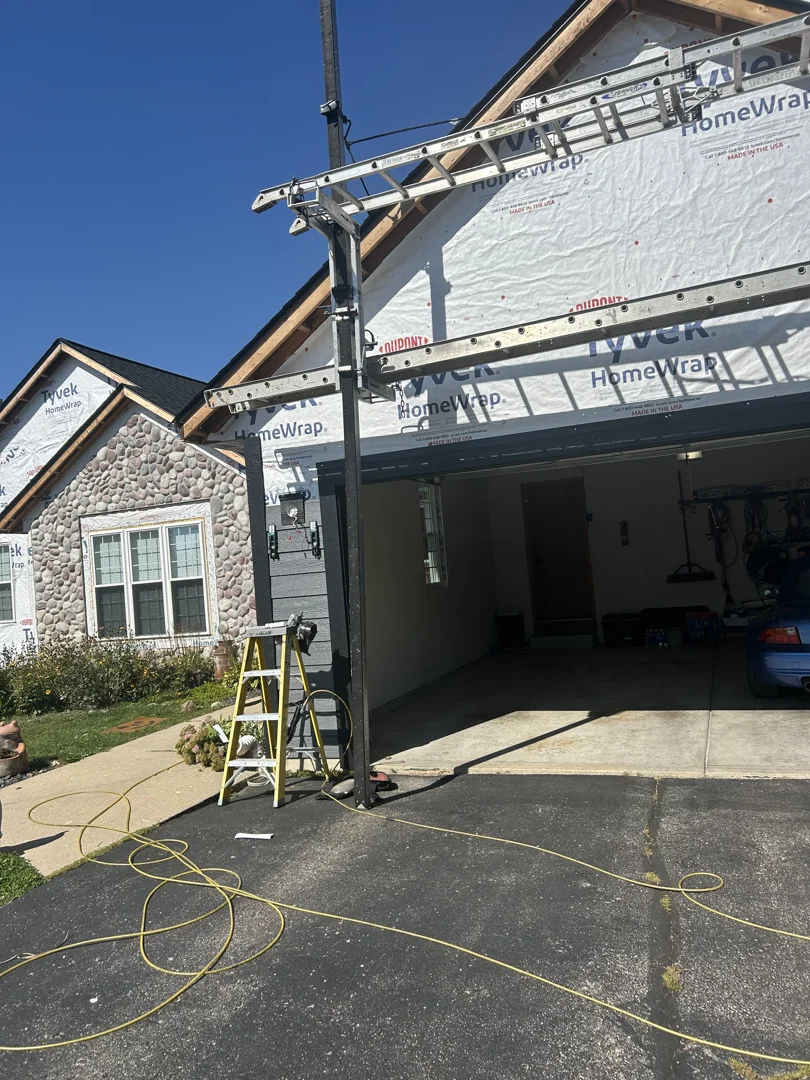
Once you have hired your contractor and set a start date, it is time to prepare your property. Siding installation is a heavy construction process that involves tearing off old materials and nailing new ones into your home’s framing. This process causes significant vibrations throughout your house.
Here is how you can prepare your family, home, and pets:
- Secure Interior Wall Decor: The heavy hammering on your exterior walls will cause interior walls to vibrate. Remove fragile artwork, mirrors, family photos, and shelving from interior walls to prevent them from falling and breaking.
- Clear the Driveway and Yard: Move all vehicles, patio furniture, grills, and potted plants away from the house. Your kids might need to find another driveway for shooting hoops, and spouses should pause outdoor gardening projects while the crew is active.
- Protect Your Landscaping: Trim back tree branches and shrubs that touch your home. A professional crew will use tarps to protect your flowerbeds, but moving delicate yard ornaments ahead of time is always a good idea.
- Plan for Pet Safety: The constant noise of nail guns and tearing wood can be highly stressful for dogs and cats. Consider scheduling trips to the dog park or boarding your pets during the loudest phases of construction.
- Relocate Outdoor Vehicles: Ensure your lawnmower, bicycles, and cars are parked far away from the work zone to avoid any accidental scratches from falling debris.
Frequently Asked Questions about Siding Installation
How do I find the best home siding installation contractors near me?
Start by asking friends, family, and neighbors for local referrals. Online review platforms like Google and the Better Business Bureau are excellent for checking a contractor’s reputation. Look for companies with high ratings and consistent, detailed reviews. Vetting contractors against high industry standards ensures you get the best possible results.
What is the average timeline for home siding installation contractors to complete a project?
Most residential siding replacement projects take between 4 to 7 days to complete. However, this timeline can vary based on several factors:

- Home Size and Complexity: A multi-story home with complex architectural angles will take longer than a single-story ranch house.
- Weather Conditions: Heavy rain, high winds, or extreme winter cold can cause safety delays.
- Material Selection: Fiber cement and natural wood require more precise, time-consuming cutting and fastening than vinyl.
- Unforeseen Repairs: If the crew discovers hidden rot or mold on your home’s framing after tearing off the old siding, the project will pause while those structural issues are corrected.
Can new siding improve my home’s energy efficiency?
Yes! Replacing your siding is the absolute best time to upgrade your home’s thermal envelope. When the old siding is removed, contractors install a modern, weather-resistant house wrap that stops drafts while allowing moisture to escape.
Additionally, you can opt for insulated vinyl siding or add rigid foam insulation sheathing underneath your new panels. This breaks the “thermal bridge” (heat escaping through the wooden wall studs), keeping your home warmer in the winter and cooler in the summer.
To learn more about how this works, read our detailed article on How A Siding Replacement Can Make A Difference In Energy Efficiency.
Conclusion
Upgrading your siding is one of the smartest investments you can make. It dramatically improves your home’s curb appeal, boosts its overall market value, and provides essential protection against Wisconsin’s unpredictable weather.
To explore the full financial and aesthetic advantages of this upgrade, read our guides on the Top Benefits Of Upgrading Your Home With Siding Replacement and see how a Siding Replacement Company Boost Home Value.
At Smith Roofing & Exteriors, we are proud to be the trusted local team for homeowners in Fort Atkinson, Lake Mills, Jefferson, Burlington, Delavan, Elkhorn, Lake Geneva, Walworth, Edgerton, and throughout Southeastern WI. We bring experienced craftsmanship, superior materials, and transparent pricing to every single project.
Ready to transform your home’s exterior? Get a Professional Siding Quote Today and let’s build something beautiful together!