What You Need to Know About Gutter Leak Sealing (Quick Answer)
A gutter leak seal is one of the most effective ways to stop water damage before it reaches your home’s foundation, walls, or basement. Here’s the short version if you’re in a hurry:
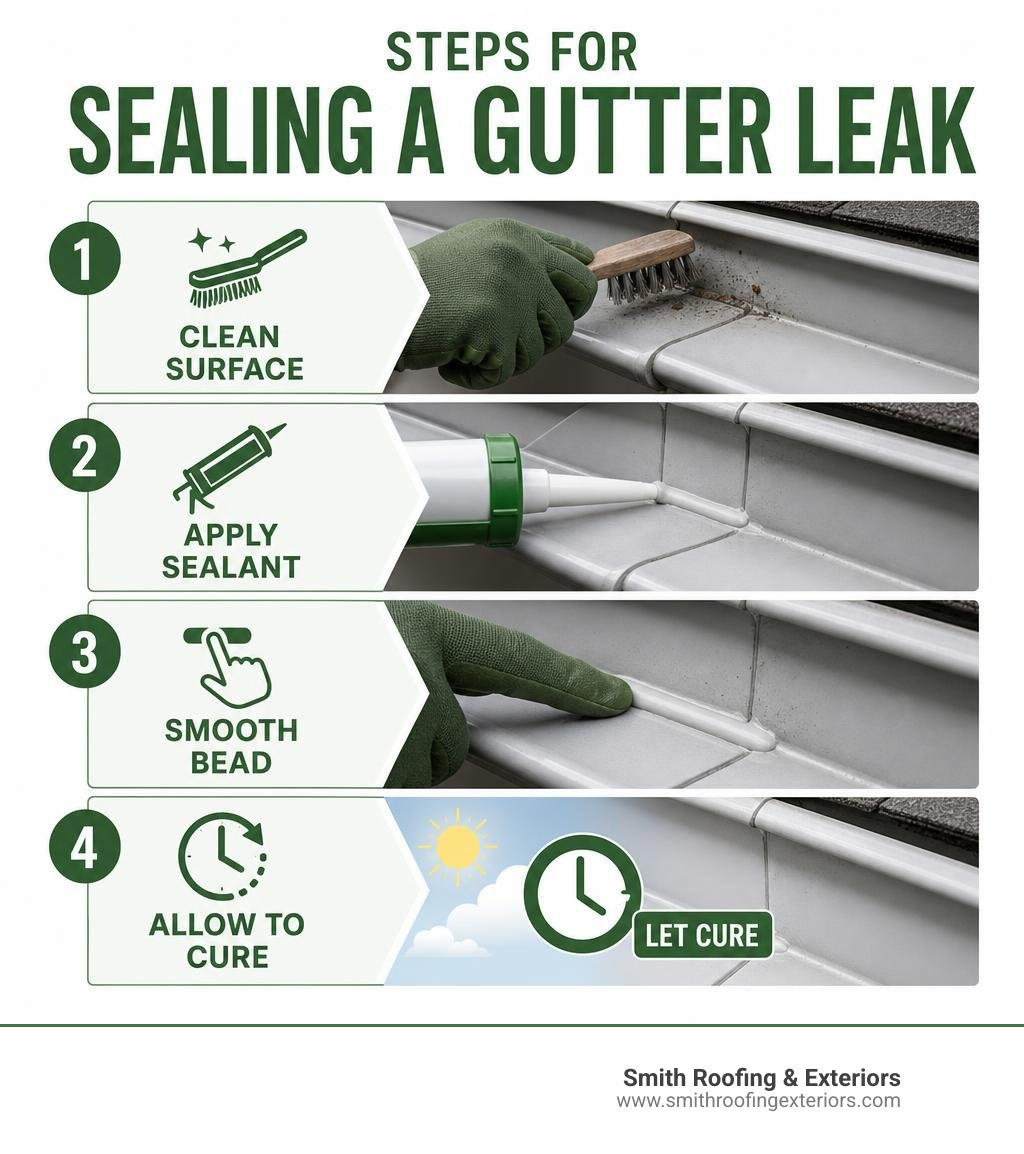
How to seal a leaky gutter in 3 steps:
- Clean the area — Remove debris, old caulk, and moisture with a wire brush
- Apply sealant — Use a silicone, butyl rubber, or elastomeric sealant along seams, joints, and end caps
- Let it cure — Allow 24-48 hours before exposing to heavy rain (some products are rain-ready in 30 minutes)
Best products for gutter sealing:
| Sealant Type | Best For | Cure Time |
|---|---|---|
| Silicone | Vinyl and metal gutters | 24 hours |
| Butyl rubber | Lap joints and flashing | 12 hrs tack-free, 21 days full |
| Elastomeric polymer | All-weather, wet surfaces | 24 hours |
That dripping sound coming from your gutters after a Wisconsin rainstorm isn’t just annoying — it’s a warning sign. Left unchecked, even a small leak at a gutter seam can quietly funnel water against your fascia boards, down your siding, and straight toward your foundation.
The good news? Most gutter leaks don’t mean you need a full replacement. In many cases, the right sealant and 30 minutes of your time can solve the problem entirely.
Wisconsin’s harsh freeze-thaw cycles are especially tough on gutters. Seams expand and contract all winter long, and that constant movement is often what breaks the seal in the first place. It’s a pattern we see every spring here in South Central Wisconsin.
I’m Matt Smith, owner of Smith Roofing & Exteriors, and after years of helping Wisconsin homeowners diagnose and repair failing gutters — including plenty of gutter leak seal repairs after brutal winters — I’ve seen which fixes hold up and which ones fail within a season. Let’s walk through exactly what works.
Simple gutter leak seal word guide:
Why Gutters Leak and How to Spot the Damage Early
Before you climb up the ladder with a caulk gun, it helps to understand why your gutters are crying in the first place. Gutters are simple systems, but they live in a harsh environment. In places like Fort Atkinson, Lake Mills, and Jefferson, WI, our gutters have to deal with heavy autumn leaves, freezing winter ice dams, and sudden spring downpours.

The Main Culprits Behind Gutter Leaks
- Seam and Joint Breakdown: Seamless gutters are fantastic, but even they have joints at the corners (miters) and where the troughs meet the downspouts. Traditional sectional gutters have seams every 10 or 20 feet. Over time, the sealant in these seams dries out, cracks, and pulls away from the metal.
- Thermal Expansion and Contraction: Metals like aluminum and copper expand when it’s hot and contract when it’s freezing. This constant shifting puts immense pressure on your gutter joints. Over a few seasons, this thermal stress can tear apart even high-quality seals.
- Corrosion and Rust: While aluminum gutters are highly rust-resistant, galvanized steel gutters are prone to rusting, especially where water pools. Once rust takes hold, it eats through the metal, leaving pinholes that eventually grow into gaping leaks.
- Standing Water and Debris: When gutters aren’t sloped correctly (they should drop about 1/4 inch for every 10 feet of run), water pools instead of flowing to the downspout. Standing water accelerates the breakdown of sealants and provides a breeding ground for rust.
Ignoring these issues can lead to severe structural headaches. Water escaping from a leaky seam doesn’t just fall harmlessly to the grass; it often clings to the underside of the gutter, rotting the wooden fascia boards behind it. From there, it can travel into your soffits and ceiling. For a deeper look at this, read about the 4 Types of Property Damage That Faulty Gutters Can Cause.
Spotting the Trouble Early
You don’t have to wait for a torrential downpour to know if your gutters are failing. Keep an eye out for these subtle warning signs:
- Peeling Paint or Rust Stains: Check your siding and the underside of your gutters. If you see peeling paint, green mold, or rust-colored streaks, water is escaping nearby.
- Erosion in the Landscaping: Walk around your home’s perimeter. If you notice trenches carved into your mulch, washed-out garden beds, or cracked concrete directly beneath a gutter joint, you have an active leak.
- Musty Smells in the Basement: When gutters leak, water often pools right next to your foundation. Over time, this water seeps through concrete walls, leading to damp basements and mold.
If you notice any of these signs, it’s time to act. Catching a leak early means you can fix it with a simple tube of sealant rather than paying for major structural repairs. For more tips on identifying these early warning signs, check out our guide on 5 Indications That It’s Time for Gutter Repair.
Choosing the Right Gutter Leak Seal: Sealant Types Compared
Walk down the caulking aisle at any home improvement store in Southeastern Wisconsin, and you will be greeted by a dizzying wall of options. Selecting the wrong product can result in a repair that peels away during the very next freeze-thaw cycle.
To help you choose, let’s look at how the three main types of gutter sealants compare:
| Feature | Silicone Sealants | Butyl Rubber Sealants | Elastomeric Polymers |
|---|---|---|---|
| Primary Use | Vinyl & metal gutters, end caps | Lap joints, flashing, metal-to-metal | All-weather repairs, narrow seams |
| Flexibility | Excellent (remains rubbery) | Moderate (stays pliable but firm) | High (handles extreme joint movement) |
| Wet-Surface Application | No (surface must be bone dry) | Yes (some formulas tolerate dampness) | Yes (can be applied through standing water) |
| Paintability | No | Yes | Yes (often within 30 minutes) |
| Cure Time | 24 hours | 12 hours tack-free; 21 days full | 24 hours |
100% Silicone Sealant
Silicone is a classic choice for exterior sealing because it is completely waterproof and highly resistant to UV rays. Products like Gutter & Exterior Silicone 2® Sealant for Gutter Caulking Projects are highly popular because they are permanently flexible and shrink-proof. Silicone forms a fantastic barrier on clean, dry aluminum and vinyl.
However, silicone has two major drawbacks: it cannot be painted, and it does not adhere well to surfaces that still have traces of old silicone on them. If you use silicone, your prep work must be flawless.
Butyl Rubber Sealant
Butyl rubber is a tough, heavy-duty sealant designed specifically for metal-to-metal joints and lap seams. A prime example is DAP® BUTYL-FLEX® Rubber Gutter & Flashing Sealant – Product Data .
Butyl rubber is excellent because it can adhere to damp surfaces, making it great for those damp spring days in Burlington or Elkhorn. It creates a durable, elastomeric seal that withstands extreme outdoor temperatures ranging from -40°F to 180°F. The trade-off is that it takes much longer to fully cure (up to 21 days), though it becomes tack-free in about 12 hours.
Advanced Elastomeric Polymers
These are the modern powerhouses of the sealant world. Products like DAP® DYNAFLEX® Gutter & Narrow Seam Advanced Elastomeric Waterproof Sealant – Product Data and DAP 3.0 Crystal Clear Premium Gutter and Flashing Sealant utilize hybrid polymer formulas.
These advanced sealants can be applied in temperatures ranging from 20°F to 120°F and can even be applied directly through standing water. They are rain-ready in just 30 minutes and can be painted in about an hour. With over 10,000 monthly purchases for top waterproof caulks and an average rating of 4.4 out of 5 stars across major retail platforms, these elastomeric sealants have become the go-to choice for both DIYers and professionals.
If you have a larger DIY waterproofing project that involves coating the entire inside of a rusted gutter trough, a liquid membrane product like the 330283149 can be brushed or rolled on to create a seamless protective barrier.
How to Prepare and Clean Your Gutters for Sealing
Ask any professional gutter installer in Walworth or Delavan, and they will tell you the same thing: 90% of sealant failures are caused by poor surface preparation. If you apply the highest-quality gutter leak seal over a layer of wet leaf muck or old, peeling caulk, the new sealant will simply stick to the dirt and peel away within weeks.

Before you begin, gather the following tools:
- A sturdy ladder (and a stabilizer bracket if possible)
- A gutter scoop or plastic garden trowel
- A stiff-wire brush
- A putty knife or 5-in-1 tool
- A heat gun (optional, but incredibly helpful for softening old caulk)
- Isopropyl rubbing alcohol or mineral spirits
- Clean rags
The Preparation Process
- Clear the Debris: Scoop out all leaves, twigs, and silt from the area you plan to seal. It’s best to clean the entire gutter run so that water doesn’t wash fresh dirt into your clean repair zone. To keep your gutters performing beautifully year-round, check out our advice on Stop the Clog with Gutter Maintenance Seasonal Service.
- Scrape Away the Old Sealant: Use your putty knife or 5-in-1 tool to scrape away every trace of old, dry caulking. If the old sealant is stubborn, use a heat gun to soften it first. Be careful not to gouge vinyl gutters or scrape the protective coating off aluminum ones.
- Scrub with a Wire Brush: Scrub the metal vigorously with a wire brush. This removes stubborn dirt, loose rust, and oxidation, leaving a clean, slightly textured metal surface that sealants love to grip.
- Degrease and Dry: Wipe the entire joint down with a rag soaked in isopropyl alcohol or mineral spirits. This removes any remaining fine dust, oils, or organic residue. Let the area dry completely. Unless you are using a specialized wet-weather elastomeric polymer, the metal must be bone dry before you apply your new seal.
Step-by-Step Guide to Sealing Gutter Seams and Joints
Now that your gutters are clean and dry, it’s time to apply the gutter leak seal. This process is straightforward, but taking your time ensures a professional-grade, watertight finish.
Step 1: Clean and Dry the Surface
Double-check your work from the preparation phase. Ensure there is no morning dew, dust, or lingering moisture in the seam. If you’re working on a cooler Wisconsin morning in Edgerton or Lake Geneva, a quick pass with a dry rag or a heat gun can ensure the metal is warm and dry.
Step 2: Apply the Gutter Leak Seal to Seams and Rivets
Cut the nozzle of your sealant tube at a 45-degree angle. For gutter seams, you want a relatively small, controlled bead—about 3/16 to 1/4 of an inch.
Load the tube into your caulking gun and puncture the inner foil seal. Hold the gun at a 45-degree angle to the seam and pull the trigger with steady pressure.
- For Lap Joints: Run a continuous bead of sealant directly along the inside edge of the overlapping metal. If the joint is held together by rivets or screws, apply a generous dab of sealant directly over each fastener head. Water loves to seep through screw holes!
- For End Caps: Apply a generous bead along the inside track of the end cap before pressing it onto the gutter end, then run a secondary bead along the inside joint where the cap meets the gutter trough.
Step 3: Tool the Sealant and Allow to Cure
Once the sealant is applied, you need to “tool” it to ensure it penetrates deep into the seam and forms a smooth, water-shedding surface.
Dip a gloved finger in soapy water (or mineral spirits if using a solvent-based butyl sealant) and gently drag it across the bead. Press the sealant firmly into the joint, feathering the edges so that water can glide over the seam without pooling.
Let the sealant cure undisturbed. While advanced elastomeric polymers are rain-ready in 30 minutes, most traditional silicone and butyl sealants require 24 to 48 hours of dry weather to cure completely. Keep an eye on the local weather forecast before starting your project!
Knowing When to Repair vs. Replace Your Gutters
While a high-quality gutter leak seal can work wonders on seams and minor cracks, it cannot perform miracles. There comes a point in every gutter system’s life when patching is no longer a viable or safe option.
When a Gutter Leak Seal Isn’t Enough: Repair vs. Replacement
To help you decide whether to grab the caulk gun or call in a professional installation team, look out for these three major warning signs:
1. Severe Rust and Corrosion
If your metal gutters are covered in extensive rust or have multiple rusted-through holes, applying sealant is a temporary band-aid at best. Rust will continue to spread beneath the sealant, causing the repair to fail. If rust has weakened the structural integrity of the metal, replacement is necessary.
2. Structural Sagging and Pulling Away
Gutters must maintain a precise slope to channel water toward the downspouts. If your gutters are sagging, warped, or pulling away from your roofline, it usually means the wood behind them (the fascia) is rotting, or the hangers have failed. Sealing a seam won’t fix a slope issue. If you want to understand how resolving these structural issues protects your home, read about How Gutter Repair Can Help Protect Your Roof and Foundation.
3. Widespread Damage (The “Swiss Cheese” Effect)
If you find yourself patching dozens of tiny pinholes or sealing every single joint along a run, your gutter system has reached the end of its lifespan. Standard aluminum gutters generally last about 20 years, while copper can last up to 50. If your system is approaching these milestones, investing in a modern, seamless aluminum system will save you time and money in the long run. Learn more about making this decision in our guide on Understanding When Gutter Replacement Becomes Necessary.
Frequently Asked Questions about Gutter Sealing
How long does a gutter leak seal take to cure?
Curing times depend entirely on the type of sealant you choose and the weather conditions. Advanced elastomeric polymers typically dry to the touch within 30 minutes to 2 hours and achieve a full cure within 24 hours.
Butyl rubber sealants are tack-free in 12 hours but can take up to 21 days to cure completely through. For the best results, try to apply your sealant on a dry day when temperatures are above 40°F (or above 20°F if using an all-weather polymer).
Can I apply gutter sealant to a wet surface?
If you are using standard silicone or butyl sealants, the answer is no—the surface must be completely dry.
However, if you have an active leak during a heavy rainstorm, you can use an advanced hybrid polymer sealant. These specialized products are formulated to cut through standing water and adhere directly to wet metal, making them perfect for emergency repairs.
How can I prevent future gutter leaks?
The best way to prevent future leaks is through regular maintenance. Clean your gutters at least twice a year—once in the spring and once in the late autumn—to prevent heavy debris from pooling water and putting stress on your joints.
Additionally, installing high-quality gutter guards is an excellent way to keep leaves and twigs out of your system entirely, reducing physical wear and tear on your seams. If you are curious about the investment, check out our breakdown on How Much Do Gutter Guards Really Cost Per Foot in 2026.
Conclusion
Sealing your gutters is a highly rewarding DIY project that can save your home from thousands of dollars in water damage. By choosing the right gutter leak seal, taking the time to properly clean your seams, and applying a smooth, clean bead of sealant, you can keep your home safe and dry through Wisconsin’s toughest seasons.
However, climbing ladders and working on rooflines isn’t for everyone. If you find extensive rust, sagging troughs, or simply prefer to have an experienced team handle the job safely, we are here to help.
At Smith Roofing & Exteriors, we proudly serve homeowners throughout Fort Atkinson, Lake Mills, Jefferson, Burlington, Delavan, Elkhorn, Lake Geneva, Walworth, and Edgerton, WI. Our experienced local team uses superior, weather-resistant materials to ensure your gutter system stands up to the harshest winters.
Ready to protect your home’s foundation and roofline? Schedule a professional gutter inspection and repair with Smith Roofing & Exteriors today!