What Is the Average Cost of a New Roof in 2026?
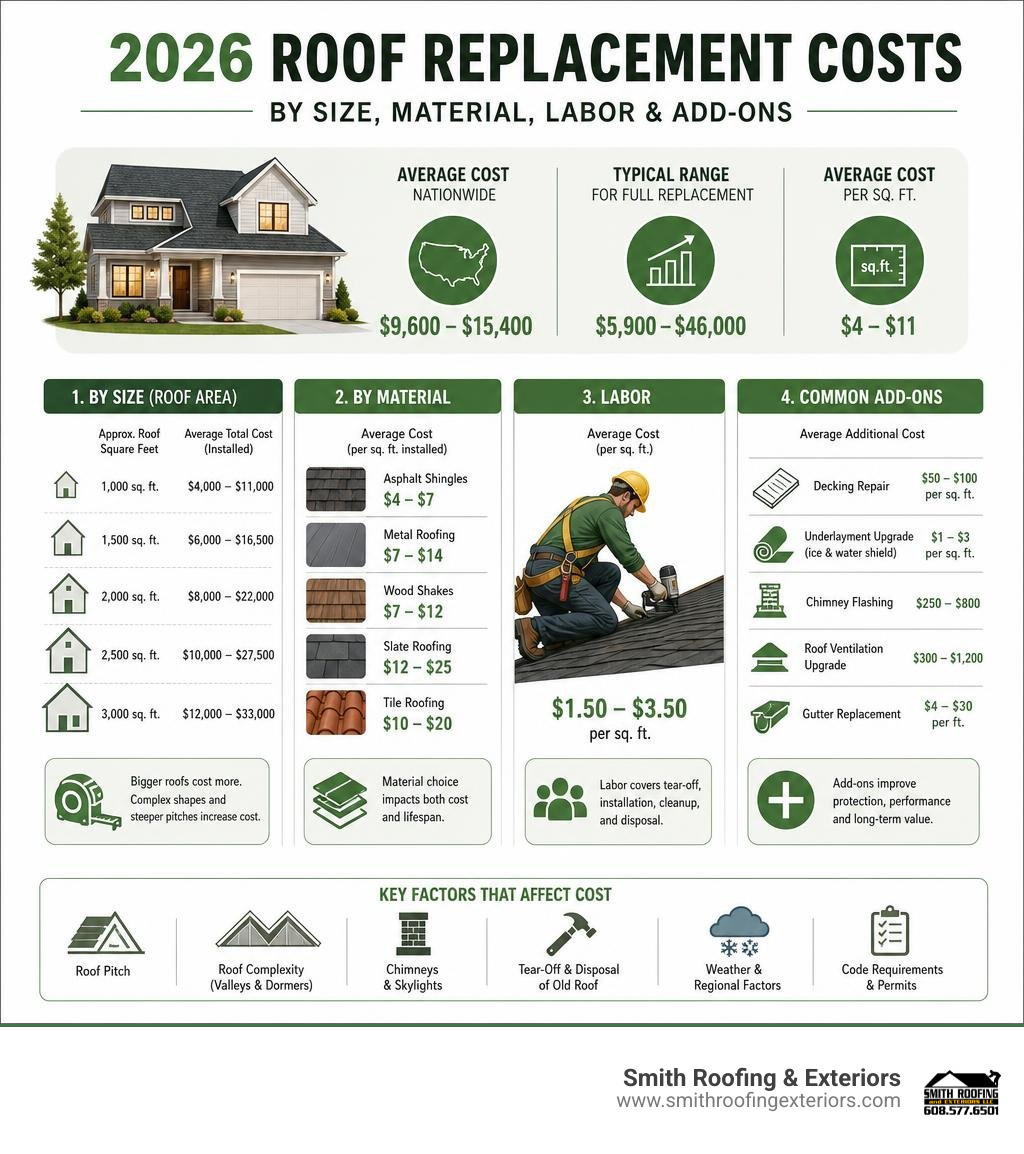
The average cost of a new roof in 2026 is roughly $9,600 to $15,400 nationwide, but a complete replacement can range from about $5,900 to $46,000. For most homes, plan on $4 to $11 per square foot of roof surface, including professional labor and materials.
Your final price depends on more than your home’s floor plan. Roofers measure the actual roof area, then account for pitch, valleys, chimneys, tear-off work, material choice, and repairs found beneath old shingles. In rural Wisconsin, snow loads, ice-and-water protection, and storm damage can also affect the scope.
A smart starting budget is to get at least three itemized estimates and set aside an extra 10% to 15% for hidden decking damage or code-required upgrades.
I’m Matt Smith, owner of Smith Roofing & Exteriors, and I help homeowners understand the average cost of a new roof 2026 before they commit to a major project. My goal is to make the pricing, options, and long-term value clear as we move into the cost details below.
Basic average cost of a new roof 2026 vocab:
- asphalt shingles roof replacement cost
- roof replacement cost
- cost of asphalt shingle roof per square foot
Average Cost of a New Roof in 2026: National Baselines and Per-Square Pricing
When planning your budget, understanding the baseline figures across the roofing sector provides a clear benchmark. For comprehensive details on full installation expenses, review our in-depth guide to roof replacement cost. On average, residential roof replacements nationwide land around $10,000 to $17,631, with a typical project for a standard single-family home averaging approximately $15,439.
In the roofing trade, pricing is calculated by the “square”—an industry unit representing 100 square feet of roof surface. For a standard architectural asphalt shingle roof, installed costs in 2026 range from $400 to $900 per square ($4.00 to $9.00 per square foot). Upgrading to premium metals, composites, or natural stone pushes costs anywhere from $950 to over $3,000 per square.
| Roofing Material | Average Installed Cost (Per Sq. Ft.) | Total Cost Range (2,000 Sq. Ft. Roof) | Expected Lifespan | Typical Resale ROI |
|---|---|---|---|---|
| 3-Tab Asphalt Shingles | $4.00 – $7.00 | $8,000 – $14,000 | 15 – 20 Years | 50% – 55% |
| Architectural Asphalt | $5.50 – $9.00 | $11,000 – $18,000 | 25 – 30 Years | 60% – 68% |
| Standing-Seam Metal | $9.50 – $18.00 | $19,000 – $36,000 | 40 – 70 Years | 48% – 50% |
| Wood Shake | $8.00 – $13.50 | $16,000 – $27,000 | 25 – 35 Years | 45% – 50% |
| Concrete / Clay Tile | $10.00 – $22.00 | $20,000 – $44,000 | 50 – 100 Years | 45% – 55% |
| Natural Slate | $15.00 – $30.00+ | $30,000 – $60,000+ | 75 – 150+ Years | 40% – 50% |
Understanding the Average Cost of a New Roof in 2026 by House Size
Roof size is the most direct driver of your bottom-line project quote. However, your home’s livable interior square footage rarely matches your total roof area. Roof pitch (slope), overhangs, eaves, architectural dormers, and attached garages add significant surface area.
To determine project scale, contractors convert raw surface dimensions into roofing squares using a precise price per square calculation. For instance, a 2,000-square-foot single-story ranch home often requires 22 to 25 roofing squares (2,200 to 2,500 square feet of actual roof surface) once slope and overhangs are calculated. A two-story home with the same interior footprint features a smaller roof footprint, but adds multi-story staging complexity.
Contractors also apply a standard 10% to 15% waste factor to account for cuts in hips, valleys, and rakes. You can verify your roof area estimates using an interactive new roof installation cost calculator to prepare before requesting bids.
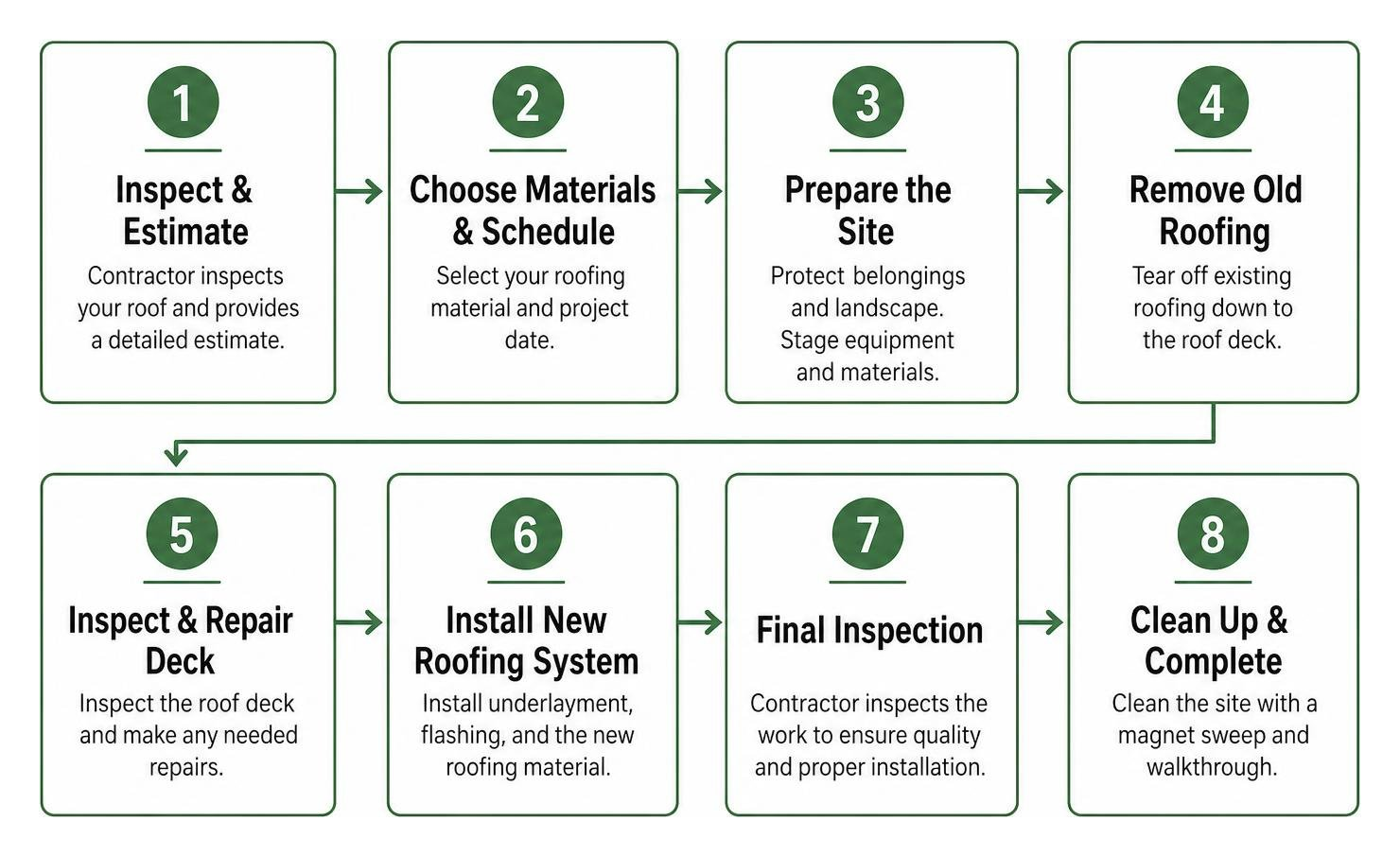
How Material Choices Drive the Average Cost of a New Roof in 2026
Material selection accounts for approximately 40% to 50% of your total invoice. In 2026, standard architectural asphalt shingles remain the dominant residential choice across Southeastern Wisconsin due to their optimal balance of weather protection and affordability. Homeowners evaluating their budget can check current asphalt shingle costs to see how various dimensional grades compare.
- Architectural Asphalt Shingles: Representing over 80% of residential installs, these laminated multi-layer shingles cost between $5,800 and $20,000 installed, delivering durable resistance against seasonal freeze-thaw cycles and high winds.
- Metal Roofing: Standing-seam and exposed-fastener metal systems range between $5,700 and $25,000 for standard applications, stretching to $36,000+ on larger homes. Metal sheds heavy snow easily and boasts superior wind resistance.
- Clay and Concrete Tile: Running from $8,500 to $26,400 or more, heavy tile systems require reinforced roof trusses to handle the substantial structural load.
- Natural Slate & Stone: The pinnacle of longevity, slate runs from $5,800 for small specialty accents up to $30,000–$60,000+ for whole-home installations, demanding specialized artisan labor.
Key Variables Influencing Total Roof Replacement Pricing
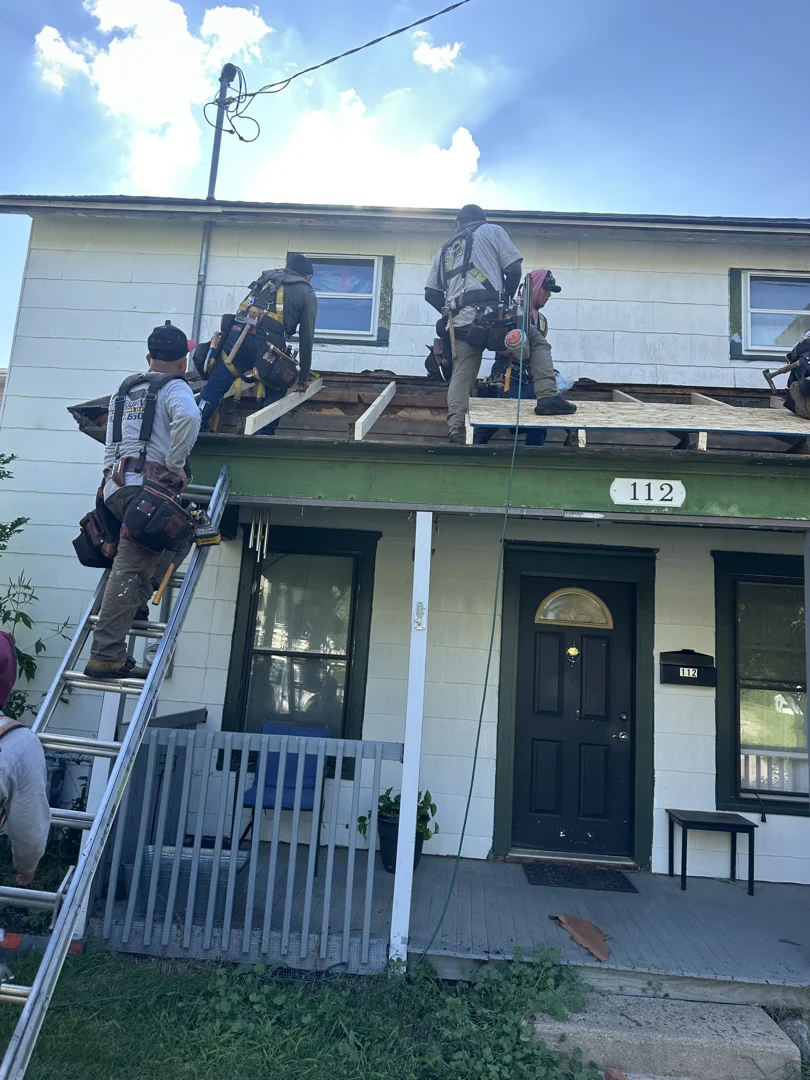
Every roof presents unique architectural challenges. Two identical homes with identical floor plans can receive vastly different quotes based on roof pitch, structural integrity, and jobsite accessibility. Discovering how roofing contractors calculate costs helps homeowners see why line items vary from bid to bid.
Labor Rates, Complexity, and Pitch Surcharges
Labor represents 40% to 60% of the total roof replacement cost, averaging between $4,000 and $6,000 on standard installations. Hourly rates for skilled roofing professionals typically run from $40 to $90 per worker. When evaluating a proposal, reviewing the typical labor cost to shingle a roof clarifies the skilled trade investment required for safety and code compliance.
Roof slope heavily influences labor fees. Low-to-moderate pitches (4/12 to 6/12) are easy to walk and stage. Once a roof reaches a steep pitch (8/12, 10/12, or 12/12), crews must install scaffolding, roof jacks, and continuous harness fall-arrest systems. A steep pitch or multi-faceted roof with multiple dormers, turrets, and valleys can add $1,000 to $3,000 in dedicated labor expenses.
Hidden Jobsite Expenses: Decking, Permits, and Disposal
When the old roof comes off, unexpected structural requirements can emerge:
- Decking Repairs: Soft, rotted, or water-delaminated plywood and OSB decking cannot hold roofing nails securely. Replacing rotted decking costs roughly $80 to $135 per 4×8 sheet.
- Building Permits: Municipal building permits generally range from $100 to $1,400 depending on your local city or township requirements.
- Tear-Off and Disposal: Removing and hauling away old roofing shingles averages $1.00 to $2.50 per square foot, which covers roll-off dumpster rentals and landfill tipping fees.
- Underlayment and Flashing: High-performance synthetic underlayments, self-adhering ice-and-water shields at the eaves and valleys, drip edges, and custom chimney step flashing are necessary components to protect against moisture intrusion.
Regional Cost Disparities and Market Price Drivers in 2026
Where you live directly shapes labor rates, code requirements, and logistics. According to industry analyses published in the 2026 Roofing Cost Report, material and labor adjustments shift significantly across regional markets.
Supply Chain Shifts, Tariffs, and Inflationary Pressures
The broader building products market has faced measurable cost adjustments over recent quarters:
- Manufacturer Increases: Six major asphalt shingle manufacturers announced price increases throughout early 2026, totaling cumulative jumps of 10% to 16% due to asphalt, fiberglass, and petroleum transport input costs.
- Raw Material Tariffs: Trade tariffs on imported raw steel and aluminum have added upwards of 12% to 25% to standing-seam metal roofing supply costs.
- Distribution Consolidation: Large-scale private equity acquisitions across regional building material supply houses have tightened competitive margins, standardizing material distribution pricing nationwide.
Geographical Labor Variations and Climate Requirements
Local building codes dictate specific material standards. In northern regions like Wisconsin, building codes require self-adhering ice-and-water membranes extending at least 24 inches inside the interior heated wall line to prevent leaks from winter ice dams. In high-wind coastal or severe convective storm corridors, mechanical fastener spacing, enhanced hurricane clips, and impact-resistant Class 4 shingles are required, altering baseline project investments.
Roof Repair vs. Replacement: Making the Financially Sound Choice
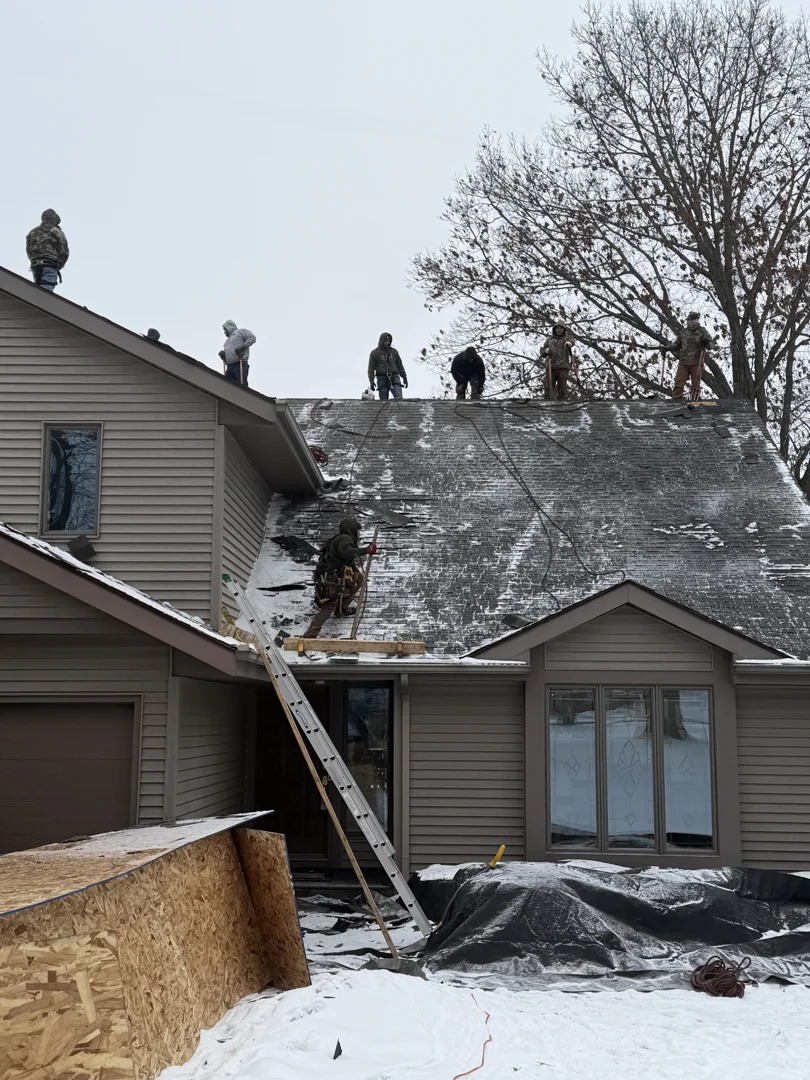
Homeowners faced with unexpected leaks often struggle between a targeted repair and a full system tear-off. Weighing roof repair vs. replacement depends on your system’s overall age, previous maintenance history, and the geographic extent of the damage.
Critical Signs Indicating Full System Failure
If your roof is over 18 to 20 years old and exhibits wide-scale deterioration, localized repairs act as temporary patches over failing infrastructure. Reviewing key signs that it’s time to install a new roof can confirm if your system has reached the end of its functional life:
- Widespread Granule Loss: Bare patches exposing asphalt substrate, with gutters clogged full of mineral granules.
- Cupping, Curling, or Brittle Shingles: Shingles losing their mechanical bond and flexibility due to long-term UV exposure.
- Structural Sagging: Visible depressions in rafter lines indicating prolonged deck rot or structural moisture retention.
- Interior Leaks Across Multiple Rooms: Chronic moisture spots showing on ceiling drywall after driving rains or snow melts.
ROI, Resale Value, and Smart Cost-Saving Strategies
A new roof delivers one of the highest returns on investment in residential exterior remodeling. Installing a new architectural asphalt shingle system yields an average ROI of 60% to 68% in added home market value, while protecting equity during home buyer inspections. Understanding the investment return when replacing your asphalt shingle roof helps you budget confidently.
To maximize your budget:
- Obtain Multiple Itemized Quotes: Compare detailed, line-item proposals covering tear-off, brands, underlayment grades, and cleanup.
- Explore Seasonal Timing: Scheduling non-emergency replacements during early spring or late autumn shoulder seasons can occasionally unlock labor flexibility.
- Verify Manufacturer Warranties: Investing in a certified contractor backed by enhanced 50-year non-prorated system warranties protects your home over the long haul.
Frequently Asked Questions About Roof Replacement Costs
What is the typical lifespan of different roofing materials?
Standard 3-tab asphalt shingles last approximately 15 to 20 years. Dimensional/architectural asphalt shingles last 25 to 30 years under normal weather conditions. Standing-seam metal roofs regularly deliver 40 to 70 years of service life, while composite tiles last 50+ years and authentic quarried slate can endure for 75 to 150+ years.
Does homeowners insurance cover the cost of a new roof?
Homeowners insurance policies typically cover roof replacement only when damage is caused by sudden, covered acts of nature—such as hail impacts, tornado-force winds, or falling tree limbs. Insurance does not cover standard wear and tear, cosmetic aging, or preventable leaks stemming from neglected maintenance. Check whether your coverage utilizes Replacement Cost Value (RCV), which reimburses full replacement costs after deductibles, or Actual Cash Value (ACV), which deducts for depreciation based on the roof’s age.
How much can I save by doing a tear-off versus an overlay?
Installing a second layer of shingles over an existing roof (an overlay) can save $1.00 to $1.25 per square foot upfront by skipping tear-off labor and dump fees. However, overlays trap excess summer heat, reduce the new shingles’ expected lifespan by 15% to 25%, prevent roofers from inspecting or repairing rotted wood decking underneath, and often void manufacturer warranties. Complete tear-offs remain the recommended industry standard for lasting performance.
Conclusion
Replacing your roof is a major home investment, but knowing what drives the numbers gives you complete control over your project. From material choices and roof pitch to local labor and tear-off requirements, having an accurate financial roadmap ensures you get dependable shelter without paying for unnecessary extras.
When you are ready to explore options for your home, reach out to our licensed, local team at Smith Roofing & Exteriors for a transparent, fully itemized estimate backed by dedicated local craftsmanship.