Choosing Galvanized Steel Roofing Panels
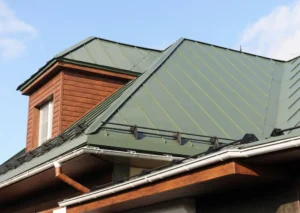
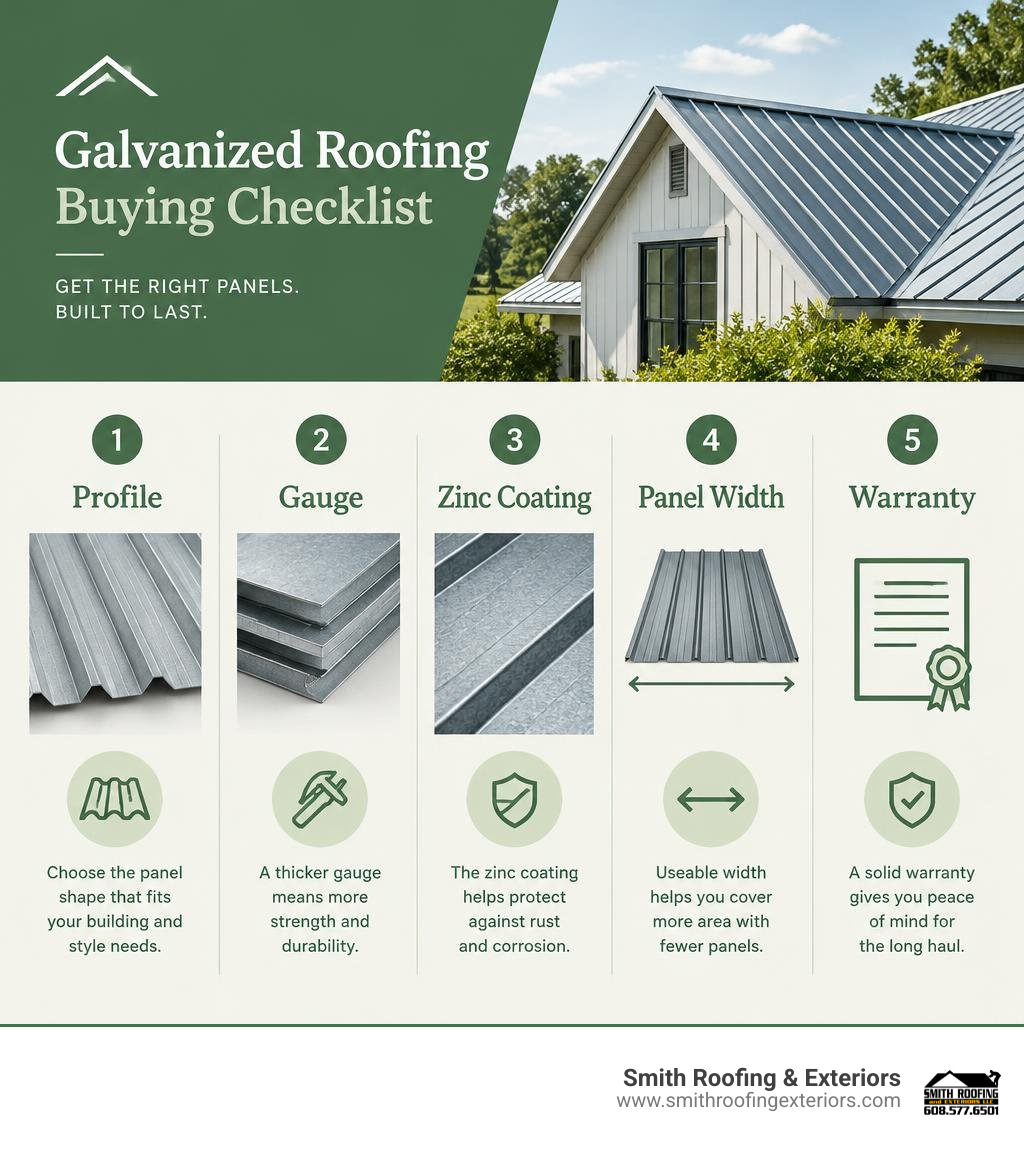
If you are buying galvanized steel roofing, start with the building and the weather it faces. Corrugated and ribbed panels are practical choices for sheds, barns, and other buildings where cost matters. For a home, ask about panel profiles, visible versus hidden fasteners, and the finished look. In every quote, check the steel gauge, zinc coating weight, usable panel width, and warranty before comparing prices.
Galvanized roofing is steel coated with zinc to slow rust. A well-chosen, well-maintained roof can last 20 to 50 years, but moisture, scratches, and poor installation can shorten its life. Learn more about the benefits of installing a metal roof.
I’m Matt Smith, owner of Smith Roofing & Exteriors in Fort Atkinson. I help property owners weigh roofing choices, including galvanized steel roofing, with a focus on clear information and long-term upkeep.
Key galvanized steel roofing vocabulary:
Introduction
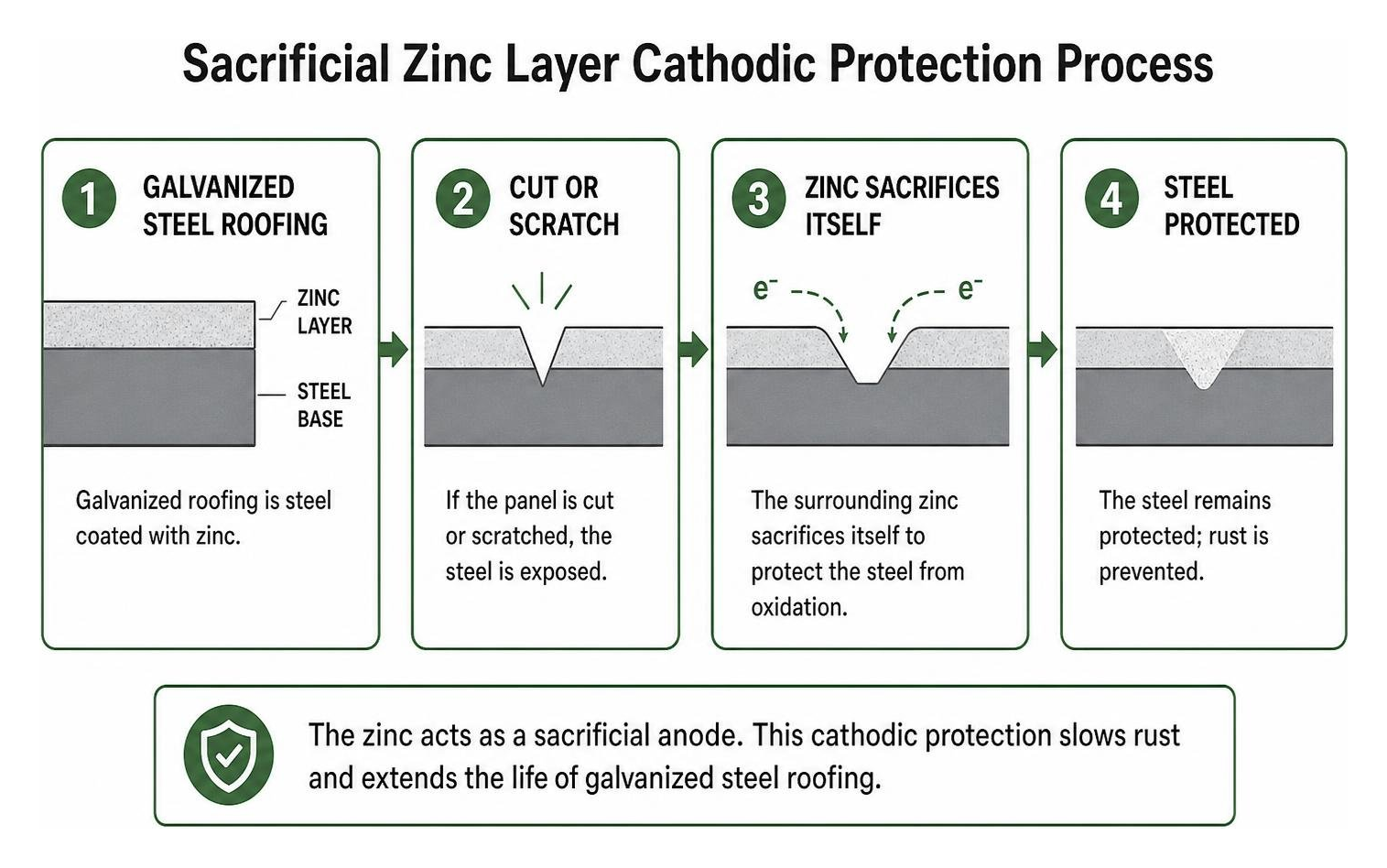
At its core, galvanized steel begins as a structural steel base sheet that undergoes hot-dip galvanization. The raw steel passes through a bath of molten zinc, forming a metallurgical bond where the zinc acts as a sacrificial anode. This means that if the panel is cut or scratched, the surrounding zinc sacrifices itself to protect the underlying steel from oxidation.
Weighing just 1.0 to 1.5 pounds per square foot, these panels are exceptionally lightweight compared to slate or concrete tiles, placing minimal stress on framing. Furthermore, galvanized steel delivers strong environmental value, boasting an end-of-life recyclability rate exceeding 85%.
Top Galvanized Steel Roofing Panel Styles and Profiles
Selecting the right profile ensures your building achieves the ideal blend of weather protection and curb appeal. To explore all metal options, check out our complete guide to metal roofing.
Corrugated Galvanized Steel Roofing Sheets for Maximum Strength
Classic corrugated sheets feature a continuous wave pattern that provides high structural rigidity across spans. Discover why corrugated steel roofing sheets easily outlast traditional shingles in agricultural and residential settings. These exposed-fastener panels are standard for workshops, barns, and detached garages throughout Jefferson and Walworth counties. Reputable manufacturers produce them according to strict standards, such as those detailed in the Sino Steel international buyer’s guide.
Ribbed and Standing Seam Galvanized Steel Roofing Systems
For a sleeker visual, ribbed systems like Purlin Bearing Rib (PBR) and 5V Crimp panels incorporate raised trapezoidal ribs that elevate structural load handling. If you prefer hidden fasteners, standing seam systems conceal clips beneath vertical interlocking seams, maximizing wind uplift resistance.
Typical 26-gauge to 29-gauge exposed-fastener ribbed systems range from $4.50 to $7.50 per square foot installed, while premium G-90 standing seam roofs cost between $8.00 and $14.00 per square foot.
Galvanized Steel vs. Galvalume: Performance and Cost Differences
Galvalume panels feature a coating of roughly 55% aluminum, 43.5% zinc, and 1.5% silicon. While Galvalume typically lasts 40 to 70 years and reflects more radiant heat, traditional galvanized steel excels in specialized settings. For instance, galvanized zinc holds up far better in livestock shelters because Galvalume deteriorates quickly when exposed to agricultural ammonia fumes.
For high-salinity zones, consider aluminum roofing in coastal environments, or review choosing a galvalume standing seam roof for standard residential properties.
| Feature | Galvanized Steel (G90) | Galvalume (AZ50/AZ55) |
|---|---|---|
| Coating Composition | 100% Zinc | 55% Aluminum, 43.5% Zinc, 1.5% Silicon |
| Typical Lifespan | 20 to 50 Years | 40 to 70 Years |
| Cost Comparison | Baseline ($4.50–$14.00/sq. ft.) | 5% to 15% Higher Upfront Cost |
| Animal Confinement / Ammonia | Excellent Resistance | Poor (Rapid Degradation) |
| Salt Spray Exposure | Moderate | Superior |
How to Choose and Maintain Your Metal Roof Investment
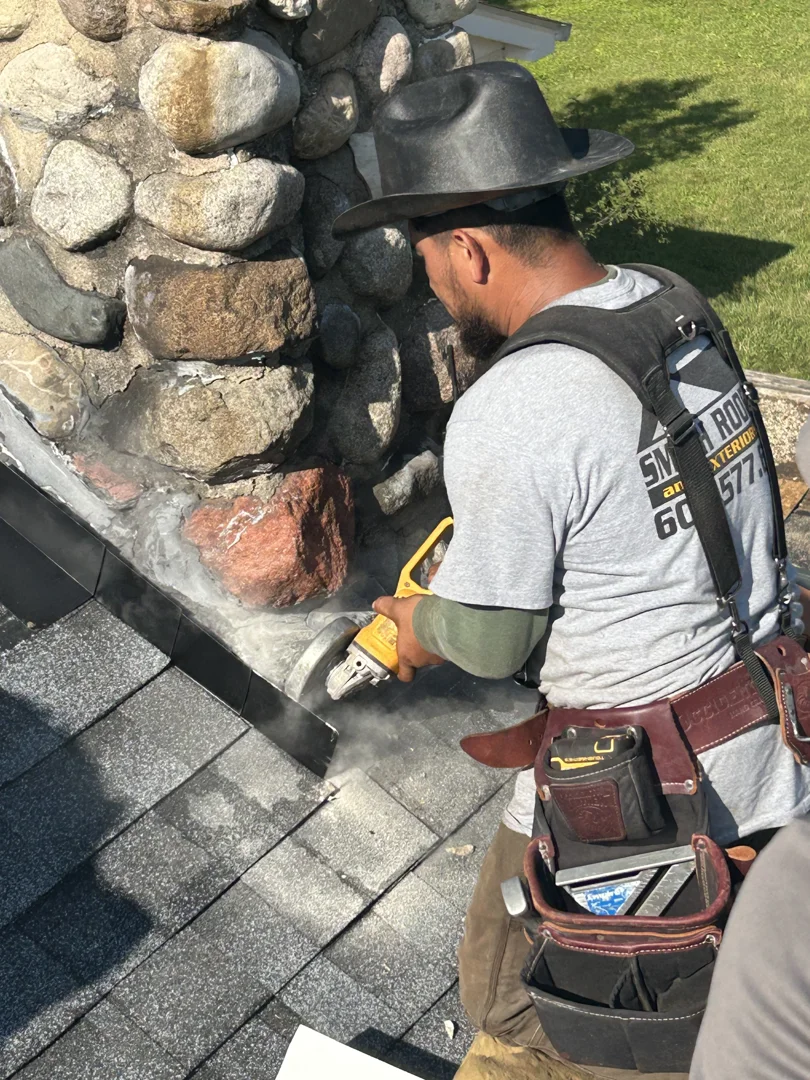
A metal roof performs only as well as its engineering and installation. Sizing your panels correctly and maintaining protective barriers guarantees maximum service life.
Gauge, Zinc Coating Weights, and Impact Resistance
Metal thickness is measured by gauge; a lower gauge number indicates thicker steel. For residential and commercial buildings across Lake Mills, Delavan, and Elkhorn, we recommend 24-gauge or 26-gauge steel, reserving thinner 29-gauge sheets for light outbuildings.
Zinc coating weight is equally vital. Standard agricultural panels often use lighter G60 coatings, but residential roofs should feature at least G90 (0.90 oz of zinc per square foot) or heavy-duty Z600 coatings, as highlighted by Freeman Group roofing materials specifications and the Heritage Roofing Group Z600 guide.
Hail causes approximately $1.6 billion in residential roof damage nationwide each year. Heavy-gauge galvanized steel routinely achieves UL 2218 Class 4 impact resistance. As documented in the McElroy Metal technical bulletin on hail damage, dent resistance increases proportionally with the square of the steel’s yield strength and the fourth power of its thickness.
Proper Installation and Long-Term Corrosion Prevention
Quality components prevent premature failure:
- Flashing Details: Install weather-tight transitions at eaves and valleys.
- Fasteners and Sealants: Use UV-stable gaskets and heavy-duty sealants for metal roofing.
- Thermal Movement: Allow room for expansion and contraction in long panels to eliminate oil canning (visible surface waviness).
- Maintenance: Routinely clear wet leaf debris and conduct periodic inspections for metal roof damage.
Selecting the Best Metal Roofing Solution for Your Property
When evaluating metal roofing options for your property in Fort Atkinson, Edgerton, Burlington, or Lake Geneva, keep these critical factors in mind:
- Building Type and Use: Select heavy-duty galvanized profiles for agricultural barns or workshops where animal waste or chemical fumes are present.
- Coating and Gauge Specifications: Insist on minimum G90 zinc coatings and 26-gauge or thicker steel for residential homes.
- Local Climate Resilience: Ensure panel profiles and fasteners are rated for regional snow loads, high wind uplift, and severe hail.
- Professional Workmanship: Partner with experienced, local contractors who understand thermal expansion, cut-edge protection, and precise flashing integration.
Ready to upgrade your property with durable, weather-resistant metal panels? Visit our metal roofing solutions category to explore top-rated systems or schedule your consultation with Smith Roofing & Exteriors today.