Wind Damage Roofing: What Every Wisconsin Homeowner Needs to Know
Wind damage roofing is one of the most common — and most misunderstood — problems homeowners face after a storm. Here’s a quick overview of what to look for and what to do:
Quick Reference: Wind Damage Roofing at a Glance
| Question | Short Answer |
|---|---|
| When does wind damage a roof? | Damage can start at 45–50 mph, especially on older roofs |
| What are the top signs? | Missing shingles, curled edges, granule loss in gutters, interior water stains |
| What should I do first? | Stay safe, document with photos, then call a roofer |
| Is it covered by insurance? | Most standard policies cover sudden wind damage |
| How urgent is it? | Very — mold can grow within 24–48 hours of water intrusion |
After a storm rolls through Wisconsin, it’s easy to focus on the downed branches and scattered debris in your yard. But your roof may have taken the hardest hit — and the damage isn’t always obvious from where you’re standing.
Wind doesn’t just blow shingles off. It creates uplift pressure that breaks adhesive seals, loosens flashing, and exposes your home’s underlying structure to water. Small issues left unaddressed can quietly escalate into thousands of dollars in repairs.
This guide walks you through everything — from spotting the early signs of damage to navigating your insurance claim — so you can act fast and protect your home.
I’m Matt Smith, owner of Smith Roofing & Exteriors, and over the years I’ve helped hundreds of Wisconsin homeowners identify and recover from wind damage roofing situations — from a handful of missing shingles to full storm restorations. Let’s make sure you know exactly what to look for and what to do next.
Wind damage roofing word roundup:
The Science of Wind Damage Roofing
To understand wind damage roofing, we have to look at physics. Most people think wind just “blows” shingles off, but it’s actually a bit more complicated. Wind damage is often the result of pressure differentials—specifically, the Bernoulli principle. As wind moves quickly over the surface of your roof, it creates a zone of negative pressure (suction) above the shingles, while the air inside your attic remains at a higher, positive pressure. This creates “uplift.”
Think of your roof like an airplane wing. The faster the air moves over the top, the more “lift” it generates. On a house, this lift targets the edges, eaves, and ridges most aggressively. When that suction force exceeds the strength of the shingle’s adhesive seal or the holding power of the nails, the shingle lifts. Once one shingle is compromised, the wind can get underneath the rest, creating a “zipper effect” that peels away entire sections.
We saw this recently when Jefferson residents clean up from storm damage – Spectrum News reported on the severe weather that swept through our area in April. Those straight-line winds were powerful enough to move heavy objects and, unfortunately, strip roofs across Southeastern Wisconsin.
Wind Speed Thresholds
How much wind does it actually take to cause a problem? You might be surprised. While most modern roofs are designed to handle significant gusts, the reality on the ground in places like Fort Atkinson or Lake Mills can be different based on the age of the materials.
| Wind Speed (MPH) | Potential Damage Level |
|---|---|
| 45–50 mph | Minor damage starts; loose or older shingles may lift or curl. |
| 58–70 mph | Severe thunderstorm levels; can break limbs and strip 3-tab shingles. |
| 75–90 mph | Hurricane-force; significant shingle loss, flashing damage, and debris impact. |
| 100+ mph | Tornado/Derecho levels; structural damage and widespread roof failure. |
Standard 3-tab shingles are often only rated to 60 mph (ASTM D3161 Class A). If you have architectural shingles, you’re in better shape, as they typically reach 110 mph (Class F) or even 150 mph (Class H). However, a single high nail—a common installation error—can reduce a shingle’s wind rating by up to 50%.
The Physics of Uplift
Uplift doesn’t hit the roof evenly. Wind accelerates as it hits the vertical walls of your home and is forced upward and over the roof edge. This creates localized high-suction zones at the eaves, rakes, and ridges. If you live in a particularly exposed area of Walworth or Elkhorn, your roof corners are under the most stress.
This is why we often see the first signs of wind damage roofing at the very edges of the house. Once the perimeter seal is broken, the rest of the roof becomes vulnerable to cascading failure.
Spotting the Signs: What Wind Damage Looks Like
Identifying wind damage is tricky because it isn’t always as obvious as a giant hole in the roof. Sometimes, the damage is “functional”—meaning the shingles look okay from the ground, but their internal seals are broken, leaving them to flap in the next breeze.
If you’re wondering how to tell if you’ve been hit, we’ve put together a guide on Blow Me Away How To Handle Wind Damaged Roof Repair Without Losing Your Mind that dives deep into the emotional and technical side of repairs.
Visible Signs of Wind Damage Roofing
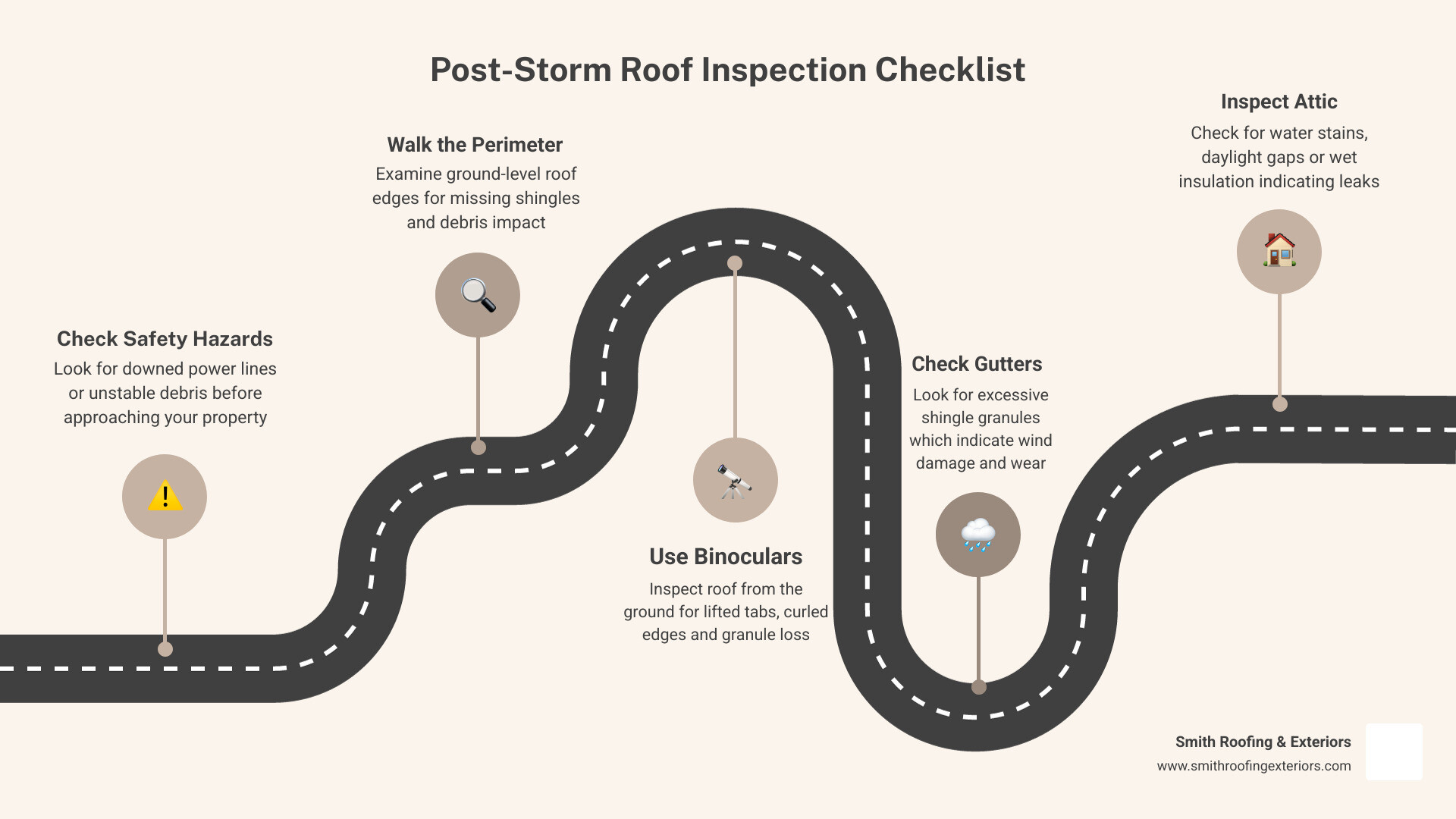
Start your inspection by walking the perimeter of your home. You are looking for:
- Missing Shingles: The most obvious sign. If you see dark patches or exposed underlayment, you have a problem.
- Curled or Lifted Edges: Use binoculars to look at the edges of the shingles. If they are peeling upward, the adhesive bond has failed.
- Creased Shingles: This is a classic sign of wind damage. A shingle flips up in the wind, folds over, and then lays back down. This leaves a horizontal crease where the fiberglass mat has fractured.
- Granule Loss: High winds and debris can scrub the protective granules off your shingles. Check your gutters—if they look like they’re filled with coarse sand, your shingles are losing their weatherproofing layer.

Hidden Attic Indicators
Sometimes the best way to see roof damage is from the inside. Grab a flashlight and head to the attic.
- Water Stains: Look for yellow, brown, or grey rings on the underside of the roof decking or along the rafters. Water often travels 10–15 feet along a rafter before it drips, so the leak might not be directly above the stain.
- Wet Insulation: Damp or matted insulation is a surefire sign of water intrusion.
- Daylight Gaps: If you can see “stars” (pinpricks of light) through the roof boards during the day, water can definitely get in.
- Mold Growth: Mold can colonize wet wood within 24–48 hours. If you smell a musty odor, you likely have a hidden leak.
Immediate Steps After a Wind Storm
When the clouds clear, your first instinct might be to grab a ladder. Stop. Safety is our number one priority. Ladder falls cause over 500,000 injuries and roughly 300 deaths annually. Especially after a storm, roofs can be slippery, and structural integrity may be compromised.
If you’re unsure where to start, check out our checklist on Emergency Roof Repair After A Storm What To Do.
Safety and Documentation
Before you do anything else, check for downed power lines. If you see any, stay far away and call the utility company immediately. Once the area is safe, begin your documentation.

- Take Photos: Document everything from the ground. Take wide shots of the house and close-ups of any debris or shingle fragments you find in the yard.
- Binocular Inspection: This is the safest way to see detail. Look for those creased or lifted shingles we mentioned earlier.
- Interior Check: Walk through every room and check the ceilings for new spots or dampness.
Professional Solutions for Wind Damage Roofing
If you find damage, you need to act fast. We recommend initiating repairs within a 24-48 hour window to prevent secondary issues like rot or mold.
We offer 24/7 emergency services for residents in Lake Mills, WI and surrounding areas. Whether you need emergency tarping, storm damage repair, or a full professional inspection in Delavan, getting a qualified roofer on site quickly is vital. Knowing the Top 7 Signs Your Home Needs Emergency Roof Repair can save you from a total ceiling collapse.
Repair vs. Replacement: Making the Right Choice
This is the question every homeowner asks: “Do I just need a patch, or do I need a whole new roof?” The answer depends on a few factors, including the extent of the damage and local building codes.
We’ve seen how How Roof Inspections Can Save Homeowners Thousands In Repairs by catching small issues before they require a full replacement.
When to Repair
If the wind only claimed a few shingles and the rest of the roof is in good condition, a spot repair is often the way to go.
- Minor Lifts: If the shingles are still in good shape but the seal has broken, they can sometimes be resealed with roofing cement.
- Shingle Matching: As long as we can find a color match, a repair is a cost-effective way to restore your home’s “envelope.”
- Age: If your roof is less than 10 years old, it usually makes more sense to repair.
For more on this, read about The Difference That A Timely Roof Repair Can Make.
When to Replace
Sometimes, a repair is just a band-aid on a bigger problem.
- The 25% Rule: In many parts of Wisconsin, building codes dictate that if more than 25% of a roof slope is damaged, the entire slope (or even the whole roof) must be replaced to meet current safety standards.
- Zipper Effect: If the wind has lifted shingles across the entire field of the roof, the structural integrity of the seals is gone. Patching 50 different spots is rarely effective.
- Roof Age: If your roof is 15–20 years old, the shingles are likely too brittle to be repaired. Lifting an old shingle to slide a new one underneath often causes the old one to crack, creating a never-ending cycle of damage.
Whether it’s Fort Atkinson/Roofing/Residential/Storm Damage or Fort Atkinson/Roofing/Commercial/Storm Damage, we can help you determine the most cost-effective path forward.
Navigating Insurance Claims for Wind Damage
Wind and hail account for 49% of all homeowners insurance claims, with an average payout of $13,511 per claim. Dealing with insurance can be stressful, but understanding the process helps.
Documentation for Claims
Insurance companies cover “sudden and accidental” damage. They do not cover general wear and tear. To get your claim approved, you need proof:
- Storm Date: Keep a record of when the high winds occurred.
- Photos: Your timestamped photos from immediately after the storm are gold.
- Professional Assessment: A report from a certified contractor like us carries a lot of weight with adjusters. We use Xactimate, the industry-standard software that insurance adjusters use, to ensure our estimates speak their language.
Avoiding Claim Denial
Insurers may try to deny a claim by citing pre-existing damage or poor installation. Common red flags include:
- High-Nailing: If the original installers put nails too high, the shingles weren’t properly secured, and the insurer might argue it is an installation issue, not a storm issue.
- Maintenance Neglect: If you’ve ignored small leaks for years, they may deny coverage for resulting mold or rot. This is Why You Should Never Ignore A Residential Roof Leak Even If It Is Small.
Frequently Asked Questions about Wind Damage
What wind speed causes roof damage?
Most residential roofs are designed to handle up to 90 mph, but in reality, damage often begins at 45–50 mph. This is especially true for older roofs where the adhesive strips have dried out or for roofs with 3-tab shingles rather than architectural ones.
Does homeowners insurance cover wind damage?
Yes, most standard policies cover wind, hail, and fallen debris. However, you should check if you have a separate wind/hail deductible, which is common in some areas. Coverage also depends on whether you have Actual Cash Value (ACV) or Replacement Cost Value (RCV) coverage. RCV is generally better for homeowners as it covers the full cost of a new roof, whereas ACV subtracts depreciation.
How quickly should wind damage be addressed?
Immediately. We recommend getting an inspection within 24–48 hours. Water intrusion can lead to mold colonization almost instantly, and even a small leak can cause structural rot over time. There are at least 5 Reasons To Fix Roof Leaks Asap that every homeowner should know.
Conclusion
Living in Southeastern Wisconsin means dealing with the elements. From the gusty winds in Burlington to the storms that roll across Lake Geneva, your roof is your home’s first line of defense.
Preventive maintenance is your best friend. We recommend:
- Trimming Trees: Keep branches at least 10 feet away from your roof to prevent them from becoming wind-driven battering rams.
- Upgrading Materials: If you’re replacing your roof, consider Class H rated architectural shingles and a 6-nail pattern for maximum wind resistance.
- Regular Inspections: Catching a loose shingle in Walworth or Delavan today prevents a flooded attic tomorrow.
Whether you need help in Fort Atkinson, Delavan, Elkhorn, Walworth, Burlington, or anywhere else in Southeastern Wisconsin, the team at Smith Roofing & Exteriors is here to help.
Don’t let the next storm catch you off guard. If you suspect your home has sustained damage, or if you just want the peace of mind that comes with a professional evaluation, Schedule a professional wind damage inspection in Janesville with us today. We’ll provide a transparent assessment and help you navigate the repair process every step of the way.