When the Wind Hits Hard: What Wisconsin Homeowners Need to Know
Wind damage to roof systems is one of the most common — and most misunderstood — problems homeowners face after a storm. It can range from a few lifted shingles to entire sections torn away, and the worst part? A lot of it is invisible from the ground.
Here’s a quick overview of what you’re dealing with:
Common signs of wind damage to a roof:
- Missing, curling, or creased shingles
- Granules collecting in gutters or downspouts
- Damaged or bent flashing around chimneys and vents
- Water stains on ceilings or attic insulation
- Loose soffits, fascia, or gutter sections
How much wind does it take?
| Wind Speed | Expected Damage |
|---|---|
| 25–40 mph | Exposes existing weak spots |
| 45–50 mph | Loose or older shingles start to lift |
| 55–75 mph | Shingle sections can tear off entirely |
| 75+ mph | Structural damage, widespread loss |
Most roofs start showing damage at 45–50 mph — which is well within the range of a typical Wisconsin thunderstorm.
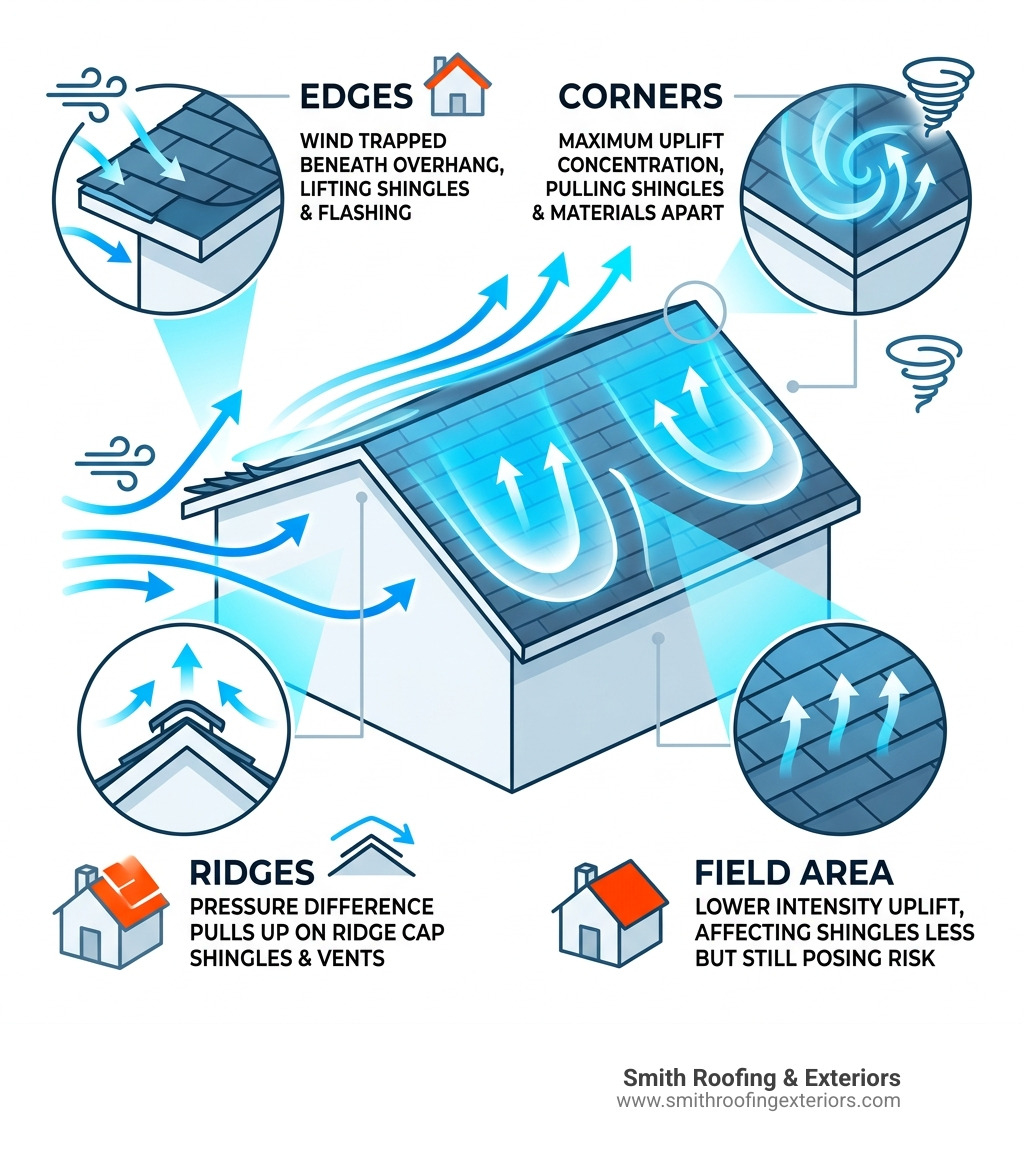
The tricky thing is that wind doesn’t just blow shingles off. It creates uplift pressure — essentially a suction force — that pulls at your roof’s edges, corners, and ridges. Damage can happen fast, and it often gets worse with every storm that follows.
I’m Matt Smith, owner of Smith Roofing & Exteriors, and I’ve spent years helping Wisconsin homeowners assess and recover from wind damage to roof systems across our region. In this guide, I’ll walk you through everything you need to know — from spotting the damage to filing your insurance claim and making smart repair choices.
Understanding Wind Damage to Roof Systems
To understand how wind damage to roof structures occurs, we have to look at the physics of air. Wind doesn’t just hit your house like a giant hand pushing against a wall. Instead, it behaves more like the air moving over an airplane wing. As wind hits the side of your home, it is forced upward and over the roof. This creates a difference in air pressure.
The Science of Suction (Uplift Pressure)
When wind moves rapidly over the surface of your roof, it creates “negative pressure” or suction. This is known as uplift. According to research on Roof Damage from Wind: How It Happens and How to Prevent It, this suction is strongest at the windward corners, eaves, and ridges.
If the wind is strong enough, it can overcome the weight of the roofing material and the strength of the shingle adhesive. Once that seal is broken, the wind can get underneath the shingles, peeling them back like the lid of a tin can.
Positive Pressure and Lateral Gusts
While suction pulls from above, “positive pressure” can push from below. If wind enters your home through a broken window or an open garage door during a storm, it can actually push upward against the roof deck from the inside. When you combine suction from the top and pushing from the bottom, you have a recipe for major structural failure.
Vulnerability Factors
Not all roofs are created equal when it comes to wind resistance. Several factors determine how well your home will fare:
- Roof Geometry: Hip roofs (which slope on all four sides) generally handle wind better than gable roofs (which have two sloping sides and flat ends).
- Age and Condition: As shingles age, the adhesive strips that bond them together become brittle. A roof that is 15–20 years old is far more likely to fail than a newer one.
- Installation Quality: If nails missed the nailing strip or if too few nails were used, the shingles won’t have the mechanical strength needed to stay put.
| Wind Speed (mph) | Potential Impact on Your Roof |
|---|---|
| 45–50 | Can blow off loose shingles and small tree branches. |
| 55–75 | Can rip off entire sections of shingles; damages gutters and siding. |
| 75+ | Hurricane-force winds. Can cause structural damage and knock over large trees. |
| 110+ | Extreme damage; common in intense tornadoes or severe derechos. |
In April 2025, some areas saw record-breaking gusts, proving that even “standard” storms can exceed the design limits of older roofing systems.
Identifying the Signs of Wind Damage to Roof Shingles
After a storm passes through Fort Atkinson or Lake Mills, your first instinct might be to look for missing shingles. While that’s a clear sign of trouble, wind damage to roof shingles is often much more subtle.
The “Zipper Effect” and Missing Shingles
When wind catches the edge of a shingle and breaks the seal, it often doesn’t stop there. It can create a “zipper effect,” where an entire row of shingles peels off in a line. If you see patches of your roof where the dark underlayment or the wooden deck is visible, you have a major emergency on your hands.
Creased and Lifted Shingles
This is the most “invisible” type of damage. High winds can lift a shingle up, flap it back and forth like a flag, and then let it lay back down. Even if it looks flat from the ground, the adhesive seal is broken. More importantly, that flapping often creates a permanent crease or crack across the top of the shingle where the fiberglass mat has fractured. If you don’t catch these, they will eventually break off or allow water to seep in during the next rain.
Granule Loss and Bald Spots
Shingles are coated with ceramic granules to protect the asphalt from UV rays. High winds, often accompanied by wind-driven rain or hail, can scrub these granules off. If you notice “bald spots” on your shingles or see piles of granules (they look like coarse sand) at the end of your downspouts, your roof has lost its primary line of defense.
Flashing and Chimney Damage
Wind can easily peel back the thin metal flashing around your chimney, vents, and valleys. We often see chimney caps completely displaced or flashing pulled away from the masonry, leaving a direct path for water to enter your home.
Interior Signs of Wind Damage to Roof
Sometimes the best way to inspect your roof is from the inside. If you suspect wind damage to roof components, grab a flashlight and head to the attic.
- Water Stains: Look for yellow, brown, or grey rings on your ceiling or rafters.
- Wet Insulation: If your insulation feels damp or looks matted down, you have a leak.
- Daylight Gaps: If you can see sunlight peeking through the roof boards, you have a structural breach.
- Mold Growth: A musty smell in the attic often indicates long-term moisture from a wind-damaged seal.
- Structural Cracks: Severe wind can actually crack rafters or trusses.
For those with flat roofs on commercial buildings, the signs can be different, such as broken seams or pooling water. You can learn more about this in our guide on How To Check Your Flat Roof For Hail Damage After A Storm.
Exterior Indicators of Wind Damage to Roof
Beyond the shingles themselves, the rest of your home’s exterior often tells the story of the storm’s intensity.
- Debris Impact: If there are large tree branches on your roof, there is almost certainly structural or shingle damage underneath them.
- Dented Vents: Metal roof vents and “whirlybirds” often show dents from flying debris or hail.
- Loose Soffits and Fascia: These are the trim pieces under your roof’s eaves. Wind can easily get behind them and rip them loose, exposing your rafters to rot and pests.
- Gutter Granules: As mentioned, heavy granule accumulation in gutters is a red flag.
A systematic approach is best to ensure you don’t miss anything during your post-storm inspection.
Immediate Steps and the Insurance Claims Process
If you’ve discovered wind damage to roof shingles or structures, don’t panic. Taking the right steps in the first 24–48 hours can save you thousands of dollars and a lot of headaches.
1. Document Everything
Before you touch anything, take photos. Use your smartphone to take wide shots of the whole house and close-ups of specific damage. If there are shingles in the yard, take a photo of them where they landed. This evidence is crucial for your insurance adjuster.
2. Prevent Further Damage
Insurance policies generally require you to take “reasonable steps” to prevent further damage. This usually means Emergency Roof Repair After A Storm What To Do, such as tarping over a hole or putting buckets under a leak. Keep your receipts for any materials you buy, as these are often reimbursable.
3. Call a Professional Roofer First
While you might want to call your insurance agent immediately, we usually recommend calling a trusted local contractor like us first. Why? Because adjusters sometimes miss the “hidden” damage like broken seals or creased shingles. Having a professional roofing report in hand when the adjuster arrives ensures nothing is overlooked. You should know What To Expect From Emergency Roof Repair Contractors After A Storm so you aren’t caught off guard.
4. Navigating the Claim
Understanding your policy is key. There are two main types of coverage:
- Actual Cash Value (ACV): This pays what the roof is worth today, factoring in depreciation. If your 20-year-old roof is destroyed, you might only get a small fraction of the replacement cost.
- Replacement Cost Value (RCV): This pays the full cost to replace the roof with a new one of similar quality, regardless of age.
Also, keep in mind the 25% Rule. In many building codes (including some areas in Wisconsin), if more than 25% of a roof slope is damaged, the entire slope must be replaced to ensure structural integrity and a uniform appearance.
Repair Options and Future-Proofing Your Home
Once the damage is assessed, you’ll need to decide on a repair strategy. Depending on the severity, you might be looking at a simple patch job or a full restoration.
Shingle Replacement vs. Full Restoration
If the damage is localized — say, a few shingles blew off one corner — a repair might be sufficient. However, if the roof is older or the damage is widespread, a full replacement is often the smarter financial move. Patching an old roof is like putting a new tire on a car with a blown engine; it doesn’t solve the underlying problem of brittle, aging materials. For business owners, our Commercial Roofing In Fort Atkinson Wi Storm Damage Guide covers the specific needs of larger structures.
Upgrading for the Future
When we perform a wind damage to roof repair, we don’t just want to fix what broke; we want to make it better.
- Impact-Resistant Materials: Consider Class 4 shingles. These are reinforced with a rubber-like polymer (SBS) that makes them much harder to tear or crack.
- Architectural Shingles: These are heavier and more wind-resistant than traditional 3-tab shingles.
- Six-Nail Patterns: While four nails per shingle is standard, we often use a six-nail pattern in high-wind areas to provide extra mechanical hold.
- Hurricane Straps: These metal connectors tie your roof trusses directly to the wall studs, preventing the entire roof from being lifted off during extreme events.
- Sealed Roof Decks: Using a high-quality underlayment or taping the seams of your roof deck provides a secondary waterproof barrier even if the shingles blow off.
Proactive Maintenance
You can’t stop the wind, but you can prepare for it.
- Tree Management: Trim branches so they are at least 10 feet away from your roof. This prevents “branch whipping” and reduces the risk of a fallen limb.
- Attic Ventilation: Proper ventilation equalizes the pressure between your attic and the outside air, which can actually reduce the uplift force on your shingles.
- Regular Inspections: We recommend a professional check-up twice a year — once in the spring and once in the fall.
Frequently Asked Questions about Wind Damage
What wind speed causes roof damage?
Most residential roofs are designed to handle up to 90 mph, but that assumes a perfect installation and a brand-new roof. In reality, wind damage to roof shingles can start at speeds as low as 45–50 mph. If your shingles are older, the adhesive strips may have already failed, making them vulnerable to even moderate gusts.
Does homeowners insurance cover wind damage?
In most cases, yes. Standard homeowners insurance policies typically cover wind, hail, and fallen debris. However, they usually do not cover damage caused by “wear and tear” or lack of maintenance. If your roof was already falling apart before the storm hit, the insurance company might deny the claim. This is why keeping maintenance records is so important. Also, be aware that some policies have separate, higher deductibles for wind and hail damage.
Can I repair wind damage myself?
We strongly advise against it. First, roofing is dangerous, especially after a storm when the structure might be compromised. Second, DIY repairs can often void your manufacturer’s warranty. Professional roofers have the safety equipment and expertise to identify hidden structural issues that a homeowner might miss. Plus, a professional repair is much more likely to be accepted by your insurance company as a permanent fix.
Conclusion
Dealing with wind damage to roof systems is never fun, but it doesn’t have to be a nightmare. By understanding how wind affects your home, knowing the signs to look for, and acting quickly to document and repair the damage, you can protect your investment and your family.
Whether you’re in Fort Atkinson, Jefferson, or Lake Geneva, our local weather can be unpredictable. If you suspect your roof has taken a beating, don’t wait for a leak to tell you there’s a problem. A small repair today can prevent a total roof failure tomorrow.
At Smith Roofing & Exteriors, we pride ourselves on being the local experts you can trust. We offer 24/7 emergency services and transparent pricing to help you get back on your feet after a storm. If you need a hand, check out our Fort Atkinson Storm Damage Restoration services or give us a call. We’re here to make sure your roof is ready for whatever the Wisconsin sky throws at it next!