Why Finding the Right Commercial Roofing Installers Near Me Can Save You Thousands
If you’re looking for commercial roofing installers near me, here’s a quick-start list to find and hire the right one fast:
- Search local directories like Thumbtack or Google for rated commercial roofers in your area
- Verify licensing, bonding, and insurance before any contractor steps on your roof
- Check manufacturer certifications (GAF, Elevate, Duro-Last) for access to stronger warranties
- Request itemized quotes from at least three contractors
- Ask for references from past commercial clients specifically
- Schedule a free inspection to assess your roof’s current condition before committing
A leaking commercial roof isn’t just an inconvenience — it’s a direct threat to your business operations, your inventory, and your building’s structural integrity. Water damage can shut down a facility fast, and in Wisconsin’s harsh climate, a roof that fails in winter can mean serious, costly consequences.
The good news? The right commercial roofing contractor can stop the damage before it spirals. The hard part is knowing who to trust.
There are over 114 commercial roofers listed in many local markets alone — and not all of them are equal in experience, certifications, or safety standards. Choosing the wrong one can void your manufacturer warranty before the job is even finished.
I’m Matt Smith, owner of Smith Roofing & Exteriors, and I’ve helped Wisconsin property owners navigate exactly this challenge — connecting them with qualified commercial roofing installers near me who deliver honest work at transparent prices. In this guide, I’ll walk you through everything you need to make a confident, informed decision.
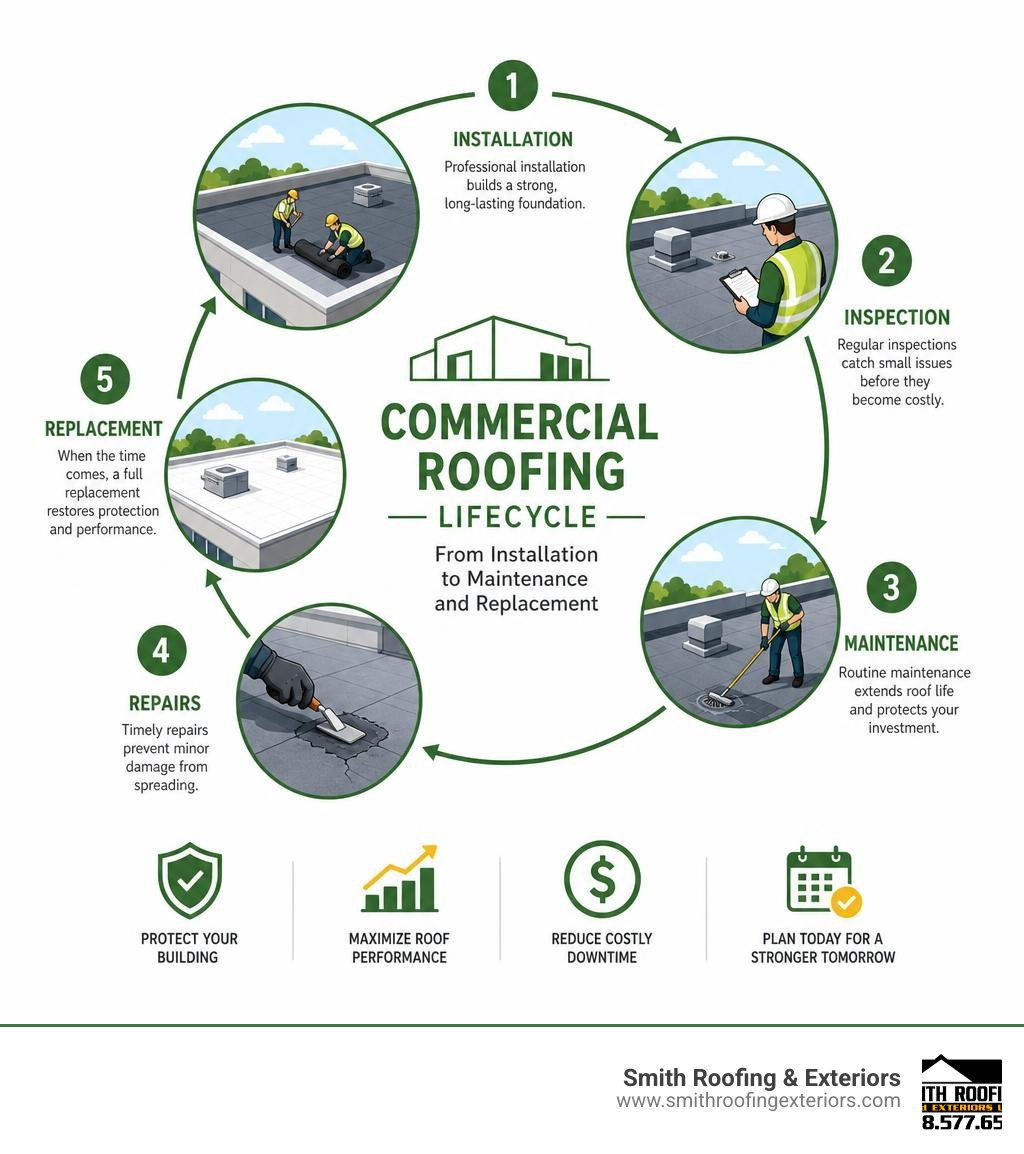
What is Commercial Roofing and How Does It Differ From Residential?
To the untrained eye, a roof is just a roof. But when you step into the commercial sector, the engineering, materials, and installation methods change dramatically.
Residential roofing typically deals with steep slopes, asphalt shingles, and relatively straightforward water shedding. Commercial roofing, on the other hand, usually involves low-slope or entirely flat roofs covering vast expanses of space.
Because flat roofs don’t have the luxury of steep gravity to pull water away, they rely on sophisticated membrane systems, custom-tapered insulation, and dedicated drainage networks to prevent water from ponding. The structural load requirements and local building codes for commercial properties are also significantly more rigid. Commercial roofs must support heavy industrial HVAC units, withstand intense wind-uplift pressures, and handle foot traffic from maintenance crews.
Understanding these differences is crucial when deciding how to protect your asset. For a deeper dive into how building design dictates your roofing options, read our guide on Flat vs. Sloped Commercial Roofing: Which is Best.
Choosing the Right Commercial Roofing System for Your Building
Selecting the right material is the foundation of a successful commercial roofing project. The choices can feel overwhelming, but they generally fall into three main categories: single-ply membranes, metal systems, and multi-ply built-up options.
- TPO (Thermoplastic Polyolefin): This is currently the most popular commercial flat roofing membrane on the market. It is highly reflective, energy-efficient, and features heat-welded seams that create a monolithic, watertight barrier.
- EPDM (Ethylene Propylene Diene Monomer): Often referred to as “rubber roofing,” EPDM has a proven track record spanning over 40 years. It is incredibly durable, handles extreme temperature swings without cracking, and remains pliable down to -60°F.
- PVC (Polyvinyl Chloride): PVC is highly resistant to chemicals, grease, and fire. This makes it the go-to choice for restaurants, food processing plants, and manufacturing facilities where rooftop ventilation releases oils or chemicals.
- Metal Roofing: Extremely durable, fire-resistant, and lightweight. Metal systems are excellent for sloped commercial buildings and offer a long service life.
- Modified Bitumen & Built-Up Roofing (BUR): Traditional multi-layer systems that offer redundant layers of protection. While heavier and more labor-intensive to install, they provide exceptional resistance to physical punctures and heavy foot traffic.
To help you weigh your options, we’ve put together detailed resources on Choosing the Right Commercial Roofing System for Your Building and the classic matchup of Metal vs. Rubber: Choosing the Right Commercial Roofing System.
Here is a quick reference table comparing the three most common flat-roof membranes:
| Feature | TPO | EPDM | PVC |
|---|---|---|---|
| Material Base | Thermoplastic rubber | Synthetic rubber | Vinyl |
| Seam Type | Heat-welded (Very Strong) | Tape / Adhesive | Heat-welded (Very Strong) |
| Reflectivity | High (Excellent energy savings) | Low (Unless coated white) | High (Excellent energy savings) |
| Chemical Resistance | Moderate | Low | High (Resists grease/acid) |
| Typical Lifespan | 15–25 Years | 20–30 Years | 20–30 Years |
Energy-Efficient Roofing Options to Reduce Operating Costs
Your roof does more than keep the rain out — it plays a massive role in your building’s energy bills. In dense urban areas or open industrial parks, traditional dark roofs absorb sunlight, contributing to the “urban heat island effect” and forcing your HVAC systems to work overtime.
By opting for a “cool roof” — typically a white or highly reflective TPO or PVC membrane — you can reflect up to 80% of solar radiation. This simple choice can reduce cooling energy consumption by up to 22% during hot summer months, extending the life of your rooftop air conditioning units and lowering peak demand charges.
Furthermore, we are seeing more businesses prepare for the future by ensuring their new roofs are solar-ready. This involves installing custom-tapered polyiso insulation and proper platform curbs to support solar arrays down the road. For buildings not yet ready for a full replacement, advanced liquid-applied silicone or acrylic roof coatings can restore an aging membrane, seal micro-fissures, and dramatically boost reflectivity at a fraction of the cost.
Learn more about maximizing your property’s efficiency in our article on Raising the Roof with the Best Commercial Roofing Systems.
How to Find and Vet Reputable Commercial Roofing Installers Near Me

Finding a local contractor who understands the unique climate challenges of Southeastern Wisconsin is essential. The freeze-thaw cycles we experience in places like Fort Atkinson and Lake Mills can devastate poorly installed flat roofs. When searching for commercial roofing installers near me, you need to look beyond the first page of search results and dig into their actual credentials.
A great starting point is checking local business directories and localized resources. For example, you can search through THE BEST 10 Roofing near LAKE MILLS, WI 53551 – Yelp to see how contractors rate in your immediate vicinity. If you are located slightly further south, checking regional directories can help you find local specialists who are familiar with municipal permitting and building codes in Jefferson County.
To help streamline your search, we have compiled a local guide: Your Directory for the Best Commercial Roofing Contractors in WI.
When vetting these contractors, pay close attention to their safety records. A professional commercial roofer should be able to provide their Experience Modification Rating (EMR). An EMR of 1.0 is the industry average; a rating below 1.0 (such as 0.65) indicates an exemplary safety record, which translates to fewer job site accidents, lower insurance liabilities, and a more professional, disciplined crew on your roof.
Essential Questions to Ask Commercial Roofing Installers Near Me
Before signing any contract, you should conduct a thorough interview. A commercial roof is a major capital investment, and a reputable contractor will welcome your questions.
To help you vet local options, whether you are browsing the Best Roofers in Delavan, WI | GAF Roofing Contractors or evaluating local installers in Walworth County, here are the critical questions you must ask:
- Are you licensed, bonded, and insured in Wisconsin? Demand to see proof of general liability insurance and workers’ compensation.
- Can you provide a list of local commercial references? Speak to other local building owners who have had similar systems installed.
- How will you minimize disruption to our daily business operations? A professional crew can schedule noisy phases of the project outside of your peak business hours.
- What safety protocols do you enforce? Ensure they comply with OSHA standards and have a dedicated safety manager.
- Does your quote include a complete, itemized breakdown? Ensure that tear-off, disposal fees, decking repairs, and permits are explicitly detailed.
If you are located in the southern lakes area, cross-referencing local reviews on THE BEST 10 ROOFING NEAR LAKE GENEVA, WI 53147 – Yelp will give you a clear picture of how different installers handle client communication and project execution.
Certifications and Licenses to Look For in Commercial Roofing Installers Near Me
The single most important differentiator between a standard contractor and an elite commercial installer is their manufacturer certifications.
Major manufacturers like GAF, Elevate (formerly Firestone), and Duro-Last do not hand out certifications to just anyone. Contractors must undergo rigorous hands-on training, maintain excellent credit ratings, and demonstrate consistent installation quality to achieve these statuses.
Why does this matter to you? Because manufacturer warranties are directly tied to contractor certification. If a non-certified contractor installs a Duro-Last or Elevate system, the manufacturer will not back the warranty.
Certified contractors can offer exclusive long-term guarantees, such as the GAF Diamond Pledge NDL (No Dollar Limit) Roof Guarantee, which can cover both materials and labor for up to 35 years. These warranties are fully backed by the manufacturer, giving you ultimate peace of mind even if the installing contractor were to go out of business decades down the road.
Commercial Roofing Cost, Timelines, and Key Decisions

A commercial roofing project represents a significant financial and operational commitment. Proper planning requires an understanding of how material costs, labor rates, and building logistics interact to shape your final estimate. To explore more about the strategic decisions behind commercial projects, browse our Category: Commercial Roofing archive.
Cost Factors and Typical Pricing
While every building is unique, most commercial flat roofing projects in 2026 range from $5 to $15 per square foot.
Several key variables drive where your project will fall on this spectrum:
- Roof Size and Complexity: Larger, wide-open roofs (like warehouses) are often more cost-effective per square foot than smaller roofs crowded with HVAC units, pipes, and skylights that require meticulous hand-flashing.
- Material Selection: EPDM and TPO are highly cost-effective, while specialized chemical-resistant PVC membranes or commercial standing-seam metal systems sit at the higher end of the pricing scale.
- Accessibility: Tall urban buildings that require cranes, street closures, and complex staging will naturally incur higher labor and logistical costs than a single-story suburban retail center.
- Local Permits and Code Compliance: Meeting local insulation R-value mandates (which often require multiple layers of polyiso board) can influence material costs.
Tear-Off vs. Re-Roofing and What to Expect During Installation
When your commercial roof reaches the end of its lifespan, you face a critical decision: a full tear-off or a re-roof (recover).
- Tear-Off: This involves removing all existing roofing materials down to the structural deck. While more expensive and labor-intensive, it allows us to inspect the decking for hidden rot, replace wet insulation, and start with a perfectly clean slate.
- Re-Roofing (Recover): If your structural deck is sound and there is only one existing roof layer with minimal moisture intrusion, we can install a new membrane directly over the old one. This saves money on labor and disposal fees, but building codes strictly prohibit installing a third roof layer.
During the installation process, our priority is maintaining your business continuity. We coordinate material deliveries, crane operations, and high-noise tasks to minimize the impact on your employees and customers. Once the installation is complete, a certified inspector conducts a final walkthrough to verify that every seam, pipe boot, and flashing detail meets strict manufacturer specifications before issuing your warranty.
Frequently Asked Questions About Commercial Roof Maintenance
Keeping your commercial roof in peak condition requires a proactive approach. Here are the answers to the questions we hear most frequently from Wisconsin business owners.
How often should commercial roofs be inspected and maintained?
We recommend scheduling professional commercial roof inspections at least twice a year — once in the spring to evaluate winter freeze-thaw damage, and once in the fall to prepare for the upcoming snow loads.
Regular maintenance should include clearing debris from drains, gutters, and scuppers to prevent water backup, inspecting pipe boots for cracks, and checking the integrity of perimeter flashing. Additionally, you should always schedule an inspection immediately following any severe weather event, such as high winds or heavy hail.
What are the signs that my commercial roof needs repair or replacement?
Keep an eye out for these warning signs that indicate your roof needs immediate professional attention:
- Water Stains or Active Leaks: Mold, ceiling stains, or dripping water inside your facility.
- Standing or Ponding Water: Water that remains on your flat roof for more than 48 hours after a rainstorm.
- Visible Membrane Damage: Cracks, blisters, punctures, or open, failing seams.
- Sagging Decking: Low spots or soft areas when walking across the roof.
- Rising Energy Bills: Sudden spikes in heating or cooling costs can indicate that your roof insulation has become saturated with water and lost its thermal resistance.
What warranties are typically offered on commercial roofing systems?
Commercial roofing warranties generally fall into two categories:
- Manufacturer Warranties: These cover material defects and, in the case of NDL (No Dollar Limit) warranties, the labor to repair them. These typically range from 15 to 35 years depending on the material thickness and system chosen.
- Workmanship Warranties: Offered directly by the installer, these cover the craftsmanship of the installation. While the industry average is just 2 to 5 years, top-tier installers will stand behind their work with a 10-year craftsmanship warranty paired with a 20-year materials warranty.
Conclusion
Your commercial property is a massive investment, and its roof is the first line of defense protecting your business, tenants, and livelihood. When you are searching for commercial roofing installers near me, don’t cut corners. Choosing a certified, highly experienced local partner ensures your project is completed safely, on time, and in compliance with all manufacturer standards.
At Smith Roofing & Exteriors, we bring decades of hands-on expertise to every commercial project in Fort Atkinson, Lake Mills, Jefferson, Burlington, Delavan, Elkhorn, Lake Geneva, Walworth, Edgerton, and throughout Southeastern Wisconsin. Our experienced local team is committed to delivering superior materials, 24/7 emergency repair services, and completely transparent pricing.
Ready to protect your building and stop the leaks for good? Let’s discuss your project. Explore our Expert Solutions for Commercial Roofing and contact us today to schedule your comprehensive commercial roof inspection.