Your Roof Is Trying to Tell You Something — Are You Listening?
A roof inspection is a thorough, systematic check of every part of your roofing system — from the shingles and flashing on the outside to the rafters and insulation inside your attic. Here’s what you need to know at a glance:
- What it is: A professional evaluation of your roof’s condition, covering exterior materials, structural integrity, and interior warning signs
- How often: At least once a year, twice if possible (spring and fall), and after any major storm
- Who does it: A licensed roofing contractor or certified roof inspector — not just a general home inspector
- How long it takes: Typically 1 to 3 hours depending on roof size and complexity
- What it costs: Most homeowners pay between $125 and $571, with a national average around $331
- Why it matters: Early detection of small problems prevents thousands of dollars in structural damage, mold remediation, and emergency repairs
Wisconsin winters are no joke. Freeze-thaw cycles, heavy snow loads, and spring storms put your roof through a beating every single year. By the time you notice a water stain on your ceiling, the damage has often been building for months — sometimes years.
That’s exactly why a proactive roof inspection is one of the smartest things you can do as a homeowner or property owner. Catching a cracked shingle or failed flashing early costs far less than repairing rotted decking, soaked insulation, or a mold-damaged attic.
I’m Matt Smith, owner of Smith Roofing & Exteriors, and after years of inspecting and repairing roofs across rural Wisconsin, I’ve seen how a simple annual roof inspection can save homeowners from financially devastating surprises. In this guide, I’ll walk you through exactly what to look for — inside and out.
Why a Professional Roof Inspection is Essential
Think of a roof inspection like a yearly physical for your home. You might feel fine, but a doctor can spot underlying issues before they become life-threatening. Similarly, your roof might look okay from the driveway, but a professional eye can spot the “silent killers” of roofing systems.
Preventative Maintenance and Cost Savings
The most compelling reason to schedule an inspection is your wallet. Research shows that regular maintenance can potentially halve the need for expensive, large-scale repairs. When we catch a small leak in a pipe boot or a single cracked shingle, the fix is affordable. If that leak goes unnoticed for three years, we aren’t just looking at a roof repair; we’re looking at replacing rotted plywood decking and moldy drywall. Understanding how roof inspections can save homeowners thousands in repairs is the first step toward proactive homeownership.
Insurance and Warranty Compliance
If a major hailstorm hits Fort Atkinson or Lake Mills, your insurance company will want to see that you’ve maintained your property. Many shingle manufacturers actually require regular inspections to keep their warranties valid. Without a documented history of care, an insurance adjuster might argue that your “storm damage” is actually just “neglect,” making it much harder to get your claim approved.
Property Value and Lifespan
A well-documented professional roof inspection: a homeowner’s guide can be a powerful tool when selling your home in Lake Geneva or Burlington. It provides peace of mind to buyers and justifies your asking price. More importantly, it extends the lifespan of your roof. Most asphalt shingles are rated for 20-30 years, but in our harsh Southeastern Wisconsin climate, they rarely reach that age without consistent professional oversight.

The Comprehensive Roof Inspection Checklist
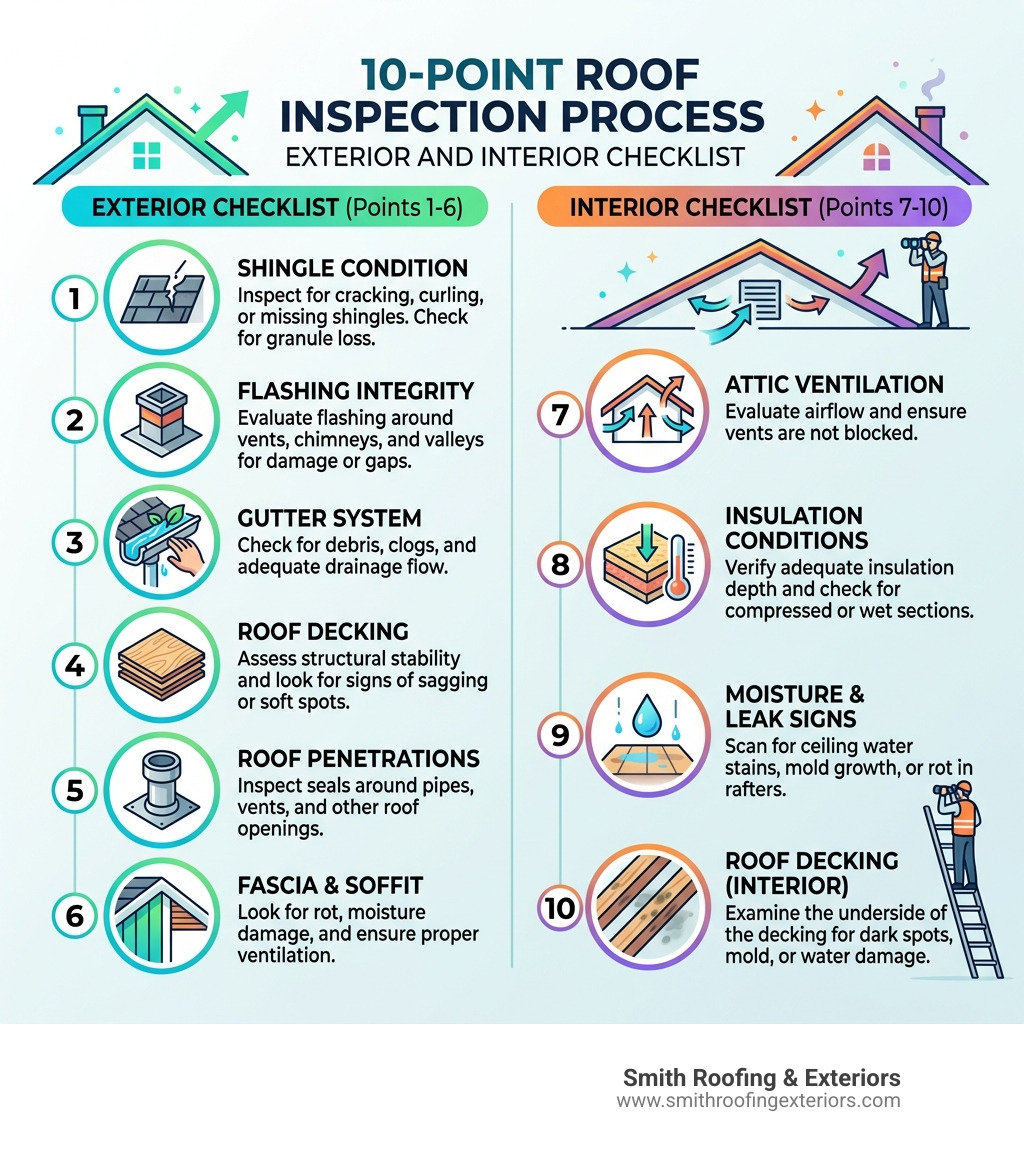
When we arrive at a property in Delavan or Elkhorn, we don’t just lean a ladder against the gutter and call it a day. A real roof inspection is a multi-point process that covers both what you can see and what is hidden.
| Inspection Category | What We Check | Why It Matters |
|---|---|---|
| Exterior Materials | Shingles, tiles, or metal panels | Primary defense against rain and snow |
| Flashings | Chimneys, vents, valleys, and walls | Most common source of leaks (majority of failures) |
| Structure | Roof planes, ridges, and eaves | Prevents sagging and collapses |
| Gutters | Debris, pitch, and attachment | Directs water away from the foundation |
| Interior | Attic rafters, insulation, and ventilation | Detects hidden leaks and prevents mold |
Exterior Components of a Roof Inspection
The exterior is the front line. We look for these critical “red flags”:
- Granule Loss: If your gutters look like they’re filled with coffee grounds, your shingles are losing their UV protection. This is one of the 5 warning signs that your shingle roof needs to be replaced.
- Pipe Boots and Flashing: These are the metal or rubber seals around things poking through your roof. Rubber boots typically only last 10 to 15 years—often failing long before the shingles do.
- Gutter Health: We check for clogs and proper drainage. If your gutters are pulling away or sagging, check out these top signs that it’s time for gutter replacement.
- Moss and Lichen: In shaded areas of Walworth or Edgerton, moss can act like a sponge, holding moisture against your shingles and causing them to rot.
- Drip Edges: This metal flashing at the edge of your roof ensures water goes into the gutter rather than behind it, where it can rot your fascia boards.
Interior and Structural Indicators
The attic tells the story the exterior tries to hide. We follow what the pros look for: the complete roof inspection checklist by heading inside.
- Rafter Sagging: We look for “dips” in the roofline that could indicate structural weakness or heavy snow damage.
- Moisture Stains: Even if it’s dry today, a dark stain on a rafter means water was there recently.
- Daylight Penetration: If we turn off the lights in your attic and see “stars,” you have holes in your roof.
- Ventilation Check: Proper ventilation (one square foot of vent for every 150 square feet of attic floor) is vital. Without it, heat builds up, “cooking” your shingles from the inside out and potentially voiding your warranty.
When to Schedule Your Inspection
Timing is everything in Wisconsin. You don’t want to find a leak during a January blizzard when the roof is covered in a foot of ice.
Seasonal Timing
The best times for a roof inspection are late spring and early fall.
- Spring: To assess damage from winter ice dams and heavy snow.
- Fall: To ensure the roof is sealed tight before the first snowflake falls. Frigid temperatures make shingles brittle, so it’s much safer and more effective to do repairs while it’s still relatively warm.
Post-Storm Assessment
After a major hail event or windstorm, don’t wait. Even if you don’t see shingles in your yard, hail can “bruise” shingles, causing them to fail prematurely. If you have a commercial building, you should specifically know how to check your flat roof for hail damage after a storm.
Age Milestones and Real Estate
If your roof is over 10 years old, it needs an annual checkup. If you are buying or selling a home in Jefferson or Lake Mills, a specialized roof inspection is better than a general home inspection. General inspectors are “jacks of all trades,” but they often miss the subtle signs you need a roofing company for repairs or replacement.
Frequency and Timing for a Roof Inspection
While an annual check is the minimum, we recommend bi-annual maintenance for the best results. There are 5 benefits of professional roof maintenance that go beyond just stopping leaks, including improved energy efficiency and enhanced curb appeal.
Professional vs. DIY: Safety and Accuracy
Can you walk around your yard with a pair of binoculars and look for missing shingles? Absolutely. We encourage homeowners to do a ground-level “gut check” twice a year. However, a DIY check is not a substitute for a professional roof inspection.
Safety First
Roofing is dangerous. Between steep pitches and slippery algae, falling is a real risk. Professional teams use OSHA-approved fall protection, specialized ladders, and slip-resistant footwear. We don’t want our neighbors in Fort Atkinson taking unnecessary risks on a ladder.
Advanced Technology
We use tools that the average homeowner doesn’t have in their garage:
- Drones: For high-resolution photos of steep or inaccessible areas.
- Infrared Scanners: These detect temperature variations. Since wet insulation holds heat differently than dry insulation, we can “see” leaks through the roof surface.
- Moisture Meters: To confirm if a stain is active or old.
Think of it like a roofing 101: why your shingles need a professional spa day. It’s about more than just a quick look; it’s about a deep, technical analysis of your home’s most important defense.
Frequently Asked Questions about Roof Inspections
How much does a professional roof inspection cost?
Nationally, the average is $331, but in Southeastern Wisconsin, you can expect to pay anywhere from $125 to $500 for a standard residential roof. Factors that increase the price include:
- Size and Pitch: A massive, steep Victorian home in Lake Geneva costs more to inspect than a ranch in Delavan.
- Accessibility: If we need specialized equipment to reach the roof.
- Technology: Using infrared or drones may add a small fee but provides much better data.
- Commercial Complexity: Commercial roofs are much larger and require different expertise.
Can a roof inspection help with insurance claims?
Yes! A professional report is your best friend during a claim. We provide high-resolution photos and detailed descriptions of damage that adjusters sometimes overlook. Having a pro on-site when the adjuster arrives ensures that all damage is documented correctly, helping you get the full value of your claim.
What is the difference between residential and commercial inspections?
Residential roofs are mostly about shedding water using shingles and pitch. Commercial roofs, often flat or low-slope, are about “waterproofing” using membranes like TPO or EPDM.
- Commercial Focus: We look for ponding water, membrane punctures, and seam integrity.
- Core Sampling: In some commercial inspections, we take a small “core” of the roof to see how many layers exist and if the underlying insulation is wet.
Conclusion
Your roof is the only thing standing between your family and the Wisconsin elements. Neglecting it is a gamble that rarely pays off. Whether you are in Fort Atkinson, Jefferson, or anywhere in Southeastern Wisconsin, a professional roof inspection is the most cost-effective way to protect your investment.
At Smith Roofing & Exteriors, we pride ourselves on being your local experts. We offer transparent pricing, superior materials, and a team that lives and works right here in your community. We’ve seen how how roof maintenance can help extend the life of your roof, and we want to help you get every year of service possible out of your shingles.
Don’t wait for the next big storm or a drip in your living room to take action. Schedule your professional inspection today and gain the peace of mind that comes with knowing your home is truly protected from the top down.