Roofers and Insurance Claims: What Happens at the Inspection?
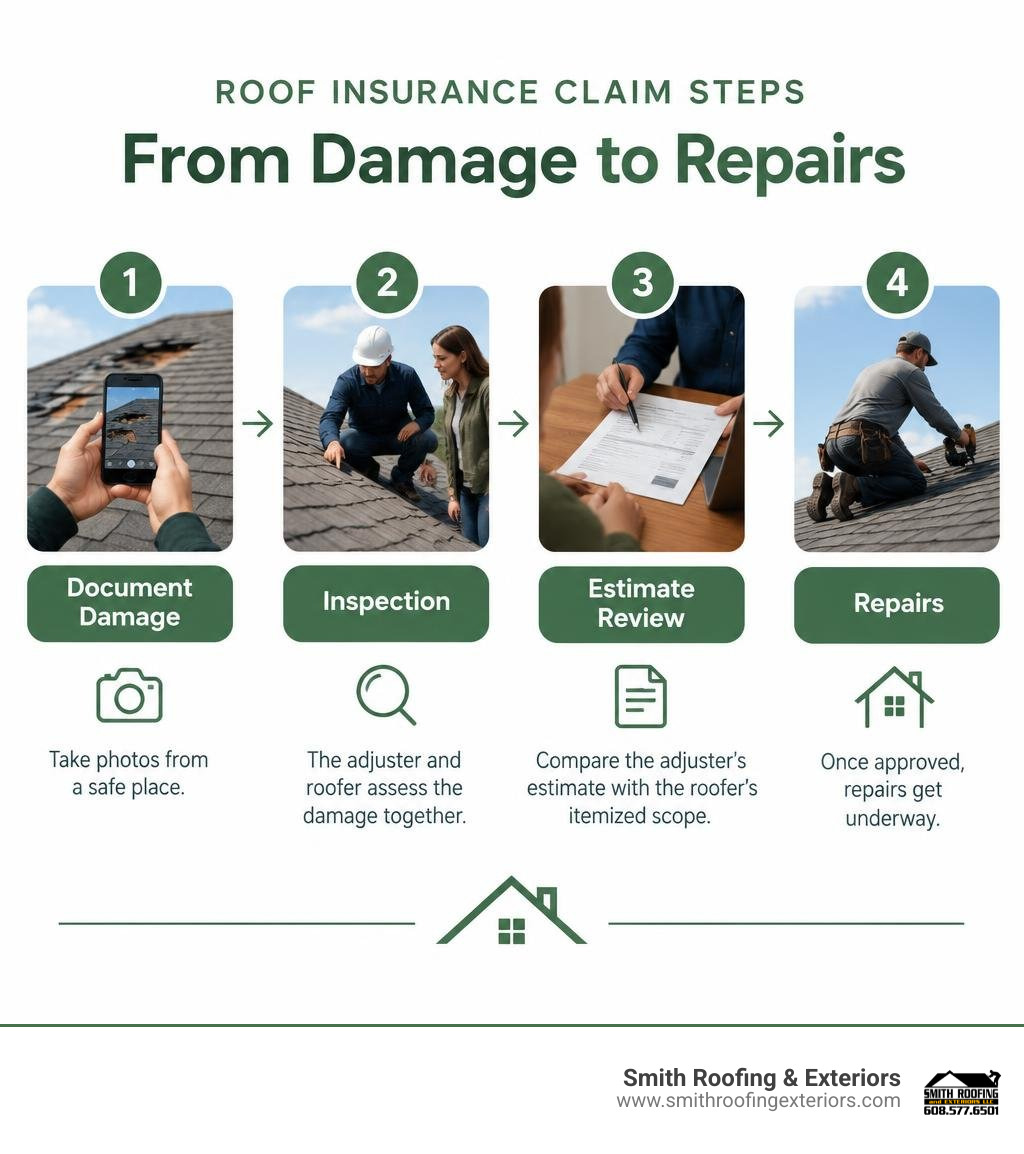
Start by photographing the damage from a safe place. If the roof is leaking, arrange temporary protection and keep the receipt. Notify your insurer promptly, then ask a roofer for an inspection and a written estimate. You can have the roofer present when the insurance adjuster visits. The roofer can point out damage and explain needed repairs, but you remain in charge of your claim.
The adjuster will inspect the damage and prepare an estimate based on the policy. Afterward, compare that estimate with the roofer’s itemized scope. If something is missing, ask for a review and provide photos or other evidence before work begins.
I’m Matt Smith, owner of Smith Roofing & Exteriors in Fort Atkinson. My experience helping homeowners understand roof repairs shapes how I explain roofers and insurance claims: with clear steps and no pressure.
Learn more about roofers and insurance claims:
- How to File Roof Insurance Claims in 7 Easy Steps
- Public Adjusters and Roof Claims: What Your Insurance Company Won’t Tell You
- How to Survive Your Insurance Adjuster’s Roof Inspection
Navigating Roofers and Insurance Claims: The Step-by-Step Inspection Process
Dealing with storm damage can feel overwhelming, especially when severe weather sweeps through Southeastern Wisconsin communities like Fort Atkinson, Jefferson, Lake Mills, and Burlington. Knowing what to expect when combining professional roofing expertise with your property insurance claim keeps the restoration moving forward smoothly.
Initial Damage Assessment: Coordinating Roofers and Insurance Claims Filings
When severe storms roll in, the first priority is establishing the exact date of loss and identifying covered perils. Standard homeowners insurance policies generally cover sudden, accidental events like wind damage, hail impacts, lightning strikes, and falling tree limbs. However, normal wear and tear or gradual leaks caused by neglected maintenance are standard policy exclusions.
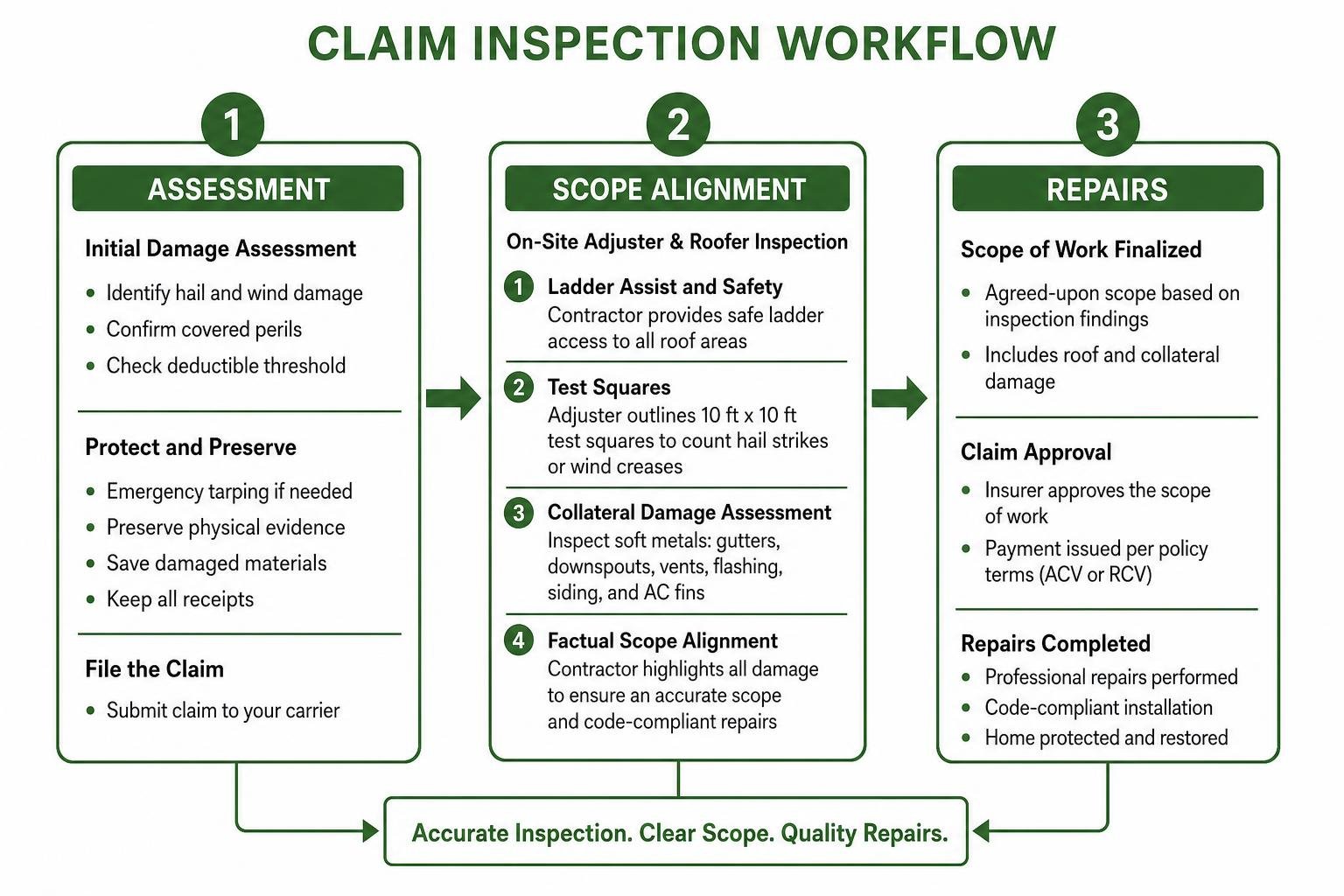
Before calling in a claim, it is wise to start by identifying hail damage on shingles and evaluating wind damage repair options. We always recommend scheduling a free roof inspection with a reputable local contractor first. An experienced professional will get on the roof, take detailed photos, and confirm whether the damage exceeds your policy deductible.
If there is active water intrusion, perform necessary emergency storm damage repairs such as professional tarping to protect your interior. Always preserve physical evidence, save damaged materials for the adjuster to examine, and keep all receipts. Once damage is confirmed, you can officially file a roof insurance claim step-by-step with your carrier.
What to Expect During the On-Site Adjuster and Roofer Inspection
Once you file your claim, your insurer assigns a field adjuster to inspect the property. Having your contractor present for a joint inspection is one of the best ways to ensure an accurate scope of work.
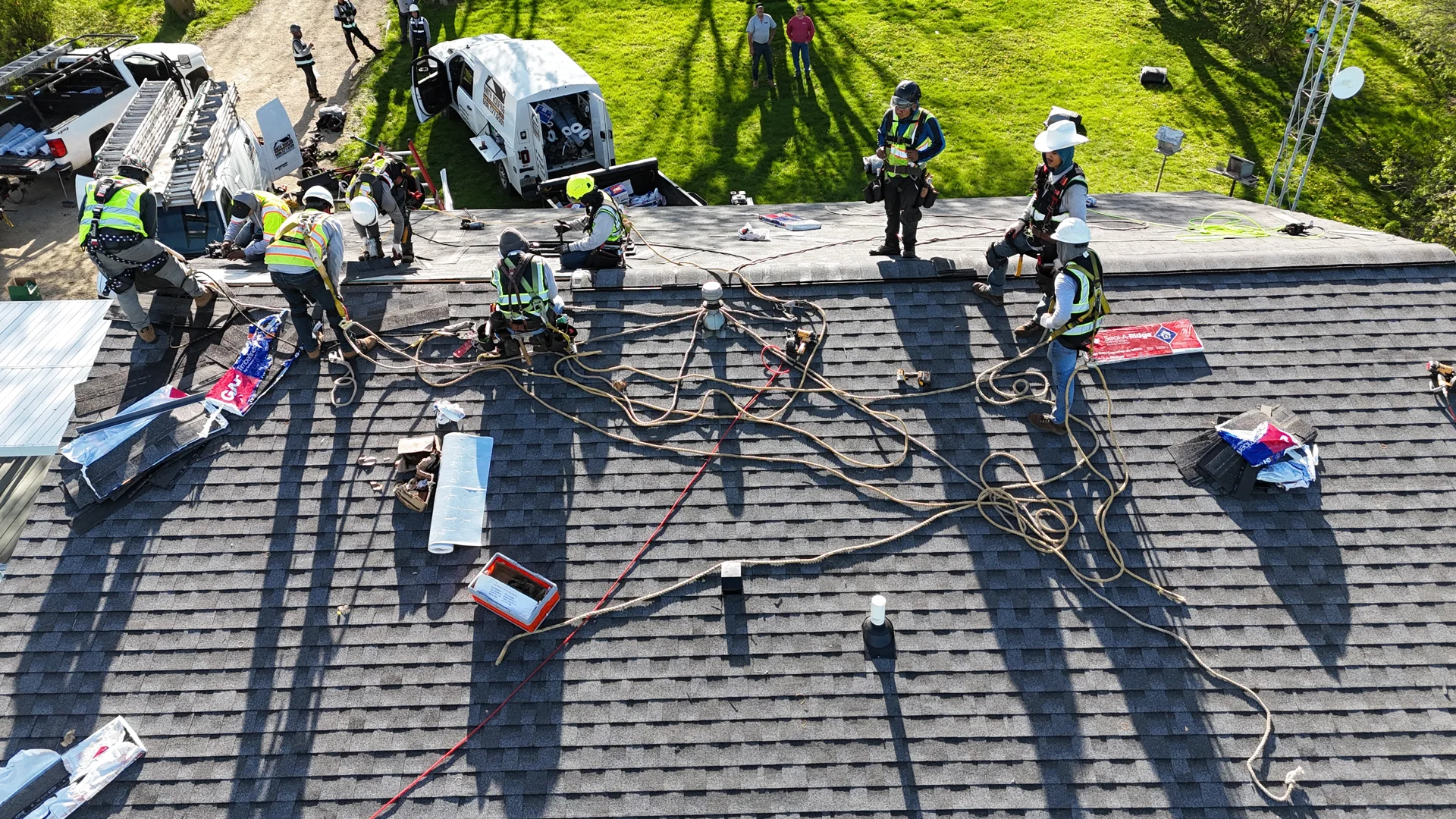
When navigating the insurance adjuster’s roof inspection, expect the following collaborative steps:
- Ladder Assist and Safety: Your roofing contractor often provides safe ladder access, helping the adjuster access steep slopes and complex roof planes.
- Test Squares: Adjusters typically outline a 10-foot by 10-foot “test square” on multiple roof slopes, counting specific hail strikes or wind creases within that area to determine if full replacement or section repair is warranted.
- Collateral Damage Assessment: The inspection extends beyond shingles to soft metals, including gutters, downspouts, box vents, flashing, siding, and air conditioning fins.
- Factual Scope Alignment: Your contractor points out specific damaged components to ensure nothing is missed, keeping conversations grounded in construction facts and local building codes rather than arguing policy coverage.
Understanding Claim Math: Actual Cash Value, Replacement Cost, and Supplements
Understanding how property insurance payouts are calculated helps eliminate confusion when the initial check arrives. Most comprehensive policies operate on either Replacement Cost Value (RCV) or Actual Cash Value (ACV).
| Claim Component | Actual Cash Value (ACV) | Replacement Cost Value (RCV) |
|---|---|---|
| Valuation Method | Current value minus depreciation (materials age/wear) | Total cost to replace damaged materials with new items at today’s prices |
| Initial Payout | ACV minus your deductible | ACV payment issued first; recoverable depreciation released after work is finished |
| Out-of-Pocket Cost | Deductible plus all accumulated depreciation | Policy deductible only (subject to policy terms and code items) |
When you receive your insurance paperwork, your carrier withholds depreciation and subtracts your deductible. If your mortgage company is listed on the policy, their name will appear on claim checks, requiring an endorsement before funds are deposited.
During construction, hidden damage like rotted plywood decking or required building code upgrades may emerge once shingles are torn off. Your contractor documents this with dated photos and submits a supplemental claim request to your carrier for review. For a detailed breakdown of these terms, consult our comprehensive roof repair insurance guide.
Protecting Your Rights: Legal Limits, Deductibles, and Scams
Storm restoration requires strict adherence to consumer protection laws and clear boundaries between contractors and adjusters.
Legal Limits for Roofers and Insurance Claims: Contractor vs. Adjuster Roles
By law, roofing contractors cannot act as public insurance adjusters on projects they are hired to repair. In many states, dual-role representation is strictly prohibited to protect consumers. Regulatory guidance, such as the Texas Department of Insurance on roofing claim regulations, makes it clear that contractors may discuss physical damage and labor scopes, but cannot negotiate settlements or legally interpret policy language. If you need independent policy representation, you should understand the distinct role of public adjusters in roof claims.
Homeowners must also safeguard their personal information. Never allow a door-to-door roofer to file a claim using your policy details without your direct involvement. As consumer investigations highlight regarding why you should never let a roofer file a claim on your insurance, unauthorized claim filings can trigger unwanted claim records, rate hikes, or unexpected policy cancellations.
The Risks of Deductible Waivers and Assignment of Benefits (AOB)
If a contractor offers to “waive,” “absorb,” or “rebate” your insurance deductible, walk away immediately. It is illegal and constitutes insurance fraud in most states for a contractor to write off your deductible through false billing or inflated invoicing.
Another major risk involves signing an Assignment of Benefits (AOB) contract. An AOB signs over your legal claim rights and policy benefits directly to a third party. When contractors abuse AOB agreements, homeowners lose control over repair decisions and risk getting trapped in prolonged legal battles. For example, Florida Office of Insurance Regulation Assignment of Benefits resources show that AOB lawsuits in Florida skyrocketed from 405 in 2006 to over 28,200 by 2016, driving major legislative reforms to restore consumer cancellation rights. Always retain ownership of your insurance policy and work with contractors who bill transparently.
Resolving Claim Disputes and Choosing a Trusted Local Contractor
In regions with severe hail frequency, such as Colorado—which ranks second in the nation for hail-related insurance claims—and throughout the Midwest, out-of-town “storm chasers” frequently flood neighborhoods after severe weather. These itinerant crews often use high-pressure tactics, deliver substandard workmanship, and disappear before warranty issues arise.
If your insurance carrier underpays or disputes legitimate storm damage:
- Request a joint re-inspection with a different field adjuster.
- Provide detailed, dated photographic evidence from your local roofer.
- Request an independent engineering evaluation if structural disputes arise.
- Review your policy’s appraisal clause to resolve scope and pricing disagreements.
Protect your home by partnering with an established, licensed, and insured local company with manufacturer certifications and transparent written contracts. If your property in Fort Atkinson, Edgerton, Elkhorn, Delavan, Lake Geneva, or Walworth has experienced recent weather damage, reach out to our team for expert residential storm damage restoration in Fort Atkinson and reliable, local service you can trust.