Artificial Cedar Shake Siding: Which Type Fits Your Home?
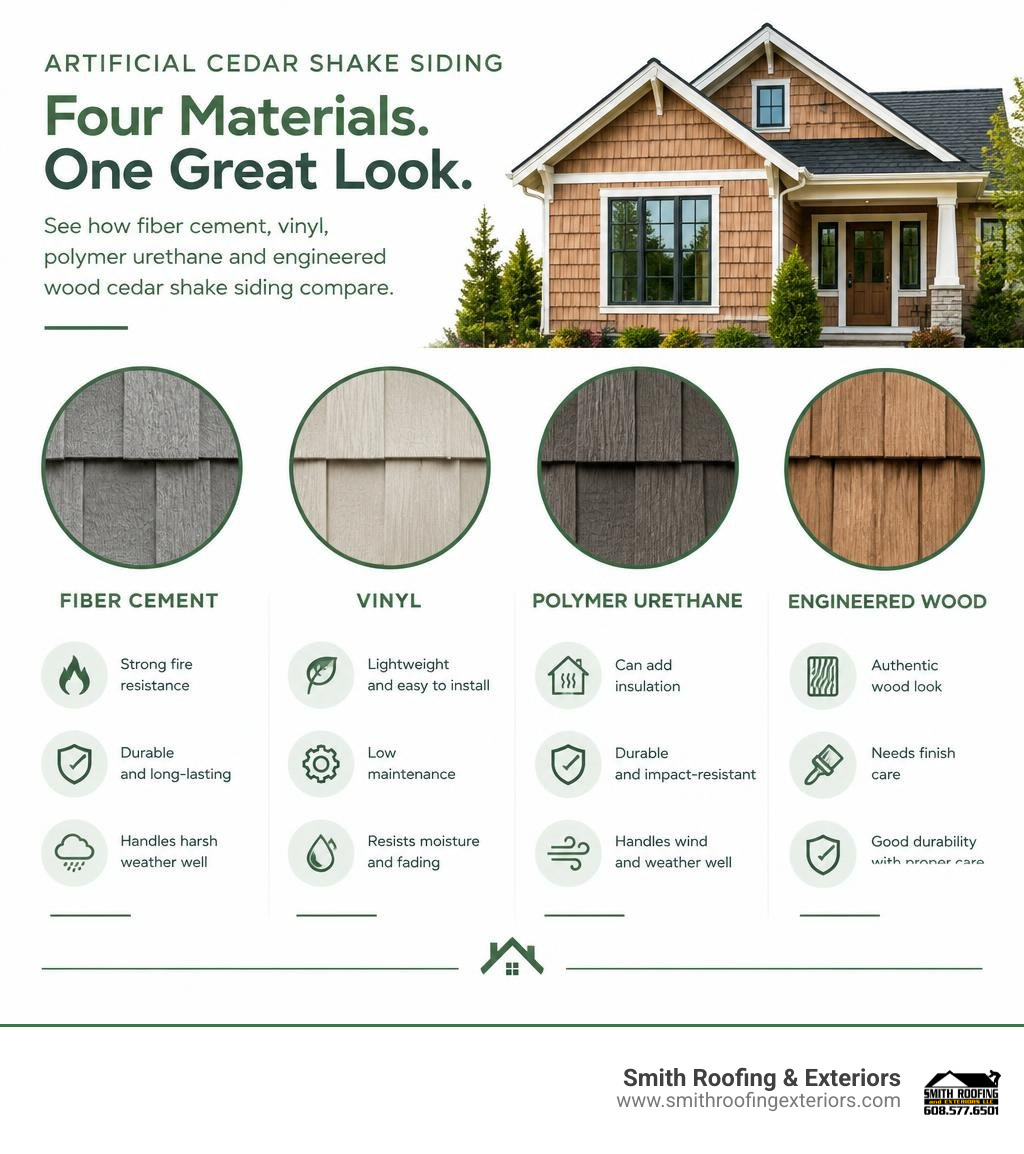
Artificial cedar shake siding gives you the look of cedar with less upkeep, but the best material depends on what matters most to you. Fiber cement is a strong choice for fire resistance. Vinyl is lightweight and needs little upkeep. Polymer urethane panels can add insulation, while engineered wood offers a wood-like look but still needs finish care.
For a home in Fort Atkinson, compare more than color and price. Ask how each product handles wind, moisture, and freeze-thaw weather, and check its installation requirements and warranty before you choose.
I’m Matt Smith, owner of Smith Roofing & Exteriors. I help homeowners weigh the short- and long-term value of siding choices, including artificial cedar shake siding, so they can make a decision that fits their home.
Important artificial cedar shake siding terms:
Comparing the Types of Artificial Cedar Shake Siding
When homeowners in Southeastern Wisconsin look for classic curb appeal without wood rot, synthetic alternatives stand out. Modern engineering has evolved far beyond the flat, glossy plastics of decades past. Today, you can choose from deep-grained composite profiles, multi-width shingles, and staggered-edge panels that replicate handcrafted wood shakes.
Before settling on a style, it helps to review a practical guide to comparing siding replacement options to understand how different substrates perform in our local climate.
Fiber Cement and Polymer Urethane Artificial Cedar Shake Siding
Two of the most durable, premium synthetic shake options on the market are fiber cement and polymer urethane:
- Fiber Cement: Made from a sturdy blend of Portland cement, sand, and cellulose fibers, fiber cement shingles are completely non-combustible and carry an ASTM E84 Class A fire rating. They resist rot, wood-boring insects, and moisture intrusion. Instead of nailing up individual wooden shingles, contractors install four-foot interlocking panels, which speeds up project timelines significantly. For details on budgeting this material, review our fiber cement siding cost guide from materials to labor.
- Polymer Urethane: High-density polymer panels are cast from real wood molds, capturing authentic graining and hand-split grooves. These panels typically measure 24 inches high by 48 inches long (covering roughly 7.5 square feet each) and provide an added thermal R-value of 2 to 5. Because they are dense and completely synthetic, they suffer near-zero UV degradation and do not absorb water.
As highlighted by industry reporting on siding: bringing the farmhouse home from Qualified Remodeler, mixing textures like faux shakes in gables with horizontal lap siding creates an authentic, layered farmhouse look that holds up against harsh weather.
Vinyl and Engineered Wood Shake Alternatives
Homeowners looking for cost efficiency or natural wood strength often look at vinyl, polypropylene, cellular PVC, or engineered composites:
- Polypropylene & Cellular PVC Shingles: Advanced polymers like Foundry and Mastic Cedar Discovery use continuous snap-in locking systems that provide double the holding strength of basic tab-style systems. They offer wind resistance exceeding 170 to 200 mph while remaining lightweight and completely rot-proof. Many homeowners find that vinyl siding installation is a smart investment when balancing budget with long-term durability.
- Engineered Wood Shakes: Products such as LP SmartSide Siding at LS Building Products combine wood strands with water-resistant resins and zinc borate treatments (the SmartGuard® process). This creates an exceptionally impact-resistant shake that repels fungal decay and termites while offering the warm texture of real timber.
Key Performance Factors and Weather Resistance
Living in Fort Atkinson, Jefferson, or surrounding communities means your home must endure scorching summer humidity, heavy winter blizzards, and severe windstorms.
| Performance Metric | Fiber Cement Shakes | Polymer Urethane Panels | High-Grade Vinyl / PVC | Engineered Wood Shakes |
|---|---|---|---|---|
| Fire Rating | Class A (Non-combustible) | Varies by manufacturer | Class A or Class B | Class C (Treated wood) |
| Wind Resistance | Up to 130–150 mph | Up to 150+ mph | Up to 180–233 mph | Up to 150–200 mph |
| Insulation Value | Minimal (R-0.15 to R-0.5) | R-2 to R-5 built-in | Low (unless backed with foam) | Minimal (R-0.5 to R-1.0) |
| Impact Resistance | High (brittle under sharp blow) | Very High (absorbs impact) | Moderate to High | Exceptional (hail resistant) |
| Moisture / Rot Risk | Zero rot or insect damage | Impervious to moisture | Impervious to moisture | High resistance (sealed edges required) |
Real Wood vs. Synthetic Shakes: Costs, Upkeep, and Long-Term Value
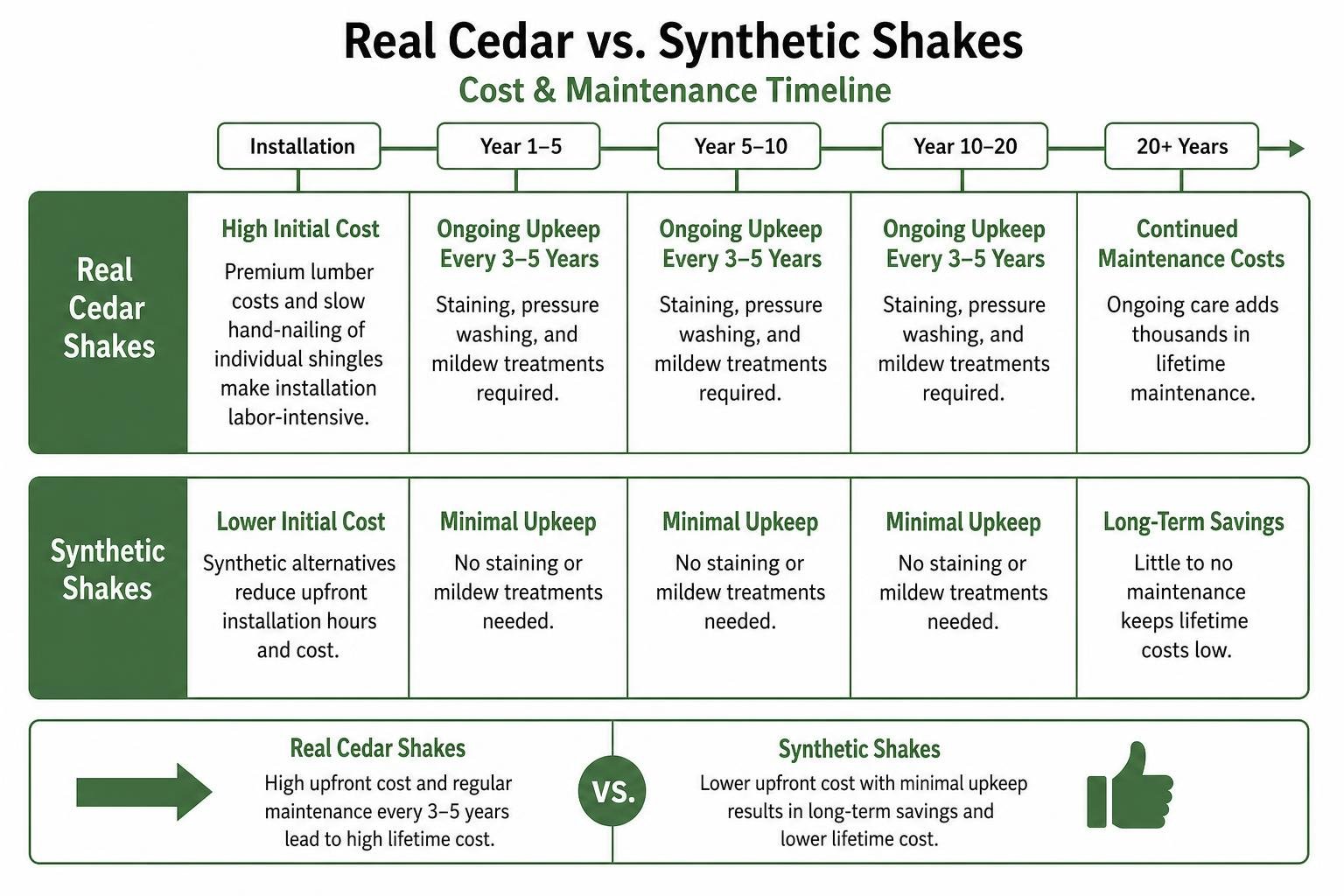
While natural cedar has unmatched historical charm, it comes with a steep price tag. Between premium lumber costs and slow hand-nailing of individual shingles, installing real cedar is labor-intensive. Over time, natural wood requires regular staining, pressure washing, and mildew treatments every 3 to 5 years.
Understanding the real cost to cedar shake a house and how to save highlights how synthetic alternatives reduce upfront installation hours and cut out thousands of dollars in lifetime maintenance.
Realistic Visuals, Textures, and Authentic Shadow Lines
The biggest hesitation homeowners have is whether synthetic shakes will look fake. Modern artificial profiles eliminate that concern through:
- Staggered and Straight Edges: You can choose clean, uniform lines or varied staggered butts that give the appearance of rustic split shakes.
- Deep Grain and Variable Thickness: Deep shadow lines create depth across the facade, preventing the flat appearance of older plastic siding.
- Multi-Tone Color Blends: Modern color palettes incorporate subtle shading, weathered grays, and warm amber tones. For bold aesthetics, exploring black cedar shake house exterior inspiration shows how dark, UV-stable polymers make architectural features stand out.
Installation Speed and Maintenance of Artificial Cedar Shake Siding
Real cedar shingles must be nailed one by one, requiring precise overlap and significant labor. In contrast, artificial shake panels interlock seamlessly across lengths of 4 to 5 feet, enabling faster installations and airtight moisture barriers.
When weighing whether traditional cedar shake siding is worth the maintenance, consider this: artificial options are virtually rinse-and-go. An occasional spray with a garden hose keeps them clean. There is no scraping, no peeling paint, and no splinters.
Choosing the Right Synthetic Shake for Your Home
Whether you are remodeling a Craftsman home in Lake Geneva, updating a ranch in Burlington, or adding interior accent walls in Delavan, synthetic cedar shakes offer versatility. High-density polymer panels work well on interior accent walls, while vinyl, composite, and fiber cement deliver protection for exterior siding and gables.
Most artificial shake manufacturers back their products with 25- to 50-year limited warranties, with some premium factory finishes offering 30-year no-fade protection.
At Smith Roofing & Exteriors, our experienced local team provides transparent pricing, superior materials, and precision installation across Fort Atkinson, Lake Mills, Elkhorn, and Southeastern Wisconsin. Contact us today to compare material samples and find the perfect synthetic shake for your home.