Is a Solar Attic Fan Right for Your Roof?
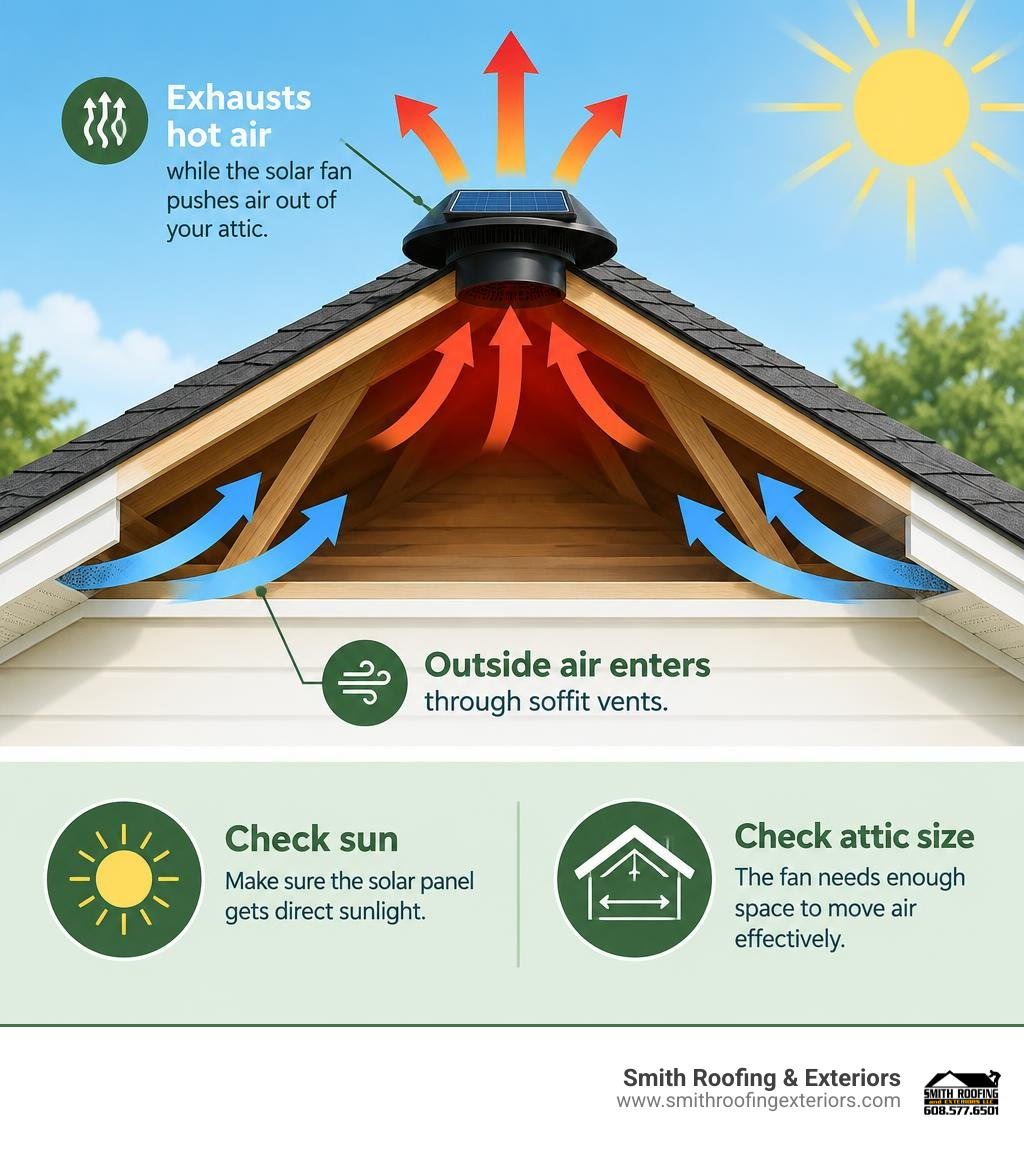
A solar attic fan uses sunlight to push hot air out of your attic. It may help reduce summer heat above your living space, but it needs enough soffit intake vents to draw in outside air. When comparing models, check the fan’s airflow rating, your attic’s size, and whether its solar panel will get direct sun.
In Fort Atkinson, summer heat is only part of the picture. A good ventilation plan also needs to account for winter moisture, snow, and gaps that let heated indoor air escape into the attic. Lower energy bills are possible, not guaranteed.
I’m Matt Smith, owner of Smith Roofing & Exteriors, and my work helping homeowners plan roof maintenance shapes how I assess a solar attic fan. Let’s start with the airflow it needs to work well.
Solar attic fan further reading:
Why Installing a Solar Attic Fan Is a Game-Changer for Energy Efficiency

During sunny summer afternoons across Southeastern Wisconsin, unventilated attic spaces turn into massive thermal batteries. Attic temperatures can easily exceed 150°F on sunny days. That intense heat radiates downward into your bedrooms and living areas, forcing your central air conditioner to run constantly just to keep your home comfortable.
A solar-powered roof exhaust fan tackles this trapped heat directly at the source without adding a penny to your monthly electric bill. By using sunlight to power a high-performance exhaust motor, the unit continuously vents superheated air back outside. Manufacturers and energy audits indicate that lowering attic temperatures can help reduce air conditioning energy costs by up to 30%.
Beyond zero operational costs, homeowners can often leverage federal clean energy tax credits and local utility rebates to offset the upfront investment. When paired with high-efficiency equipment, your return on investment is realized through lower monthly utility bills, reduced air conditioning runtime, and a longer lifespan for your roof structure.
How a Solar Attic Fan Works to Lower Attic Temperatures
The engineering behind solar attic ventilation combines simple thermal dynamics with modern photovoltaic efficiency. High-efficiency monocrystalline solar panels convert direct sunlight into direct current (DC) electricity. This electricity drives a brushless DC motor engineered to spin whisper-quiet fan blades, pulling stagnant hot air upward and pushing it out through the roof flashing.
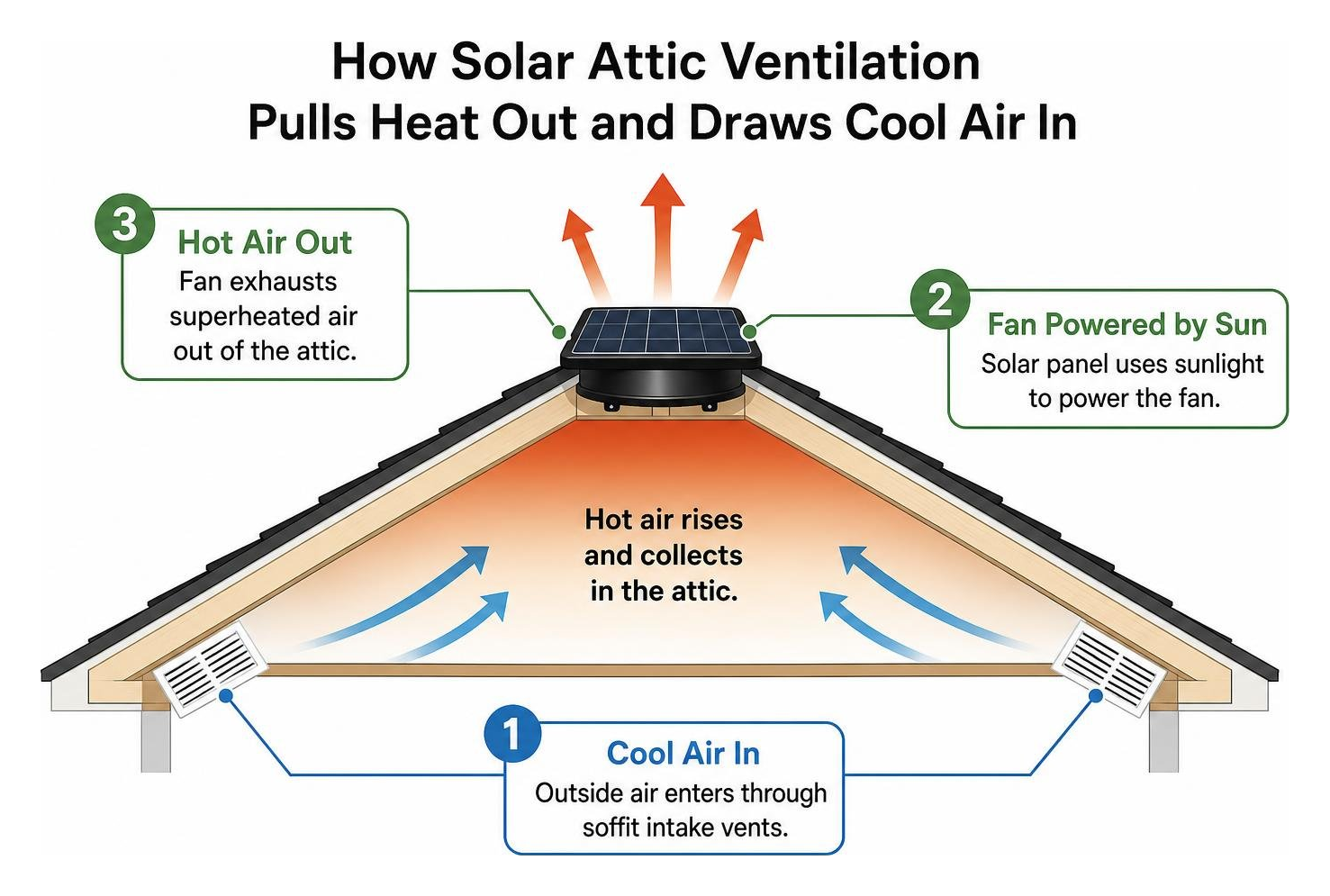
As superheated air is forced out, it creates negative air pressure inside the attic cavity. This pressure differential pulls cooler, ambient outdoor air in through lower intake vents. Understanding the complete guide to roof ventilation highlights how this balanced air exchange keeps the roof deck cooler. Lowering attic temperatures prevents asphalt shingles from baking from the underside, preserving shingle adhesive bonds and extending overall roof longevity.
Solar Attic Fan vs. Hardwired Electric Models
Choosing between solar models and traditional AC-powered roof ventilators involves comparing upfront installation complexity against long-term operating costs.
| Feature / Metric | Solar Attic Fan | Hardwired Electric Attic Fan |
|---|---|---|
| Initial Purchase Cost | Moderate to High ($300 – $800+) | Low to Moderate ($100 – $250) |
| Electrical Installation | None (No electrician needed) | High ($200 – $500+ for wiring) |
| Monthly Operating Cost | $0.00 (100% solar powered) | $15 – $30+ per month during peak summer |
| Average Airflow (CFM) | 500 to 3,850 CFM | 1,000 to 1,600+ CFM |
| Noise Level | Whisper quiet (< 1 sone / 30 dB) | Moderate to Loud (2 to 5+ sones) |
| Grid Independence | Operates during summer power outages | Shuts off if grid power goes down |
| Motor Type & Longevity | Sealed brushless DC (Long lifespan) | Standard AC motor (Wears brushes faster) |
Hardwired units require running 120-volt lines through your attic, requiring professional electrical permits and higher installation fees. Exploring dedicated solar power roof vents shows that self-contained solar units eliminate electrical work entirely while preventing recurring monthly electricity costs.
Top Mounting Options: Roof-Mount, Gable, and Interior Units
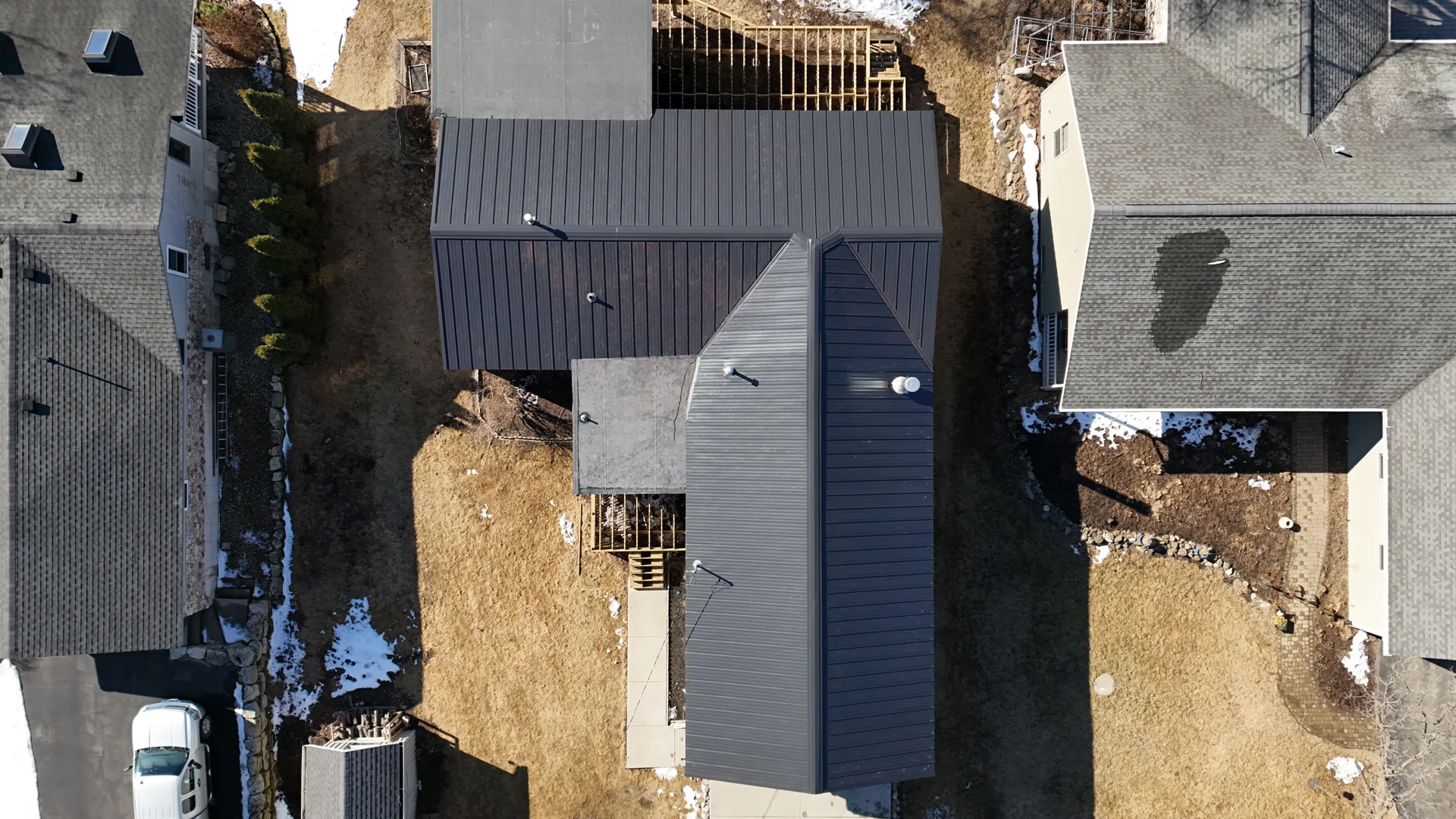
Every home features unique roof profiles, attic depths, and sun exposures. Solar ventilation systems generally fall into three distinct mounting configurations:
- Roof-Mount Units: The most common installation style mounts directly over a circular opening cut into your roof decking. Low-profile models like the Master Flow 15-Watt Solar Powered Static Roof Vent blend seamlessly into asphalt shingle roofs. For areas in Lake Mills, Jefferson, or Delavan that experience heavier snowfall, high-profile bases elevate the fan housing above snowlines to ensure winter exhaust pathways stay clear.
- Gable-Mount Units: Gable fans install behind existing louvered vents at the side of your home. Premium gable setups allow you to position an external solar panel on the roof facing south while mounting the fan motor securely inside the gable framing.
- Interior-Mount Conversions: Designed to upgrade existing static dome vents without cutting new penetrations into your roofing material, these units fasten beneath your current vents to convert passive exhaust points into active solar-powered systems.
Whether your home features standard architectural asphalt shingles, standing seam metal, or concrete tiles, high-grade powder-coated steel or heavy-gauge aluminum flashings deliver weather-tight protection.
Crucial Features to Look For: CFM, Wattage, and Smart Controls
When sizing a system, match your attic’s square footage to the fan’s cubic feet per minute (CFM) output. As a rule of thumb, aim for at least 1 CFM of airflow for every square foot of attic space, adding 20% more capacity for steep roof pitches or dark shingle colors:
- Compact Spaces (Up to 800 sq. ft.): A 15W panel moving around 525 CFM offers dependable ventilation for small ranch homes, garages, or garden sheds.
- Mid-Sized Attics (1,000 to 1,800 sq. ft.): Units like the 1,030 CFM Steel Solar Powered Attic Fan with a 25-watt panel, or the heavy-duty Attic Breeze AB-2523A delivering up to 1,550 CFM, provide balanced air exchanges.
- Large & Multi-Story Attics (2,000 to 2,900+ sq. ft.): High-capacity options like the iLiving ILG8SF301A 40-Watt Hybrid Fan moving 1,150 CFM, or the FORLEAVES 60W Solar Roof Fan rated at 1,344 CFM, ensure complete airflow coverage. Heavy-duty 70W systems can move up to 3,850 CFM for expansive residential footprints.
Essential performance features to look for include:
- Smart Thermostats & Humidistats: Premium models include thermostats that automatically turn on when attic heat reaches 80°F–88°F and shut down below 65°F to extend motor life. Built-in humidistats activate the fan when moisture levels exceed 60% relative humidity.
- Hybrid AC/DC Inverters & Run-at-Night Tech: Basic solar fans only run when direct sun hits the cells. Advanced hybrid units use smart controllers to draw tiny amounts of household current or battery storage after dark, offering extended runtimes up to 4 hours past sunset to cool the attic overnight.
- Whisper-Quiet Operation: Quality brushless DC motors and balanced multi-blade assemblies produce less than 1 sone (under 30 dB), operating quieter than a soft whisper.
- Heavy-Duty Construction: Look for IP68-rated waterproof motor enclosures, stainless steel wildlife screens, and long-term warranties like the Natural Light Solar Attic Fan limited lifetime protection.
Balancing Intake Ventilation and Protecting Attic Health Year-Round
A powered roof exhaust fan can only push out as much air as your intake vents allow in. For proper ventilation, your attic requires balanced net free ventilating area (NFVA) along the eaves. Reviewing our guide on attic soffit vents and eave ventilation will help you calculate whether you have enough clear soffit openings to feed your exhaust fan.
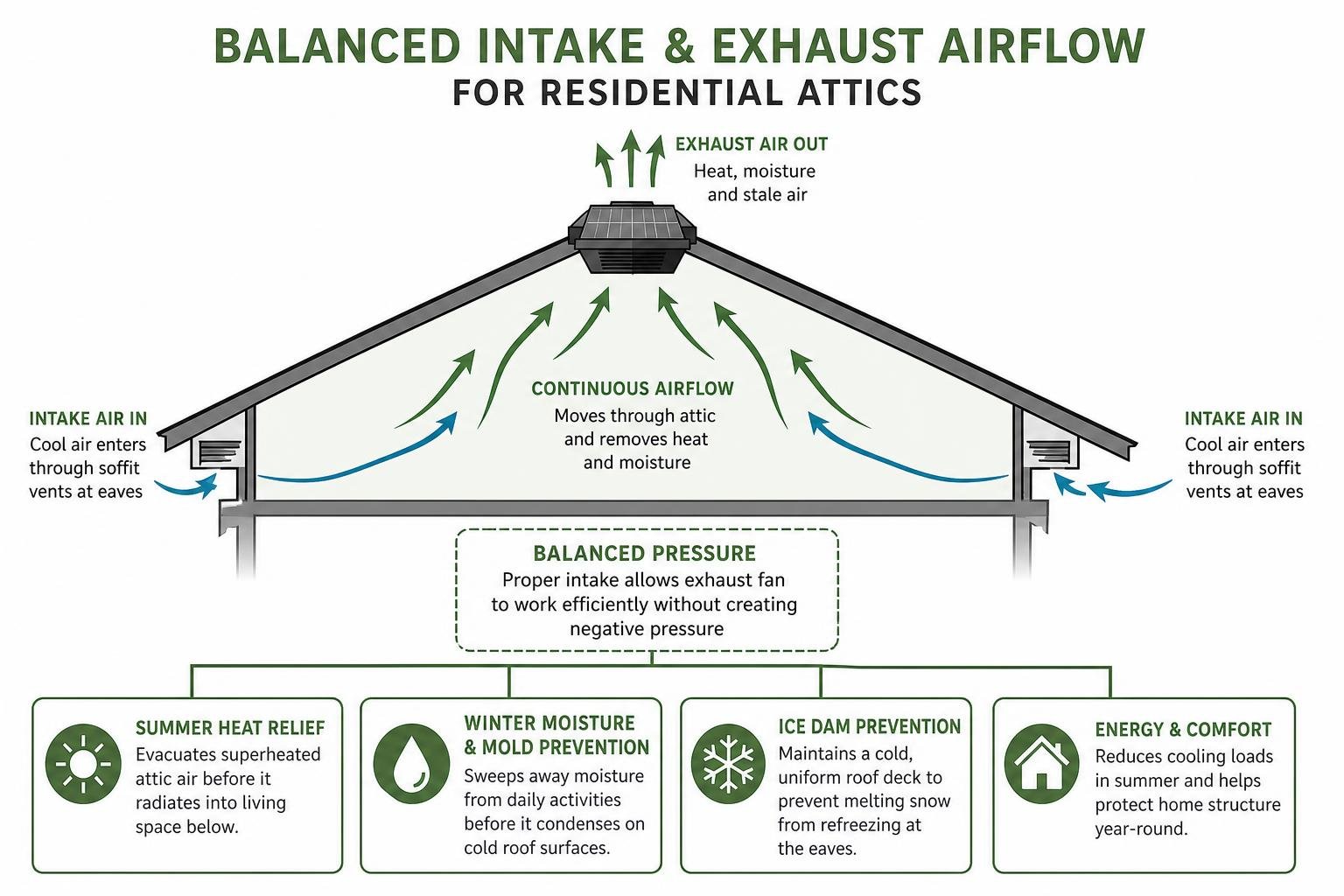
Without adequate intake, an active exhaust fan can create negative pressure that pulls cooled indoor air from your living space through ceiling can lights, access hatches, and wall framing gaps. Sealing attic bypasses before installing powered ventilation prevents this issue. When properly balanced, solar attic fans provide critical benefits year-round:
- Summer Heat Relief: Evacuates superheated attic air before it radiates downward into your ceiling drywall.
- Winter Moisture & Mold Prevention: Cold outside air entering through soffit vents sweeps away moisture generated by household showers, laundry, and cooking before it condenses on cold roof rafters.
- Mitigating Ice Dam Formation: In snowy climates across Burlington, Lake Geneva, Edgerton, and Elkhorn, maintaining a cold, uniformly ventilated roof deck prevents snow on upper shingles from melting, running down, and refreezing at the cold eaves into damaging ice dams.
Making the Right Ventilation Choice for Your Roof and Home
Proper attic ventilation is never a one-size-fits-all solution. Before adding any powered exhaust system, evaluate your current insulation depth, ensure your soffit vents are free of insulation blockages, and confirm that your roof deck receives sufficient southern or southwestern sun exposure. If your roof receives heavy shade, look for models featuring detached, adjustable solar panels that can be mounted up to 15–30 feet away on an unshaded exposure.
Solar exhaust systems are equally practical for keeping detached workshops, sheds, and garages comfortable during humid summer months.
At Smith Roofing & Exteriors, our experienced team provides comprehensive roof inspections, ventilation balancing, and exterior services across Fort Atkinson, Walworth, and surrounding Southeastern Wisconsin communities. Discover more about how balanced airflow, air sealing, and quality roofing materials work together to protect your home by exploring the role of roofing in energy efficiency and consulting the federal guidelines in Ceilings and Attics: Install Insulation and Provide Ventilation. Reach out to our team today to ensure your attic system is ready for both summer heat and winter freezes.