How to Compare Home Siding Companies With Confidence
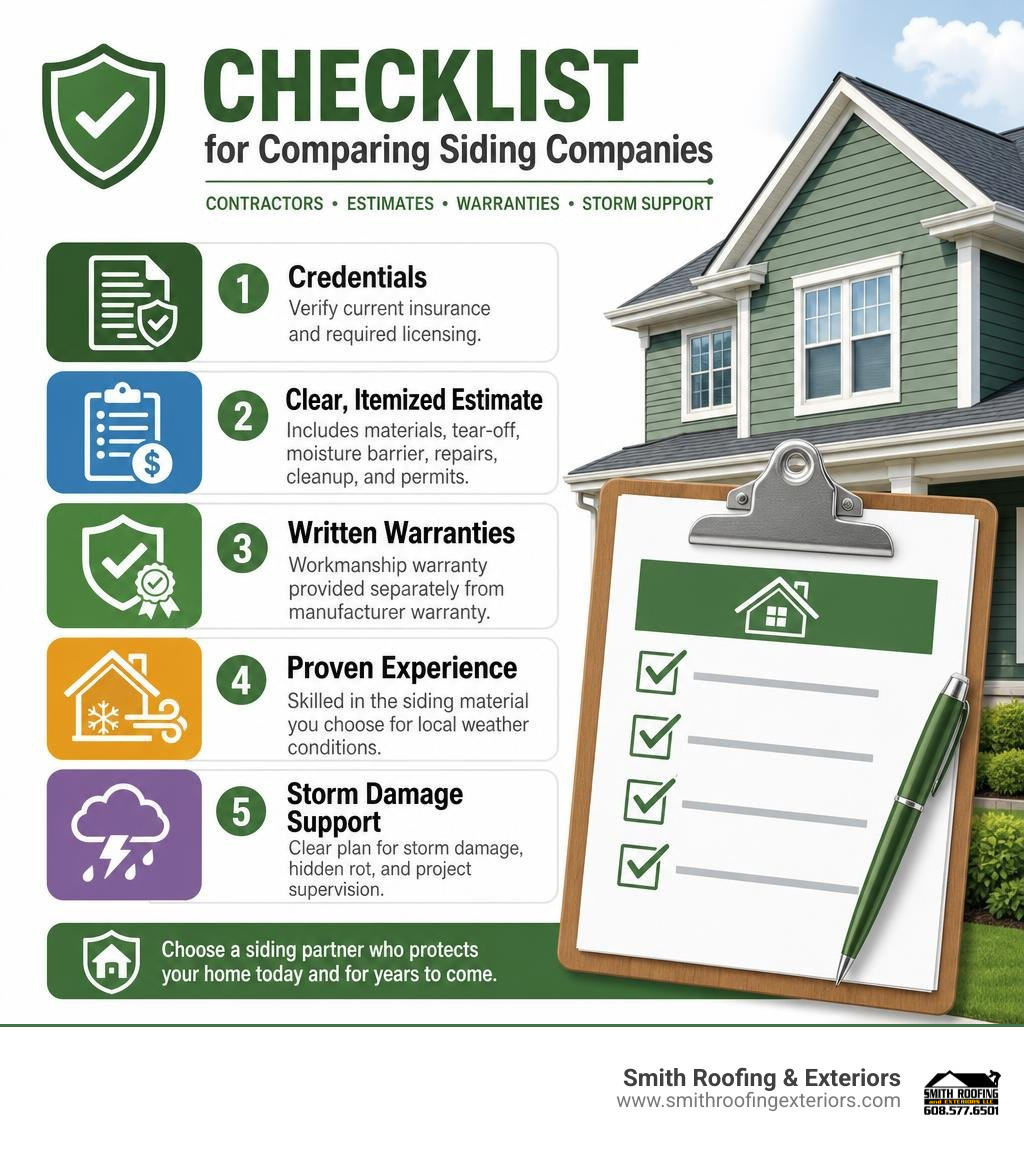
The best home siding companies make it easy to verify their credentials, compare clear written estimates, and understand who is responsible if hidden damage appears. Before hiring, narrow your list to contractors that:
- Carry current liability insurance and any required local licensing.
- Provide an itemized quote for materials, tear-off, moisture barrier work, repairs, cleanup, and permits.
- Offer a written workmanship warranty that is separate from the siding manufacturer’s warranty.
- Have proven experience installing the material you choose for Wisconsin’s wet, cold, freeze-thaw weather.
- Can explain their plan for storm damage, rotten sheathing, and project supervision.
New siding is more than a curb-appeal update. It is your home’s outer weather shield. Cracks, loose panels, fading, soft spots, repeated paint failure, mold, drafts, and hail damage can all signal that water is getting where it should not.
Material matters, too. Vinyl can be a practical lower-cost option and often lasts about 20 to 30 years. Fiber cement generally lasts 30 to 50 years or longer and is well suited to moisture, pests, fire, and harsh seasonal shifts when installed correctly. The right choice depends on your budget, maintenance expectations, and local exposure to wind, snow, rain, and hail.
I’m Matt Smith, owner of Smith Roofing & Exteriors. I work with homeowners to understand exterior repair and replacement needs, and I believe comparing home siding companies should start with honest answers, clear scope, and long-term protection for the property.
Home siding companies glossary:
Signs It Is Time for an Exterior Cladding Upgrade
Every exterior reaches a point where cosmetic touch-ups can no longer keep moisture, pests, and drafts outside. Your cladding serves as the primary barrier protecting your framing and living areas. When that protective layer breaks down, water quickly seeps behind panels and attacks structural components.
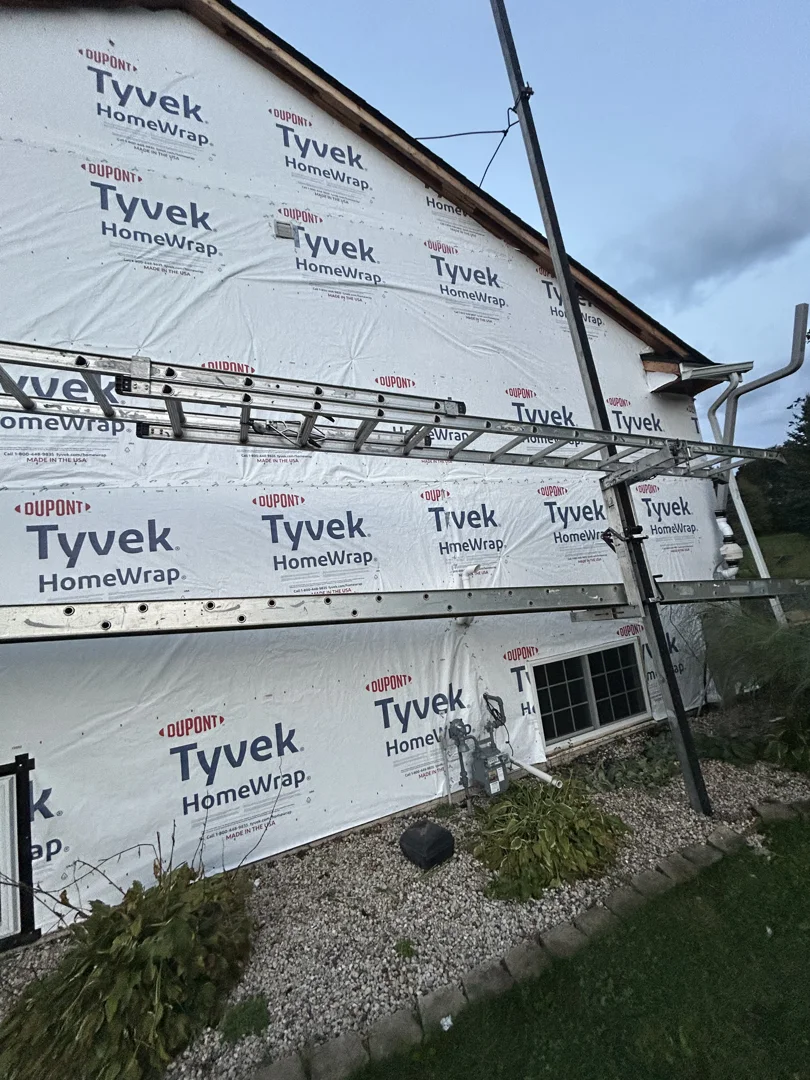
Knowing the Signs It’s Time to Call a Siding Replacement Company helps prevent minor exterior wear from turning into extensive structural decay. The most common warning signs include:
- Visible Rot and Soft Spots: Pressing gently on wood siding or trim should feel solid. Spongy textures indicate active decay.
- Warped, Buckled, or Cracked Panels: Panels pulled away from the wall create open channels for wind-driven rain and nesting insects.
- Peeling Interior Paint or Wallpaper: Moisture penetrating exterior walls often migrates inward, showing up as interior bubbling and drywall staining.
- Drafty Interiors and Skyrocketing Utility Bills: Poorly insulated, deteriorating cladding allows conditioned air to leak out rapidly. Understanding How a Siding Replacement Can Make a Difference in Energy Efficiency allows homeowners to lower heating and cooling demands.
- Frequent Repainting Cycles: If exterior paint chips, peels, or fades every few years, the substrate is likely absorbing moisture and pushing paint away from the surface.
Rot or moisture damage is discovered behind existing siding on approximately 30% of older residential homes—especially those built between 1970 and 1990. When existing cladding is stripped away, we inspect the underlying wall sheathing, weather barriers, and framing. Catching localized decay early prevents extensive framing rebuilds later.
Choosing the Right Material for Your Regional Climate
Our local climate subjects home exteriors to punishing seasonal extremes: freezing winter temperatures, rapid freeze-thaw cycles, high summer humidity, and heavy seasonal storms. Selecting the right cladding profile ensures long-term weather protection without continuous maintenance headaches.

Siding Material Options
- Vinyl Siding: Modern vinyl is durable, cost-effective, and low-maintenance. It never requires painting and resists moisture rot. Insulated vinyl profiles add continuous rigid foam backing to boost energy savings and reduce outside noise. It is easy to see Why Vinyl Siding Installation Is a Smart Investment for Homeowners looking for an attractive balance of performance and affordability.
- Fiber Cement (James Hardie): Fiber cement is composed of Portland cement, sand, and cellulose fibers. James Hardie is the #1 brand of fiber cement siding in the U.S., trusted by more than 10 million homeowners across America to protect their properties. Fiber cement provides exceptional dimensional stability, non-combustible fire resistance, and superior durability against harsh freeze-thaw shifts.
- Engineered Wood (LP SmartSide): Combines wood strands with advanced resin binders and zinc borate treatments to resist fungal decay and wood-boring insects. It provides the warm, textured aesthetic of real cedar while resisting cracking, splitting, and hail impacts.
- Aluminum and Metal Siding: Highly resistant to fire, rot, and pest damage. Seamless steel or aluminum cladding delivers a modern architectural look, though lightweight aluminum panels remain vulnerable to visible dents from large hail.
Siding Material Comparison
| Siding Material | Average Expected Lifespan | Typical Cost Range (Installed) | Freeze-Thaw Resistance | Maintenance Demands |
|---|---|---|---|---|
| Standard Vinyl | 20 – 30 Years | Lower to Moderate | Moderate (can crack if hit in deep freeze) | Very Low (occasional wash) |
| Insulated Vinyl | 30 – 40 Years | Moderate | High (foam backing cushions panels) | Very Low (occasional wash) |
| Fiber Cement (Hardie) | 30 – 50+ Years | Moderate to Premium | Exceptional (resists moisture and expansion) | Low (paint cycles every 12–15 yrs) |
| Engineered Wood | 30 – 50 Years | Moderate to Premium | High (flexible resin core absorbs impacts) | Moderate (periodic caulking/staining) |
| Metal / Steel | 40+ Years | Premium | Exceptional (unaffected by temperature swings) | Very Low (rinse and inspect) |
| Natural Wood / Cedar | 20 – 40 Years | Premium | Moderate to High (requires proper sealing) | High (frequent stain, paint, pest sealing) |
What to Look for When Evaluating Home Siding Companies
Replacing exterior cladding is a major home investment. Choosing the right crew is just as critical as choosing the right material. A poor installation will compromise even the highest-rated fiber cement or vinyl profile, voiding warranties and allowing hidden water damage.

When reviewing local contractors, consult our detailed Home Siding Contractors Guide 2026 to assess technical qualifications. Homeowners researching Siding Contractors near Delavan, WI should prioritize these vital standards:
- Active Licensing and Comprehensive Insurance: Never hire an uninsured crew. Verify active general liability coverage and full workers’ compensation policies so you are not liable for accidental job site injuries or structural damage.
- Dedicated In-House Crews vs. Subcontractors: In-house crews work under uniform quality standards, ensuring predictable installation quality, steady project oversight, and clear accountability throughout construction.
- Manufacturer Certifications & Alliance Tiers: Top manufacturers establish structured programs (Select, Preferred, Elite) to recognize vetted contractors. Elite members of the James Hardie ALLIANCE maintain an average manufacturer affiliation of over 10 years, demonstrating proven technical expertise and adherence to strict fastening guidelines.
- Independent Workmanship Warranties: Material warranties from manufacturers only cover physical product defects, leaving labor and installation errors excluded. Professional contractors provide a written, standalone workmanship warranty (ranging from 5 to 10+ years) backing their installation.
Essential Questions to Ask Home Siding Companies Before Signing
Before approving a contract or putting down a deposit, ask these direct questions to protect your home and budget:
- Who will directly manage and supervise the daily job site? Confirm whether an experienced project manager or company owner personally inspects daily progress.
- Is your estimate fixed and completely itemized? Verify that tear-off, dump fees, weather barrier installation, flashing, window trim integration, and final permit costs are included in writing.
- What is your exact protocol if rotted sheathing is found? A reliable contractor will pause work, photograph structural damage, explain required repairs, and provide upfront pricing before proceeding.
- What certifications do your installers hold for my selected siding profile? Ensure the crew is trained in specific fastening, gap allowance, and flashing standards for that material.
- How does your crew handle daily job site cleanup? Confirm that work areas are kept tidy and that magnetic sweeps are performed daily to collect stray nails from driveways and lawns.
How Top Home Siding Companies Handle Insurance Claims and Permits
Severe weather events—including high winds and heavy hail—can crack vinyl panels, dent metal surfaces, or shatter trim. Homeowners facing sudden exterior damage should review our guide on Aluminum Siding vs Hail Spotting the Damage and Finding Solutions to recognize subtle impact points.
Top exterior contractors actively assist throughout the storm restoration process:
- Conducting comprehensive photographic damage inspections of all exterior elevations, gutters, and trim.
- Meeting on-site directly with insurance adjusters to review hidden damage and confirm complete repair scopes.
- Filing supplemental documentation when adjuster estimates omit necessary flashing, house wrap, or code-required components.
- Pulling all necessary municipal building permits (typically costing $50 to $150) and coordinating final local building inspections to ensure compliance with local building codes and neighborhood HOA requirements.
Siding Replacement Costs, Timelines, and Lifespans
Understanding project costs helps you budget accurately and avoid unrealistic low-bid estimates that cut corners on underlayment or flashing.
Siding pricing is calculated per square foot of wall surface area (or by “squares,” where 1 square equals 100 square feet). If you are budgeting for vinyl, our guide on How Much Does It Cost to Reside a House with Vinyl Siding details specific line items. For fiber cement, refer to our Fiber Cement Siding Cost Guide from Materials to Labor.
General Siding Investment Estimates (2,000–2,500 Sq Ft Home)
- Standard Vinyl Siding: $14,000 – $26,000+ ($6 – $12 per sq ft installed). Delivers a reliable 20–30 year lifespan with minimal upkeep.
- James Hardie Fiber Cement: $22,000 – $32,000 ($6 – $15 per sq ft installed). Offers a 30–50+ year lifespan with superior fire and weather protection.
- Engineered Wood Siding: $18,000 – $28,000 ($7 – $13 per sq ft installed). Provides a 30–50 year lifespan with high impact resistance.
Most residential siding projects take between 4 to 7 days from start to finish, weather permitting. Complex multi-story designs, extensive custom trim wraps, or underlying sheathing repairs can extend the timeline slightly.
Frequently Asked Questions About Siding Replacement
Can siding be installed during cold winter months?
Yes. Professional crews can install siding throughout the winter as long as temperatures remain above the 20°F to 30°F (-6°C to -1°C) threshold. Working above this temperature prevents vinyl panels from becoming brittle and cracking during cutting and fastening. Cold-weather installations require specialized tools, careful handling, and proper nail gun pressure settings to ensure correct panel expansion gaps.
What is the difference between a manufacturer and workmanship warranty?
A manufacturer warranty covers physical material defects, such as premature fading, peeling, or delamination of the product itself. It does not cover installation mistakes. A workmanship warranty is provided directly by the independent contractor, covering labor errors, improper fastening, and water leaks caused by installation defects. Both warranties are essential for complete protection.
Do all siding replacements require a building permit?
Yes, most municipal building departments require a building permit for siding replacements, soffit alterations, and structural cladding updates. Permitting ensures that the weather barrier, flashing, and wall coverings meet local building codes. Properties located within historic districts may also require approval from local preservation commissions before exterior changes begin.
Conclusion
Upgrading your home’s exterior cladding improves energy efficiency, provides lasting protection against seasonal weather, and delivers instant curb appeal. Selecting an experienced, transparent team ensures that your project is finished on time, within budget, and built to code.
At Smith Roofing & Exteriors, we take pride in delivering superior materials, honest project pricing, and 24/7 emergency response for homeowners across Southern Wisconsin—including Fort Atkinson, Lake Mills, Jefferson, Burlington, Delavan, Elkhorn, Lake Geneva, Walworth, and Edgerton.
Ready to protect your home with durable, beautiful exterior cladding? Explore our complete range of installation and repair options through our Category Siding hub, or contact our team today to schedule your comprehensive on-site consultation.