How Durable Is HardiePlank Siding?
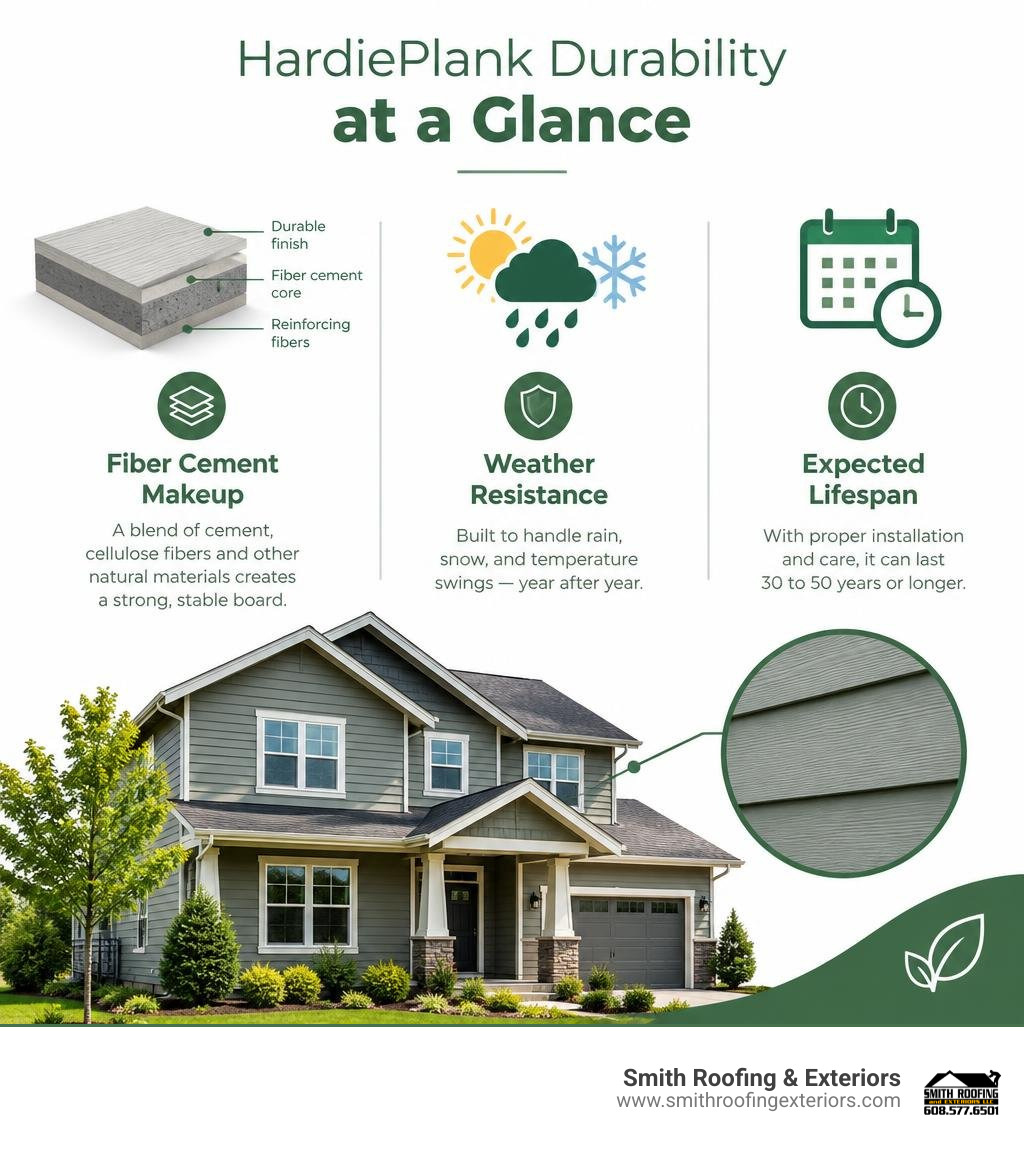
HardiePlank siding durability is a strong reason to consider it for a Wisconsin home. With proper installation and care, the fiber cement boards can last 30 to 50 years or longer. They resist fire, rot, and pests, and are made to handle rain, snow, and temperature swings. But they are not damage-proof: poor flashing, trapped water, or cracked boards can cut that lifespan short.
I’m Matt Smith, owner of Smith Roofing & Exteriors in Fort Atkinson. I help property owners weigh long-term exterior upkeep, including the installation and maintenance choices that affect HardiePlank siding durability.
Key terms for HardiePlank siding durability:
Evaluating HardiePlank Siding Durability Across Extreme Climates and Conditions
When evaluating any exterior cladding for homes across Southeastern Wisconsin—from Fort Atkinson and Jefferson over to Lake Geneva and Delavan—the primary test is how well the material handles nature.
Engineered from a dense mixture of Portland cement, fine sand, cellulose fibers, and water, James Hardie fiber cement boards are cured under heat and pressure. This composition gives the planks structural stability, allowing them to resist warping, splitting, and swelling under environmental stress.
Fire, Moisture, and Pest Resistance: Core Durability of HardiePlank Siding
The structural integrity of fiber cement delivers measurable advantages against everyday exterior threats:
- Noncombustible Fire Performance: HardiePlank achieves an ASTM E136 Class A fire rating. Because it is noncombustible, it will not ignite when exposed to direct flame and adds no fuel to an exterior fire.
- Moisture and Water Resistance: In standardized water submersion tests, HardiePlank resists visible swelling for seven full days, helping reduce the risk of swelling and moisture-related damage when snow piles up against exterior walls.
- Pest and Wildlife Defense: Termites, carpenter ants, and other wood-boring insects cannot feed on Portland cement. Woodpeckers also avoid the material since it offers no food source or nesting cavity.
The HardieZone System and Coastal Storm Performance
To guarantee longevity across diverse environments, the manufacturer uses the HardieZone® system, tailoring the chemical substrate of the siding to specific regional weather patterns.
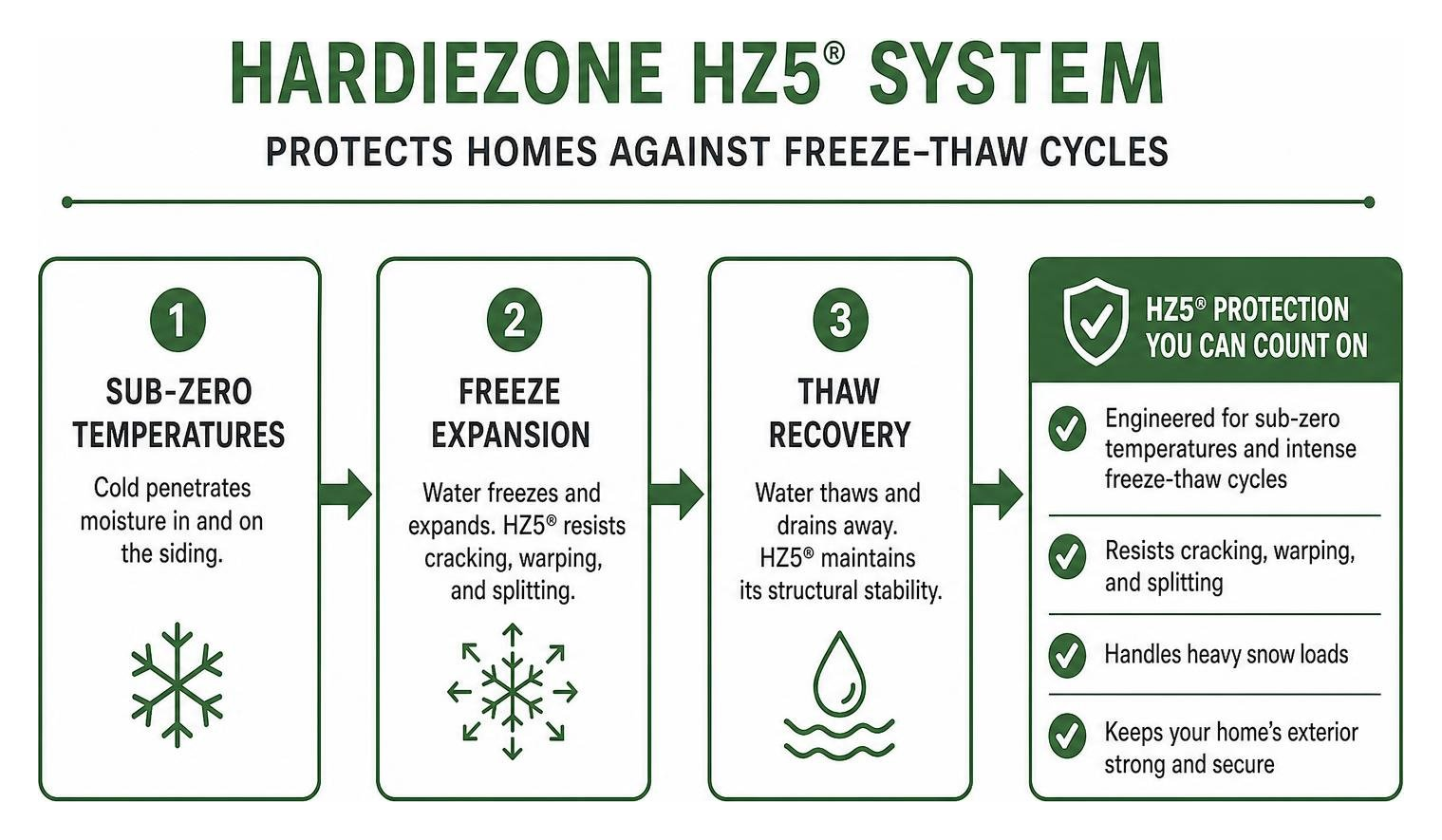
For properties in cold-weather regions like Lake Mills, Edgerton, and Walworth, the HZ5® formulation is engineered specifically for sub-zero temperatures, intense freeze-thaw cycles, and heavy snow loads. In southern and humid regions, the HZ10® formulation is designed to resist extreme heat and UV degradation.
These boards are FEMA-certified for flood resistance and engineered to withstand high wind loads, including conditions found in High Velocity Hurricane Zones. Whether facing wind-driven lake storms in Burlington or deep winter frost in Elkhorn, choosing the right formulation ensures your cladding remains secure. Homeowners can explore these regional profiles further by comparing Hardie plank options for their architectural design.
HardiePlank Durability: Lifespan and Fire Ratings
When reviewing lifecycle costs, fiber cement provides high durability with minimal structural degradation over decades. Remodeling Magazine’s Cost vs. Value data shows fiber cement siding yields around an 88% return on investment, largely due to its fire rating and multi-decade lifespan.
| HardiePlank Feature | Durability Consideration |
|---|---|
| Expected lifespan | 30–50+ years with proper installation and care |
| Fire performance | Noncombustible fiber-cement composition |
| Pest resistance | Cement-based material does not provide a food source for wood-boring insects |
| Moisture management | Proper flashing, clearances, and installation details remain essential |
Long-Term Performance: Maintenance, Warranties, and Installation Quality
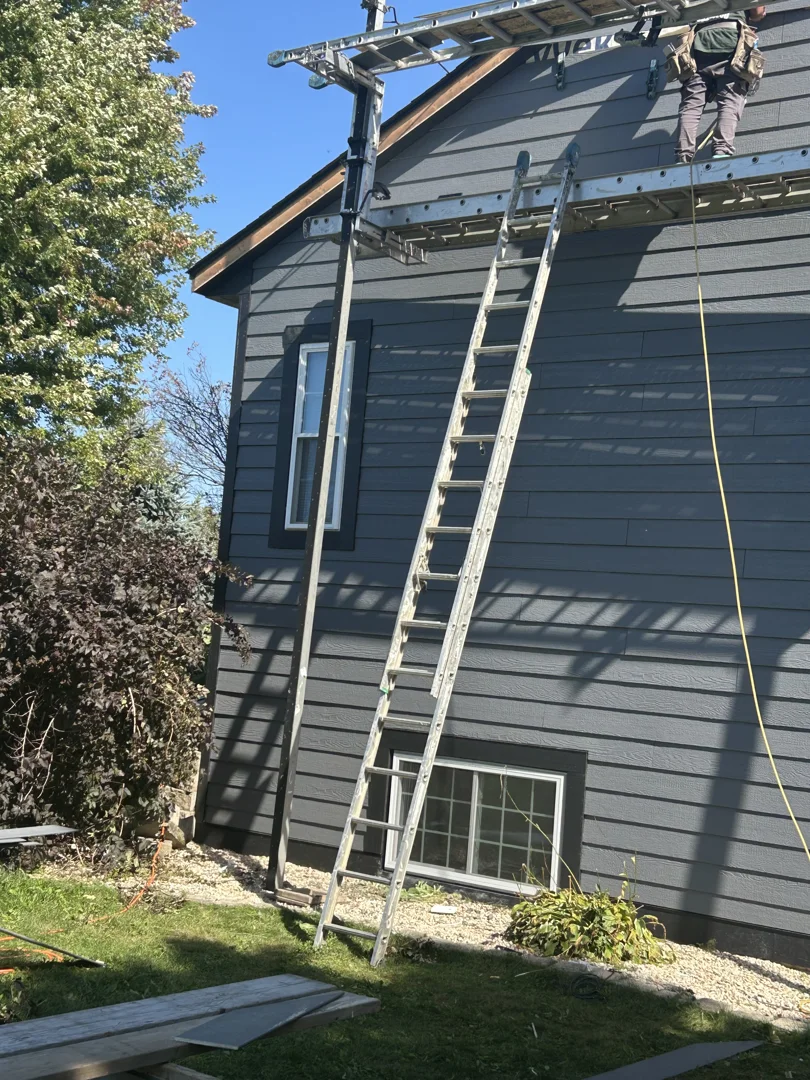
While the material itself is strong, long-term durability depends heavily on installation quality and routine upkeep. Homeowners planning an exterior renovation can consult our comprehensive fiber cement siding cost guide to understand the balance between material pricing and the specialized labor required for lasting results.
Critical Installation Details That Protect HardiePlank Siding Durability
Because fiber cement planks are heavy and rigid, installation requires strict adherence to manufacturer specifications:
- Fastener Placement & Blind Nailing: Nails must be driven flush into framing studs without over-driving, which can crack the core of the board.
- Clearances & Joint Spacing: Maintaining a moderate gap at butt joints allows for minor thermal movement without board collision. Learn more about managing siding seams to prevent weather infiltration.
- Flashing Integration: Proper flashing at roof-wall intersections and window edges prevents water intrusion. You can read our guide on mastering wall flashing and window details to see how moisture barriers protect structural framing.
- Silica Dust Safety: Installers must use specialized shears or dust-collecting circular saws with diamond blades to manage respirable crystalline silica on the jobsite.
Warranty Coverage, Potential Drawbacks, and Lifespan Realities
James Hardie backs HardiePlank siding with a 30-year non-prorated limited product warranty, meaning the substrate protection does not diminish in value as the siding ages. Factory-applied finishes with ColorPlus® Technology include a separate 15-year limited finish warranty covering peeling, cracking, and chipping.
However, material weight (averaging 300 pounds per 100 square feet) requires multi-person crews and specialized handling to avoid corner fractures during staging. Historical legal filings, such as the HardiePlank product litigation complaint, demonstrate that when boards are installed with inadequate ground clearances or missing flashings, moisture exposure can cause edge delamination and finish defects. Following exact manufacturer specifications is essential to keep the 30-year warranty fully valid.
Essential Maintenance Practices for 50-Year Longevity
To help your siding achieve its multi-decade lifespan, follow these straightforward maintenance best practices:
- Rinse Annually: Wash the exterior once or twice a year using a standard garden hose and a soft-bristle brush. Avoid high-pressure power washers, which can erode factory finishes.
- Inspect Caulking and Seals: Check the joint sealant around windows, doors, and trim bands every 12 to 24 months, reapplying a high-grade, flexible exterior polyurethane caulk when gaps appear.
- Maintain Ground Clearances: Keep soil at least 6 inches and hard surfaces (like driveways or decks) at least 2 inches away from siding edges to stop backsplash moisture absorption.
- Manage Repainting Intervals: Factory ColorPlus finishes often hold their vibrancy for 15 years or more. If you choose primed-only boards or want to refresh your style with vibrant colored siding combinations, budget for high-quality acrylic exterior paint every 10 to 15 years.
- Address Surface Damage Early: If a stray baseball or fallen branch damages a board, consult our practical guide on fixing cracked fiber cement siding to patch or replace the plank before water enters the wall cavity.
For property owners throughout Fort Atkinson and Southeastern Wisconsin, our experienced local team at Smith Roofing & Exteriors provides professional inspections, precision installation, and 24/7 emergency response to keep your home’s exterior protected in every season.