Choosing a Grey Metal Roof for Your Home
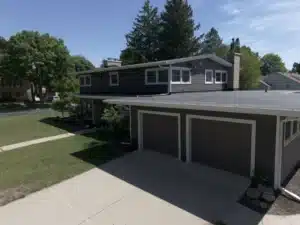
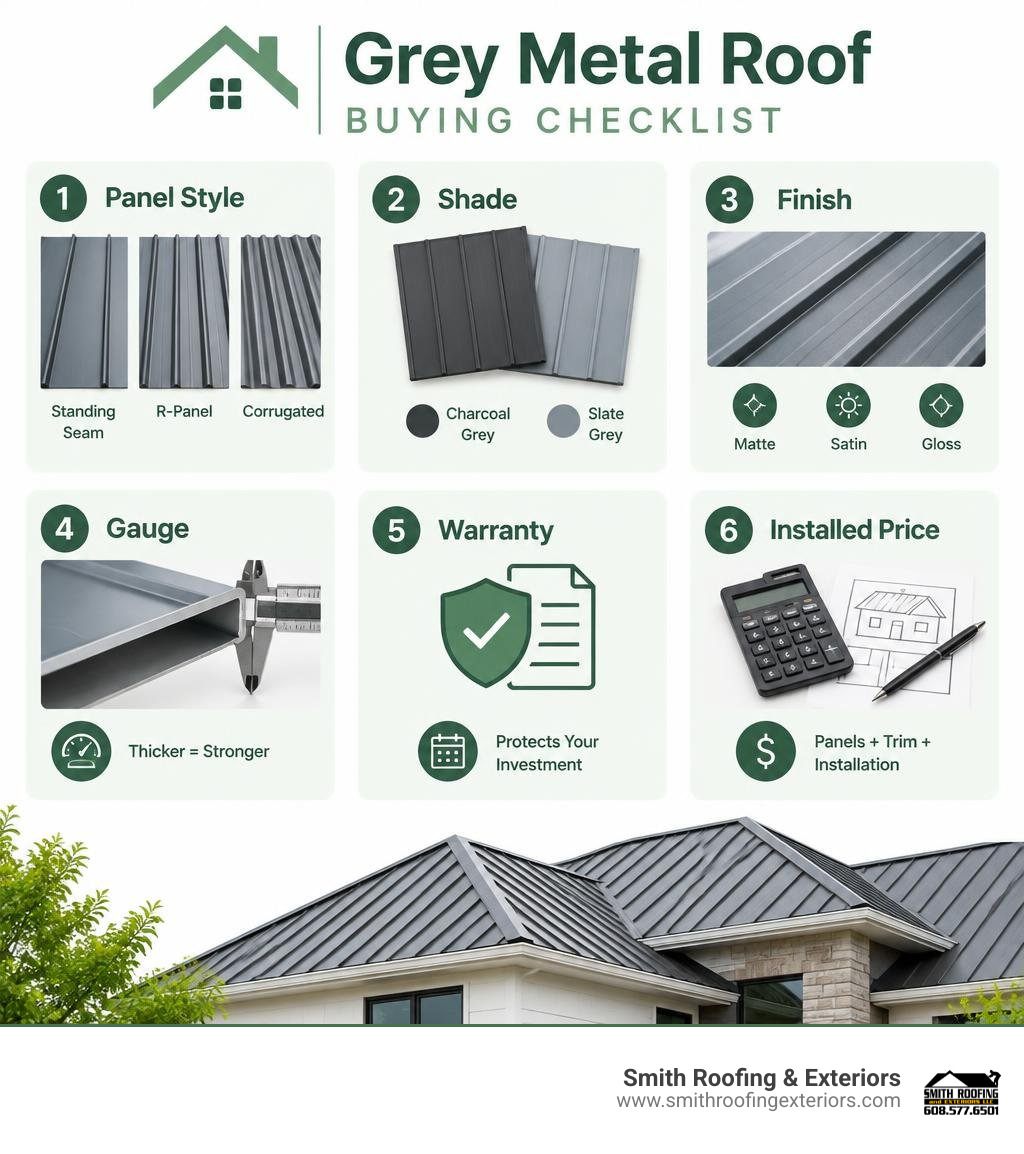
Buying a grey metal roof? Start with the panel style, then choose the shade and finish. Standing seam gives a clean look with concealed fasteners. R-panel and corrugated panels have visible fasteners and a more traditional ribbed look. Charcoal grey makes a bold contrast with light siding, while slate grey offers a softer look. For Wisconsin weather, ask each installer about the panel gauge, paint warranty, and the complete price for panels, trim, and installation.
Grey works because it fits many homes without taking over the exterior. The right choice still depends on your roof’s shape, your siding, and how much upkeep you want.
I’m Matt Smith, owner of Smith Roofing & Exteriors. I help homeowners understand the short- and long-term choices behind projects like a grey metal roof, so they can plan with confidence.
Learn more about grey metal roof:
Why a Grey Metal Roof Is the Top Choice for Contemporary Homes
Modern architecture emphasizes clean lines, balanced proportions, and materials that handle seasonal shifts without constant upkeep. A grey metal roof anchors these principles better than almost any alternative. Using a Galvalume substrate—steel hot-dipped in an alloy of roughly 55% aluminum and 45% zinc—these systems resist corrosion and surface rust, even through damp Midwest springs and freeze-thaw cycles.
To understand how steel panels outperform traditional asphalt, see the complete guide to metal roofing. Grey provides a timeless neutral contrast. While stark black can look severe under bright midday sun and light tan can wash out against pale masonry, grey bridges warm and cool exterior palettes. This adaptability preserves curb appeal and boosts resale value for decades.
Popular Shades and Profiles for a Grey Metal Roof
Grey metal panels come in distinct colorways and structural profiles. Choosing the right combination balances budget, installation method, and neighborhood aesthetics:
- Charcoal Grey: The leading color choice for modern farmhouses, barndominiums, and urban homes. It reads dark and crisp from the curb while displaying rich slate undertones up close.
- Slate Gray: A mid-tone neutral that mimics traditional quarried stone, hiding minor dust and matching earthy brick or stone facades.
- Burnished Slate: A deep, warm-toned brownish-grey that pairs naturally with cedar siding and rustic trim.
- Mountain Grey: A contemporary, muted tone frequently specified in modern architectural portfolios, such as Seagull Road – GreenCoat® PLX Mountain Grey & Chestnut Brown.
- Zinc Metallic: A reflective, industrial silver-grey finish that replicates weathered raw zinc at a fraction of the cost.
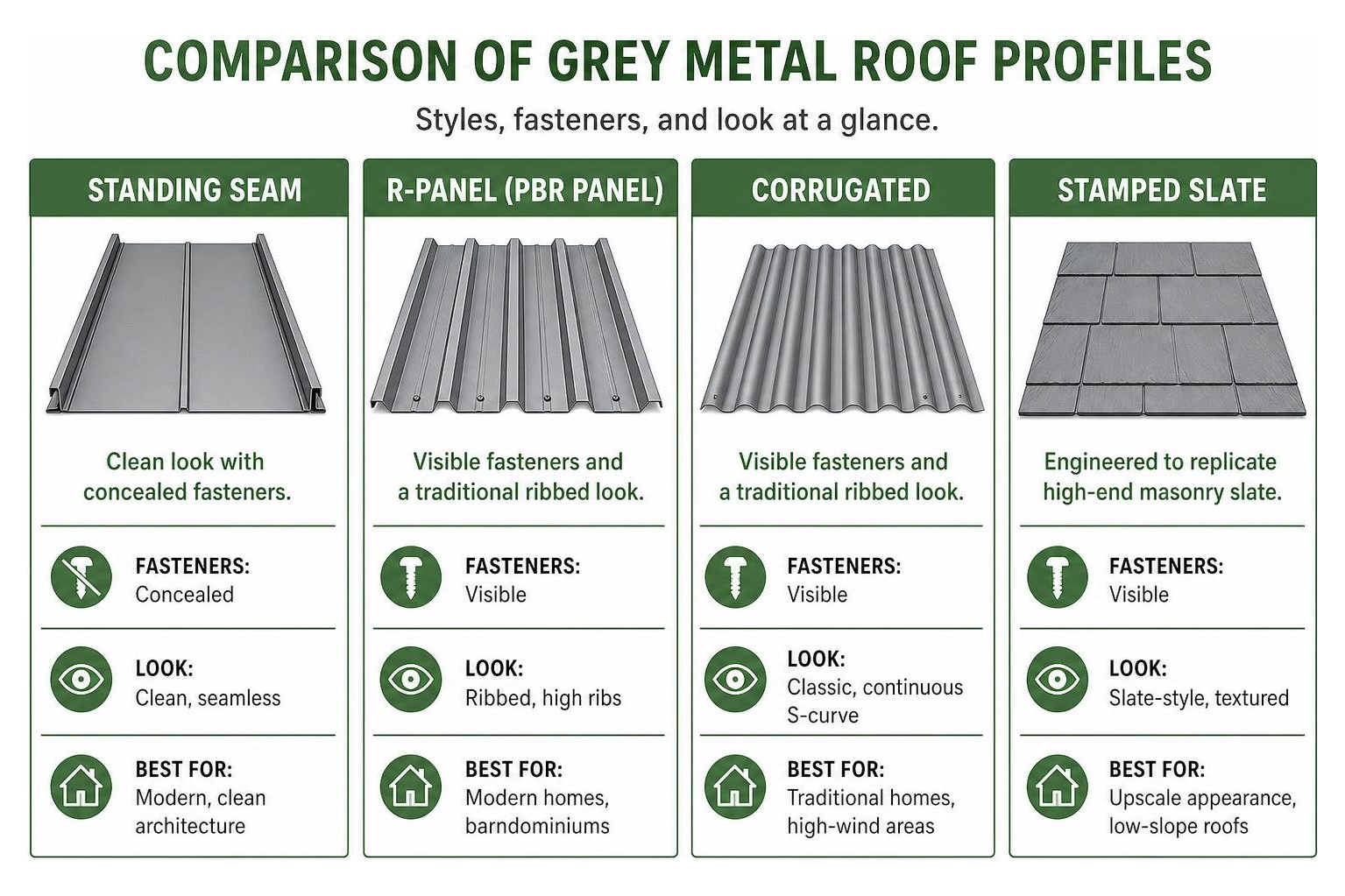
When selecting a profile, you have four main options:
- Standing Seam: Interlocking vertical ribs with concealed clips and fasteners. If you want seamless, clean aesthetics with zero exterior fastener penetrations, check out why your next roof should be a Galvalume standing seam masterpiece.
- R-Panel (PBR Panel): An exposed-fastener ribbed profile with high structural ribs and purlin-bearing legs. Originally industrial, it is now widely used for modern residential and barndominium projects.
- Corrugated Panels: Classic, continuous S-curve sheets that deliver rigidity and weather shedding. Discover why corrugated steel roofing sheets easily outlast traditional shingles in high-wind and heavy-snow environments.
- Metal Tile and Slate Panels: Stamped metal sheets engineered to replicate high-end masonry slates. Products like Britmet Slate 2000 and Lightweight Roof Slates weigh around 7 kilograms per square meter—one-seventh the weight of concrete tiles—while offering a 50-year weather-seal warranty and compatibility with roof pitches down to 12 degrees.
| Roof Profile | Fastener Style | Standard Gauges | Best Architectural Application | Relative Cost |
|---|---|---|---|---|
| Standing Seam | Concealed Clips | 24, 26 ga | Modern residential, luxury homes, low-pitch slopes | High |
| R-Panel (PBR) | Exposed Screws | 26, 29 ga | Barndominiums, workshops, modern accents | Moderate |
| Corrugated | Exposed Screws | 26, 29, 30 ga | Contemporary rustic, rural retreats, garages | Budget to Moderate |
| Metal Slate Tile | Concealed / Direct Interlock | 26 ga / 0.45mm–0.9mm | Historic replacements, luxury custom builds | High |
Paint Finishes and Performance: PVDF vs. SMP vs. Matte
A metal panel’s longevity depends on its factory-applied coating. The three primary paint options for grey steel are PVDF, SMP, and specialized Matte formulations.
PVDF is the gold standard for resin technology. It uses strong carbon-fluorine bonds that resist chalking, fading, and UV breakdown. Gray PVDF panels retain their true color across decades of sun exposure, making them ideal for south-facing, unshaded roofs.
SMP offers mid-tier durability at a lower price point. Typical SMP paint systems carry a 40-year chip/peel warranty and a 30-year fade/chalk warranty. While it eventually fades slightly faster than PVDF, combining 26-gauge steel with an SMP finish delivers a 35% to 40% cost savings compared to 24-gauge PVDF panels.
Standard paint finishes have a slight gloss that can cause glare in bright sunlight. Matte finishes, such as those featured on Como – Noble Matt | Contemporary Metal Roof Material, diffuse light to soften the roof’s visual profile and mask minor thermal movement. Matte coatings usually add roughly $0.15 to $0.25 per square foot over standard PVDF colors, while specialty textured prints (such as Vintage or Zinc Matte) add about $1.00 per square foot.
| Paint System | Resin Base | Chalk & Fade Resistance | Gloss Level | Approximate Added Cost | Expected Paint Life |
|---|---|---|---|---|---|
| SMP | Silicone-Modified Polyester | Good (30-year warranty) | Medium to High | Base price | 30–40 Years |
| PVDF (Kynar) | Polyvinylidene Fluoride | Superior (40+ year performance) | Low to Medium | +$0.30–$0.60 / sq. ft. | 45–50+ Years |
| Noble Matte / Matte PVDF | Premium Matte PVDF / Polyurethane | Superior (Anti-glare, high UV lock) | Ultra-Low (No glare) | +$0.15–$0.25 / sq. ft. | 45–50+ Years |
| Specialty Prints (Zinc/Patina) | Multi-tone PVDF Print | Superior (Aged architectural look) | Matte / Textured | +$1.00 / sq. ft. | 40–50 Years |
Energy Efficiency, Weather Resistance, and Long-Term Value
A grey roof balances winter thermal retention with summer solar reflection. Reflective cool-roof pigments bounce infrared light away from the attic, lowering summer cooling demand. Review our breakdown on the role of roofing in energy efficiency to see how proper ventilation and reflective coatings work together.
Modern grey steel roofs provide reliable storm defense:
- UL 2218 Class 4 Impact Resistance: Withstands severe hail without puncturing or cracking.
- UL 580 Class 90 Wind Uplift: Tested to endure severe wind pressures over 140 mph when fastened correctly.
- Class A Fire Rating (UL 790 / ASTM E 108): Protects against windblown embers.
- 40 to 70 Year Lifespan: Outlasts asphalt shingles multiple times over, preventing recurring teardown and disposal costs.
Buyer’s Guide: Specifying, Pairing, and Installing Your Metal Roof

A successful roofing project requires thoughtful material specification, color matching, and proper detailing. Because mill runs can drift slightly in tone from batch to batch, order all panels, trims, and fasteners at once to ensure a uniform color match across your roof.
For residential roofs in areas with snow loads, 26-gauge or 24-gauge Grade 80 steel is standard. While 29-gauge or 30-gauge panels work well for utility sheds, heavier gauges resist oil canning (visible surface waviness) and stand up better to falling tree limbs and hail.
Siding Pairings and Architectural Styles for a Grey Metal Roof
Grey metal works across a range of exterior siding palettes:
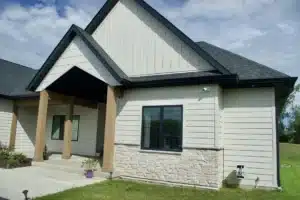
- Polar White & Light Stone: Pairing Charcoal Grey metal roofing with crisp white or warm stone vertical board-and-batten siding creates a high-contrast modern farmhouse look.
- Natural Cedar & Timber Accents: Slate Gray roofs balance the warm, amber tones of natural wood porches, soffits, and gables.
- Stone Veneer & Earthy Masonry: Burnished Slate and Patina Grey shades pick up the darker mineral flecks in river rock or limestone facades.
- Monochromatic Scandinavian Design: Layering light grey siding with a dark charcoal roof creates a clean, intentional look.
For visual inspiration across different exterior layouts, browse this curated gallery of gray houses with metal roofs.
Essential Installation Guidelines, Gauges, and Flashing Trim
Proper installation details ensure your metal roof sheds water cleanly through heavy downpours and winter snowpack:
- Roof Pitch Requirements: Standing seam systems with mechanical seams can run on slopes as low as 2:12 or even 1:12 with specialized seam sealant. Exposed-fastener panels typically require a minimum pitch of 3:12 to prevent standing water at side laps.
- Underlayment: Always install high-temperature, self-adhering synthetic underlayment over the entire decking. Metal panels transfer heat quickly, which can melt standard asphalt felt underlayment.
- Flashing and Closures: Watertight transitions require solid trim detailing. Learn how to choose the best metal roof flashings for your home to prevent leaks at valleys, rakes, sidewalls, and chimneys. Use pre-formed foam closure strips at eave and ridge lines to keep out wind-driven rain, snow, and pests.
- Thermal Movement: Steel expands and contracts with daily temperature swings. Standing seam panels handle this using hidden clips that allow the metal to slide naturally. When using exposed-fastener panels, drive neoprene-washer screws to the correct depth—over-tightening crushes the rubber seal, while under-tightening leaves gaps for water.
For complete project guidance from an experienced team, explore our professional metal roof installation and replacement options. We will help you select the ideal panel profile, gauge, and grey finish to protect and elevate your home for decades to come.